Yes — a virtual phone number can be a smart choice for alumni networking if you want people to reach you without giving your main personal number to every alumni directory, reunion signup, mentor thread, and follow-up contact.
It works best when the number is stable, easy to monitor, and professional enough for real conversations; if it is too disposable or rarely checked, it creates missed opportunities instead of better privacy.
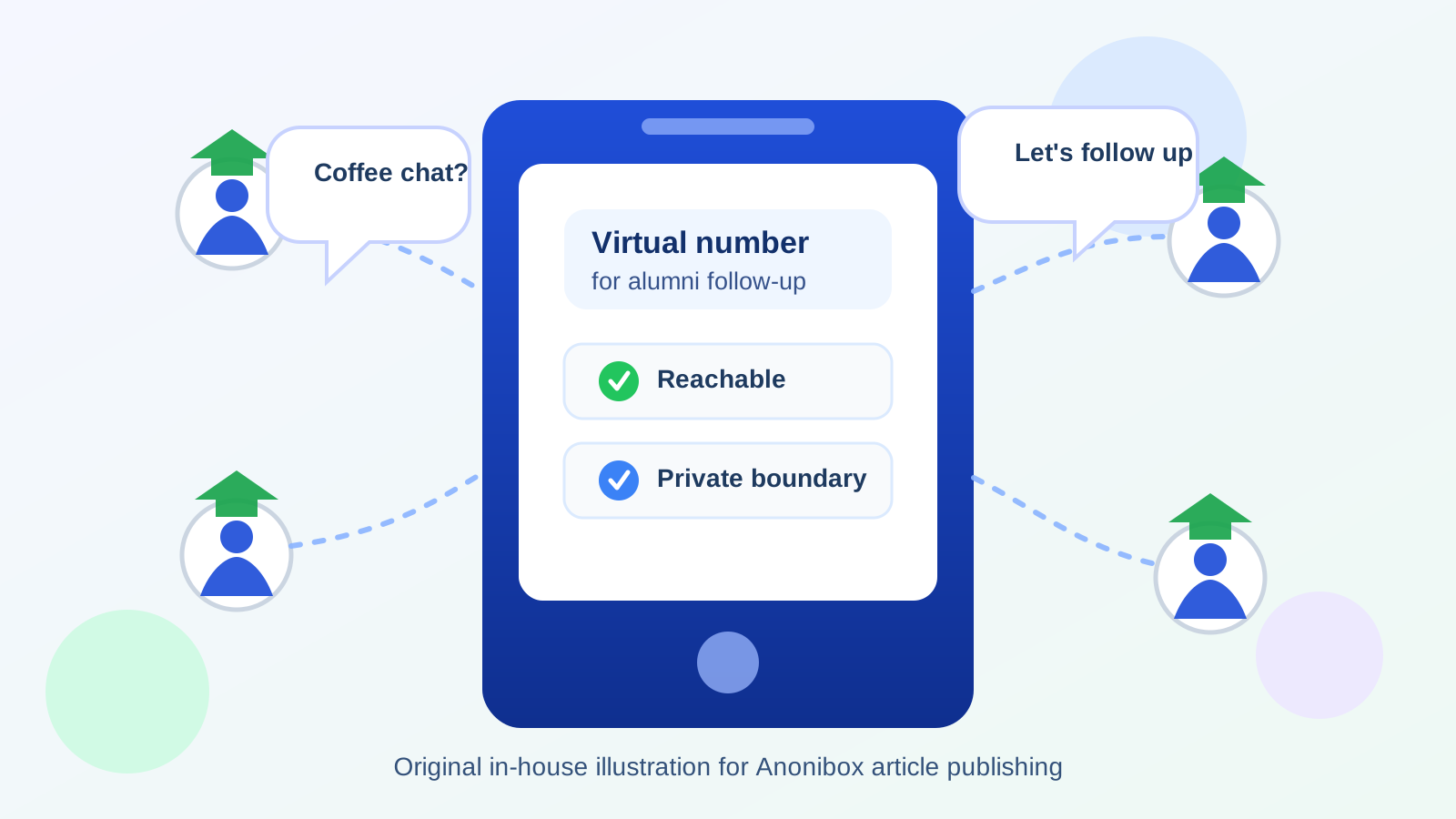
That is the real answer behind searches for virtual phone number for alumni networking. Alumni outreach is not quite the same as applying for a job and it is not quite the same as casual social networking either. You might message graduates from your school for advice, join alumni groups, attend chapter events, ask for introductions, or reconnect with former classmates who now work in industries you want to enter. Those conversations can be useful for months, not just days. A virtual number can help you stay reachable while keeping better boundaries around your everyday personal phone line.
Why this question comes up so often
Alumni networking creates a strange contact problem. The interactions usually feel warm and semi-personal, but your details can spread farther than you expect. You may share your number with a school directory, alumni portal, event organizer, mentoring program, chapter volunteer, speaker, or alumnus who says, “I’ll connect you with someone else.” None of that is automatically bad. The issue is that your main number can end up attached to a much larger professional-adjacent network than you originally intended.
Unlike a one-time website signup, alumni networking often has a long tail. Someone may text you next week about coffee. Another person may follow up two months later when a role opens. A chapter organizer may add you to the next event reminder. A virtual number can create a buffer between that long-tail outreach and the phone line you use for family, close friends, banking alerts, delivery updates, and everything else in daily life.
Short answer: when a virtual number usually makes sense
A virtual number is usually worth considering if any of these apply:
- You are reaching out to many alumni in a short period.
- You plan to attend mixers, reunions, panels, or regional chapter events where people exchange contact details quickly.
- You are quietly exploring a job change and want cleaner boundaries.
- You want to screen calls and texts before they land on your main personal line.
- You already use a separate email for networking and want your phone strategy to match.
- You expect introductions and follow-up to continue over time, not just during one event week.
If several of those sound familiar, a virtual number is not overkill. It is a practical way to stay open to opportunities without turning your primary phone number into a permanent intake form for every alumni-adjacent interaction.
When your regular number is probably fine
You do not need a second number for every alumni coffee chat. Your normal number is often fine if you are only talking to one or two trusted people, you are networking in a small and credible circle, or you already prefer to keep most early communication on email or LinkedIn. In a low-volume, high-trust situation, the privacy benefit of a virtual number may be modest.
The decision becomes more compelling when volume increases or trust decreases. The more event registrations, directories, group chats, or broad introductions you touch, the more a virtual number starts to look like basic contact hygiene rather than paranoia.
What a virtual phone number actually helps with
1. Cleaner screening
If alumni and career-related calls land on a dedicated number, you immediately know what category an incoming message belongs to. That makes it easier to answer thoughtfully instead of guessing whether an unknown call is personal, professional, or spam.
2. Better long-term control
Alumni networking often stays alive much longer than expected. A virtual number gives you a dedicated lane you can keep active during a networking season, then rethink later if the traffic becomes noisy. That is much easier than trying to “take back” your main personal number once it has been shared widely.
3. More professional follow-up
A well-managed virtual number can still look serious and dependable. You can set a clear voicemail, keep alumni messages in one place, and reply without mixing everything into your personal message history. For many people, that creates better responsiveness, not worse.
4. Easier boundaries when networking overlaps with job searching
Alumni conversations often turn into referrals, introductions, and informational calls. If you are using a separate inbox strategy already, a virtual number fits naturally beside it. For example, you might use Anonibox or another separate-email workflow for low-trust signups, event registrations, or directory experiments, then keep a stable networking inbox and a stable virtual number for real people and longer conversations.
What a virtual number does not solve
A virtual number is useful, but it is not magic. It does not make you anonymous. It does not guarantee protection from spam. It does not automatically make every outreach channel trustworthy. And it does not help if you forget to monitor it.
You still need to use judgment. If an “alumni contact” immediately pressures you to move to an unfamiliar app, asks for sensitive information, or sends suspicious links, a virtual number does not make that behavior safe. It simply gives you a little more separation and control while you decide whether the person is legitimate.
Virtual number vs separate number vs burner number
These ideas overlap, but they are not identical.
- Virtual phone number: usually routed through an app or cloud-based service. It is flexible, easy to screen, and often a strong middle ground for alumni networking.
- Separate phone number: could be a second SIM or additional line. This can work very well, but it may be less convenient depending on your setup.
- Burner number: useful for low-trust or temporary situations, but often too disposable for alumni relationships that may resurface weeks or months later.
For alumni networking, the sweet spot is usually a number that feels separate without feeling temporary. People may save your contact for future intros or follow-up. You want privacy, but you also want continuity.
Best practices if you use a virtual number for alumni networking
Choose stability over cleverness
Pick a number you can keep active for as long as your networking cycle lasts. Alumni follow-up is often delayed. If the number expires or becomes something you barely check, you lose the main advantage.
Set a professional voicemail
A simple voicemail greeting with your name is enough. If someone from an alumni board, company, or mentoring program calls you, they should hear something that sounds normal and dependable.
Keep your channels consistent
If you message someone on LinkedIn, then offer a phone number, make sure your name and overall contact presentation stay consistent. The goal is privacy with trust, not confusion.
Use it for the right stage of the relationship
A virtual number is especially helpful for event signups, broad outreach, first calls, and introductions where you are still figuring out whether the connection will matter. Once a relationship becomes established, you can decide whether to keep using that number or move the conversation somewhere else.
Track context
When someone texts you, try to note where they came from: a reunion, a chapter event, a shared introduction, or an alumni directory. That context makes your replies better and prevents the “sorry, remind me who this is” feeling that weakens good networking.
Watch for verification and code scams
No legitimate alumni contact needs a one-time login code from your phone. If someone asks for one, stop immediately. The same goes for requests to install remote software, send identity documents early, or move money.
Red flags that mean you should slow down
- The person claims an alumni connection but cannot explain how they know the school, chapter, or mutual contact.
- The conversation becomes pushy as soon as you ask basic questions.
- You are asked to switch immediately to a less accountable channel for vague reasons.
- The contact wants personal or financial information that has nothing to do with networking.
- The outreach sounds like recruiting bait but avoids concrete job details, names, or company domains.
In those cases, the right move is not just “use a virtual number.” The right move is to verify the person independently and decide whether the conversation is worth continuing at all.
A simple decision checklist
Before you use your main number for alumni networking, ask yourself:
- How many new alumni contacts am I likely to make this month?
- Will I be sharing my number in directories, group chats, event RSVPs, or broad introductions?
- Do I want to keep networking traffic separate from my everyday personal life?
- Can I reliably monitor a second number?
- Would a stable virtual number give me better screening without making me harder to reach?
If the answer to most of those is yes, a virtual number is probably a sensible choice.
Final answer
Yes — using a virtual phone number for alumni networking is often a smart privacy and organization move. It can help you stay reachable for coffee chats, event follow-up, introductions, and referral-related conversations without giving your main personal number to every alumni-facing system or casual contact.
The key is to treat it like a real professional channel, not a throwaway trick. Keep it stable, monitor it consistently, and pair it with good judgment about where you share it. Done well, a virtual number gives you better boundaries without making you harder to reach — which is exactly what most people want from alumni networking in the first place.