Yes — a virtual phone number can be a smart choice for internship applications if it is stable, professional, and checked reliably. It gives you more privacy and better call screening than putting your personal number everywhere, without forcing you to miss recruiter follow-up.
The key is to use a long-enough, job-search-dedicated number you control for the full internship cycle, not a throwaway line that may disappear before interviews, offer calls, or onboarding messages arrive.
Why this question matters more than it looks
Internship applications often go out in batches. You might apply through company career pages, campus portals, event platforms, recruiter forms, student job boards, and referral links in the same month. That volume creates two problems at once: you need to stay easy to reach, and you need to avoid turning your personal number into a permanent spam magnet.
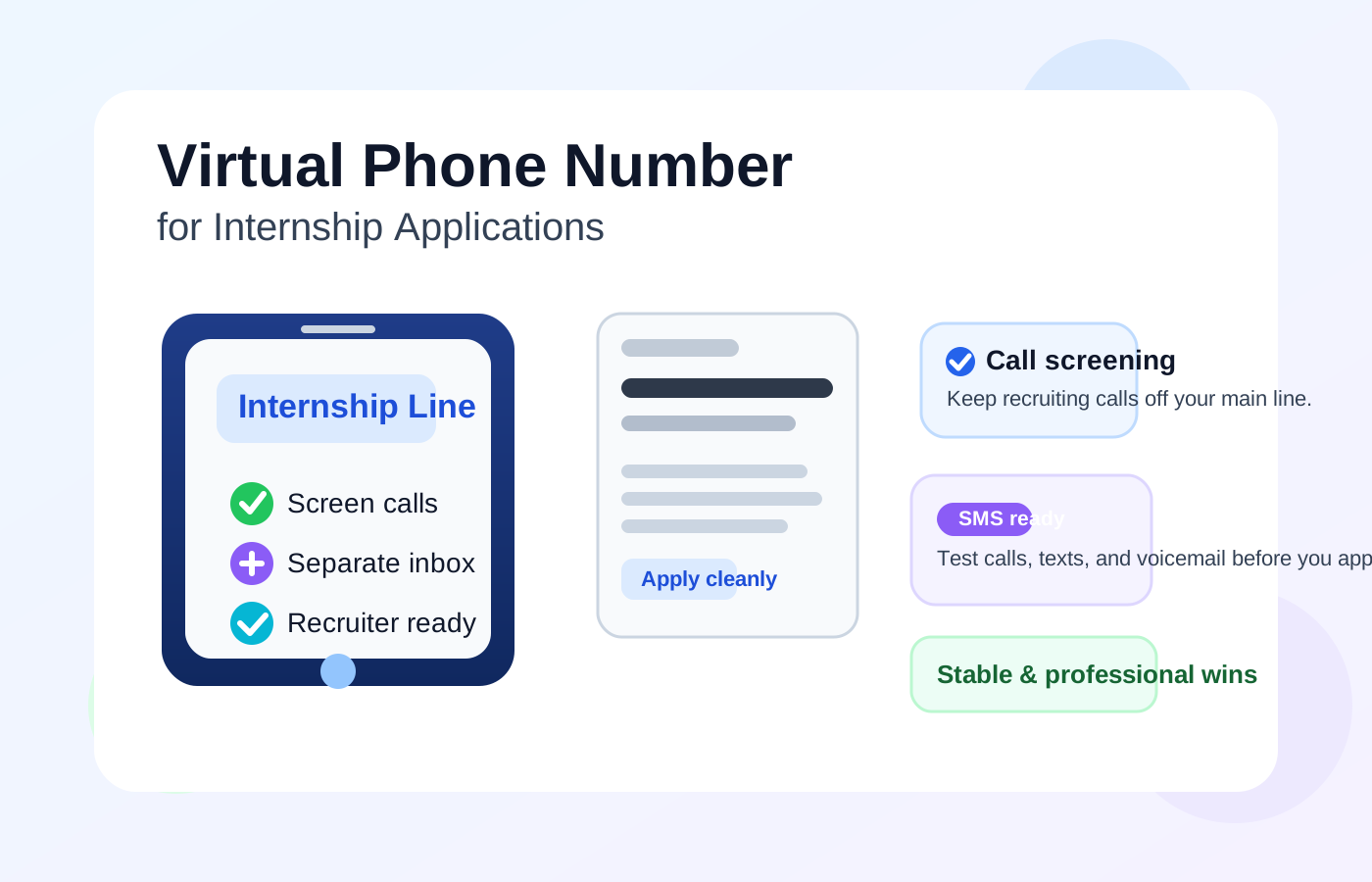
A virtual phone number can help because it gives you a separate lane for your internship search. Calls and texts related to applications stay in one place. Unknown numbers are easier to screen. Your family, friends, and everyday life do not have to share the same line with every recruiter, staffing partner, or event follow-up.
That said, “virtual” does not automatically mean “better.” Some numbers are reliable and perfect for a multi-month search. Others are too temporary, too limited for verification texts, or too awkward for professional follow-up. The real question is not whether a virtual number is possible. It is whether it is the right kind of virtual number for internship recruiting.
Short answer: usually yes, if the number is stable and professional
For most internship applications, a virtual phone number is fine if:
- you control it for the whole recruiting cycle,
- it can reliably receive the calls and texts you actually need,
- your voicemail sounds professional, and
- you monitor it as carefully as you would your main line.
It is usually a better fit than a truly disposable number, because internship hiring rarely ends with one message. Recruiters may call to schedule screenings, confirm availability, share interview details, ask follow-up questions, or reach you again weeks later if another role opens up.
What a virtual phone number can do well during an internship search
1. Protect your personal number from spreading everywhere
Many internship seekers apply widely, especially during recruiting seasons tied to campus events or graduation timelines. A virtual number lets you stay reachable without handing your everyday personal line to every form, recruiter, and talent portal. That matters because even legitimate applications can lead to future outreach long after you stop searching.
2. Make call screening easier
Internship recruiting often involves unknown numbers. Some are real recruiters. Some are agencies. Some are automated reminders. Some are junk. A virtual number gives you a clean place to separate that traffic from your regular life, which makes it easier to answer thoughtfully instead of reflexively ignoring unknown calls.
3. Keep your search organized
A dedicated number creates a useful boundary. When a voicemail or text arrives on that line, you already know what category it belongs to. That makes it easier to trace the source, return calls quickly, and keep your search from feeling chaotic.
4. Help if you are balancing school, work, or family boundaries
Some internship applicants are juggling classes, part-time jobs, roommates, or family obligations. A separate virtual number can reduce interruptions on the number people already use to reach you for everyday life. That is a quality-of-life benefit, but it is also practical professionalism: you can keep your recruiting communication more intentional.
When a virtual number is a particularly good fit
A virtual number usually makes the most sense in situations like these:
- You are applying to many internships at once. High volume increases the odds of spam, mismatched follow-up, and inbox-style overload for your phone.
- You are using campus recruiting platforms or event tools. Career fairs, talent communities, and student recruiting systems can create a lot of outreach over time.
- You want a dedicated job-search contact setup. If you already use a separate email for applications, a separate number is a natural companion.
- You want better privacy while still looking professional. A stable virtual number can feel more polished than a burner-style setup while still protecting your main line.
- You want easier voicemail and callback management. A dedicated search number helps you notice and respond to recruiter follow-up faster.
When a virtual number can backfire
The main risk is not that the number is virtual. The risk is that the setup is flimsy.
Using a too-temporary number
If the number might expire, get recycled, or disappear when you stop using an app for a short time, it is a poor fit for internship recruiting. A company may call back weeks after your application, especially if the role moves slowly or hiring managers are coordinating around academic schedules.
SMS or short-code limitations
Some virtual-number services handle ordinary calls well but are inconsistent with certain text messages, short codes, or verification flows. That matters if an employer, scheduling system, or background-check vendor uses text-based confirmation.
Delayed notifications
If your virtual number forwards unreliably, buries voicemails, or makes it too easy to miss alerts, it stops being an asset. Recruiter follow-up often rewards speed. A setup that adds friction can cost you interviews.
An unprofessional presentation
A weird voicemail greeting, confusing caller ID behavior, or a number you never answer can make you look harder to reach than you really are. The number itself does not need to be prestigious. It just needs to work consistently and sound like it belongs to a serious applicant.
Assuming it makes you anonymous
A virtual number improves privacy, but it does not make you invisible. If you tie it to your résumé, applications, interviews, and online profiles, it becomes part of your professional trail. Treat it as a privacy layer, not a magic cloak.
Virtual number vs. burner number vs. separate phone number
These ideas overlap, but they are not identical.
- Virtual phone number: usually app-based or forwarding-based, designed to give you a usable second line without needing a separate physical phone. This is often the best balance for internship searching.
- Burner phone number: usually implies something more temporary. That can help with spam, but it can also be too short-lived for real recruiting timelines.
- Separate phone number: the broad category. It could be a second SIM, a separate physical device, or a virtual number. A virtual number is one way to create that separation.
If you already know a separate number is the right move, a virtual number is often the easiest and least expensive way to do it. If you know you only need something for a week, a burner-style setup may feel tempting, but it is usually riskier for internships because follow-up does not always happen on your schedule.
How to set up a virtual number for internship applications the smart way
1. Pick stability over novelty
Choose a number you can keep active for the full internship season, including interviews and offer-stage communication. The best setup is boring in the best sense: dependable, easy to check, and unlikely to vanish.
2. Test both calls and texts before using it anywhere
Do not assume a number works just because it exists. Call it from another phone. Leave a voicemail. Send a normal text. If you expect to receive scheduling links or confirmation codes, check that those behave as expected too.
3. Set a professional voicemail greeting
A plain greeting is enough: your name and a brief promise to return the call. No jokes, no music, no confusion. Internship recruiting is often fast-moving, and a professional voicemail can rescue missed calls.
4. Use the same number across the whole internship search
Consistency matters. If your résumé, application forms, email signature, and follow-up messages all point to the same dedicated number, recruiters have a clear channel to reach you. Swapping numbers mid-search creates unnecessary friction.
5. Pair it with a clean application email strategy
A separate number works best when the rest of your contact setup is organized too. If you already use a separate inbox for job searching, keep the same mindset here. For example, if you use Anonibox to keep early-stage application emails away from your main inbox, a dedicated phone line complements that approach by reducing contact spillover on both channels.
6. Keep a simple application log
When an unknown call comes in, you should be able to quickly ask, “Which company might this be?” A basic spreadsheet or notes list with company name, role, date applied, and status makes your dedicated number much more useful.
What should you put on your résumé and application forms?
If the virtual number is stable, professional, and monitored, you can usually use it the same way you would use any other contact number. That means:
- use the same number on your résumé and application forms,
- avoid switching between numbers unless you have a strong reason,
- make sure your voicemail identifies you clearly, and
- check messages promptly during active recruiting periods.
If a form asks for a phone number but you are not sure the opportunity is legitimate, slow down and verify the employer first. A virtual number can reduce your risk, but it should not become an excuse to ignore obvious warning signs.
Red flags to watch for even if you use a virtual number
A virtual number helps with privacy, but it does not solve scam problems by itself. Be cautious if:
- someone reaches out only by text and refuses to identify the employer clearly,
- you are pushed to move immediately to Telegram, WhatsApp, or another private channel with no real context,
- you are promised quick hiring before a real interview process,
- the “recruiter” asks for payment, banking details, or identity documents too early, or
- the company domain, website, or job posting does not hold up under basic verification.
Use the number to create distance, not to lower your guard.
A quick decision checklist
A virtual phone number is probably a good fit for your internship applications if you can answer yes to most of these:
- Will I keep this number active for the full recruiting timeline?
- Can it receive the calls and texts I actually need?
- Have I tested voicemail and notifications?
- Will this setup make me easier to organize, not harder to reach?
- Am I using it as a professional dedicated line rather than a disposable escape hatch?
If the answer to those questions is mostly no, a virtual number may be the wrong implementation for you — or you may simply need a better provider and a more stable setup.
Bottom line
A virtual phone number can be an excellent choice for internship applications when you want privacy, cleaner call screening, and a more organized recruiting setup. For many applicants, it is the sweet spot between oversharing a personal number and using a throwaway line that is too fragile for real follow-up.
Just remember the standard: stable, professional, and monitored. If your virtual number can handle that, it is usually a smart tool. If it cannot, stick with a more reliable separate number instead. The goal is not to look hidden. The goal is to stay reachable for real opportunities while keeping better control over where your contact information ends up.