Yes, a virtual phone number can be a smart choice for job referrals if it is stable, professional, and checked regularly. It gives you a cleaner boundary than your personal number while still letting referrers, recruiters, and hiring teams reach you quickly.
The catch is that not every virtual number is a good referral number. If the number expires, drops verification texts, routes callers into a neglected voicemail box, or looks obviously disposable, it can make a warm introduction harder instead of easier.
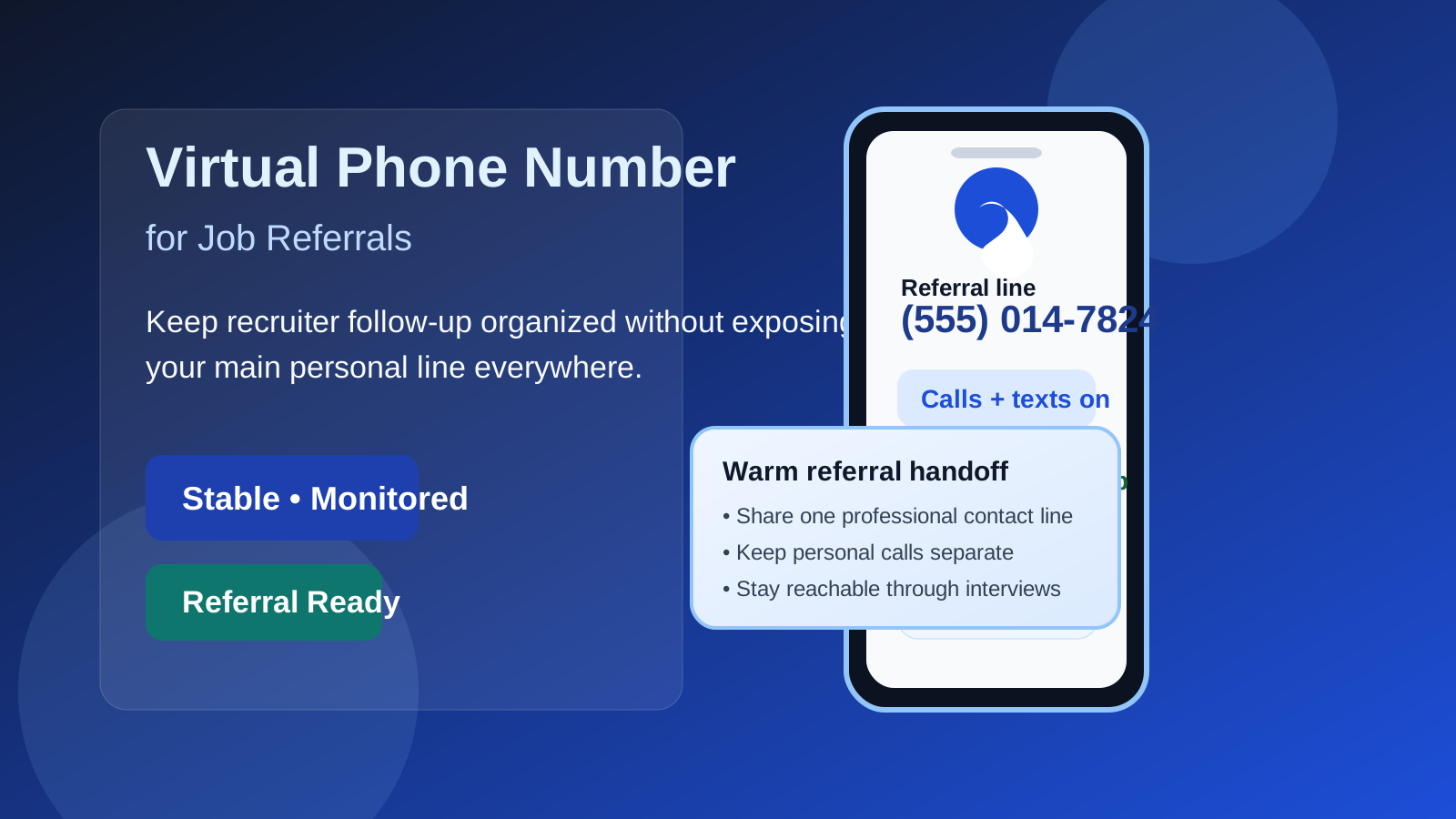
Why this question comes up with job referrals
Referrals sit in a slightly awkward middle ground between casual networking and a formal application. A friend, former coworker, alumnus, mentor, or industry contact may be willing to introduce you, but that warm handoff can move fast. Sometimes the next step is a recruiter email. Sometimes it is a short phone screen. Sometimes it is a last-minute text asking whether you are free for a call.
That is why contact details matter. If you share your main personal number everywhere, referrals can spill into your everyday life, and spam can follow later if your information gets forwarded more widely than you expected. If you hide behind a number that looks temporary or stops working, you risk missing the exact opportunity the referral was supposed to create.
A good virtual number tries to solve that tension. It gives you a dedicated line for job-search activity without forcing you to publish your primary personal number to every referral chain, recruiter, or applicant tracking system that enters the picture later.
What a virtual phone number actually solves
Used well, a virtual number gives you more control over three things: privacy, organization, and responsiveness.
- Privacy: you can keep your everyday number off résumés, referral forms, and forwarded email threads.
- Organization: referral calls and texts stay in one lane instead of mixing with family, banking alerts, and random daily noise.
- Responsiveness: you can still answer quickly when a recruiter follows up on an introduction.
That combination is why virtual numbers often work better than the two extremes people usually consider: giving out a personal number everywhere or using something so temporary that it breaks the moment real follow-up begins.
When a virtual phone number is a good idea for job referrals
A virtual number is usually a good fit when you are actively networking and expect your information to travel beyond the first person you gave it to. That often happens in these situations:
- Alumni and community referrals: a college contact, meetup organizer, or professional group member offers to pass your details along.
- Former coworker introductions: someone inside a company says, “Send me your résumé and best contact info and I’ll refer you.”
- Multiple active leads: you are talking to several referrals at once and want a cleaner way to track recruiter responses.
- Boundary-setting: you want job-search calls separated from your personal life without being hard to reach.
- Spam control: you know one warm referral can easily turn into several calls, texts, or recruiter database entries later.
In all of those cases, a dedicated number can make you easier to manage, not harder to reach.
What can go wrong if you use the wrong virtual number
The problem is not the idea of a virtual number. The problem is using a bad one.
1. It looks disposable
If your number behaves like a throwaway line, people notice. Calls that fail, voicemail that is never configured, or obvious low-trust routing can create friction at the exact moment someone is trying to help you.
2. You miss texts or call notifications
Some referral follow-up is surprisingly time-sensitive. A recruiter may text to confirm availability, share a scheduling link, or ask whether you are open to a quick conversation that day. If your virtual setup is unreliable, the referral loses momentum.
3. Verification can be inconsistent
Some companies, job boards, or scheduling systems send one-time codes or confirmation texts. Not every virtual number handles those the same way. If the number cannot consistently receive the messages you need, it becomes a bottleneck.
4. You create a continuity problem
A referral can turn into an interview loop, a later callback, or even an offer weeks after the first introduction. If the number expires or you stop checking it, you have traded privacy for avoidable missed opportunities.
Virtual number vs personal number vs work number vs burner number
This is where most people make a better decision.
Personal number
Your personal number is usually the simplest and most reliable option, but it gives away the most direct access to you. If you are comfortable with that trade-off and you are only handling a few high-trust referrals, it can be fine.
Work number
Your work number is usually the worst choice for job referrals. It can blur employer boundaries, expose your search activity, and create problems if you leave the role or lose access to the line.
Burner number
A burner-style number may sound privacy-friendly, but it often creates the wrong kind of instability for referrals. Warm introductions depend on credibility and follow-up. A number that feels short-lived or poorly managed can undermine both.
Virtual number
A stable virtual number often lands in the best middle ground. It can protect your primary line, keep communication organized, and still look like a real contact channel as long as you manage it like a professional number rather than a throwaway toy.
How to use a virtual phone number professionally
If you decide to use one, treat it like a real business communication channel.
Set up voicemail immediately
Record a simple, professional voicemail greeting with your name. If a recruiter or hiring coordinator calls after a referral, they should hear something that sounds normal and trustworthy.
Check it daily
A referral number only works if it is monitored. Turn on notifications, test incoming calls and texts, and make sure you notice missed-call alerts quickly.
Keep it long enough
Do not retire the number right after a referral is sent. Keep it active for the entire referral and interview window, plus a buffer in case someone follows up later.
Use a local or appropriate area code when possible
This is not a strict rule, but a wildly mismatched area code can create small trust friction. The goal is not to deceive anyone. It is to avoid avoidable weirdness.
Pair it with a stable email workflow
Job referrals rarely live on phone alone. Most real processes move between email, résumé forwarding, scheduling links, and occasional calls. A virtual number works best when paired with a stable inbox you actually monitor. If you use Anonibox at all in your job-search workflow, it makes more sense for early privacy or signup testing than for a high-value referral thread that may need long-term continuity.
Best practices when sharing it with a referrer
The way you present the number matters too. Do not overexplain it. A clean, professional contact block is enough.
- Use the same number consistently on the résumé or profile you are sending.
- Make sure the voicemail name matches the name on your application materials.
- Respond promptly if the referrer says someone may contact you.
- Keep your messaging tone professional even if the introduction came through a casual relationship.
A referral is partly about trust transfer. You want your contact information to feel easy and dependable for the person making the introduction.
When you should not use a virtual number for job referrals
A virtual number is not always the right move.
- Do not use one if you know you are bad at monitoring secondary communication channels.
- Do not use one if the specific service is unreliable for calls, voicemail, or the texts you need.
- Do not use one if you only have one high-trust referral and your main number is already the cleanest, most dependable option.
- Do not use one if you are treating it like a disposable shield that you plan to abandon quickly.
In those cases, your real personal number may actually be the better professional choice. Reliability matters more than cleverness.
A quick checklist before you use one
- Can it reliably receive calls and texts?
- Is voicemail set up with your real name?
- Will you keep the number active through the full hiring process?
- Does it match the professional tone of your résumé and email?
- Are notifications turned on so you do not miss a fast-moving referral?
If the answer to any of those is no, fix that before you give the number to anyone.
Final answer
Using a virtual phone number for job referrals is usually a good idea when you want more privacy and better organization without becoming harder to reach. The key is to use a number that is stable, monitored, and professional enough to support real follow-up.
If your setup is reliable, a virtual number can be one of the better ways to handle referral calls and texts. If it is flaky, temporary, or poorly managed, it becomes one more thing standing between you and a warm lead. For referrals, trust and continuity matter more than maximum anonymity, so choose the option that protects your privacy and keeps you reachable.