Usually yes — a virtual phone number can be a smart choice for reference checks if it stays active, accepts calls and voicemail reliably, and is fully under your control.
It gives you more privacy than your main personal line without the instability of a throwaway number, which matters when recruiters, references, or screening vendors may need to reach you quickly.
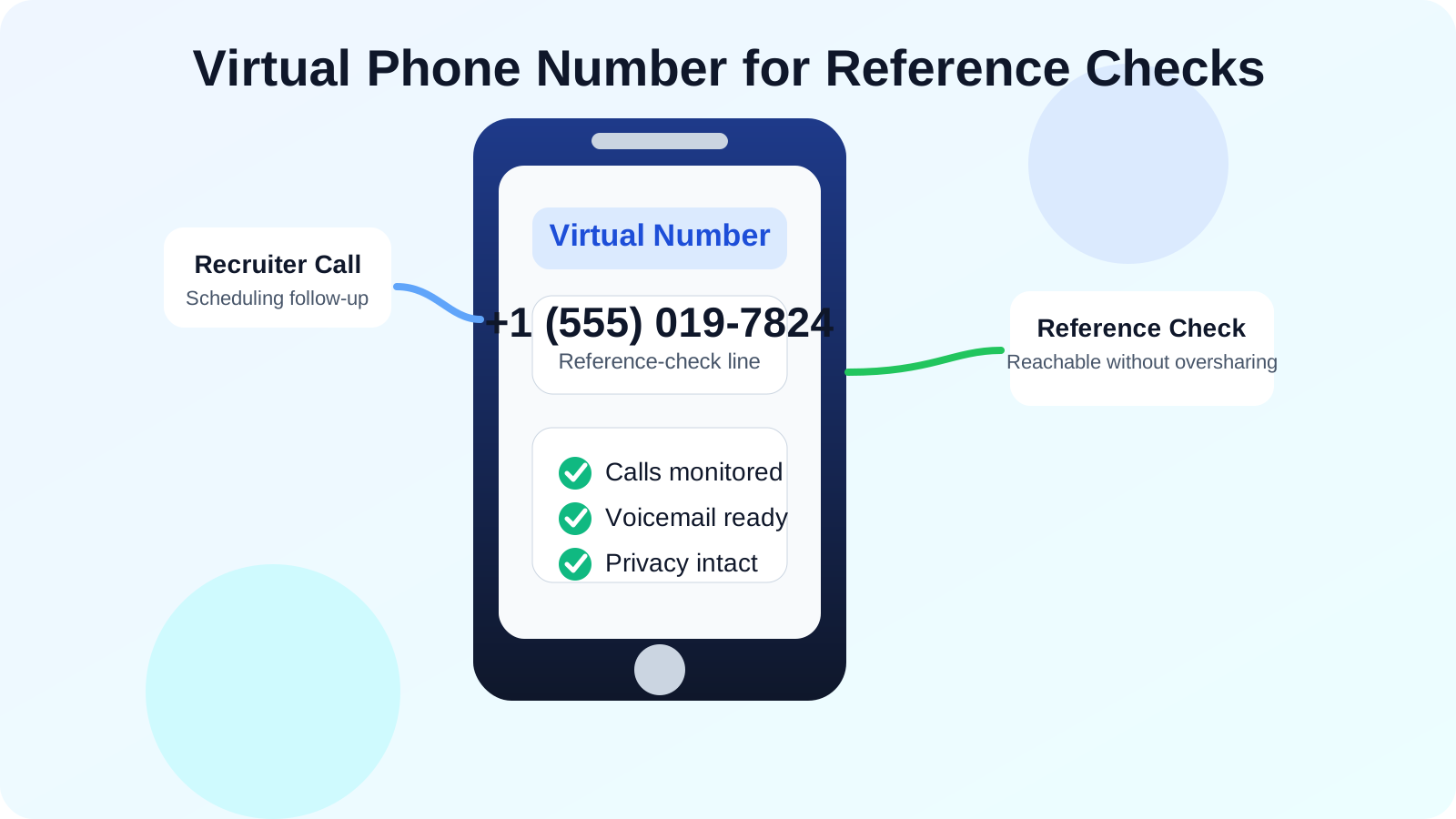
Reference checks happen late enough in the hiring process that small communication mistakes can suddenly matter. A missed voicemail, a filtered call you never notice, or a number you stop checking for a few days can delay feedback or make you look harder to reach than you really are. That is why the best answer is not simply “use any number” or “never use a virtual number.” The real question is whether the number is dependable enough for a stage where timing and follow-up matter.
For many job seekers, a virtual number is a useful middle ground. It can keep your main number private, help you separate hiring activity from daily life, and give you more control over spam or stale recruiter outreach later. But it only works well if you treat it like a real contact channel, not a disposable shortcut.
Short answer: yes, if the number is stable and you actually monitor it
If you expect reference-check calls, scheduling follow-up, or outreach from a third-party screening service, a virtual phone number is often a reasonable choice. It can be especially helpful if you are still employed, want to avoid mixing job-search traffic with your main line, or expect your number to end up in multiple recruiter systems.
The key is reliability. A virtual number is a better choice than a work line, and often a cleaner choice than exposing your everyday personal line everywhere, but only if it can receive the kinds of communication this stage actually uses: voice calls, voicemail, and sometimes text messages.
Why a virtual phone number can help during reference checks
Reference checks are usually not the first interaction in a hiring process. By the time they happen, the employer is often serious enough that your contact details may be shared across a recruiter, a hiring manager, HR, and sometimes a screening vendor. That increases the odds of repeat calls, unknown caller IDs, and follow-up messages landing after business hours.
A virtual phone number can help because it lets you:
- keep your main personal number more private,
- separate hiring traffic from family and day-to-day calls,
- retire or mute the number later if recruiter traffic lingers,
- set a professional voicemail just for job-search communication, and
- track which calls are tied to your hiring process rather than everything else in your life.
That kind of separation is useful because reference checks can trigger a surprising number of touchpoints. An employer may contact you to confirm a reference’s title, a screening company may need clarification, or someone may call because a reference form bounced or went incomplete. A number dedicated to that process can make all of those interactions easier to manage.
What counts as a virtual phone number here?
In this context, a virtual phone number means a phone line that is not your primary carrier-issued everyday number but still functions as a real communication channel you control. It might be tied to a calling app, a VoIP service, a second line product, or another lawful number arrangement that gives you dependable access to incoming calls and voicemail.
What it should not mean is a random temporary number you barely test, a line that expires quickly, or a number you can only access on one device you do not always carry. Reference checks are too close to the finish line for that kind of fragility.
That is also why a virtual number is not automatically the same thing as a burner number. Some burner-style services are fine for very short-term privacy, but reference checks often stretch across several days or longer. A number that disappears, recycles, or loses voicemail access is a bad fit for that stage.
When a virtual phone number is a good fit
A virtual number is often a strong option when:
- you are still working and do not want job-search calls mixed with your normal line,
- you expect multiple recruiters or employers to reuse your contact details later,
- you want a cleaner boundary between hiring communication and personal life,
- you are already using separate contact channels for job-search organization, or
- you want a voicemail and call log dedicated to hiring-related follow-up.
It can also be a good match if you used a privacy-first email workflow earlier in the search and now want a similar level of control over phone contact. For example, some people use a service like Anonibox early on to protect their main inbox from broad job-board exposure, then switch to a more stable email account once the process becomes serious. A virtual phone number can play a similar role on the calling side, with one important difference: by reference-check stage, your phone line must stay dependable enough for real back-and-forth communication.
Where a virtual phone number can go wrong
The benefits are real, but so are the failure points. Before you use one for reference checks, pay attention to the practical downsides.
1. You may miss calls if the app setup is weak
Some virtual-number apps are aggressive about battery saving, muted notifications, or delayed ringing. If you only notice missed calls hours later, the privacy benefit is not worth the communication cost. Test the setup before you share the number.
2. Some services handle texting better than others
Not every employer uses text messages, but some recruiters and scheduling tools do. If your virtual number receives calls perfectly but handles texts unreliably, you need to know that in advance.
3. A short-lived number creates the wrong kind of risk
If you might shut the number off next week, it is the wrong tool for reference checks. This stage can spill into offer timing, follow-up clarification, or post-check communication. You need a number you can keep active long enough for the process to finish cleanly.
4. A region mismatch can create friction
Sometimes a clearly nonlocal number is not a problem. Sometimes it creates avoidable hesitation, especially if the employer expects a domestic contact number or the screening vendor has rigid assumptions about format and reachability. That does not mean you need to use your main line, but it does mean your virtual number should look normal for the context.
5. It can tempt you to treat late-stage communication too casually
The biggest mistake is psychological. People sometimes use virtual numbers to create distance, then forget that reference checks are no longer a low-stakes browsing phase. At this point you want controlled communication, not disposable communication.
Virtual number vs. personal number vs. work number
If you are choosing between your options, the tradeoffs are usually pretty simple.
- Work number: usually the worst choice, because it can expose your search to your current employer and may stop being accessible if your job changes.
- Main personal number: reliable, but it gives up more privacy and can leave you with long-term recruiter spam or awkward follow-up months later.
- Virtual number: often the best balance if it is stable, monitored, and set up professionally.
- Disposable burner-style number: useful only if it behaves like a stable line for long enough; otherwise too risky for reference-check timing.
That is why a good virtual number often beats both extremes. It is not as exposed as your main line, and it is not as brittle as a short-lived throwaway number.
Best practices if you use a virtual phone number for reference checks
Choose a number you can keep active through the whole process
Do not pick a number you plan to abandon immediately. Keep it live until reference checks, offer timing, and any immediate follow-up are clearly complete.
Test calls, voicemail, and texts before sharing it
Call it from another phone. Leave yourself a voicemail. Send a text if the service supports it. Make sure notifications are obvious and timely.
Set a professional voicemail greeting
A simple greeting with your name is enough. If a recruiter, coordinator, or screening vendor reaches voicemail, you want to sound reachable and organized.
Check it like a real inbox
Once you share the number, monitor it consistently. A virtual number only works if you treat it like an active business channel.
Keep your email strategy aligned
Reference checks often involve both phone and email. If you used a temporary inbox earlier in your search, this is usually the stage to move to a stable, monitored email address while keeping the privacy benefits of a controlled phone number. Anonibox is useful for early inbox protection, but reference checks themselves usually deserve contact channels you will not lose.
Save important numbers and identify the process clearly
If an employer or screening vendor tells you which number they may call from, save it. That makes it less likely you will ignore a legitimate reference-related call because it looks unfamiliar.
When you should probably avoid a virtual phone number
A virtual number is not always the right answer. You may want to avoid it if:
- the service you have is unreliable with incoming calls or voicemail,
- you already know certain hiring platforms fail to text or verify that number type,
- the employer explicitly requires a standard reachable mobile line, or
- your references and hiring contacts already use your main number and switching would create confusion instead of clarity.
In those cases, a separate stable nonvirtual line or even your main personal number may be better than forcing a setup that adds friction.
A quick checklist before you share it
- Can you answer or return calls from this number quickly?
- Does voicemail work properly?
- Will the number remain active for the full reference-check window?
- Does it look normal for the employer’s region and format expectations?
- Have you tested text delivery if you expect SMS scheduling?
- Are you using a stable email account alongside it for follow-up?
If you can answer yes to those questions, the number is probably a workable choice.
Final answer
Yes — a virtual phone number is often a smart option for reference checks, as long as it behaves like a real long-term contact channel rather than a disposable one.
The goal at this stage is not maximum distance. It is controlled reachability: enough privacy to protect your main line, enough stability to avoid missed follow-up, and enough organization to keep late-stage hiring communication clean. If your virtual number is dependable, monitored, and professional, it can be one of the best ways to handle reference-check calls without giving up more personal exposure than you need to.