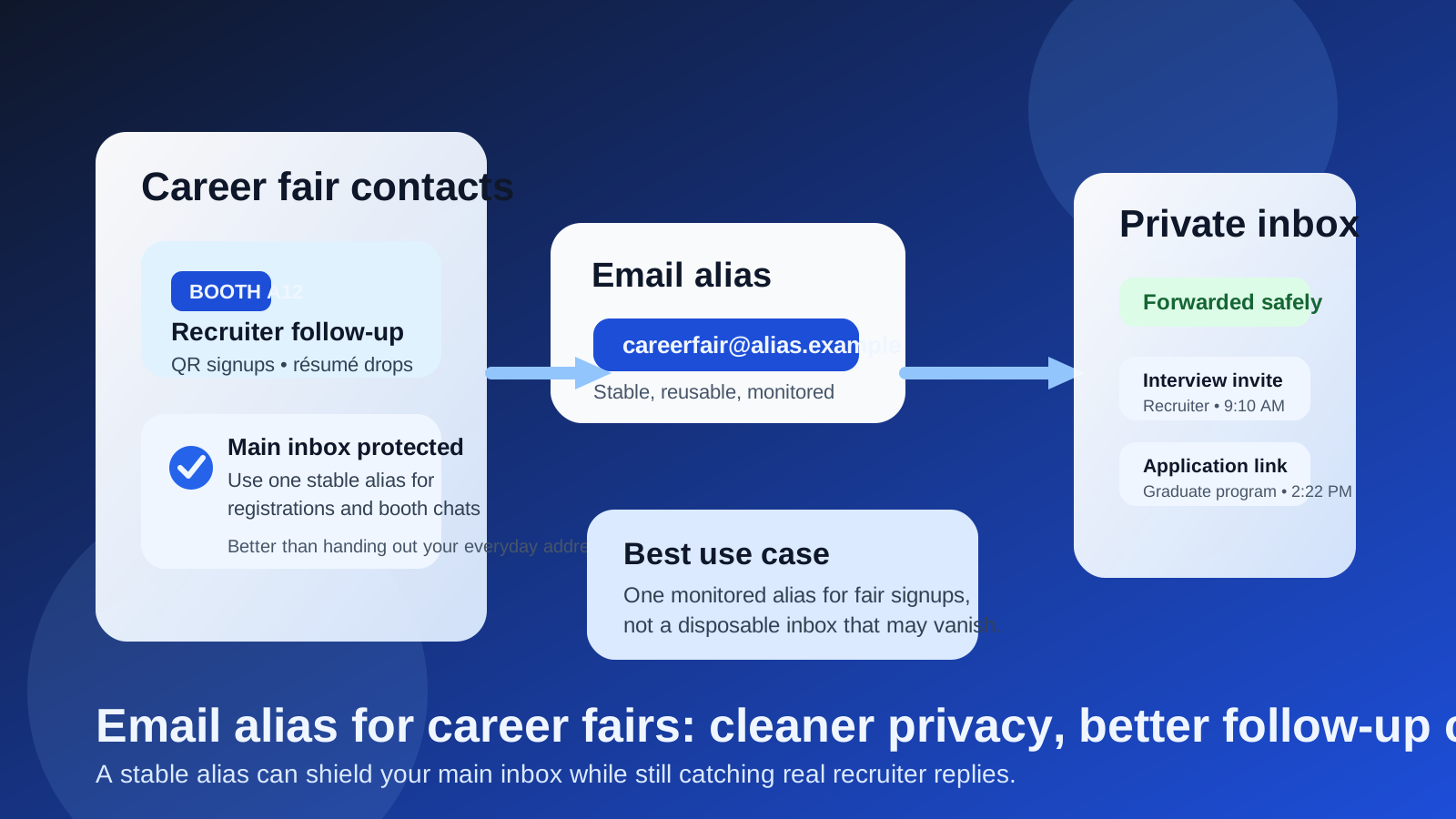
Yes — using an email alias for career fairs is often a smart move if the alias forwards reliably and you plan to monitor it after the event. It gives you more privacy than handing out your everyday address everywhere, but it only works well if it stays active long enough for recruiter follow-up.
For most job seekers, the best setup is a reusable alias for fair registrations, booth conversations, and QR-code forms, then a shift to a longer-term inbox once a real employer becomes a serious lead. A vanishing throwaway inbox is usually too risky for important follow-up.
Why career fairs are a special inbox problem
Career fairs create a very different kind of exposure from a normal one-company application. In one afternoon, you may hand your résumé to multiple recruiters, scan QR codes for talent communities, register for follow-up events, join employer mailing lists, download brochures, and submit interest forms you barely remember by the time you get home.
That means one email address can spread through a surprising number of systems very quickly. Some of that is perfectly legitimate. Recruiters really do need a way to send application links, internship details, interview scheduling instructions, or “nice meeting you” follow-up messages. But career fairs also create plenty of low-value email: generic newsletters, event recap blasts, webinar promotions, campus marketing campaigns, and long nurture sequences from companies you are not actually interested in.
An email alias gives you a middle ground. You are not refusing contact. You are simply deciding that the address you hand out at the fair does not need to be the same one tied to your personal life, bills, close contacts, and important long-term logins.
What counts as an email alias?
An email alias is a secondary address that routes mail to your real inbox or sits under the same account structure you already control. Depending on the service, it might be a custom forwarding alias, a masked address, or an alternate address under your existing mailbox.
The important detail is stability. A good alias is reliable enough for real recruiter replies. It is not just a one-time disposable inbox that disappears before a hiring team sends the next step three days later.
That distinction matters a lot at career fairs. Follow-up is often delayed. A recruiter may not write back until after the event, after a campus presentation, or after the team finishes reviewing résumés. If your address expires too soon, you may lose a real opportunity for the sake of short-term privacy.
When an email alias is a good fit for career fairs
An alias usually makes sense when you want a cleaner, more controlled version of the address-sharing process rather than a total wall between you and employers.
- You expect broad distribution of your email: fairs often push your address through multiple recruiter and marketing systems quickly.
- You want to protect your main inbox: especially if you use it for personal communication and important accounts.
- You want tracking and organization: a dedicated alias makes it easier to see which fair or employer produced which follow-up.
- You still want real replies: unlike a throwaway inbox, a stable alias can stay active long enough for serious employer contact.
- You are still in the filtering stage: you want first-contact privacy before deciding which employers deserve your long-term address.
For many students and early-career job seekers, this is the sweet spot. You remain reachable, but you reduce the chance that one busy afternoon turns into months of inbox clutter.
When an alias can backfire
An alias is not automatically the right answer. It can create problems if it is poorly chosen or managed carelessly.
1. The alias is too temporary
If the address is likely to disappear before employers respond, it is a bad fit for career fairs. Recruiter follow-up can be delayed, especially after large campus or industry events.
2. You do not monitor it
A privacy tool is not helpful if you forget to check it. The best alias in the world will still lose you opportunities if application links, interview invites, or screening requests sit unread.
3. It looks unprofessional or random
Most recruiters will not obsess over the exact format of an email address, but an alias that looks confusing, joke-like, or obviously disposable can create friction. You want privacy, not a weird first impression.
4. You use different addresses for every booth without a plan
Too much fragmentation becomes hard to manage. Career fairs move fast. In most cases, one well-managed alias for the event or for your job search is better than a dozen tiny one-off identities you will never keep straight.
Email alias vs separate email vs temporary email
This is where people often get stuck. These options sound similar, but they solve slightly different problems.
Email alias
Best when you want a buffer between public-facing signups and your main inbox, but still need dependable follow-up. Good for most fair registrations, recruiter handoffs, and early application links.
Separate email account
Best when you want a fully independent inbox dedicated to job search or recruiting. This usually gives the most control, but it takes more setup and active monitoring.
Temporary email
Best for low-trust forms, quick downloads, or one-off marketing gates where long-term follow-up does not matter. It is useful when you want to avoid spam, but it is often too fragile for real recruiter communication.
If you use Anonibox or another temporary-email workflow, the safest way to think about it is this: use a stable alias for the fair itself and for employers you may genuinely want to hear from later. Reserve a temporary inbox for the low-importance extras around the event, such as vendor handouts, generic resource downloads, or forms that feel more promotional than substantive.
Why an alias can be better than your personal email at a fair
Career fairs are noisy environments. You may talk to excellent recruiters and mediocre ones in the same hour. You may scan one QR code that leads to a serious graduate program and another that dumps you into a generic marketing funnel. Using your personal everyday address for all of that means your main inbox absorbs every consequence equally.
An alias gives you three practical advantages:
- Less long-term clutter: promotional sequences stay away from your primary inbox.
- Easier sorting: it is obvious which messages came from fair activity.
- More control later: if the alias becomes too noisy, you can adjust or retire it without rebuilding your entire digital life.
That last point is underrated. Email addresses tend to accumulate forever. An alias creates some breathing room between one career-fair season and the inbox you depend on year-round.
How to use an email alias for career fairs without missing opportunities
1. Choose one stable alias before the event
Set it up in advance. Test that messages arrive where they should. Make sure reply forwarding works if the service supports it. Do not experiment for the first time while standing in line at a booth.
2. Keep the address simple and professional
Readable beats clever. If you need to say it out loud or write it on a form quickly, simple formatting helps. You want recruiters to use it correctly the first time.
3. Check the inbox heavily for at least a few weeks
The event itself is just the beginning. The important messages may arrive later: interview requests, deadlines, “please complete the formal application” notes, or requests for availability. Monitor the alias carefully during that window.
4. Move serious employers to a long-term address when appropriate
Once an employer becomes a genuine lead, it is reasonable to transition from the alias to the inbox you want tied to your longer application history. The alias can remain your first-contact shield without becoming your forever address for every relationship.
5. Pair it with an organized workflow
Keep notes about which recruiter, company, or booth received the alias. If the fair is large, your memory will blur fast. A short spreadsheet or notes list is usually enough.
Signs you should not use a disposable inbox for that interaction
- The recruiter asks you to complete a formal application later.
- The employer is one of your top targets.
- You expect scheduling, interview, or offer-related communication.
- The company says it will review résumés after the event and follow up next week.
- You already had a meaningful conversation rather than just scanning a generic signup link.
Those are signals that persistence matters more than short-term anonymity. A stable alias is often still fine. A temporary inbox that may expire is not.
Mistakes to avoid
Using an alias you never tested
If forwarding is delayed, broken, or confusing, you will notice it at the worst time.
Assuming an alias solves every privacy problem
An alias reduces exposure, but it does not make a company disappear, stop outreach, or guarantee perfect control over how your information moves after submission.
Giving the same address to everything without judgment
Even with an alias, use common sense. You can still be selective about low-trust forms or random sponsor promotions.
Making the address so disguised that you miss replies
The goal is manageable privacy, not a puzzle. If you cannot easily recognize or access the mailbox path, the setup is too complicated.
A simple decision rule
If the interaction might reasonably lead to a real recruiter follow-up, use a stable alias or a dedicated job-search inbox. If the interaction is mostly a marketing gate, promo download, or low-trust signup, a temporary inbox may be enough. If the employer becomes a serious opportunity, move that conversation to the longer-term channel you actually want to maintain.
That gives you a practical privacy ladder instead of a one-size-fits-all rule.
Final answer
So, should you use an email alias for career fairs? In many cases, yes. It is one of the cleanest ways to protect your main inbox, reduce post-event clutter, and stay reachable for legitimate recruiter follow-up without handing out your primary address everywhere.
The key is using the right kind of alias: stable, monitored, professional, and easy to manage. For most job seekers, that is a better fit than relying entirely on either a fully exposed personal inbox or a disposable address that may vanish before the real opportunities arrive.