Yes — an email alias can be a smart choice for occupational therapy school applications if it routes into an inbox you already trust and check every day.
It gives you a cleaner layer of privacy for OTCAS updates, supplemental requests, interview scheduling, and financial-aid follow-up without the reliability risks of a throwaway inbox.
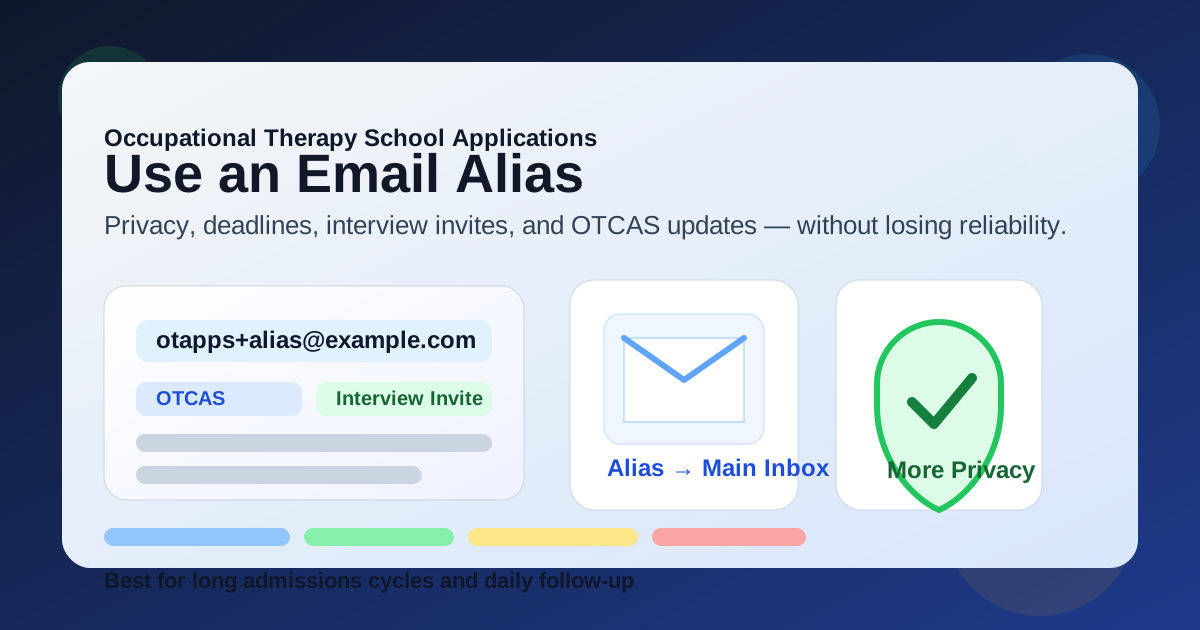
What an email alias means in this context
An email alias is not the same thing as a disposable inbox. Usually, it is a secondary address that forwards into your main mailbox. For example, you might create something like otschool@yourdomain.com or yourname.ot.apps@yourprovider.com and have every message land in the inbox you already monitor.
That matters because occupational therapy school applications are rarely a short, one-and-done process. Between OTCAS account activity, transcript questions, recommendation reminders, school-specific supplementals, interview invites, waitlist movement, scholarship notices, and final enrollment tasks, the same contact address may matter for months.
An alias gives you some separation without forcing you to manage a fully separate account. In practical terms, that can be a very comfortable middle ground.
Why applicants think about email privacy for OT school in the first place
People usually start thinking about email strategy once the application process gets noisy. You may begin by downloading brochures, joining virtual info sessions, or requesting reminders from multiple programs. Then the volume ramps up. Suddenly you are getting OTCAS confirmations, school newsletters, campus event invitations, supplemental application notices, and sometimes broad admissions marketing from programs you only researched briefly.
If all of that lands in the same inbox you use for everyday life, it becomes easy for important messages to get buried. That is especially risky when admissions timelines are tight. Missing a transcript issue, an interview scheduling email, or a document request is a much bigger problem than missing another store coupon or social notification.
That is why many applicants do not just ask whether they need a different email. They ask what kind of different email makes the most sense.
Why an email alias can work well for occupational therapy school applications
For most applicants, an alias works because it balances three goals at once: privacy, organization, and continuity.
1. It adds a layer of privacy
An alias lets you avoid handing out the exact same personal address you use everywhere else online. That does not make you anonymous, and it should not be treated like a security guarantee. But it does reduce how broadly your primary address is exposed during a high-volume application cycle.
If one school list sends more marketing than you expected, or a third-party event registration form ends up generating extra follow-up, the alias gives you a cleaner buffer than using your most public, everyday inbox.
2. It keeps the admissions cycle easier to manage
The best inbox strategy is often the one that removes friction. Because an alias forwards into a mailbox you already open every day, you do not need to remember a second login, a second password, or a second recovery setup. You get the organization benefit without increasing the odds that you forget to check the right place.
That is a real advantage in OT admissions, where long timelines matter. You may be tracking prerequisite questions, recommendation progress, fieldwork discussions, interview scheduling, accommodation requests, and financial details over a span of many months.
3. It is easy to filter and search
Aliases work especially well when paired with filters, labels, or folders. If every application-related message comes through the same alias, you can automatically tag it, star it, archive it separately, or route it into a dedicated admissions folder. Later, searching becomes much simpler because your entire application trail is grouped together.
That can help when you need to find an old portal link, a tuition question, a deadline clarification, or the exact wording of an interview invitation.
Why an alias is usually better than a temporary email for real applications
This is the key distinction. A temporary inbox can be useful for low-stakes browsing, but a real occupational therapy school application is not low-stakes.
If you are only downloading a guide, checking one webinar signup form, or testing whether a school list starts sending promotions immediately, a temporary inbox such as Anonibox can be perfectly reasonable. That kind of early research is exactly where short-lived privacy tools make sense.
But once you are creating an OTCAS account, requesting recommendation letters, monitoring supplemental portals, or waiting for interview and decision emails, reliability matters much more than short-term inbox privacy. A disposable address can expire, become inconvenient, or create continuity problems later. An alias, by contrast, still protects your main address a bit while keeping all official communication tied to a mailbox you control long-term.
In other words: an alias is usually the better fit for the actual admissions process, while a temporary inbox is more appropriate for low-commitment early research.
When an alias may not be the best choice
An alias is not perfect for everyone.
- Your main inbox is already chaotic: if forwarding still dumps everything into a mailbox you ignore, an alias will not solve the real problem.
- Your provider handles aliases poorly: some setups are awkward, confusing, or make replying from the alias inconsistent.
- You want complete separation: if you prefer a hard boundary between personal life and school applications, a dedicated admissions email account may be better than an alias.
- You are likely to reply from the wrong address: some people find alias workflows easy, while others accidentally respond from the base account and lose the neat separation they wanted.
If any of those issues sound familiar, a separate long-term admissions inbox may be the better option.
How to set up an email alias for OT school applications the right way
Choose an alias you will feel comfortable sharing
Keep it professional, plain, and easy to read. Something based on your name and the purpose is better than something clever or anonymous-looking. Admissions offices do not need a flashy address. They need one that looks stable and legitimate.
Route it into an inbox you already check daily
This is non-negotiable. If the alias lands in a mailbox you only remember once a week, you are creating risk, not reducing it. The whole point is to improve control without missing time-sensitive messages.
Create filters before the first application goes out
Set rules that label or folder every message sent to the alias. If your provider supports it, also auto-flag messages that include terms like interview, action required, transcript, supplemental, or decision.
Use the same alias consistently
Do not submit one address to OTCAS, another to school supplementals, and a third to scholarship forms unless you have a very deliberate system. Consistency makes it easier for you to track messages and reduces the chance of confusion later.
Test the alias before anything important depends on it
Send yourself a message, reply from the alias, and confirm forwarding works exactly the way you expect. It is better to find a configuration problem before a school sends something time-sensitive.
Common mistakes to avoid
- Using a throwaway inbox for official admissions traffic: fine for casual browsing, risky for real application steps.
- Picking an address that looks unserious: keep the alias professional and readable.
- Failing to check spam and promotions folders: even good messages can land in the wrong place.
- Switching addresses mid-cycle: changing contact details halfway through an admissions season creates unnecessary confusion.
- Relying on memory instead of rules: use filters, labels, stars, and calendar reminders rather than assuming you will keep track manually.
Email alias vs separate email: which is better?
If you want the simplest answer, here it is: an alias is great if you want lighter privacy and cleaner organization without another full inbox to manage. A separate email account is better if you want total separation and do not mind managing a dedicated mailbox.
For many occupational therapy applicants, the alias option is the sweet spot. The process is long enough that you need stability, but you may not want the overhead of one more standalone account. As long as the alias routes into a dependable inbox and you use it consistently, it covers a lot of the real-world need.
A quick decision checklist
- Do you want more privacy than your everyday address gives you?
- Do you need a setup you will still trust months from now?
- Do you check your main inbox every day?
- Can your email provider handle aliases cleanly?
- Do you want one place to filter OTCAS and school-specific messages?
If the answer to most of those is yes, an alias is probably a strong fit.
Final answer
Yes — using an email alias for occupational therapy school applications is often a smart move. It gives you a little more privacy, makes the admissions process easier to organize, and avoids many of the reliability problems that come with disposable inboxes.
Just remember what the tool is for. A real OT school application cycle is long, deadline-driven, and full of follow-up. The best alias setup is one that protects your personal address a bit while still making you easy to reach every single day. If you can do that, an alias is one of the most practical inbox strategies you can use.