Yes — an email alias can be a smart option for physician assistant school applications if it forwards reliably to an inbox you already monitor and stays active through the full admissions cycle.
For most applicants, an alias is safer than a temporary inbox, but it only works well if you can receive CASPA notices, supplemental school messages, interview invitations, and reply from a professional address without confusion.
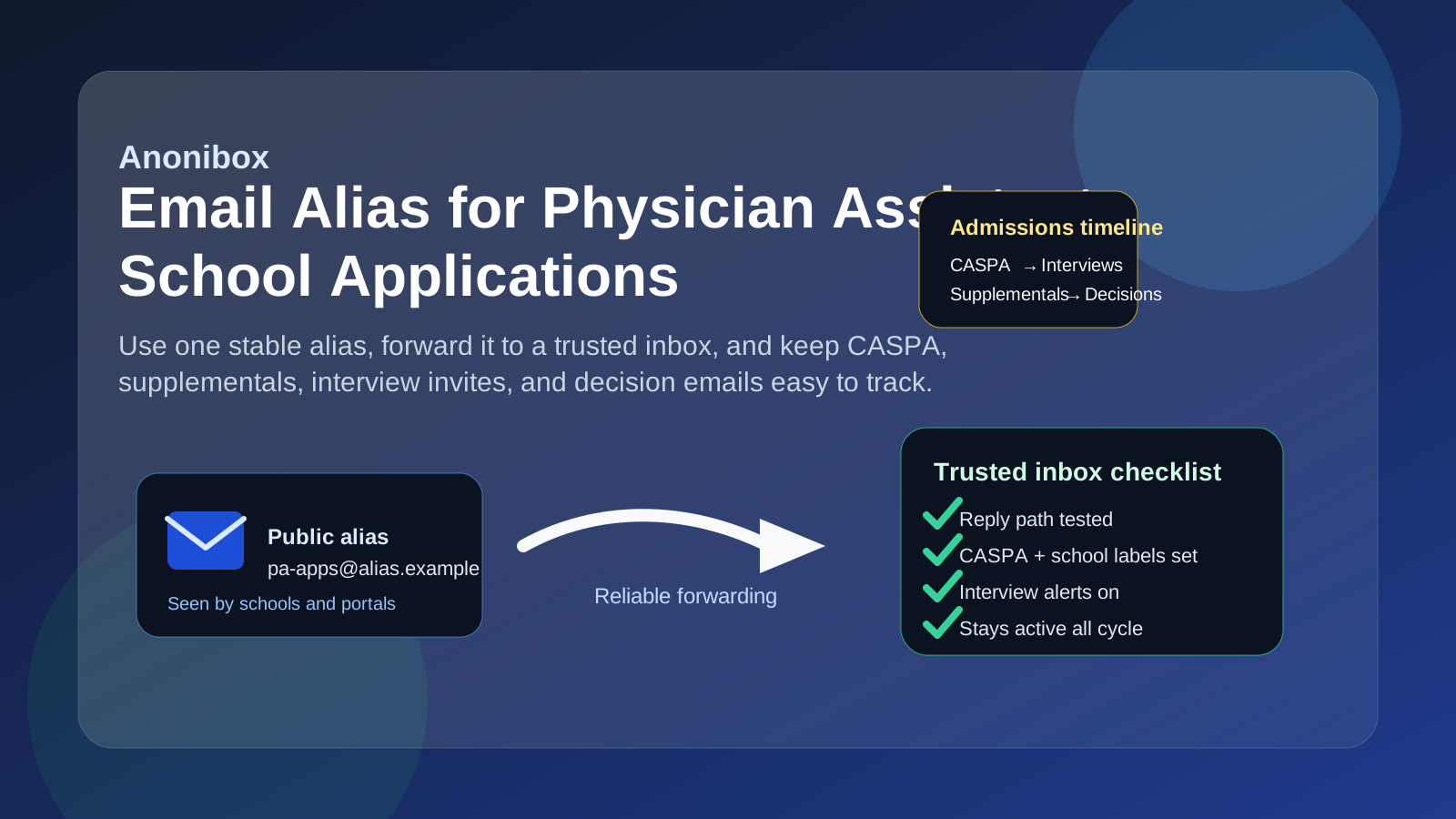
What an email alias actually means in this context
An email alias is not the same thing as a disposable inbox. An alias is usually a forwarding address or masked address that sends messages to your real inbox while letting you control what address other people see. In practice, that means a school or application system sends mail to one address, but you read it somewhere else.
That setup can be useful if you want more privacy than your main long-term address gives you, but you do not want the risk that comes with a short-lived temporary email. For physician assistant school applications, that difference matters a lot. This is a months-long process, not a one-click trial signup.
Short answer: yes, but only if the alias is stable and boring
If you want the shortest honest answer, it is this: yes, an email alias can work very well for physician assistant school applications — but only if it is stable, professional, and easy for you to manage.
The best alias setup is not flashy. It is something dependable that forwards instantly, supports replies cleanly, and will still be available when interview scheduling, waitlist movement, financial paperwork, or deposit reminders arrive later in the cycle.
If the alias system is fragile, confusing, or likely to change mid-cycle, it stops being a privacy tool and becomes an admissions risk.
Why an alias can be a good fit for PA school applications
1. It gives you privacy without forcing a fully separate mailbox
Some applicants want distance between school applications and the oldest email address in their life. That is reasonable. Your main inbox may be tied to years of shopping, banking alerts, newsletters, old accounts, and data-broker exposure. An alias gives you a cleaner public-facing address without forcing you to build a brand-new email routine from scratch.
If you already have a well-managed primary inbox, an alias can create a privacy buffer while keeping the convenience of one place to read everything important.
2. It can keep admissions traffic organized
Physician assistant school applications often involve centralized application messages, school-specific supplemental instructions, interview logistics, recommendation follow-up, verification notices, and deadline reminders. That can be a lot of traffic to manage. Using one consistent alias for all of it gives the process its own lane.
You still need labels, folders, or filters, but the alias itself makes it easier to separate admissions mail from everything else. It also makes future cleanup easier once the cycle is over.
3. It is usually a better fit than a temporary or burner inbox
A temporary inbox can be handy for low-stakes signups. PA school admissions are not low stakes. Programs may contact you weeks or months after your initial submission. Interview invites may need quick replies. Waitlist movement can happen late. Supplemental requests can arrive on their own timetable.
That is why a stable alias beats a throwaway inbox for serious school applications. You get some privacy benefits without gambling on short-term access. If you use Anonibox for early research or casual signups, that makes sense — but the main admissions channel should usually be more durable than a disposable address.
4. It can make post-cycle cleanup easier
Once the cycle ends, you may want to keep records without leaving every admissions message mixed into your forever inbox. With an alias, you can turn off filters, archive the folder set, or retire that address if it begins attracting extra marketing mail later. That is much cleaner than letting application traffic blend permanently into your everyday address.
Where an alias setup can go wrong
This is the part people skip, and it is the part that matters most. An alias is only a good idea if the mechanics are solid.
Forwarding delays or silent filtering
If your alias provider sometimes delays messages, drops them, or filters them in odd ways, that is a real problem. A school email that lands six hours late or vanishes into junk is not a small inconvenience if it involves interview scheduling or a document request.
Reply confusion
Some alias tools are excellent at receiving mail but clumsy when you need to reply. You do not want to start a conversation through an alias and then accidentally reply from a completely different address that confuses the admissions office or breaks the thread context. Before trusting an alias, make sure you understand exactly how replies work.
Changing addresses mid-cycle
Switching from one address to another after applications are in motion is messy. Some systems update cleanly. Others do not. If you want to use an alias, decide before you submit and keep it consistent whenever possible.
Using too many aliases
One stable alias for the overall cycle can be practical. A different alias for every school, portal, or recommender is usually overkill. More moving parts means more chances to miss something important.
Email alias vs separate inbox vs temporary inbox
For physician assistant school applications, each option solves a different problem.
- Email alias: good if you want privacy and simplicity while still reading everything in a trusted inbox you already use.
- Separate full inbox: better if your main inbox is chaotic and you want total isolation for CASPA, supplementals, interviews, and admissions paperwork.
- Temporary or burner inbox: usually too risky for the core admissions process because the timeline is long and the messages matter too much.
If you are already very organized, an alias may be enough. If your current inbox is full of receipts, promo email, job alerts, and social noise, a dedicated separate inbox may be the safer operational choice.
The best setup for most PA applicants
For most people, the best setup is simple:
- Choose one professional-looking alias you can keep active for the whole cycle.
- Forward it to a real inbox you check every day.
- Test both receiving and replying before you use it on CASPA or school forms.
- Create filters or labels so every PA-school-related message is easy to spot.
- Keep using the same address for supplemental applications, interview scheduling, and follow-up unless a school explicitly asks you to update it.
This gives you most of the privacy benefit without creating unnecessary complexity.
How to test an alias before you trust it with applications
1. Send yourself a test message from another account
Do not assume forwarding works just because the dashboard says it does. Send test messages from at least two unrelated email addresses and confirm they arrive quickly.
2. Test replies
Reply from your real inbox and make sure the response path is clean. The other side should see a normal, professional sender identity — not something broken, inconsistent, or obviously temporary.
3. Check spam and promotions folders
Some important messages may still land in spam, updates, or promotions tabs. Learn where forwarded messages actually go before the cycle gets busy.
4. Use a normal address format
Keep the alias boring and professional. A name-based format is better than something random, jokey, or overly anonymous-looking. Admissions offices do not need your oldest personal email, but they do need a contact address that looks credible.
5. Verify it on mobile too
If you rely on phone notifications, make sure the forwarded messages trigger the same way on mobile as they do on desktop. A perfect desktop workflow is not enough if urgent messages disappear when you are away from your laptop.
When an alias is a strong choice
- You already have a calm, well-organized primary inbox.
- You want a privacy buffer between schools and your oldest personal address.
- You understand how your alias provider handles forwarding and replies.
- You want one public-facing admissions address without maintaining a second full mailbox.
- You are disciplined about monitoring folders, labels, and notifications.
When a separate full inbox is probably better
- Your main inbox is crowded and easy to lose things in.
- You do not fully trust your alias provider’s forwarding reliability.
- Replying through the alias feels awkward or error-prone.
- You want total separation between application traffic and everyday life.
- You know the cycle will stress you out enough that simpler is better.
This is worth saying plainly: if an alias adds mental overhead, it is not helping. A separate dedicated mailbox can be less elegant on paper but more dependable in real life.
What to avoid during the PA admissions cycle
Do not use a short-lived inbox for serious communication
Interview invitations, waitlist notices, supplemental document requests, and final decisions are too important to risk on an inbox that may expire or become inaccessible.
Do not mix alias experimentation with live deadlines
If you want to try a new alias provider or routing setup, do it before application season gets active. Do not troubleshoot your email stack the same week a program may contact you.
Do not let filters hide urgent messages
Automation is helpful until it becomes too clever. If you build filters, keep them simple and check the destination folders regularly.
Do not forget recommenders and portal accounts
Your contact address needs to match the broader workflow. If schools, recommendation systems, and applicant portals are all tied to one address, consistency matters.
A quick checklist before you commit
- Is the alias professional-looking?
- Can it stay active for the entire admissions cycle?
- Does forwarding work instantly and reliably?
- Can you reply cleanly from it?
- Will you check the destination inbox every day?
- Would a separate full inbox actually be simpler for you?
If you can answer yes to the first five and no to the last one, an alias is probably a good fit.
Final answer
An email alias for physician assistant school applications can absolutely work, and for some applicants it is the sweet spot between privacy and reliability. It lets you keep your main address a little more protected while still using a stable inbox you trust.
But the alias has to be dependable. If forwarding is shaky, replies are confusing, or the setup makes you second-guess whether important messages will arrive, use a separate dedicated inbox instead. Physician assistant admissions involve too many deadlines, portal updates, and time-sensitive messages to gamble on a clever system that is not rock solid.
In other words: use an alias if it makes your workflow calmer and more organized. If it makes your setup more fragile, pick the boring option and keep admissions communication simple.