Yes — an email alias can be a smart choice for salary negotiations if it forwards into one stable inbox you check constantly and the address still looks professional.
No — it is a bad choice if the alias is temporary, confusing, or likely to break before offer details, deadlines, and follow-up questions are finished.
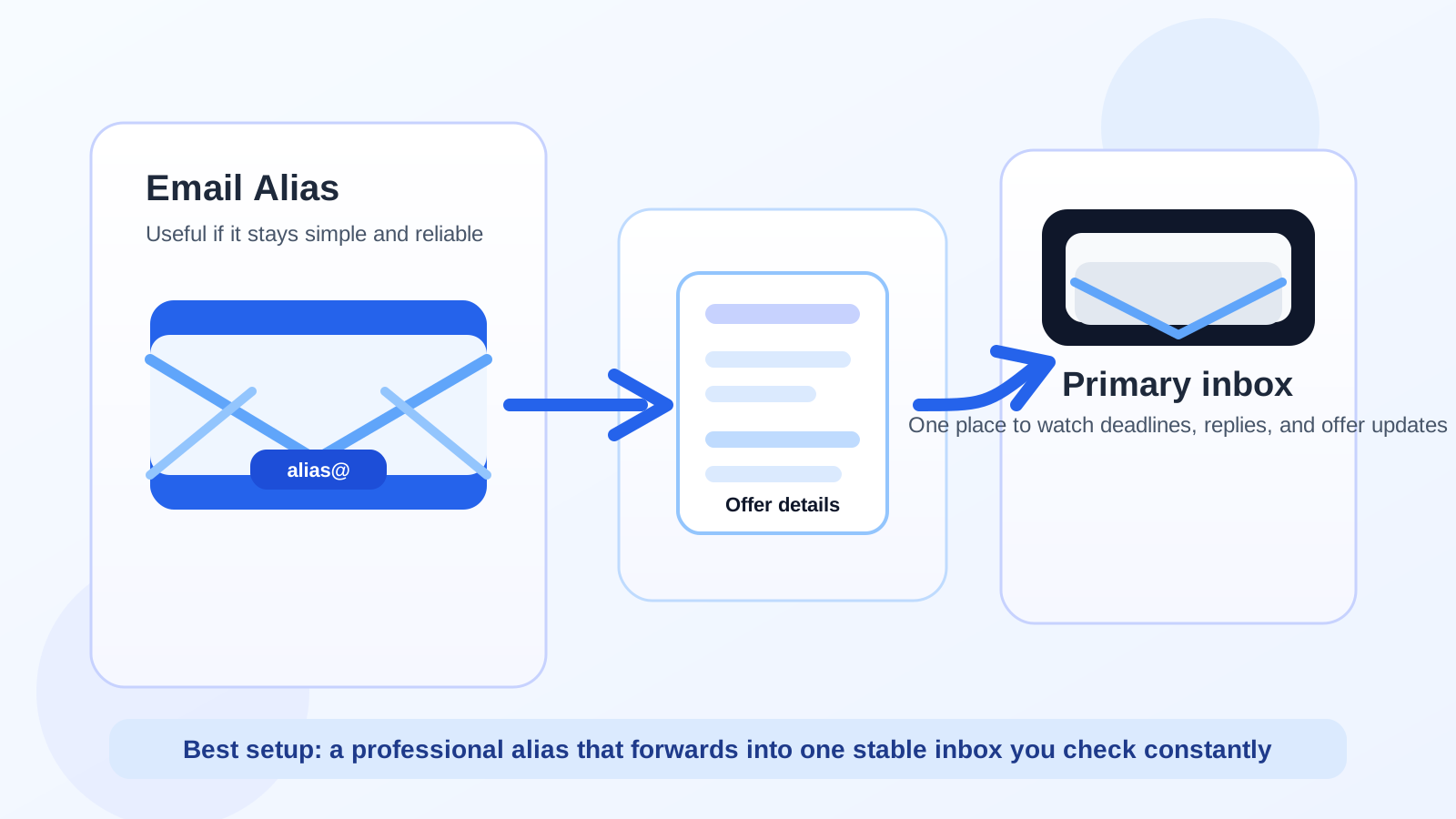
That is the practical answer behind the question should you use an email alias for salary negotiations. At this stage of a job search, privacy still matters, but reliability matters even more. Compensation discussions often involve written numbers, revised terms, offer attachments, start-date questions, benefits documents, and quick back-and-forth messages that you cannot afford to miss.
An alias can help if it gives you separation without adding friction. In other words, it should behave like a clean front door, not like an experiment. If the alias forwards into one dependable mailbox, preserves reply history, and lets you keep recruiter messages away from your personal clutter, it can be genuinely useful. If it creates uncertainty about where replies land or whether messages will keep arriving, it is the wrong tool for a high-stakes conversation.
What counts as an email alias here?
In this context, an email alias is a secondary address that routes mail into your real inbox. It might be a forwarding alias from a privacy tool, a custom-domain alias you control, or a provider feature that lets you receive mail through an alternate address without juggling multiple inboxes.
The important distinction is that an alias is not automatically the same thing as a temporary email. A temporary inbox may be fine for low-stakes signups or early lead capture, but salary negotiations usually need something more durable. You want the privacy benefit of separation without the instability of a throwaway address.
Why an alias can work well during salary negotiations
Salary discussions are more sensitive than the average recruiting message. They can include compensation expectations, equity questions, relocation details, and formal documents that you may want to keep separate from newsletters, personal receipts, and everyday noise.
- Inbox control: you can keep negotiation emails together instead of scattering them across your personal mailbox.
- Privacy: you do not have to expose the oldest address you use for banks, family, or long-term accounts.
- Cleaner search and records: when everything routes through one negotiation alias, it is easier to find prior compensation messages later.
- Reduced spam spillover: if the hiring process leads to mailing-list follow-ups or recruiter outreach later, you can filter that traffic more cleanly.
Those are real advantages. They are especially useful if you are talking to several employers at once or if you prefer to compartmentalize your job search for privacy reasons.
Why salary negotiations are different from early-stage job hunting
Early in a job search, people sometimes experiment more aggressively with privacy tools. They may use a separate inbox for job boards, a trial alias for recruiter outreach, or a controlled address for resume submissions. That can be sensible, because the goal is often to limit spam and reduce exposure while you figure out which conversations are real.
Salary negotiations are later-stage and narrower. By the time you are discussing compensation, you are usually dealing with one employer, one recruiter, or one hiring team that already expects consistent replies. This is the moment when convenience and professionalism start to outweigh cleverness. You do not need the most private-looking setup. You need the setup that lets important messages arrive, stay organized, and get answered quickly.
When an email alias is a good fit
An alias is usually a good option when all of the following are true:
- You fully control the alias or forwarding rule.
- It delivers into a mailbox you already monitor throughout the day.
- The sender address looks normal and readable.
- You can reply from it consistently without confusing the other side.
- You trust it to stay active through the full negotiation and onboarding window.
That last point matters more than people think. Negotiations are not always finished when you say yes to a number. There may still be written offers, revised offers, benefits clarifications, background-check coordination, and start-date follow-up. Your alias should survive the whole arc.
When an alias is the wrong choice
Not every alias setup is worth using. Some create more risk than they solve.
- Disposable or short-lived aliases: if there is any chance the address expires or gets disabled, do not use it for negotiation-stage communication.
- Ugly or suspicious-looking addresses: a weird random string may not kill an opportunity, but it can look careless during a professional conversation.
- Aliases you cannot easily reply from: if incoming mail lands in one place but your replies come from another address, the thread can get messy fast.
- Forwarders you barely trust: if you have never tested the routing, do not make salary discussions the first time you rely on it.
- Shared or employer-managed systems: anything your current employer can view, archive, or shut off is a bad choice.
In short, an alias should simplify communication. If it makes you explain your email setup, troubleshoot delivery, or wonder whether attachments arrived, it is not helping.
What a good alias looks like in practice
The best negotiation alias is boring in the best way. It feels ordinary to the person on the other end and dependable to you.
Good examples include a simple custom alias tied to your name, a professional forwarding alias you can reply through, or a separate address that behaves like an alias in daily use because all messages end up in one primary inbox. The format should be easy to read and easy to repeat if someone says it aloud during a call.
Bad examples include novelty names, addresses stuffed with numbers, or privacy tools that generate random strings you would not want on an offer email. You are not trying to impress anyone with cleverness here. You are trying to keep compensation communication clean.
Reply behavior matters more than the address itself
One of the biggest mistakes people make is focusing only on the inbound side. They think, “Great, the alias forwards to my inbox,” and stop there. But the real question is whether the entire conversation thread remains coherent.
Before using an alias for salary negotiations, test these basics:
- Send a message into the alias and confirm it arrives quickly.
- Reply from your mailbox and check which address the other side sees.
- Make sure attachments, signatures, and quoted replies behave normally.
- Confirm the alias will still work next week, next month, and after a password change or provider update.
If that sounds fussy, that is the point. Negotiation email is not where you want hidden complexity.
Should you use a temporary inbox instead?
Usually no. Salary negotiations are one of the clearest cases where a temporary inbox is the wrong tool. A throwaway address might protect your identity in very early research or one-off signups, but compensation talks depend on continuity. You may need to revisit an older message, forward a document to a spouse or advisor, or compare a revised offer against a prior draft.
If you used Anonibox or another privacy-first setup earlier in the search, this is the stage to simplify rather than escalate. The better move is usually a stable alias or separate professional mailbox, not a disposable inbox that could add uncertainty.
How an alias compares with a separate dedicated email account
If you are deciding between an alias and a whole second mailbox, the trade-off is simple:
- Alias: better if you want privacy plus one central inbox.
- Separate account: better if you want maximum compartmentalization and are willing to check another mailbox manually.
For most salary negotiations, the alias option is easier because it reduces the chance that you forget to monitor a second account. One destination inbox is often safer than two partially watched ones.
Red flags to avoid during compensation discussions
No email strategy fixes a sketchy process. Even with a good alias, stay alert if the employer or recruiter does things that feel off.
- They suddenly push you onto personal messaging apps for offer details.
- They ask for sensitive identity or banking information before formal paperwork.
- The compensation numbers change informally without written confirmation.
- The sender domain keeps changing in ways that are hard to explain.
- You are pressured to move fast without enough time to review documents.
Your alias can help contain exposure, but you still need normal judgment about legitimacy and documentation.
A quick decision checklist
- Does the alias forward into one inbox you already monitor closely?
- Can you reply from the same visible address without confusion?
- Will the alias stay active through offer letters and onboarding follow-up?
- Does the address look professional enough for a compensation thread?
- Have you tested delivery before using it in a real negotiation?
If the answer is yes across the board, the alias is probably fine. If not, switch to a more stable setup before the negotiation gets deeper.
Bottom line
Yes, you can use an email alias for salary negotiations — and in many cases it is a smart privacy-conscious choice. The key is to use an alias that behaves like a dependable professional contact point, not a temporary workaround.
When compensation discussions start, clarity beats cleverness. Keep one stable inbox, one readable sender identity, and one system you trust enough to catch every important reply. If your alias does that, it is useful. If it adds uncertainty, use a more straightforward address instead.