Yes — for veterinary school applications, an email alias is often a smart middle ground. It gives you more privacy and better inbox control without the reliability problems of a throwaway address during a long admissions cycle.
In most cases, an alias works better than a temporary inbox because vet school applications can stretch across months, with portal notices, interview invitations, supplemental requests, financial-aid messages, and final decisions all arriving at different times.
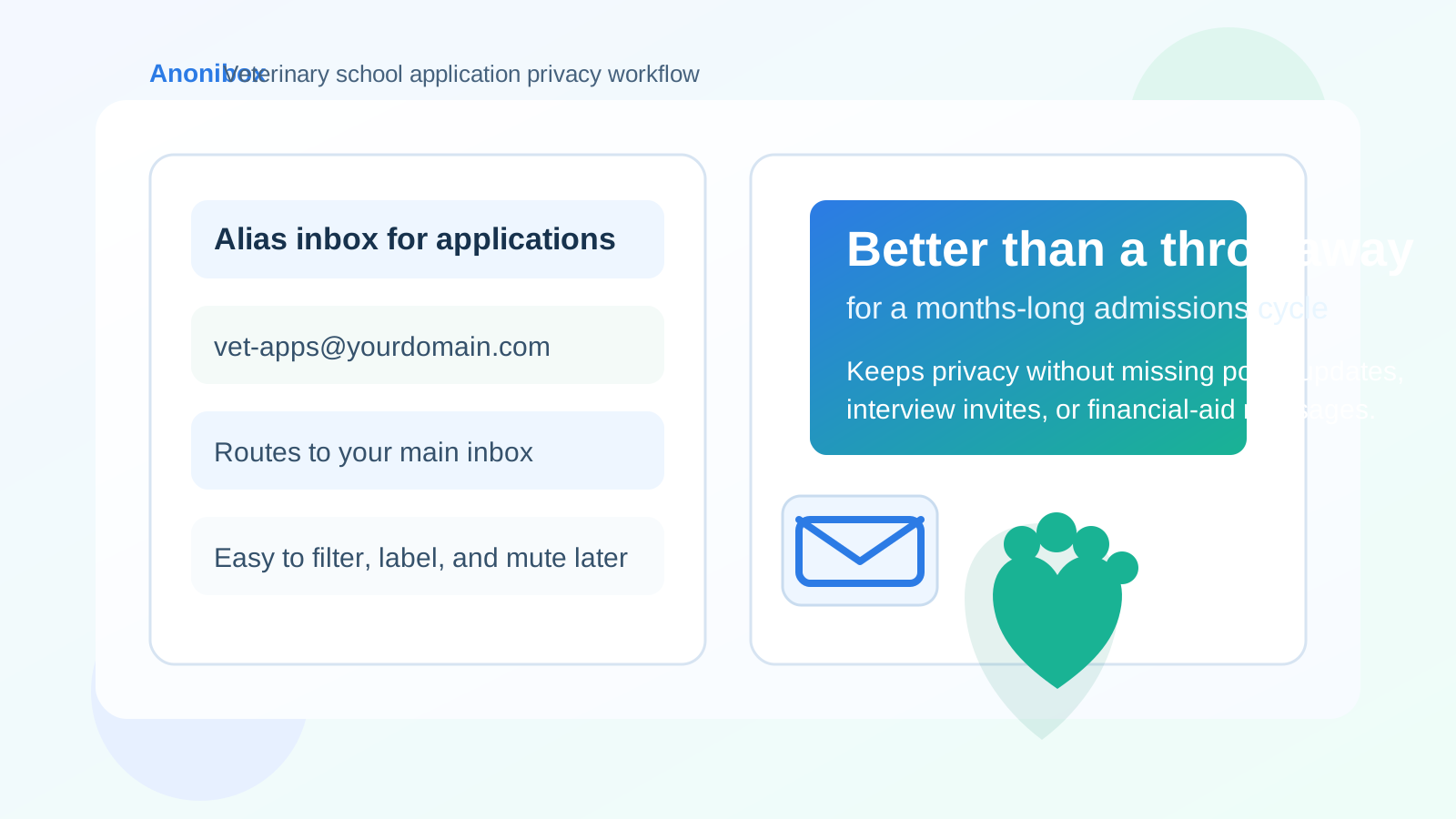
That does not mean an alias is automatically the right choice for everyone. The best option depends on how you manage your inbox, how much privacy you want, and whether you need a setup you can keep active from the first application all the way to enrollment paperwork. But if your goal is to separate admissions traffic from your main personal inbox without risking missed messages, an alias is usually one of the strongest options.
What is an email alias in this context?
An email alias is an alternate address that forwards to your existing inbox. Instead of giving every school your main everyday address, you might use something like vetapps@yourdomain.com or firstname.lastname.vet@yourmail.com. Messages still reach you, but the alias creates separation and makes admissions traffic easier to manage.
That separation matters more than it sounds. Veterinary school applications often involve centralized systems, individual school communications, interview scheduling, prerequisite questions, recommendation reminders, and later follow-up from programs you no longer care about. When all of that lands in your primary inbox, it becomes harder to stay organized.
Why an alias fits veterinary school applications well
Vet school applications are not a one-week process. They usually involve a long timeline with multiple checkpoints:
- primary application setup and verification
- supplemental application invitations
- document reminders
- interview scheduling and waitlist updates
- financial-aid, deposit, and enrollment messages
That makes reliability important. A temporary or burner inbox may be fine for a quick product trial or one-off sign-up, but it is a poor fit when you may need the same address to remain active for months. An alias gives you the organization and privacy benefits of a separate identity layer without sacrificing continuity.
Benefits of using an email alias for vet school applications
1. Better privacy without looking suspicious
A clean alias still looks professional. It protects your main personal address from being copied across multiple systems, but it does not look disposable or low-effort. That matters when you are communicating with admissions offices, faculty interviewers, or financial-aid teams.
2. Easier filtering and search
If every admissions message comes through one alias, you can build filters, labels, and folders around it. That makes it easier to review every school update in one place instead of hunting through a crowded inbox mixed with shopping receipts, newsletters, and personal conversations.
3. Lower long-term clutter
Even after the cycle ends, some schools and related organizations may continue sending updates, marketing messages, or event invitations. With an alias, you can mute, filter, or retire that stream without disrupting your main email identity.
4. Stronger control over exposure
If you start receiving unexpected spam or unrelated outreach, the alias tells you where the traffic is likely coming from. That visibility is useful. Your main address stays less exposed, and you have more control over how you respond.
When an alias is better than a separate full inbox
A separate inbox can also work, and sometimes it is the best choice. But for many applicants, an alias is more practical because it does not add another account you need to log into constantly.
An alias is often the better option when:
- you want one main inbox, but better organization inside it
- you already trust your primary mail provider and do not want another password to manage
- you want fast access to all messages on your usual devices
- you are disciplined about filters, labels, and starred messages
A separate inbox may be better if you know your main inbox is already chaotic, or if you want much stronger separation between school applications and everyday life. But if you mainly want structure, professionalism, and lower exposure, an alias is a very strong middle path.
When an alias may not be enough
An alias is not magic. If it forwards into a badly managed inbox, you can still miss messages. And if your main inbox already has weak security, an alias does not fix that either.
You may want a separate mailbox instead of only an alias if:
- your main inbox already buries important messages
- multiple family members can see your primary mail and you want more privacy
- you want a dedicated place for drafting admissions replies and storing attachments
- you tend to ignore forwarded messages unless they arrive in a clearly separate account
The key question is not “alias or nothing.” The real question is whether your setup will help you stay reachable for the full admissions timeline.
Should you use a temporary email instead?
Usually no. A temporary inbox is generally too fragile for veterinary school applications. You may need access to the same address weeks or months later, and you do not want interview details or deposit reminders tied to an inbox you cannot rely on.
Temporary email tools are more appropriate for low-stakes sign-ups, early research, or situations where you intentionally do not want a lasting relationship. Vet school admissions is the opposite. It is high-stakes, deadline-driven, and often slow-moving.
If you use Anonibox or another privacy-focused workflow anywhere in this process, it makes more sense in the early research stage — for example, when comparing forums, newsletters, or unrelated services — than as the main address you give to admissions offices.
How to set up a good alias for veterinary school applications
Choose a professional format
Keep it simple. Use an address that is easy to read and unlikely to raise questions. Good examples include:
- firstname.lastname.vet@domain.com
- vetapps.firstname@domain.com
- admissions.lastname@domain.com
Avoid jokes, slang, or anything that looks disposable. You want privacy, not gimmicks.
Test forwarding before you apply
Send yourself a few messages. Make sure forwarding works, reply behavior is clear, and messages are not landing in spam. This is a boring step, but it matters.
Set up filters immediately
Create a label or folder for vet school applications. Add filters for your alias, application services, and each school name. That way your inbox stays organized from day one instead of becoming a cleanup project later.
Use a strong password and two-factor authentication
Your admissions email workflow should be secure. Whether you use an alias, a separate inbox, or both, protect the main account behind it. Missing access because of a security problem is worse than dealing with a few extra promotional emails.
Check it on a schedule
During active application season, check your admissions mail intentionally. Morning and evening is usually enough for most people, but be more frequent near deadlines or after interview invitations start arriving.
Common mistakes to avoid
- Using a throwaway address for serious communication: reliability matters more than novelty.
- Picking an alias that looks unprofessional: admissions teams should see a normal address, not a joke account.
- Forgetting reply settings: make sure replies come from the alias when appropriate, or at least do not create confusion.
- Skipping organization: an alias only helps if you actually filter and review the messages.
- Ignoring old messages after decisions: save anything you may need later, including financial-aid, portal, and deposit records.
Quick comparison: alias vs separate inbox vs temporary email
Email alias
Best for applicants who want privacy and organization without managing a whole second mailbox. Strong fit for long admissions cycles.
Separate inbox
Best for applicants who want maximum separation and do not mind managing another account. Also a strong fit if your main inbox is already messy.
Temporary email
Best for low-stakes sign-ups and short-lived access needs. Usually a poor fit for veterinary school applications.
A simple decision checklist
Use an email alias for veterinary school applications if most of these are true:
- you want to protect your main everyday address
- you expect months of admissions traffic
- you want easy filtering and search
- you still need a professional, stable address
- you do not want to risk missing interview or enrollment updates
If those points sound right, an alias is probably one of the best setups you can use.
Final answer
Yes — an email alias is usually a very good choice for veterinary school applications. It gives you privacy, organization, and a professional-looking contact method without the reliability problems of a disposable inbox.
For a long, deadline-heavy admissions process, that balance matters. You stay reachable for the messages that count, while keeping your primary address cleaner and more controlled. If you set the alias up properly, test it, and monitor it consistently, it can make the entire application cycle easier to manage.