Yes — you can use an email alias on your resume if it looks professional, forwards reliably, and stays under your control long term.
It is often a smart privacy move, but it is a bad idea if the alias looks disposable, expires, or sends recruiters to an inbox you do not monitor closely.
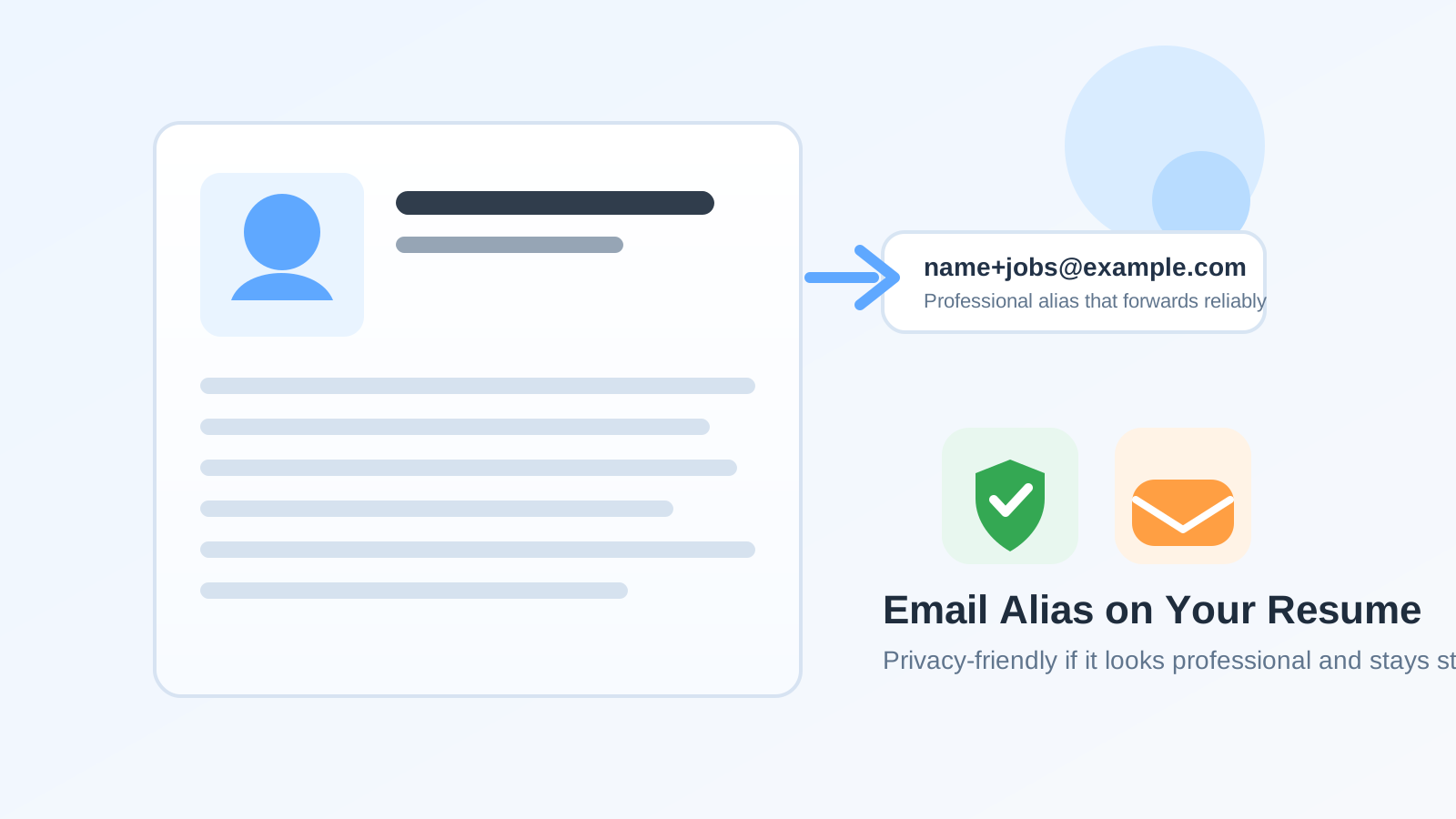
That middle ground is what makes an alias interesting. Many job seekers want more privacy than a personal inbox gives them, but they also know a throwaway address can look risky on a resume. A good alias can solve that problem. It lets you present a professional contact address, keep your real primary inbox less exposed, and stay organized during a job search without looking like you are hiding behind a disposable account.
The catch is that not every alias is resume-safe. Some are stable and polished. Others look temporary, confusing, or hard to trust. The best choice depends on how you set it up, where it forwards, and whether you plan to keep using it for as long as employers might contact you.
What an email alias actually is
An email alias is an alternate address that forwards to your main inbox or lands in the same account. For example, someone might use name.jobs@example.com, firstname.lastname+resume@gmail.com, or a custom-domain address that points to a private mailbox they already control.
That is different from a classic temporary or disposable address. A disposable inbox is often built for short-term signups, one-time verification, and quick privacy protection. It can be useful in early research or low-trust situations, but a resume is different. A resume may keep circulating for weeks or months. Recruiters may come back later. Hiring managers may forward it internally. Stability matters.
So the real question is not just “alias or no alias?” It is whether the alias behaves like a professional long-term contact point.
When an alias works well on a resume
An alias is usually a good fit when you want extra separation without looking unconventional. It can work especially well if:
- you want to keep job-search messages out of your everyday personal inbox
- you want to know instantly which messages came from resume circulation
- you are applying widely and expect a lot of recruiter outreach
- you want a more polished address than an old personal email gives you
- you control the mailbox behind the alias and can keep it active long term
In those situations, an alias can be cleaner than using a purely personal address and more credible than using something disposable. It gives you privacy and organization without making the employer wonder whether they can still reach you next month.
When an alias is a bad idea
An alias becomes a problem when it introduces doubt. Employers do not need your primary inbox, but they do need a contact address that looks legitimate and dependable.
An alias is a poor choice on a resume if it:
- looks gimmicky, anonymous, or spammy
- contains slang, jokes, or unnecessary numbers
- forwards unreliably or lands in a folder you rarely check
- depends on a service you may abandon during the hiring process
- expires automatically or is meant only for short-term verification
If you would hesitate to say the address out loud to a recruiter on the phone, it probably does not belong on your resume.
Email alias vs personal email vs work email vs temporary email
It helps to compare the main options directly.
Personal email
Your personal inbox is simple and stable, but it also exposes the address you use for friends, banking, subscriptions, and everyday life. If your personal address is already cluttered or easy to guess, job-search spam can become a long-term annoyance.
Work email
A work address is usually the worst option unless you have a very unusual situation and clear permission to use it. It creates boundary problems, may expose your job search to your employer, and can become inaccessible if you leave suddenly.
Temporary email
A temporary inbox can be useful for low-trust signups, job boards, or one-off research. But for a resume, it is often too fragile. If an employer reaches out later and the inbox is gone, you lose the opportunity. That is why an Anonibox-style temporary email can be useful earlier in the funnel, while a resume usually calls for something more durable.
Email alias
An alias sits in the middle. It can protect your main address, keep job-search messages organized, and still look professional if it is stable and well named. For many people, that makes it the best privacy-conscious option on a resume.
What makes a resume-safe alias look professional?
A good resume alias should feel boring in the best possible way. The safest patterns are simple, readable, and name-based.
Strong examples:
- firstname.lastname@example.com
- first.last.jobs@example.com
- careers@yourname.com
- name+resume@gmail.com if the plus-address format is supported and still looks clean
Weak examples:
- stealthmode2026@…
- burnerresumebox@…
- hiremefast999@…
- anything that signals the address is temporary, fake, or disposable
The goal is not to show off that you understand email privacy tools. The goal is to give the employer a calm, professional contact point that happens to be smarter about privacy.
How to set up an alias before you put it on your resume
1. Choose a stable provider or domain you control
If the alias forwards to your real inbox, make sure the underlying provider is one you trust to keep using. If it sits on a custom domain, make sure you plan to renew that domain and keep mail forwarding active.
2. Test forwarding more than once
Send messages from multiple addresses and make sure they arrive promptly. Check spam and promotions folders too. A resume contact point only works if replies actually reach you.
3. Reply from the same address when possible
Consistency matters. If your resume shows one address but your replies come from a completely different one, employers may get confused. Use a setup that lets you send from the alias or at least keep the visible contact trail consistent.
4. Keep the alias active
Do not treat a resume alias like a short campaign that can disappear after a week. Some employers revisit candidates later. A clean alias is only helpful if it still works when opportunity comes back around.
5. Pair it with a professional voicemail and clean contact section
Your resume should feel consistent. If you are privacy-conscious enough to use a careful email alias, make sure the rest of your contact setup looks equally deliberate.
Common mistakes job seekers make with aliases
- Using a visibly disposable address: even if it works, it can look flaky.
- Forgetting to monitor the inbox: privacy is not helpful if you miss interview requests.
- Changing addresses mid-search: switching too often makes follow-up messy.
- Overcomplicating the format: simple beats clever almost every time.
- Using an alias to avoid professional standards: an alias should improve presentation, not lower it.
Should you use an alias if you are already using a separate job-search inbox?
Sometimes the better move is not an alias at all, but a separate dedicated email account for job searching. That works well if you want stronger separation between job-search communication and your normal life. It may also be easier if you expect high volume and want its own folders, rules, and notifications.
But if you already have a solid primary inbox and just want a cleaner public-facing address on the resume, an alias may be enough. The choice comes down to how much separation you want:
- Alias: lighter setup, easier continuity, still privacy-aware
- Separate inbox: stronger separation, more management, often better for heavy-volume job searches
There is no single correct answer. The best option is the one you can maintain reliably.
A quick checklist before you publish your resume
- Does the alias look like a normal professional address?
- Can you receive and reply through it without confusion?
- Will it still exist in a few months?
- Have you tested it from more than one sender?
- Does it protect your privacy without looking secretive or temporary?
If the answer is yes across the board, the alias is probably a good fit.
Final answer
Using an email alias on your resume is usually a smart idea when the alias is professional, stable, and easy to monitor. It can reduce inbox exposure, keep job-search communication organized, and give you better privacy than posting your main personal address everywhere.
What you should avoid is anything that feels disposable or unreliable. A resume is not the place for a short-lived throwaway inbox. If you want privacy without sacrificing credibility, use an alias that looks like a real long-term contact address, test it carefully, and keep it active for the full life of your search.