DuckDuckGo Email Protection can work for apartment inquiries if you want landlords, brokers, and listing sites to contact you without exposing your main inbox right away.
It is usually best for early outreach and spam control, not for formal rental applications, sensitive documents, or lease-stage communication you cannot afford to miss.
Apartment hunting creates privacy problems fast. You message a few listings, fill out forms on multiple rental sites, ask about tours, and suddenly your inbox starts collecting broker follow-ups, automated drip campaigns, recycled listing alerts, and occasional scam replies. Even when the platforms are legitimate, your contact details can spread farther than you expected.
That is why alias tools sound appealing. If you can put a layer between your real address and the first wave of rental email, you get a little more breathing room while you sort serious listings from noise. DuckDuckGo Email Protection sits in that middle ground. It is more stable than a one-time disposable inbox, but it is still not the same thing as using a dedicated long-term rental email account.
What DuckDuckGo Email Protection actually does
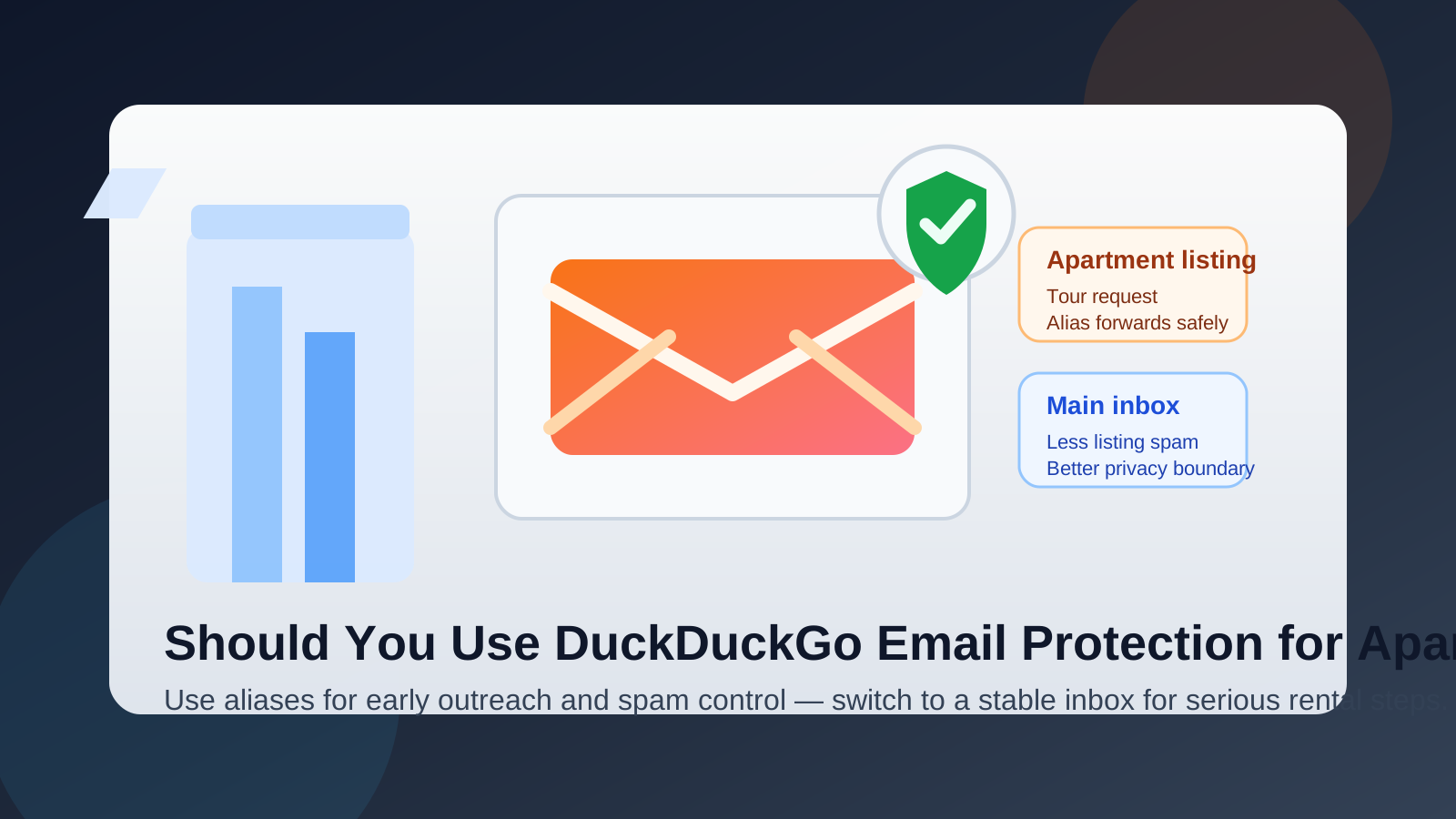
DuckDuckGo Email Protection gives you a forwarding address instead of a standalone mailbox. Messages sent to that alias are forwarded to an email address you already control. That means you can receive apartment inquiry replies without handing your main address directly to every portal, landlord, or leasing workflow you touch.
That setup matters because apartment inquiries often involve uncertain trust. You may not know yet whether a listing is stale, whether a broker is legitimate, whether a portal aggressively shares lead data, or whether a “property manager” is just a scammer pushing you off-platform. An alias gives you a useful boundary during that uncertain stage.
But a forwarding alias is still a forwarding alias. It is not magic privacy armor, and it is not a guarantee that every rental workflow will behave nicely with it. You still need to think about reliability, how long the conversation may continue, and when a more stable address becomes the better choice.
Short answer: yes for early apartment outreach, less ideal once the process becomes serious
If you are browsing multiple listings, contacting several buildings at once, or testing whether a rental site is going to flood you with follow-up messages, DuckDuckGo Email Protection can be a smart first-contact option. It helps reduce direct exposure of your primary inbox and can make it easier to separate apartment-search traffic from everything else in your life.
Once you move beyond “Is this listing even real?” and into “Here are my documents, application fee, and lease questions,” the trade-off changes. At that point, dependability matters more than one extra layer of privacy. The closer you get to an actual rental decision, the more useful a stable address becomes.
When it makes sense to use it
1. You are contacting a lot of listings from mixed-quality sources
Apartment search traffic rarely comes from one clean source. It comes from marketplaces, syndication networks, property management websites, smaller local listings, social posts, and sometimes random inquiry forms with very little trust built in. In that environment, an alias helps you avoid feeding your main inbox to every source equally.
2. You want less long-tail email spam
Rental lead systems are famous for follow-up that keeps going after you have lost interest. Some listings disappear but the email campaigns do not. Some brokers keep reusing old lead lists. Some sites continue sending “similar apartments” long after your move is over. A forwarding alias is useful when your main goal is controlling that long-tail clutter.
3. You want to separate apartment hunting from daily life
Your main email probably already handles bills, work, school, banking, subscriptions, and family communication. Apartment search messages can get chaotic fast, especially if you are comparing neighborhoods, budgets, move-in dates, and roommate options at the same time. An alias gives you cleaner separation without forcing you to create and manage a whole new inbox immediately.
4. You want something more stable than a fully temporary inbox
A true disposable inbox is fine for one-off verification or low-trust signups, but apartment inquiries often continue for several days. A landlord may reply later. A leasing office may send tour options tomorrow. A property manager may follow up after the weekend. That makes a forwarding alias more practical than a throwaway inbox when the conversation has a real chance of continuing.
When it is not the best choice
1. You are submitting a formal rental application
Once you are sending pay stubs, ID documents, employment details, references, or screening information, you have moved beyond casual inquiry mode. At that stage, clarity and continuity matter more than keeping your real inbox hidden one step longer. Use an address you know you will monitor consistently through the full application and lease process.
2. The communication is time-sensitive
Tour confirmations, same-day availability changes, and application deadlines can move quickly. If the listing is competitive, you do not want extra uncertainty about whether forwarded messages will be noticed fast enough. Even when forwarding works perfectly, a simpler communication path is often better under time pressure.
3. You expect a long relationship with the sender
If a listing turns into a real lease, maintenance requests, move-in instructions, utility coordination, and renewal notices may follow later. That is usually not the moment to keep relying on a lightweight privacy layer you originally used for screening unknown listings.
4. You have not tested your forwarding setup
Never use an alias for an important apartment inquiry until you have sent test messages to it yourself. Make sure they land where you expect, check how they look on desktop and mobile, and confirm you notice them quickly. Rental markets are often competitive. Missing one reply can cost you a viewing or a good unit.
The real risks and limitations
DuckDuckGo Email Protection can be useful, but it has limitations that matter in rental searches.
- Forwarding is still a dependency: there is an extra layer between the sender and your inbox.
- Some forms may dislike aliases: certain portals or screening tools may reject, flag, or behave strangely with alias-style addresses.
- Email privacy does not solve phone privacy: if you also give out your real number, scam texts and spam calls can still become the bigger problem.
- It can create false confidence: an alias reduces direct email exposure, but it does not make a suspicious listing trustworthy.
That last point matters a lot. A rental scam is still a scam even if it reached you through a privacy alias instead of your primary inbox. You still need to verify addresses, confirm the property exists, watch for payment pressure, and be wary of anyone trying to rush deposits or identity documents before normal viewing and application steps.
DuckDuckGo Email Protection vs a temporary email address
This is where people often mix up two tools that serve different jobs.
A temporary inbox is best for throwaway access, low-trust signups, and situations where you do not expect a meaningful conversation to continue. A forwarding alias is better when you want privacy, but you still expect replies over time.
If you only need to unlock one listing portal, test a suspicious-looking site, or avoid handing your real inbox to a service you do not trust yet, a temporary inbox tool like Anonibox can be the cleaner option. But if you are contacting a real apartment listing and expect actual back-and-forth about availability, tours, or next steps, a forwarding setup is usually safer than a short-lived disposable inbox.
DuckDuckGo Email Protection vs a separate rental inbox
A dedicated rental inbox is usually the strongest long-term option. It gives you full control, a direct communication path, better searchability, and no forwarding dependency. If you are moving to a competitive market, searching for weeks, or expecting multiple application cycles, a separate apartment-search inbox is often the most reliable setup.
DuckDuckGo Email Protection makes more sense when you want a lighter privacy layer before you commit to that full setup. It is a good middle step for the screening phase. It is less compelling once you know you are going to be deep in apartment outreach for a while.
How to use it safely for apartment inquiries
1. Test the alias before you use it on a real listing
Send yourself a message first. Then test again from a different address. Make sure forwarding works, the email lands in the right folder, and you notice it fast.
2. Use it for first contact, not every stage forever
The best use case is early outreach: “Is this unit available?” “Can I schedule a tour?” “What are the move-in requirements?” Once the conversation becomes serious, decide whether to continue or switch to a stable inbox you plan to keep using.
3. Keep a separate phone strategy too
Many apartment scams shift from email to text quickly. If you are privacy-conscious enough to protect your email, think about whether you also want a separate phone number, call-screening workflow, or at least stricter caution around text replies.
4. Save important details outside the email thread
Do not rely on memory when multiple listings are in motion. Keep a simple tracker with the property name, location, contact person, tour date, fees, and what address you used. Apartment searches get messy fast.
5. Switch to a stable address when the risk-reward balance changes
If a building is legitimate, responsive, and moving toward an application or lease, switch before the communication becomes high stakes. That avoids confusion later.
A practical decision checklist
Before using DuckDuckGo Email Protection for an apartment inquiry, ask yourself:
- Am I still in early browsing mode, or am I already applying seriously?
- Do I trust this listing platform or landlord yet?
- Would a short-lived temporary inbox be too fragile for this conversation?
- Would a dedicated rental inbox be better if I expect this search to last weeks?
- Am I also protecting my phone number, or only my email?
- Have I tested the alias and confirmed I will notice replies quickly?
If your answers point toward early-stage outreach, uncertain listing quality, and a desire to reduce inbox exposure, DuckDuckGo Email Protection is a reasonable choice. If your answers point toward document-heavy applications, deadline-sensitive communication, or a property you are seriously pursuing, move to a more stable address.
Final answer
Yes, you can use DuckDuckGo Email Protection for apartment inquiries, and it is often a sensible way to reduce listing-site spam and keep your main inbox less exposed during the first phase of a rental search.
Just do not confuse “useful privacy layer” with “best long-term communication setup.” For early inquiries, it can be a smart buffer. For applications, supporting documents, and lease-stage follow-up, a stable dedicated inbox usually wins. Use the alias to screen the market, then switch to the communication setup that gives you the fewest chances to miss something important.