Yes, you can use DuckDuckGo Email Protection for internship applications if you want extra privacy and you are confident your forwarding setup is stable. In most cases, it is a better choice than a throwaway inbox, but it is still not the right fit for every stage of an internship search.
For early applications, a DuckDuckGo-protected address can help you reduce spam and keep your real inbox less exposed. But internships often move quickly, so you need to think about reply reliability, follow-up habits, and when to switch to a more direct long-term address.
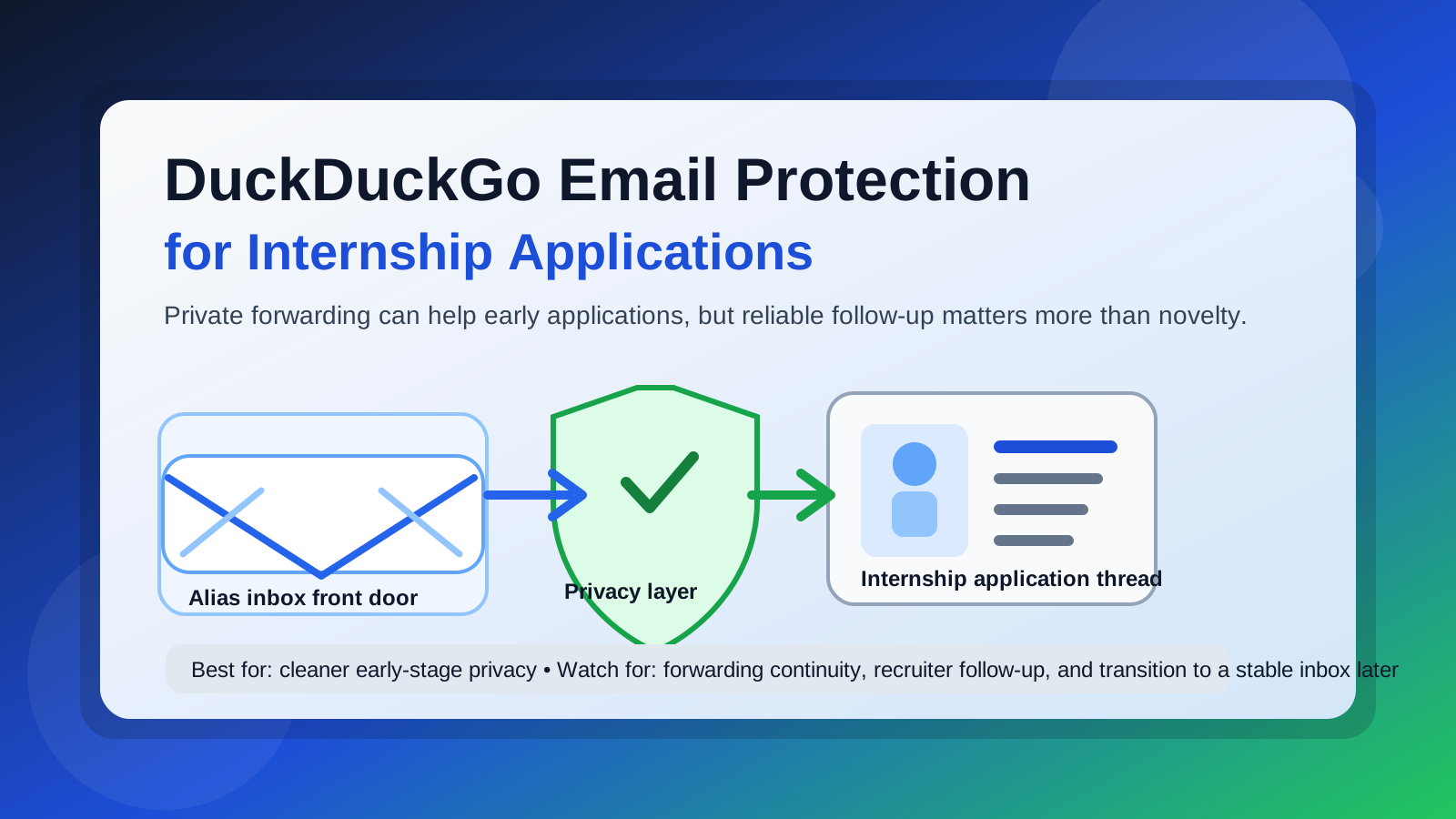
What DuckDuckGo Email Protection actually solves
Internship applications often start in messy places: job boards, startup landing pages, campus recruiting portals, “apply now” forms, and third-party applicant systems that may keep sending updates long after you stop caring about the role. That makes privacy-conscious students look for something more controlled than dropping their main personal address into every form they find.
DuckDuckGo Email Protection sits in the middle between a fully public inbox and a disposable temp address. Instead of using a one-time inbox that may disappear, you use a forwarding layer that sends messages on to an email account you already monitor. That makes it more practical for real internship follow-up than a purely temporary inbox, while still giving you some separation from your main address.
Short answer: usually fine for early-stage applications, less ideal for high-stakes later stages
If you are applying broadly, testing interest in different companies, or signing up for internship postings that may lead to marketing email, DuckDuckGo Email Protection can be a reasonable choice. It gives you extra distance between your real address and every form you fill out.
But once a company is actively interviewing you, asking for portfolio updates, sending scheduling links, or preparing formal paperwork, the downside of any extra forwarding layer becomes more important. At that point, convenience and continuity matter more than keeping one more company from seeing your underlying primary inbox.
When it makes sense to use it
1. You are applying to a lot of internships from mixed sources
Many students apply through company sites, school portals, LinkedIn, Handshake, niche communities, and startup job boards all at once. Some of those sources are solid. Some are noisy. Using a privacy-protective forwarding address can help you avoid giving your everyday inbox to every platform in that mix.
2. You want less long-term inbox clutter
Even legitimate employers and recruiting systems sometimes keep sending reminders, newsletter-style updates, or future-opportunity campaigns. If you want to reduce long-tail clutter while still receiving the messages that matter, a forwarding address can be a useful compromise.
3. You want more separation between job-search activity and personal life
Students often use one main personal email for school, banking, family, subscriptions, receipts, and everything else. Internship applications can quickly flood that inbox. A layer that keeps the search more organized is often worth it.
4. You care about privacy but still need continuity
This is the biggest difference between a forwarding alias and a disposable inbox. If you are applying for a real internship, you usually need replies to keep working days or weeks later. That is why a forwarding setup is often safer than a short-lived temp inbox for actual applications.
When it may not be the best choice
1. The internship process is moving fast
If you are already in active recruiter conversations, interview scheduling, or offer-stage follow-up, adding another layer between the employer and your main inbox can feel unnecessary. At that point, simple and direct usually wins.
2. You are using an email setup you have not tested properly
Never use a forwarding-based address for a serious application until you have tested it yourself. Send messages to it. Check where they land. Confirm you notice them quickly on desktop and mobile. If anything feels inconsistent, do not gamble with internship follow-up.
3. You plan to abandon the address too soon
Internship hiring can drag on longer than students expect. A role you applied to today may come back to you two weeks later with an interview request. If your plan is “I just want something disposable,” that is a sign you may need a stable separate inbox instead of a short-term privacy experiment.
4. The employer is already a trusted finalist
Once you know the employer is legitimate and the process is serious, there is less value in hiding behind extra layers. Clean communication becomes the bigger priority.
DuckDuckGo Email Protection vs a temporary email address
This is where a lot of people confuse tools that look similar but serve different jobs.
- Temporary email: best for quick signups, one-off access, and situations where you do not expect important long-term follow-up.
- Forwarding protection: better when you still want privacy, but the conversation may continue over time.
If you use Anonibox for disposable signups, that can be perfect for trial accounts, low-trust forms, and early research. But most real internship applications are not one-click throwaways. A recruiter may email you again, ask for availability, request a writing sample, or follow up after a delay. That makes a stable forwarding address more practical than a true temporary inbox in many internship situations.
DuckDuckGo Email Protection vs a separate internship inbox
A separate internship inbox is usually the most dependable long-term option. It gives you full control, full searchability, and no forwarding dependency. If you know you will be applying heavily for weeks or months, a dedicated internship inbox can be the cleanest setup.
DuckDuckGo Email Protection is often better when you want privacy without creating and maintaining another full mailbox. It is lighter-weight. But a dedicated inbox is usually stronger for deep follow-up, document handling, and long hiring cycles.
A simple rule works well here:
- Use a temporary inbox for low-trust or throwaway situations.
- Use a forwarding address for early real applications where privacy still matters.
- Use a separate dedicated inbox when the search becomes serious and ongoing.
Best practices if you decide to use it
Test everything before sending real applications
Do not assume that because a forwarding address exists, it is automatically a safe choice for a live job search. Send yourself test emails. Open them on the devices you actually use. Make sure you notice them promptly.
Keep your underlying destination inbox professional
The forwarding layer does not eliminate the need for a solid real mailbox behind it. If the internship process becomes active, you still want a professional display name, a reliable inbox, and a workflow that lets you respond fast.
Do not use it to avoid checking your email
Privacy tools are not organization tools unless you actually monitor them well. If you are the kind of applicant who misses recruiter emails for three days, the problem is not the alias. It is the follow-up habit.
Switch to a more direct address when the process becomes serious
You do not have to stay with the same contact method forever. If a recruiter is clearly legitimate and the process moves into interviews, paperwork, or offer discussions, it is fine to transition to the inbox you want tied to the longer relationship.
Use the same address consistently within one application thread
Internship searches get messy fast when you mix multiple addresses for the same company. Pick one contact path for each application and keep it stable unless there is a real reason to change it.
Common mistakes to avoid
- Using a privacy tool you have never tested.
- Choosing something that feels anonymous but is too fragile for recruiter follow-up.
- Treating internship applications like one-off site signups.
- Forgetting that summer internships, fall co-ops, and startup roles often move unpredictably.
- Keeping every company behind an alias even after trust is established and direct communication would be easier.
A quick decision checklist
Before you use DuckDuckGo Email Protection for an internship application, ask yourself:
- Do I need privacy from this platform or employer at this stage?
- Have I tested the forwarding setup myself?
- Would a dedicated internship inbox be simpler for this search?
- Is this a broad early-stage application, or am I already close to interviews?
- If a recruiter replies tomorrow, next week, or in three weeks, am I confident I will still catch it?
If your answers point to “I want more privacy, but I still need continuity,” then it can be a good fit. If your answers point to “I cannot afford any extra friction,” then a direct, stable inbox is probably the better call.
Final verdict
DuckDuckGo Email Protection can be a smart option for internship applications when you want more privacy than a public personal inbox gives you, but more stability than a disposable temp address can offer. It works best in the early and middle stages of an internship search, especially when you are applying widely and trying to control spam.
Still, it is not magic. Internship hiring depends on timely replies, easy scheduling, and consistent contact details. If the opportunity becomes serious, use the contact method that gives you the highest confidence you will not miss anything important. Privacy matters, but reliability matters more when an interview or offer is on the line.