Yes — Fastmail is usually a strong choice for apartment applications if you want a stable, separate inbox that looks professional and keeps rental paperwork out of your main email.
It works best when you treat it as a real application address, check it often, and use a temporary inbox like Anonibox only for low-trust listing forms or very early screening.
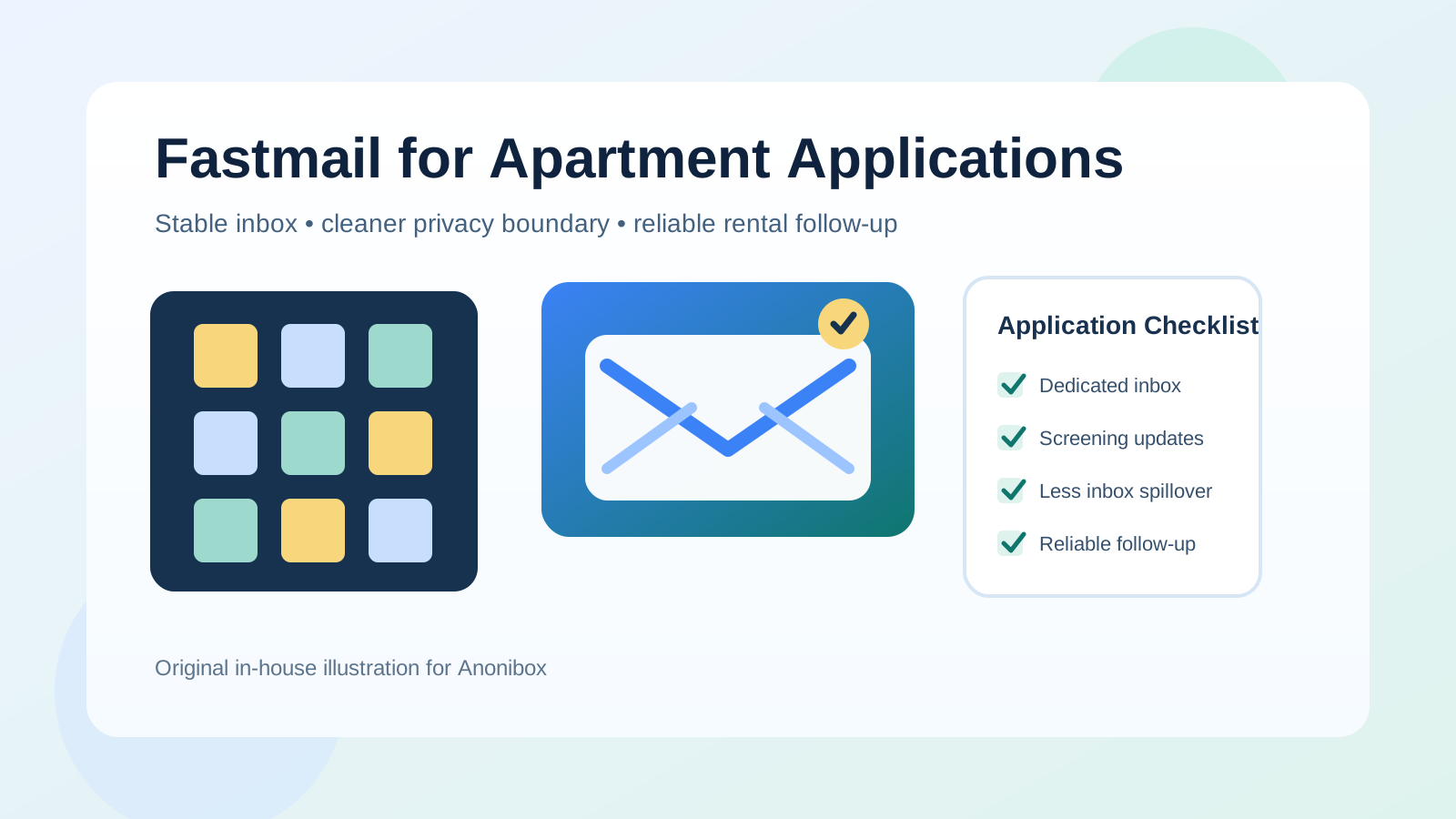
Apartment applications are a different situation from casual apartment browsing. Once you move past “is this unit still available?” and start submitting real applications, your inbox may receive fee receipts, screening links, requests for proof of income, co-applicant instructions, lease updates, and follow-up from property managers or broker platforms. That stream can get noisy fast, and it can keep showing up long after you have already found a place.
That is why the email decision matters. You want something stable enough for serious follow-up, but you may not want your oldest personal address attached to every rental portal, listing site, and leasing workflow. Fastmail fits that middle ground well for a lot of renters: it is more durable and professional than a throwaway inbox, but it still gives you separation from your everyday identity.
Short answer: Fastmail is a good fit when your application process is real, ongoing, and worth tracking carefully
Most legitimate landlords and property managers do not care whether your inbox is on Gmail, Outlook, Fastmail, or another well-known provider. What they usually care about is whether your address looks normal, whether their messages reach you, and whether you respond quickly. If Fastmail helps you stay organized and reachable, it can be an excellent apartment-application address.
The bigger question is not whether Fastmail is “allowed.” It is whether it gives you the right mix of privacy, reliability, and organization for a process that may stretch across multiple listings, multiple property managers, and several time-sensitive documents. In many cases, the answer is yes.
Why apartment applications need a more reliable inbox than apartment inquiries
An inquiry can be disposable. An application usually cannot.
At the inquiry stage, you may just be testing whether a listing is real, whether a unit is available, or whether a price was bait. In those cases, a temporary inbox can make sense because you are trying to reduce exposure before trust exists. That is where a service like Anonibox can help: it gives you a low-commitment way to handle first contact or gated listing forms without handing over a long-term email address immediately.
Applications are different. Once money, identity documents, and screening timelines enter the picture, you need continuity. If a property manager sends a follow-up question about your pay stubs or a screening portal sends an expiration-sensitive link, you do not want that message landing in a mailbox you rarely check or that you set up only to be disposable. Fastmail is stronger in that stage because it is built to be a real inbox, not a short-term shield.
What Fastmail does well for apartment applications
1. It gives you a separate lane for rental paperwork
One of the biggest benefits is simple separation. Apartment applications can mix together receipts, approvals, denials, broker follow-up, automated reminders, and post-application marketing. If all of that lands in your main everyday inbox, it becomes harder to see what matters and easier for rental-search clutter to linger for months. A dedicated Fastmail address keeps that traffic contained.
2. It feels stable without forcing you to expose your oldest personal inbox
Some renters want more privacy but still need to look credible. A disposable email can be fine for low-trust scenarios, but it is not ideal for a serious application thread that may lead to document review and lease follow-up. Fastmail gives you something stable enough for an ongoing process without automatically tying that process to the personal inbox you use for banking, healthcare, family communication, and years of old accounts.
3. Its organization tools match how apartment searches actually work
Apartment applications are rarely one-message transactions. You may apply to several places at once, compare move-in dates, wait for screening results, and revisit older messages to confirm pet policies, deposits, or guarantor requirements. A dedicated inbox with folders, rules, and search is genuinely useful here.
Even a basic setup helps:
- one folder for active applications,
- one for screening and document requests,
- one for declined or dead leads, and
- one for obvious spam or suspicious listings.
That sounds simple, but it reduces the chance that an urgent screening email gets buried between random listing alerts and promotional follow-up.
4. Aliases can reduce spillover without changing your whole workflow
If you already use Fastmail aliases well, they can make rental tracking cleaner. You might keep one main apartment-search inbox and use a specific alias for applications, broker contact, or one particular portal. That can make it easier to see which sites create noise later. The important part is not to get clever for its own sake. Use aliases only if they help you stay organized and do not make you harder to reach.
5. It usually looks normal enough that nobody cares
Property managers are not usually performing a deep analysis of your email provider. A clean address using your real name or a professional variation is what matters most. If the address is readable and replies reliably, Fastmail is unlikely to create friction on its own.
Where Fastmail is not enough by itself
It does not make you anonymous
Using Fastmail gives you separation, not invisibility. If your name, phone number, documents, employer, and current address are part of the application, the provider choice is not a magical privacy shield. It simply prevents your oldest personal inbox from being sprayed everywhere.
It is a bad choice if you will not monitor it closely
A dedicated inbox only works if you actually check it. Apartment opportunities can move quickly, especially in competitive markets. If you set up a separate Fastmail address and then forget to watch it, you may lose the exact benefit you were trying to create.
It can be risky if your setup is complicated
Some people use Fastmail with a custom domain, forwarding chains, or elaborate alias rules. That can be fine when you know the setup is reliable. But apartment applications are not the place to discover that a forwarding rule broke or a domain expired. If your setup is complex, test it before you trust it with something time-sensitive.
It should not be your first move for obviously sketchy listings
If a listing looks suspicious, the rent is strangely low, the photos look copied, or the contact pushes you off-platform immediately, even a dedicated Fastmail inbox may be more exposure than the situation deserves. That is the point where a temporary inbox can still be the better first layer. You can always move to a stable address after the listing proves legitimate.
Fastmail vs other apartment-application email options
Fastmail vs your main personal inbox
Your main inbox is familiar and probably the easiest to monitor. The downside is long-term spillover. Apartment traffic may continue after the search ends, and it can mix rental noise with the rest of your life. Fastmail is better if you want compartmentalization without sacrificing stability.
Fastmail vs a separate Gmail or Outlook account
A separate Gmail or Outlook account is often the simplest low-friction alternative. It is easy to set up and widely recognized. Fastmail can still be a better fit if you prefer its cleaner workflow, stronger separation from your existing ecosystem, or alias-friendly organization. The practical difference is not prestige. It is whether the setup helps you stay organized and responsive.
Fastmail vs a temporary inbox
A temporary inbox is best for low-trust first contact, gated listing downloads, or situations where you are not yet willing to attach a stable address. For an actual application, Fastmail is usually the better tool because you need follow-up continuity. In short: disposable inboxes are good for screening; stable inboxes are better for real application threads.
Best practices if you use Fastmail for apartment applications
Use a plain, professional address
Your address should look boring in the best possible way. A real-name style address is usually better than a joke name, a privacy persona, or something overloaded with numbers.
Turn on notifications and check spam
Screening vendors, broker software, and automated property-management systems do not always send the cleanest-looking emails. If you use a dedicated Fastmail address, watch the spam folder during active application windows and make sure notifications are enabled for time-sensitive replies.
Keep one stable address through the serious part of the process
Once an application becomes real, avoid switching identities unless you must. Consistency helps property managers match your messages to your forms, receipts, and supporting documents.
Store documents outside the inbox too
Your email should be the communication channel, not the only place your application records live. Save receipts, screening confirmations, and requested documents in a folder you control so you are not forced to hunt through email when a landlord asks for something again.
Use aliases to organize, not to hide
If you use aliases, keep the workflow simple. The goal is to sort sources of traffic and reduce clutter, not to create a maze of identities that confuses you later.
Red flags that mean you should slow down before using any stable inbox
- Requests for money before a verified viewing or documented lease process
- Pressure to move from the listing platform to text, Telegram, or another channel immediately
- Refusal to answer basic questions about the property
- Application links that look broken, rushed, or unrelated to the listing
- Demands for unusually sensitive documents too early
- Messages that create fake urgency to stop you from checking facts
In those cases, the issue is not just your email provider. The issue is whether the listing deserves further contact at all.
A simple decision checklist
- Do you want rental applications separated from your everyday inbox?
- Will you check this account multiple times a day during active applications?
- Does the address look clean and professional?
- Is the listing or property manager legitimate enough to deserve a stable address?
- Would a temporary inbox be better for first contact before trust is established?
If most of those answers point toward a real, ongoing application process, Fastmail is probably a good fit.
Final answer
So, should you use Fastmail for apartment applications? Usually yes. It is a practical option when you want a separate, dependable inbox for screening updates, landlord follow-up, and lease-related communication without exposing your main personal email everywhere.
Just use it intentionally. Keep the address simple, monitor it closely, use temporary inboxes only where they actually make sense, and remember that provider choice helps with organization and exposure control — not with guaranteeing that a listing is legitimate. If you want a clean middle ground between a throwaway inbox and your oldest personal address, Fastmail is one of the better options.