Yes, Gmail is usually a good choice for networking events if the address looks professional, you check it regularly, and you want a stable inbox for real follow-up.
It stops being the best default when event registrations, sponsor lists, and cold outreach start mixing with your main inbox — in those cases, a separate Gmail, alias, or temporary address can protect your privacy without making you unreachable.
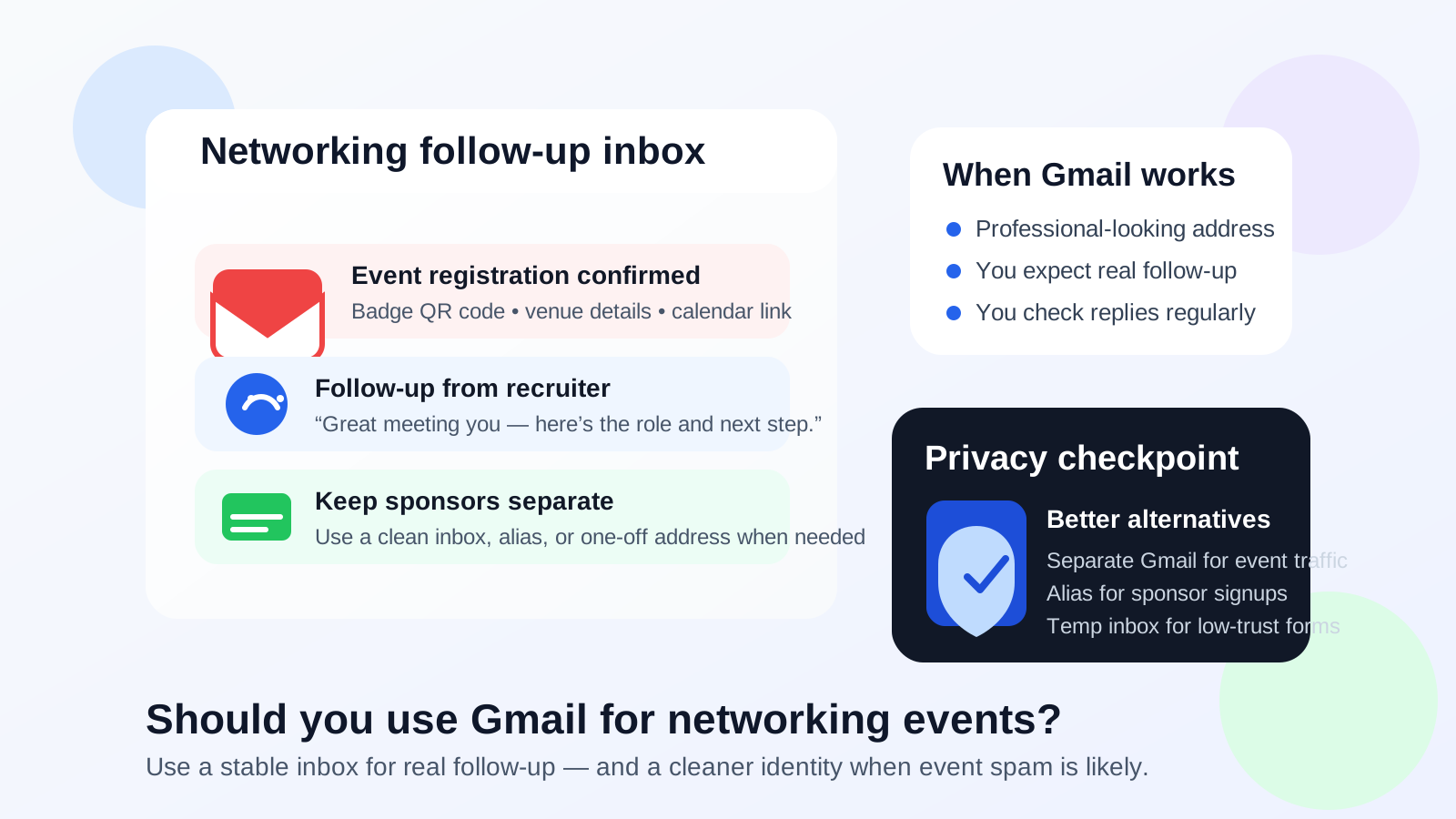
That distinction matters because networking events create two very different kinds of email at the same time. One kind is useful: registration details, QR badges, speaker slides, follow-up notes, introductions, recruiter messages, and the occasional “let’s continue this conversation next week.” The other kind is noise: sponsor blasts, vendor newsletters, list-sharing fallout, and promotional sequences you did not really mean to join for the next six months.
Gmail handles the useful part very well. It is familiar, reliable, easy to search, and widely accepted. The real question is not whether Gmail itself is acceptable. The real question is whether this particular Gmail workflow makes sense for the kind of networking you are doing.
Why this question comes up at networking events
Networking events are messy from a privacy perspective. You might register on one platform, scan a badge at three booths, RSVP to a side meetup, exchange contact details with two people you actually want to know, and sign up for a speaker’s resources before you head home. Those are not all the same kind of interaction, but they often land in the same inbox.
If you use Gmail for everything, that may be fine. Many people do. But if you use your oldest personal Gmail address for every registration, every waitlist, every QR code, and every follow-up, you may end up exposing a long-term inbox to short-term event spam. That is where the problem usually starts.
Short answer: Gmail is usually fine for genuine follow-up
For actual human follow-up, Gmail is usually a strong choice. If someone you meet at a conference, job fair, founder meetup, alumni event, or industry panel wants to continue the conversation, a stable Gmail address often works better than a disposable inbox. People recognize it, trust it, and know their message will probably reach you without weird forwarding issues or expired inbox problems.
That is especially important when the relationship might continue beyond the event itself. A thoughtful follow-up note, a recruiter introduction, a request for your portfolio, or a coffee chat invitation may arrive days later rather than the same afternoon. You do not want that message going to an address you already abandoned.
What Gmail does well for networking events
1. It is familiar and easy for other people to use
There is almost no explanation required when you share a Gmail address. People do not wonder whether it is temporary, whether replies will bounce, or whether their company filters will dislike it. That sounds basic, but low-friction contact matters in networking. The simpler you make it for someone to reply, the better.
2. It handles longer message threads well
Networking rarely stays limited to one email. A simple “nice meeting you” can turn into a forwarded introduction, a recruiter copy, a calendar invitation, a résumé request, or a later check-in. Gmail is good at keeping those threads readable and searchable, which helps when you are juggling multiple new contacts after an event.
3. Calendar invites and attachments are easy to manage
Many networking conversations move quickly into scheduling. Someone wants a twenty-minute call. A recruiter sends a calendar invite. An organizer shares a deck or attendee guide. Gmail works smoothly for all of that, which is one reason it often beats a throwaway inbox for serious follow-up.
4. It gives you continuity
Real networking is not just collecting contacts. It is staying reachable long enough for the connection to become useful. Gmail supports that continuity. If you meet someone in July and they reach out in August, your address is still there, your old thread is still searchable, and the relationship does not disappear with an expired inbox.
Where Gmail can become the wrong choice
1. Your main Gmail inbox is already overloaded
If your everyday Gmail account is full of receipts, family mail, subscriptions, alerts, and old clutter, adding event traffic on top of that may make follow-up harder rather than easier. The risk is not that Gmail looks bad. The risk is that you miss useful replies because they are buried.
2. The address itself feels too personal
An old Gmail handle that includes a hobby, joke, graduation year, or random username may be fine among friends but less ideal in professional networking. In that case, Gmail the service is not the issue. The specific address is.
3. You expect heavy sponsor or vendor spam
Some events are basically lead-generation funnels with name badges. If you know you are about to scan QR codes, download sponsor materials, enter giveaways, or join multiple vendor demos, using your main Gmail everywhere may create months of inbox debris.
4. You are mixing personal life with exploratory career activity
If you are networking quietly while employed, or simply prefer more separation between daily life and professional outreach, using your main Gmail account can blur boundaries. You may want a cleaner identity for event-related traffic even if Gmail is still the platform you choose.
When a separate Gmail account is smarter
For many people, the best answer is not “use Gmail” or “do not use Gmail.” It is “use a separate Gmail account for networking events.” That gives you most of Gmail’s practical benefits without exposing your oldest inbox to every registration, sponsor sequence, and cold follow-up.
A separate Gmail account makes sense when:
- you attend events regularly,
- you want networking traffic in one place,
- you are doing active career exploration,
- you do not want event organizers and sponsors learning your main long-term address, or
- you want a cleaner professional identity than your personal inbox currently offers.
This setup is often the sweet spot. It is stable enough for real conversations, but compartmentalized enough to keep networking from taking over the rest of your inbox.
Gmail vs temporary email for networking events
This is where context matters most. A temporary inbox can be useful when the interaction is low-trust, one-off, or clearly promotional. If you only need to confirm a webinar registration, unlock a download, or test whether an event platform will start spamming you, a disposable address can be helpful.
That is where a tool like Anonibox fits naturally. If you suspect a signup form is mainly collecting leads, a temporary inbox can protect your long-term email identity from unnecessary noise.
But temporary email is not the best default for genuine networking. If you are giving your address to a recruiter, founder, hiring manager, alumni contact, speaker, or someone you actually hope will write back next week, use a stable inbox instead. Disposable addresses reduce spam, but they also reduce continuity. Networking depends on continuity.
Gmail vs an alias or forwarding address
If you already have a stable inbox you like, an alias can be a great middle ground. Instead of creating a whole new account, you can use a separate address for event registrations or sponsor forms while still receiving mail in one place. That helps you identify which contacts came from which event and cut off noisy sources later if needed.
Aliases are especially helpful when you want three things at once: a professional-looking address, ongoing reply reliability, and better control over who got which version of your email.
Best practices if you use Gmail for networking events
Choose a professional address
If your Gmail address looks messy, create a cleaner one before the event. Ideally it should be some simple variation of your real name, not an old nickname or joke handle from years ago.
Decide in advance which inbox is for what
Use one address for real follow-up and another for low-value registrations if needed. Do not make the decision on the fly while scanning badges.
Turn on labels or filters
Even basic organization helps. A simple event label or filter can keep new messages visible and separate from the rest of your mail.
Reply quickly to real humans
If someone meaningful reaches out, answer while the event context is still fresh. A clean Gmail workflow only helps if you actually stay responsive.
Be selective with QR codes and booth forms
Not every scan deserves your main follow-up address. Some are real opportunities; others are just list-building machines.
Red flags that mean you should protect your main Gmail more carefully
- the event platform has a weak or spammy reputation,
- every sponsor wants full details before sharing basic information,
- the form language suggests broad marketing consent,
- you expect little real follow-up value from the interaction, or
- you are exploring opportunities quietly and want tighter separation.
In those cases, a separate Gmail, alias, or temporary inbox is often a better fit than your oldest primary address.
A simple decision rule
If you expect a real conversation, use a stable address. If you expect mostly marketing, use a more disposable identity. Gmail is often the right answer for the first case. An alias, separate account, or temporary inbox is often better for the second.
That is why the best networking setup is usually layered rather than absolute. Use a dependable inbox for people you actually want to hear from. Use more protective email choices for registration forms, sponsors, and low-trust signups.
Final answer: should you use Gmail for networking events?
Yes, Gmail is usually a solid choice for networking events because it is familiar, reliable, and good at handling real follow-up. For one-to-one conversations, recruiter outreach, introductions, and post-event scheduling, it is often much better than a disposable inbox.
But your main Gmail address is not automatically the best address for every event interaction. If the event is likely to generate spam, if your personal inbox is already crowded, or if you want stronger privacy boundaries, a separate Gmail account, alias, or temporary inbox may serve you better. The goal is not just to be reachable. It is to stay reachable without giving every event and sponsor permanent access to the inbox you care about most.