Yes, you can use HEY Email for job interviews, and for many candidates it is a perfectly workable choice if the address looks professional and the inbox is stable.
It is usually a better fit than temporary email once interviews become real, but because HEY is less common than Gmail or Outlook, you should keep the setup simple and make sure no important recruiter message gets screened out or missed.
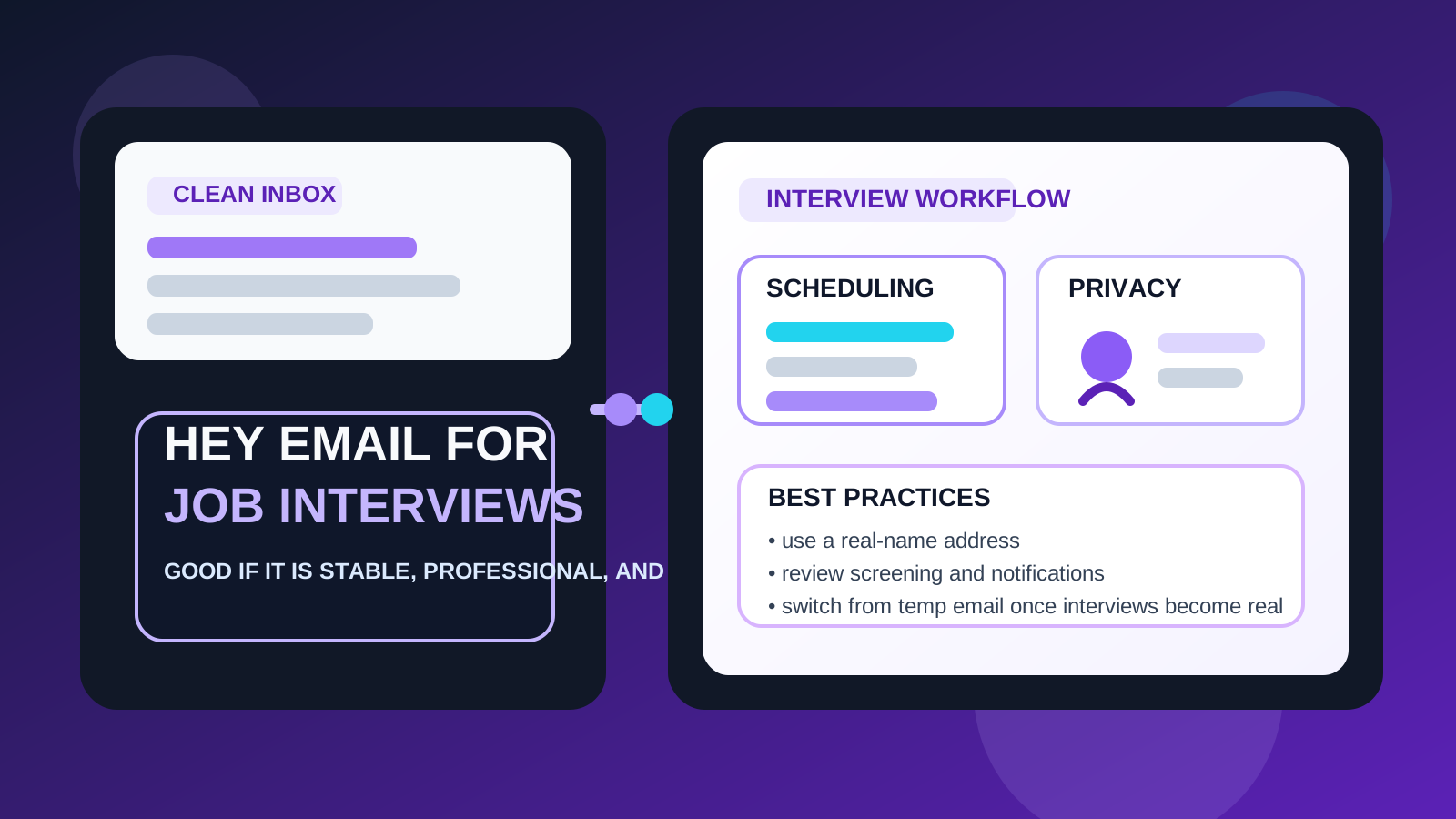
That is the short answer behind searches for should you use hey email for job interviews. The provider itself matters less than reliability, organization, and professionalism. If HEY helps you keep your inbox cleaner and your interview communication easier to manage, it can absolutely work. If your setup creates friction, delayed notifications, or uncertainty about where messages land, then it becomes less helpful during a fast-moving hiring process.
Interview-stage communication is not the same as signing up for a job board or testing a new recruiting platform. Once a recruiter wants to schedule a call, send a take-home assignment, or confirm final-round logistics, your email stops being a throwaway contact field and becomes part of a live workflow. That is why the right answer is not just “Is HEY good?” but “Will this specific HEY setup keep me reachable and organized?”
Why HEY Email can work for job interviews
For most employers, the real test is simple. They want to know whether your inbox is dependable enough for fast communication. A recruiter is rarely sitting there ranking candidates by brand preference between HEY, Gmail, Outlook, Fastmail, or another legitimate provider. They care about whether you reply promptly, whether messages bounce, and whether the address looks serious.
HEY can work well because it is a real, stable inbox rather than a disposable one. It is designed for ongoing use, which already makes it a much better interview tool than temporary email. It can also appeal to people who want more control over inbox clutter, clearer boundaries, or a less noisy work style during a job search.
Why interview-stage email needs more stability than application-stage email
At the beginning of a job search, some people want distance between their main inbox and all the random traffic that comes with applications, alerts, and recruiter outreach. That is reasonable. Early on, privacy tools and temporary inboxes can help you protect your everyday address from noise.
But interviews change the stakes. Once you are speaking with real employers, your inbox may need to handle:
- screening-call scheduling
- calendar invites and reschedule requests
- video interview links
- homework or take-home assignment instructions
- follow-up questions from recruiters or hiring managers
- reference-check or offer-stage communication
That is why a stable inbox matters so much. A temporary inbox can help protect you from low-trust traffic at the edge of the funnel. HEY, like other full email providers, is better suited for the point where every missed message can slow or damage a real opportunity.
What HEY does well in an interview workflow
It can keep noisy inbox traffic under control
If you are applying for multiple roles at once, inbox sprawl becomes a real problem. Newsletters, job alerts, recruiter blasts, automated status updates, and regular personal email can all pile together. A more deliberate inbox workflow can make it easier to spot the messages that actually matter.
That is one of HEY’s strongest practical advantages. If you prefer a cleaner inbox and a more intentional message flow, HEY can reduce the chance that an interview invite gets buried under everything else happening in your digital life.
It supports a privacy-minded approach without being disposable
Some candidates want more distance between their identity, their search habits, and their long-term personal inbox. HEY can fit that goal better than using your oldest everyday address everywhere. It is still a stable email account, but it can be part of a more intentional privacy setup if you want your interview communication separated from shopping accounts, social logins, and years of personal clutter.
It can look professional if the address itself is clean
The provider name matters less than the full address. If your HEY address is some straightforward version of your real name, most recruiters will treat it like any other legitimate email account. A professional address matters more than whether the domain is extremely common.
Where HEY Email can create friction
It is less familiar than Gmail or Outlook
Recruiters see Gmail and Outlook addresses constantly. HEY is less common. That does not mean it looks suspicious, but it may feel less familiar at a glance. Usually that is not a real problem. Still, if your address also looks quirky, overly clever, or anonymous, the combination can feel weaker than a plain real-name inbox on a mainstream provider.
Your own inbox rules can work against you
A more opinionated inbox only helps if you understand how you set it up. If an important recruiter message gets screened out, bundled into a lower-priority area, or simply missed because your notifications are too quiet, then the tidy experience stops being an advantage. Interview communication is time-sensitive enough that convenience features should never come at the cost of reachability.
You may be tempted to over-optimize privacy at the wrong stage
Privacy matters, but once a legitimate company is moving you through interviews, being reliably reachable matters too. If you stack too many layers between yourself and the employer, you can create confusion about where to reply, which address to trust, or how long the inbox will remain active.
HEY Email versus temporary email for job interviews
This is where the distinction becomes important for Anonibox readers. Temporary email can be useful in the earliest, noisiest part of a job search: testing a job board, opening a gated salary guide, or checking whether a recruiter form feels legitimate before you commit your long-term inbox. That is where a tool like Anonibox makes sense.
But once you are interviewing, a disposable inbox usually becomes the wrong tool. You need continuity. You need message history. You need an address that still works next week if an employer sends a revised interview slot, a policy document, or a follow-up assignment. HEY is far better suited to that stage than temporary email because it is a real ongoing account rather than a short-term shield from spam.
HEY Email versus Gmail or Outlook
Gmail and Outlook have one major advantage: nobody needs them explained. They are familiar, expected, and deeply ordinary in professional settings. That can be useful when you want the lowest possible friction.
HEY’s advantage is not mainstream familiarity. Its advantage is that some people find it easier to manage, cleaner to work with, and better for boundaries. If that helps you stay organized and responsive, HEY can be just as practical for interviews. But if you already use Gmail or Outlook well and have never had organizational problems, HEY is not automatically better just because it is different.
When HEY is a strong choice for interviews
- You already use it regularly and trust it.
- Your address is simple, professional, and easy to recognize.
- You want a cleaner inbox than your crowded main personal account.
- You are comfortable checking it frequently during active scheduling.
- You want a stable job-search inbox without falling back to a disposable one.
In those cases, HEY can be a perfectly solid interview inbox.
When HEY may not be the best default
- You barely use the account and might forget to monitor it.
- Your setup screens or delays important mail in ways you do not fully control.
- Your address is too playful, anonymous, or confusing.
- You are switching between multiple addresses and making the hiring process harder to follow.
- You really just need the simplest, most familiar option and already have a good Gmail or Outlook account.
If any of those apply, the problem usually is not HEY as a provider. The problem is fit. Interview communication rewards boring reliability.
Best practices if you use HEY Email for job interviews
Use a real-name address if possible
A simple address built around your real name will nearly always land better than an old nickname, an edgy alias, or a string of random numbers.
Check your inbox and screening flow every day
If you rely on HEY’s filtering and inbox organization, make sure you know exactly where recruiter emails will appear. During an active job search, review the full message flow often enough that nothing important sits unseen.
Turn on dependable notifications
Interview scheduling can move quickly. If you only check the inbox casually, you can miss a same-day time change or a recruiter follow-up that needs a prompt reply.
Keep one stable address through the interview process
Switching between an application inbox, a temporary inbox, and a separate interview inbox can create confusion. Once the opportunity becomes real, try to keep the communication channel stable.
Save important attachments and links
Calendar invites, take-home instructions, policies, and contact details should not live only in your head. Keep the process organized so you can find what you need quickly.
Do not use a disposable address once trust is established
If you used temporary email earlier to reduce spam, that was the right stage for it. Move to HEY or another stable inbox as soon as interviews become real and time-sensitive.
A simple decision framework
- Use HEY confidently if it is a stable account you already monitor well and the address looks professional.
- Use HEY instead of temporary email once an employer starts sending interview logistics, assignments, or follow-up questions.
- Use Gmail or Outlook instead if you want the most familiar, lowest-friction option and already have a clean professional account there.
- Use a separate dedicated inbox if your main personal account is too crowded or you want stronger job-search boundaries.
Final answer
Yes, HEY Email can be a good choice for job interviews if the inbox is stable, the address looks professional, and you monitor it closely. It is usually much better than temporary email once interviews begin because it gives you continuity, message history, and a real long-term communication channel.
The main caution is not that recruiters will reject HEY. It is that a less-common provider only works well if your setup stays simple and reliable. If HEY helps you stay organized without hiding important messages, it is a solid option. If you want the easiest, most familiar path, a clean Gmail or Outlook account may create less friction. Either way, temporary email tools like Anonibox are best reserved for the noisy early stage of a search, not for active interview coordination.