Usually yes — HEY Email is a reasonable inbox for salary negotiations if you already use it, check it often, and can respond quickly when an employer sends an offer, deadline, or follow-up question.
It becomes a weaker choice only when the setup adds friction: if you rarely check it, rely on a complicated forwarding chain, or let a high-stakes negotiation sit in an inbox that is less convenient than your main professional workflow.
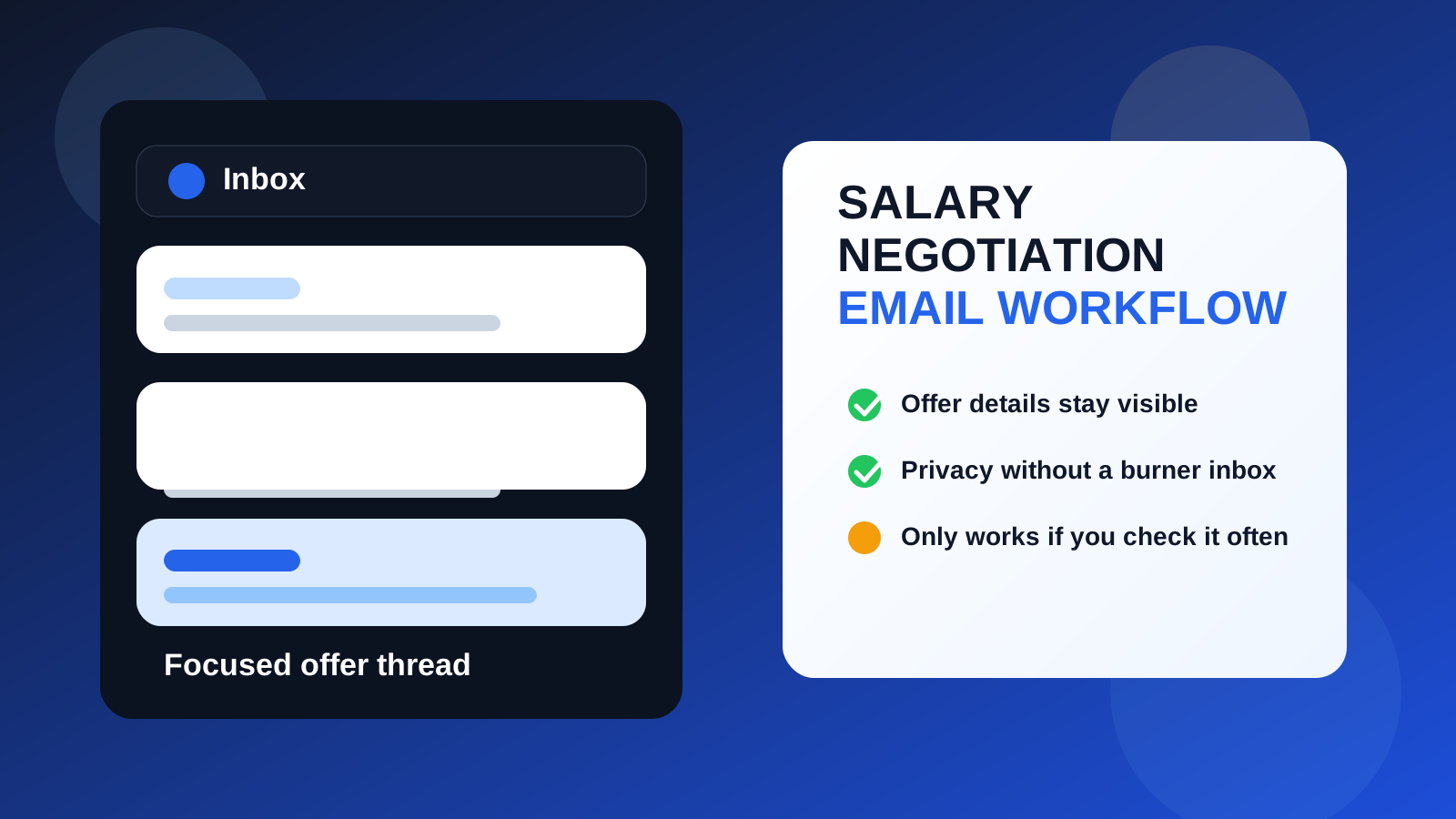
That is the short answer behind searches for HEY Email salary negotiations. When you are negotiating compensation, the privacy question is real, but the continuity question is even bigger. This is not the stage where you want a disposable inbox, a half-monitored alias, or a message buried under newsletters. You want a mailbox that helps you read carefully, reply thoughtfully, and keep the whole conversation organized.
HEY Email can absolutely do that. It is a real long-term inbox, not a temporary address, and its screening-first design can help keep noisy messages away from important threads. For some job seekers, that makes it a surprisingly good place to handle salary discussions. But a privacy-focused inbox is only helpful if it does not get in the way of speed, clarity, and reliable follow-up.
If you use Anonibox earlier in the funnel to protect your main address from job-board spam or one-off signups, this is the point where the workflow changes. Salary negotiations are usually late-stage, time-sensitive, and tied to an actual offer. At that point, stability matters more than disposable privacy tricks.
Why salary negotiations need a different standard than early job-search email
Early in a job search, it often makes sense to be defensive. You may be testing job boards, signing up for alerts, or replying to opportunities that still feel uncertain. In those stages, separate inboxes, aliases, and privacy tools can reduce clutter and limit exposure.
Salary negotiations are different. By the time compensation comes up, you are usually dealing with a real recruiter, hiring manager, or HR contact. The messages may include:
- the initial compensation package
- deadline language for accepting or responding
- clarifications about bonus structure, equity, relocation, or start date
- revised offer letters after negotiation
- questions you need to answer carefully and in writing
That means the best inbox for salary negotiations is not the one that feels most private in the abstract. It is the one that lets you stay calm, organized, and fast enough to avoid missing something important.
What HEY Email gets right for salary negotiations
1. It is a stable inbox, not a disposable tool
This is the biggest advantage. HEY Email is not a throwaway address. If an employer sends a revised offer two days later, a benefits explanation next week, or a follow-up after a weekend pause, the conversation is still in one place. That long-term continuity matters more here than it does during casual networking or low-trust signups.
2. The screening model can reduce noise
One reason people like HEY is that it tries to keep unwanted senders from flooding the inbox. In a job search, that can be useful. If you are dealing with recruiter outreach, newsletters, job alerts, and old application follow-up at the same time, keeping the important negotiation thread separate from inbox noise is genuinely helpful.
A salary discussion often benefits from a cleaner mental environment. You want to read closely, compare details, maybe draft your reply offline, and come back with a clear answer. Less clutter helps.
3. Thread visibility can make follow-up easier
Negotiation emails are rarely one-and-done. You might receive an offer, ask a question, get a revised number, discuss timing, and then confirm next steps. A mailbox that makes it easy to find the whole thread reduces mistakes.
That is especially useful when the details are subtle. A compensation conversation may hinge on whether a signing bonus is guaranteed, whether equity vests on a standard schedule, or whether a review point is six months out instead of twelve. Missing those details because your inbox is chaotic is avoidable.
4. It can support privacy without looking suspicious
Unlike a burner address or a temporary inbox, HEY Email still looks like a real, normal long-term email account. That matters. Salary negotiations are not a good place to create doubt about whether you are reachable. HEY lets privacy-conscious people keep some separation without sending the signal that the address may disappear tomorrow.
Where HEY Email can become a problem
1. You do not actually check it often
This sounds obvious, but it is the main decision point. A good inbox used badly is still a bad workflow. If HEY is not the mailbox you keep open during the workday, or if you let important threads sit because the app is not part of your routine, it may not be the right place for a negotiation.
Compensation conversations do not always need instant replies, but they do need steady attention. A recruiter who sends an offer on Thursday afternoon may reasonably expect acknowledgment before the weekend. If you are slower than intended simply because the inbox is out of sight, that is a real downside.
2. Over-screening can create friction
Privacy tools are useful until they become obstacles. If you aggressively filter or ignore unfamiliar senders, you need to be careful not to make a recruiter work harder to reach you. Salary negotiations often involve HR, legal, compensation specialists, or third-party recruiters in addition to the person you have been speaking with. Not every important email will come from the exact same address.
If your setup causes you to miss or delay messages from legitimate participants in the process, the organizational benefit disappears fast.
3. A negotiation thread is sometimes better in your main job-search inbox
Some people already maintain a dedicated professional inbox for applications, interviews, calendar invites, and offer-stage paperwork. If that system works well, moving salary negotiations into HEY just because it sounds more private may not help. The best place for the conversation is usually the inbox where you already manage the rest of the hiring process cleanly.
In other words, HEY Email is a good option when it is your dependable professional inbox, not when it is a side inbox you hope to remember checking.
When HEY Email is a smart choice for salary negotiations
- You already use HEY daily. The account is part of your regular communication rhythm.
- You want less inbox clutter. The screening model helps you focus on the actual offer thread.
- You are privacy-conscious but still need a real mailbox. You want separation from your oldest personal address without using a disposable solution.
- You keep negotiations in writing on purpose. Email gives you a clear record of numbers, dates, and wording.
- Your address is stable enough to keep beyond the negotiation. If the employer needs to send a revised offer or onboarding follow-up, the channel still makes sense.
In those situations, HEY can be a solid fit. It gives you privacy and order without introducing the instability that makes temporary-email tools risky this late in the process.
When another inbox may be better
- You rarely monitor HEY. Convenience beats theory here.
- Your negotiation is moving quickly. If you are already coordinating interviews, references, and offer details from another inbox, centralization may matter more.
- You rely heavily on forwarding tricks. The more hops a message takes, the more chances something gets delayed or overlooked.
- You need tight integration with your existing workflow. Some people simply handle scheduling, documents, and search better in Gmail, Outlook, or another account they already live in.
That does not mean HEY is bad. It just means a salary negotiation is not the time to optimize for novelty. It is the time to optimize for clarity and consistency.
How to use HEY Email well during salary negotiations
Keep one thread for each offer when possible
If the recruiter has already started the conversation in one email chain, try to keep replies there unless they specifically ask otherwise. This reduces confusion and preserves context for both sides.
Acknowledge important emails promptly
You do not need to negotiate instantly, but it helps to confirm receipt. A simple note that you received the offer and will reply after review buys time without looking unresponsive.
Do not mix negotiation with disposable inbox habits
This is where some privacy-minded job seekers overcorrect. A temporary inbox is fine for low-stakes signups. A salary negotiation is not low stakes. If you started the search with a more protective setup, this is the point to move the real conversation into a durable account you control.
Watch for additional senders
A compensation conversation may expand beyond the recruiter you know best. HR operations, benefits staff, or another hiring contact might enter the thread. Make sure your HEY workflow does not accidentally bury those messages just because the names are unfamiliar.
Store the final version clearly
Once the negotiation settles, save the final email chain, revised offer letter, and any written clarifications somewhere easy to retrieve. You may need them again during onboarding or when comparing multiple offers.
A practical example
Imagine you used a temporary address or a separate sign-up inbox earlier while applying broadly. That helped limit spam and protect your main identity trail. Now a serious employer sends an offer and wants to discuss base salary, target bonus, and start date.
At that point, the smart move is usually to continue in a stable mailbox that you actually monitor. If HEY is that mailbox for you, great. Its cleaner structure may even help you think more clearly about the negotiation. But if HEY is just a secondary experiment that you check every other day, it is the wrong tool for the moment.
The lesson is simple: privacy matters, but timing matters too. Use the right level of privacy for the stage you are in.
Red flags that have nothing to do with HEY specifically
No email provider fixes a bad opportunity. Be cautious if a supposed employer:
- pressures you to accept immediately without giving details in writing
- refuses to send a formal offer but keeps asking for personal information
- moves the discussion off professional channels into random messaging apps for no clear reason
- changes numbers informally without documenting them
- asks for payment, banking details, or identity documents before the process is legitimate and clear
Those are process problems, not HEY Email problems. Still, a good written record in a real inbox makes them easier to spot.
Final answer
Yes — HEY Email can be a good choice for salary negotiations if it is a real inbox you use consistently and trust for time-sensitive communication. Its cleaner organization and privacy-friendly design can help you keep an offer thread focused without relying on a disposable address.
The key is not the brand name but the workflow. If HEY is stable, monitored, and easy for you to use, it is perfectly reasonable. If another long-term professional inbox already handles your job search better, use that instead. Salary negotiations reward reliability, calm follow-up, and a clear written record far more than they reward clever inbox experiments.