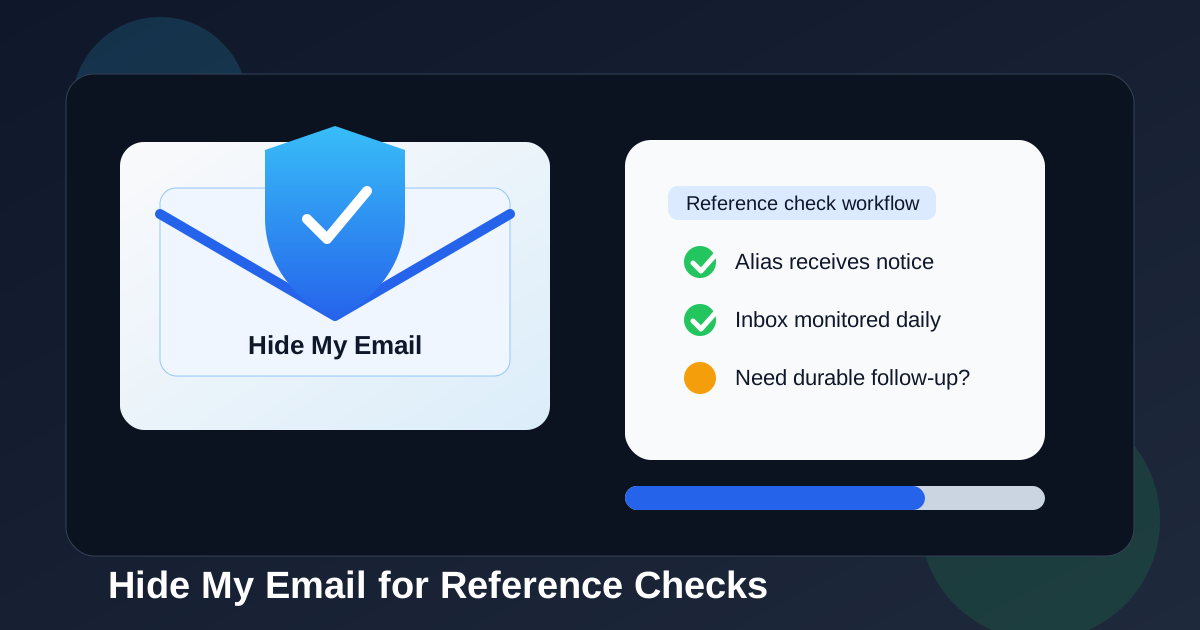
Yes, Hide My Email can work for reference checks if it forwards into a stable inbox you watch closely and plan to keep active through the whole process.
For most job seekers, the safer choice is still a long-term inbox they control directly, because reference checks can trigger follow-up, clarification, and timing-sensitive messages that are easier to manage without adding another forwarding layer.
Why this question comes up
By the time an employer is asking for reference checks, the hiring process usually feels more serious and more personal. You may already have shared your résumé, completed interviews, and invested real time in the opportunity. At that stage, many people want to stay reachable without giving yet another company, recruiter, or screening vendor direct access to their primary inbox.
That is where Apple’s Hide My Email starts to look appealing. It lets you use an alias instead of exposing your real address, which can help reduce long-term spam and keep job-search communication better organized. The attraction is obvious: you stay reachable, but you keep a layer between your true inbox and one more hiring workflow.
The catch is that reference checks are not casual signups. They are late-stage, time-sensitive, and sometimes messy. A reference-check process can involve recruiter follow-up, reminder emails, clarification requests, or vendor portals that arrive later than expected. So the right question is not just “Can Hide My Email receive the message?” It is “Is Hide My Email the best setup for this part of the hiring process?”
Short answer: it can work, but reliability matters more than privacy theater here
Hide My Email is not a bad option by default. If the alias forwards into an inbox you monitor constantly, if you are confident you will keep access to the destination account, and if you have already tested that setup in normal use, it can be perfectly workable.
But reference checks are a stage where missed communication can slow things down or make you look unresponsive. That means reliability should come before clever compartmentalization. If your setup is even a little confusing, fragile, or hard to search later, a direct long-term inbox is usually the better choice.
What reference-check communication actually looks like
People sometimes imagine reference checks as a single clean email, but real hiring processes are often less tidy than that. Depending on the employer, recruiter, or third-party vendor, you may receive:
- an initial notice that references will be contacted soon
- forms asking you to confirm names, job titles, or contact details
- portal links to complete or review information
- follow-up questions if a reference does not respond quickly
- clarification requests about dates, reporting lines, or past roles
- status updates that arrive days after you thought the process was finished
That is why reference checks often reward simple setups. You want one inbox you trust, one place to search, and as few chances as possible for a message to disappear into the background.
Where Hide My Email helps
1. It limits direct exposure of your real address
If you are applying widely or dealing with multiple intermediaries, it is reasonable to avoid scattering your main inbox everywhere. A Hide My Email alias lets you hand out an address that still reaches you without revealing the destination account publicly.
2. It can keep hiring messages separate from your everyday inbox
Some job seekers like compartmentalization more than pure privacy. Using a distinct alias for hiring-related communication can make it easier to identify what a message is about, especially if you are juggling several processes at once.
3. It gives you a little more control if the process gets noisy later
If a recruiter, vendor, or employer keeps sending messages long after the role is closed, an alias-based workflow can be easier to retire or isolate than a permanently exposed primary address.
Where Hide My Email can become a problem for reference checks
1. You are adding one more layer to a time-sensitive process
Reference checks are usually not the stage where you want unnecessary complexity. Any forwarding setup introduces another point where things can become harder to troubleshoot: which alias did you use, where did it forward, what thread contains the original message, and will you still recognize it quickly if a recruiter follows up later?
2. Important messages can be easier to overlook
Even if forwarding works properly, reference-check emails may not arrive with obvious subject lines. A message about a reference questionnaire or a vendor reminder can look routine at first glance. If your destination inbox is already crowded, the alias may protect privacy without actually improving your ability to spot the message.
3. Late-stage hiring benefits from permanence
Earlier in a job search, it makes sense to be more defensive. Later in the process, stability matters more. If the employer needs to resend a form, clarify a delay, or reopen the conversation, you want them reaching an address that still feels like your main professional contact point rather than an alias you barely remember creating.
4. Some people confuse privacy with low commitment
This is not about whether employers are right to make assumptions. It is about avoiding avoidable friction. A polished personal inbox or a dedicated long-term job-search inbox tends to feel simple and stable. An alias can still be fine, but if you use it, you should manage it confidently and professionally rather than treating it like a disposable throwaway.
When Hide My Email is a reasonable choice for reference checks
Using Hide My Email is usually reasonable when all of the following are true:
- the alias forwards into a stable inbox you check multiple times a day
- you already use that destination inbox for serious hiring communication
- you are comfortable searching and tracking threads across the alias setup
- you do not rely on the alias as a short-term experiment you might forget about
- you want privacy, but not at the expense of responsiveness
In other words, Hide My Email works best when it is part of a deliberate system, not a last-minute trick.
When you should probably avoid it
A direct inbox is usually better if any of these sound familiar:
- you already lose track of messages in your main mailbox
- you are not fully confident how your alias workflow behaves under pressure
- the employer is moving fast and you expect several rounds of follow-up
- you are close to an offer and want the cleanest possible communication path
- you are using the alias mainly because you are nervous about spam, not because you have a reliable system around it
If your only goal is “I do not want one more company to have my email,” that instinct is understandable. But late-stage hiring often rewards boring, durable contact details more than elegant privacy gymnastics.
A better middle ground for many job seekers
If you want both organization and reliability, a separate long-term job-search inbox is often stronger than a pure forwarding alias for reference checks. It gives you cleaner boundaries without adding as much ambiguity about where messages land and how you will find them later.
This is where the broader Anonibox mindset is useful. Privacy-first tools are excellent for reducing exposure during early, noisy parts of a search: job boards, one-off recruiter forms, low-trust signups, or situations where you are testing interest. But reference checks are not early-stage noise. They are closer to the finish line. At that point, continuity usually beats disposability.
Practical best practices if you do use Hide My Email
Test the destination inbox before you rely on it
Do not assume everything is fine because the alias exists. Make sure the destination inbox is one you actually watch and that it is not buried under newsletters, receipts, and old alerts.
Use one alias for the whole employer thread
If you choose an alias for this opportunity, keep it consistent. Jumping between different addresses during interviews, reference checks, and offer-stage follow-up creates confusion for no real benefit.
Save the important emails immediately
As soon as a reference-check email arrives, move it into a dedicated label or folder. Save the portal link, contact names, deadlines, and any instructions about what your references should expect.
Tell the recruiter quickly if you need to switch
If you decide mid-process that you would rather use a direct inbox, make the change before more messages go out. It is much easier to correct the path early than after reminders and follow-up threads are already in motion.
Do not confuse an alias with a disposable inbox
Hide My Email may feel lighter-weight than giving out your primary address, but reference checks still deserve the same seriousness as any other late-stage hiring step. Use the alias professionally, monitor it closely, and treat it as part of your real communication system.
A quick example
Imagine you interviewed with a company, gave them a Hide My Email alias, and assumed the process was basically done. Three days later, a screening vendor sends a clarification request because one reference has not replied and another needs a corrected job title. If that message lands in an inbox you do not monitor carefully, you may not notice it until the employer is already wondering why the process stalled.
Now imagine the same scenario with a dedicated long-term hiring inbox you check often and search easily. The follow-up is obvious, you answer quickly, and the process keeps moving. That is the difference. The issue is rarely whether the alias technically works. The issue is whether it helps you stay reliably reachable when timing matters.
Checklist before you use Hide My Email for reference checks
- Does the alias forward into an inbox I monitor every day?
- Will I still be using that destination inbox comfortably if the process drifts for a week or two?
- Am I using this alias as part of a stable system, not as a one-off experiment?
- Would a dedicated long-term job-search inbox be simpler?
- If the recruiter emailed me right now with a deadline, am I confident I would see it quickly?
If you hesitate on those questions, that hesitation is useful. It usually means a more direct inbox would be safer for this stage.
Final answer
Yes, you can use Hide My Email for reference checks, and for some people it is a perfectly workable privacy layer. But it is best only when it feeds into a dependable inbox you already manage well and intend to keep active throughout the hiring process.
If you are optimizing for the fewest surprises, a direct long-term inbox or a dedicated job-search inbox is usually the better choice. Use privacy tools where they genuinely help, keep Anonibox-style separation for noisier early-stage exposure, and switch to the most reliable communication path once reference checks become real and time-sensitive.