Yes, usually. Hotmail is generally fine for salary negotiations if it is a real inbox you monitor closely and the address itself looks professional.
What matters most is reliability, quick replies, and separation from your work email—not whether the domain is trendy.
Why your email choice matters more once compensation talks start
Early in a job search, email is often just an intake channel. It is where you get application confirmations, recruiter outreach, scheduling links, and reminders. Salary negotiations are different. Once the conversation shifts to compensation, email becomes part of the written record for base pay, bonus structure, equity, signing incentives, start dates, remote-work details, benefit clarifications, and deadline extensions.
That is why the question matters. You do not need the most fashionable inbox provider on the internet. You need an account that is easy to access, easy to search, and clean enough that an important reply does not get buried. If your Hotmail account does that job well, it can absolutely work for negotiations.
Short answer: Hotmail is workable, but context matters
If you are asking whether you should use Hotmail for salary negotiations, the practical answer is yes in many cases. A hiring manager is rarely making compensation decisions based on whether your address ends in @hotmail.com. They care more about whether you reply promptly, keep the thread organized, and communicate clearly.
Still, Hotmail is not automatically the best option in every situation. An old account with a cluttered inbox, outdated recovery settings, or an awkward username can create unnecessary friction. The inbox itself is only part of the story. The way you maintain and present it matters too.
Why Hotmail can be a reasonable choice for salary negotiations
It is usually more stable than a disposable inbox
Negotiations are not the right stage for temporary email. A compensation discussion may stretch over several days, involve attachments, or resurface later if the company sends a revised offer. You need continuity. A Hotmail inbox that you control long term is much better suited to that than a throwaway address.
If you used Anonibox earlier in your search to protect your main inbox while testing job boards, signing up for career resources, or filtering low-trust recruiter traffic, that was a practical move. But once a real employer is discussing numbers, a stable inbox should take over. Hotmail can fill that role if you actually use it like a serious account.
It keeps negotiation messages away from your current employer
One of the worst choices for salary negotiations is a current work email. Even if nobody is actively reading it, that account belongs to your employer, not to you. Using a personal Hotmail address creates a safer boundary and gives you control over the record of the conversation.
That matters because negotiations can involve sensitive details you do not want mixed into corporate systems: compensation targets, competing offers, relocation concerns, family constraints, or timing around a resignation. A personal account is the better place for those conversations.
It is still familiar and usable for mainstream hiring workflows
Hotmail may be an older brand, but it is not some exotic or broken email system. Recruiters know what it is, and employers are used to candidates using mainstream personal inboxes. In practice, most hiring teams are focused on whether the address works, whether attachments arrive cleanly, and whether your replies stay threaded correctly.
That means an ordinary, readable Hotmail address can be perfectly fine, especially if the rest of your communication is calm and professional.
Where Hotmail can hurt you
A dated or unserious username
The domain usually matters less than the handle. An address like firstname.lastname@hotmail.com is one thing. An address built around old jokes, gamer tags, random numbers, or teenage nicknames is another. Salary negotiations are a late-stage conversation. If your address feels sloppy, that impression can undercut an otherwise polished exchange.
If the account itself works well but the username is embarrassing, consider moving negotiations to a cleaner personal inbox before the offer stage gets complicated.
A noisy legacy inbox
Many old Hotmail accounts have years of clutter: newsletters, retail promos, travel confirmations, family threads, password resets, and random signups. That noise is not just annoying. It increases the chance that you miss an important recruiter message or respond later than you meant to.
If your Hotmail inbox is overloaded, create folders and rules before negotiations begin. A simple setup for one employer can make a real difference when deadlines or revised numbers arrive.
Weak security hygiene
An older personal account can also have weak spots: outdated recovery email addresses, old phone numbers, reused passwords, or no two-factor authentication. You do not want to discover those issues when a company has just sent a revised offer or time-sensitive benefits document.
Before using Hotmail for anything important, make sure you can log in reliably, recover the account if needed, and get notifications on the devices you actually check.
Does Hotmail look unprofessional to employers?
Usually not on its own. In most industries, employers care far more about your responsiveness and judgment than the specific mainstream email brand you use. A plain Hotmail address is not automatically disqualifying, suspicious, or unserious.
What can look unprofessional is an address that feels chaotic, hard to read, or obviously repurposed from a different era of your life. The professionalism test is simple: if the address would look fine on a résumé, in an offer thread, or in a forwarded internal note, it is probably fine for negotiations too.
If you are worried about optics, the safer question is not “Is Hotmail allowed?” but “Does this exact address make me look organized?” That is the real standard.
Should you switch from Hotmail to something else before negotiating?
Sometimes yes, but only if there is a concrete reason. Switching accounts mid-process can create confusion if you do it badly, so do not change just because you think an older domain is automatically a problem.
A switch makes sense if:
- your Hotmail handle looks unprofessional or hard to read,
- you do not check the account regularly,
- the inbox is too messy to trust with important deadlines,
- you have security or recovery issues you cannot fix quickly, or
- you want a dedicated account just for job-search communication.
If none of those issues apply, staying with a clean, stable Hotmail inbox is usually the lower-friction option.
Best practices if you use Hotmail for salary negotiations
1. Clean up the account before the numbers start moving
Archive old clutter, create a negotiation folder, and set a rule or category for the employer’s domain. The goal is simple: when an updated offer arrives, you should see it immediately and be able to find every prior message fast.
2. Turn on notifications and check spam
Important negotiation messages can include PDFs, benefit summaries, or revised compensation breakdowns. Make sure notifications are enabled on the devices you actually use, and check spam or junk folders regularly during active negotiation windows.
3. Keep your display name plain and professional
Your display name should usually match the name you are using in the hiring process. Avoid creative signatures, quotes, or anything that adds noise to a serious exchange about compensation.
4. Stay in one thread when possible
Recruiters and hiring managers appreciate continuity. If the conversation is already happening in one thread, keep using it so details about salary, bonus timing, start dates, and contingencies stay connected. Switching threads or accounts without explanation makes misunderstandings more likely.
5. Do not use Hotmail as an excuse to be casual
Even though Hotmail is a personal account, salary negotiations are still professional communication. Write clearly, confirm details in writing, and avoid letting the conversation drift into rushed or vague replies.
Privacy considerations: good enough, but not magic
Using Hotmail for salary negotiations is usually better for privacy than using your current employer’s email, but it does not create special anonymity. A recruiter still knows who they are talking to, and the company still has the negotiation record. The privacy benefit is mostly about control and separation: the messages live in an account you own rather than one tied to a job board, a current employer, or a highly exposed personal inbox.
If you want stronger separation, use a dedicated long-term personal account for job-search activity. That can be Hotmail, Outlook, Proton Mail, or another stable provider. What matters is that it is yours, it is maintained, and it is not temporary.
Red flags that matter more than the email provider
Sometimes job seekers overfocus on inbox branding when the real issue is the opportunity itself. During salary negotiations, pay closer attention to warning signs like:
- pressure to move the conversation off email immediately,
- urgent requests for personal documents before basic details are confirmed,
- vague compensation language that never becomes concrete in writing,
- last-minute changes that are not documented clearly, or
- requests for sensitive information through insecure or unusual channels.
Those are bigger concerns than whether you are using Hotmail or another mainstream personal inbox.
A quick checklist before you use Hotmail for offer discussions
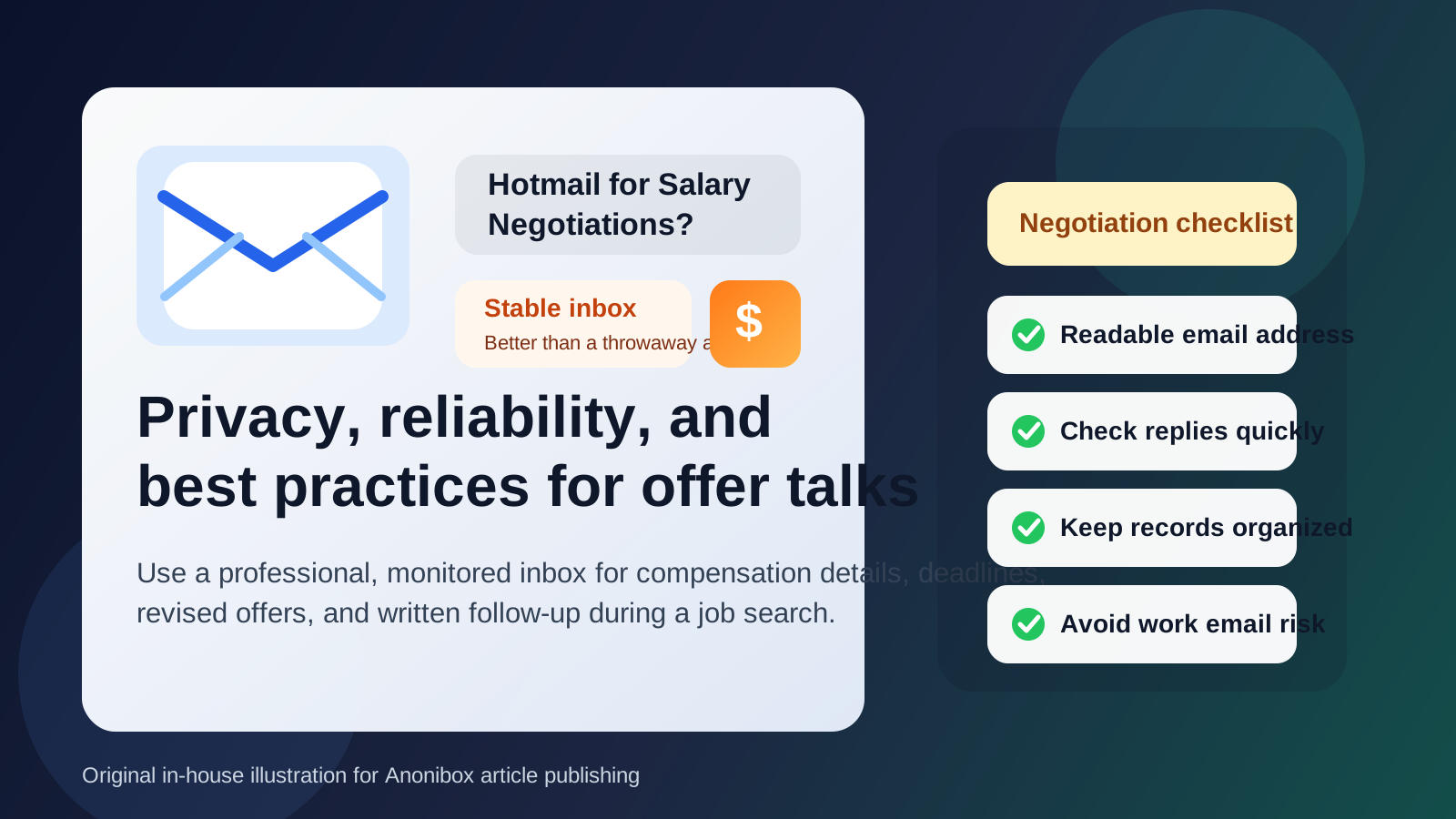
- Is the address readable and professional?
- Do you check it multiple times a day during the negotiation?
- Can you search it easily and keep one employer’s thread organized?
- Are your password, recovery details, and device access up to date?
- Are you using it instead of a work-controlled email account?
If the answer is yes to those questions, Hotmail is probably good enough for the job.
Final answer
Hotmail is usually fine for salary negotiations if the account is stable, secure, and presented professionally. The biggest risks are not the Hotmail brand itself, but a messy inbox, a weak username, or slow communication habits.
Use a personal account you control, keep the thread organized, and respond with care. If your Hotmail account meets those standards, there is no strong reason to abandon it just because it is an older provider. And if it does not, the right move is not a disposable inbox—it is a cleaner long-term account that can carry the conversation all the way from negotiation to signed offer.