Yes — Hushmail can be a good choice for salary negotiations if you want a separate, privacy-focused inbox and you will monitor it closely through the whole offer process.
It is usually a better fit than a temporary inbox because compensation emails need continuity, fast replies, and a written record you can still access when terms change.
If you are wondering should you use Hushmail for salary negotiations?, the honest answer is less about the brand itself and more about how you plan to use it. Salary negotiations are one of the points in a job search where your inbox suddenly becomes part of a real business conversation. Offer details, revised numbers, bonus clarifications, equity explanations, relocation discussions, and response deadlines can all pass through email. That means the address you use needs to be dependable, professional enough, and easy for you to manage without mistakes.
For some job seekers, Hushmail is a sensible option because it gives them a clean separation from an older personal inbox or a current employer’s email account. That separation can be genuinely useful. But a private inbox is only helpful if you check it regularly, keep the thread consistent, and avoid treating it like a disposable mailbox you might stop using next week.
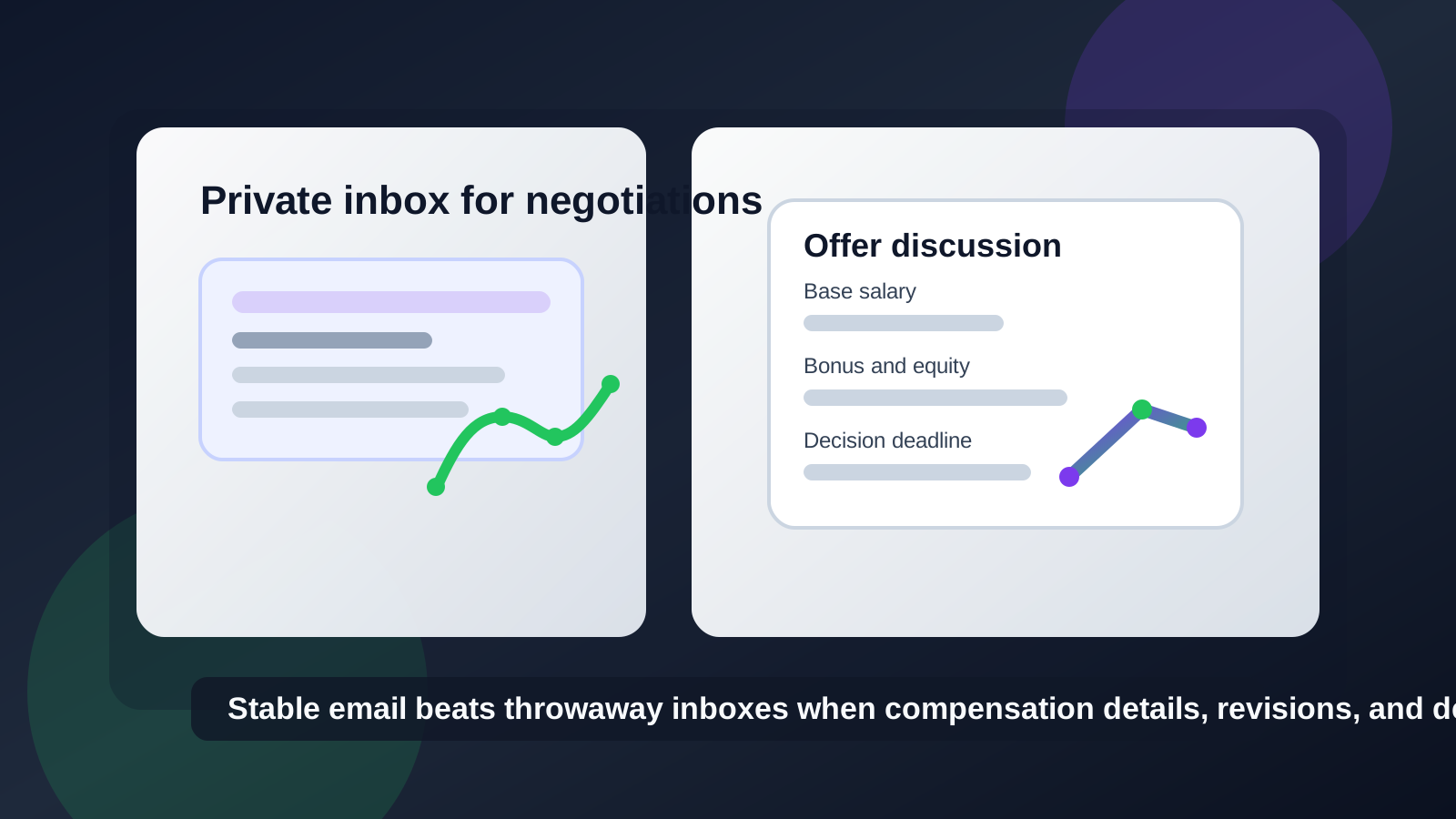
Why salary negotiations need a stable inbox
Early in a job search, email can feel interchangeable. You apply, get a confirmation, maybe schedule a screening call, and move on. Salary negotiations are different. Once compensation is on the table, the email thread often becomes the written history of what was discussed and what changed.
You might receive:
- an initial offer summary
- a revised base salary after a counterproposal
- details about bonus eligibility or commission structure
- equity or stock-option explanations
- benefits documents and start-date options
- time-sensitive deadlines for accepting or responding
That is not the kind of conversation you want buried in a noisy inbox, tied to a company account you do not control, or sitting in a throwaway address that may disappear from your workflow. You need an inbox you can search, trust, and keep open for as long as the negotiation and onboarding steps continue.
Short answer: Hushmail is often reasonable, but not automatically ideal
In many cases, yes. Hushmail can work well for salary negotiations because it is a real long-term inbox rather than a temporary mailbox. It can give you better separation, less clutter, and more control than using a current employer’s email or a chaotic old personal account.
But it is not automatically the best choice for everyone. If you already have a stable professional inbox you check constantly, switching just for the sake of switching may add friction. Negotiations reward consistency more than novelty.
What Hushmail does well during compensation discussions
It gives you separation from your oldest personal inbox
If your main personal address is buried under newsletters, receipts, app alerts, and everyday life, a dedicated negotiation inbox can be a relief. A cleaner inbox makes it easier to spot the messages that actually matter, especially when an employer sends a revised package or asks for a same-day answer.
It is more appropriate than a work-managed account
Using your current work email for salary negotiations with another employer is usually a bad idea. Even if nobody is actively watching the mailbox, it still belongs to your employer. Access, retention, device management, and account recovery are not under your control. A personal Hushmail account is far safer than discussing new compensation through employer-owned systems.
It can support a more private workflow
Some people simply want their job-search communication separated from the rest of their digital life. That is reasonable. Hushmail can give you a personal inbox you control without forcing offer details into the same account you use for family messages, shopping receipts, and every online account you have ever created.
It works better than temporary email at this stage
This is the important comparison for Anonibox readers. Anonibox-style temporary email can be useful earlier in the funnel for low-trust forms, job-board experiments, or recruiter-gated downloads you do not fully trust yet. Salary negotiations are not that stage. By the time money is being discussed, you usually need persistence more than distance. A stable inbox wins.
Where Hushmail can create friction
You do not check it often enough
The biggest risk is not Hushmail itself. It is neglect. A dedicated inbox only helps if it becomes part of your actual routine. If you check Gmail or Outlook all day but remember Hushmail only once each evening, then the privacy benefit is being canceled out by slower replies.
You switch addresses in the middle of a live negotiation
Consistency matters once a recruiter and HR team are already in motion. If your applications, interviews, and calls all happened on one address, then suddenly the offer discussion moves to a different inbox, it can create avoidable confusion. If you want Hushmail to be your negotiation inbox, it is usually better to make that decision before the offer stage begins.
Your address or display name looks unprofessional
The mailbox provider usually matters less than people assume, but presentation still matters. Keep the address clean and your display name obvious. A compensation thread should not be attached to an old joke handle, random gamer tag, or a confusing nickname that makes a recruiter wonder whether they emailed the right person.
You assume privacy replaces discipline
A private inbox does not fix weak habits. If you ignore messages, miss attachments, or fail to keep a clear record of what was offered, the provider name will not save you. Negotiations still depend on clarity, responsiveness, and organization.
When Hushmail makes the most sense
Hushmail is usually a solid option when most of the following are true:
- You want a separate inbox for a serious job search.
- You can monitor it multiple times per day.
- You want to avoid using a work email entirely.
- You prefer a quieter inbox for offer-related documents and deadlines.
- You plan to keep the account active through the full decision and onboarding window.
In that setup, Hushmail can be a practical tool: private enough to feel separate, stable enough to support real negotiations, and clean enough to keep critical details from getting lost.
When you should probably use something else
You may be better off sticking with another inbox if:
- you already have a well-managed separate job-search email that everyone is using
- you are likely to forget to check Hushmail frequently
- you created the account impulsively and do not plan to keep it active
- you are already deep in an offer thread on another address and changing now would add confusion
Late-stage hiring is not the best time to optimize for experimentation. It is the best time to optimize for reachability and clean records.
Best practices if you use Hushmail for salary negotiations
1. Keep the entire negotiation in one thread when possible
Reply in-thread instead of starting fresh messages every time. That helps recruiters, HR, and you keep track of what was proposed, what changed, and what still needs a decision.
2. Turn on notifications during active negotiations
You do not need to stare at your phone all day, but you do need to know when a revised offer or deadline arrives. Compensation discussions often move in short bursts.
3. Save key documents locally
Download offer letters, benefits summaries, and compensation breakdowns that matter. Email is a communication channel, not your only filing cabinet.
4. Use a professional display name and signature
Your name should be obvious. A short signature with your name and phone number is plenty. This is not the moment for decorative quotes, oversized banners, or clutter.
5. Pair it with a sensible phone strategy
Some recruiters negotiate partly by email and partly by phone. If privacy is your goal, think about whether your phone setup matches your email strategy. A carefully separated inbox plus an always-on work phone number is a mismatched system.
6. Watch spam and filtered folders
Offer attachments, HR portal invites, or automated reminders do not always land where you expect. During an active negotiation, check spam or filtered folders just in case.
Practical examples
Good fit
You already use Hushmail for your job search, the address looks professional, and you check it throughout the day. In that case, continuing salary negotiations there is usually a very sensible move.
Okay but not ideal
You decide to move to Hushmail shortly before the offer stage because your personal inbox is chaos. That can still work, but only if you clearly communicate the new address once and then stay consistent.
Poor fit
You create a Hushmail account just because it sounds private, but you do not configure notifications, barely open it, and plan to abandon it after the first offer email. That is exactly the situation where a stable-looking inbox still behaves like a throwaway one.
A quick checklist before you negotiate through Hushmail
- Will I check this inbox closely while negotiations are active?
- Does the address look clean and professional?
- Am I avoiding employer-owned email and devices where possible?
- Can I keep offer emails, revisions, and deadlines organized in one place?
- Do I plan to keep this account active through the final decision?
If the answers are mostly yes, Hushmail is probably a workable negotiation inbox. If not, the smarter choice is often the inbox you already manage best.
Final answer
Hushmail can be a good choice for salary negotiations if you want privacy, separation, and a calmer inbox without sacrificing continuity.
Just do not treat it like temporary email. When pay, deadlines, and written terms are being discussed, stability matters more than novelty. Use Hushmail if it helps you stay organized and reachable, keep the account professional, and stick with it until the compensation conversation is fully finished.