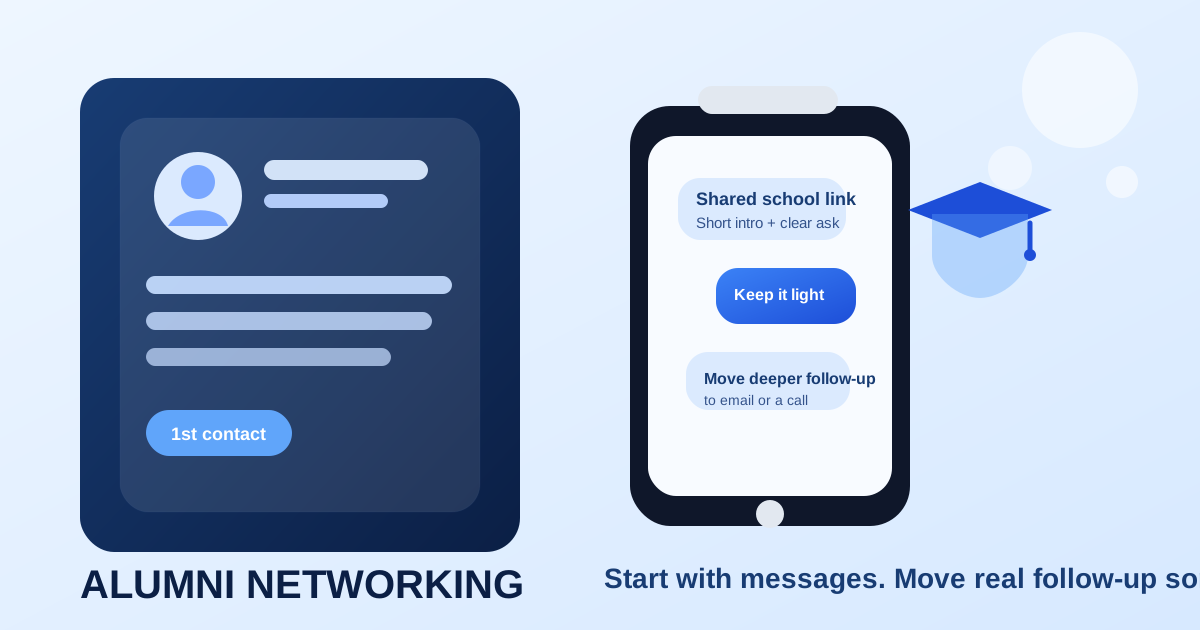
Yes, LinkedIn Messages are usually a good first-contact channel for alumni networking, but they are not the best place to run the entire relationship. Use them to reconnect, reference your shared school link, and ask for a light next step, then move serious follow-up to email or a scheduled call.
That balance matters because alumni networking sits in an awkward middle ground: it is warmer than a cold outreach, but often more personal and longer-lived than a one-off event conversation. LinkedIn can open the door cleanly, yet relying on it for everything can create privacy, visibility, and follow-up problems later.
Why LinkedIn Messages feel natural for alumni networking
Alumni networking often starts with a built-in reason to talk. You already share a school, a program, a student organization, a graduation year, a campus job, or a former professor. That shared context makes LinkedIn Messages feel less intrusive than a cold email and less personal than a text message to someone you barely know.
For many people, that is exactly the right tone. You are not pretending you have a deep relationship, but you are also not introducing yourself from scratch. A short message that says who you are, how you found them, and why you are reaching out usually makes sense in this setting.
LinkedIn also solves a practical problem: you may not know which email address the other person actually checks. Alumni move companies, change roles, finish graduate school, take career breaks, or shift industries. A school directory or older company page might point to outdated contact details. LinkedIn profiles are often easier to find than reliable email addresses, especially when you are only looking for an introductory conversation.
Short answer: good for first outreach, weak for long-term follow-up
If your goal is to make the first connection, send a thank-you after an alumni event, or ask for a short career conversation, LinkedIn Messages are often a smart choice. They work well when you want a professional but low-pressure opening.
Where people get into trouble is treating LinkedIn as the permanent home for every later step. Alumni relationships often turn into something more substantial: a coffee chat, an informational interview, a job lead, a referral, a portfolio review, or a long-term mentor connection. At that point, LinkedIn becomes less reliable than email and less organized than a calendar-backed conversation.
When LinkedIn Messages are the right choice
You are reaching out for the first time
This is the strongest use case. If you found someone through your university alumni tool, a school LinkedIn group, or a post-event attendee list, a short LinkedIn note feels proportionate. You are signaling professional intent without jumping straight into a more personal channel.
You want a lightweight ask
LinkedIn works best when the first ask is small. Good examples include:
- asking whether they would be open to a short chat about their career path
- following up after an alumni panel or networking mixer
- thanking them for advice they already gave you
- asking one focused question about a role, industry, or transition
That kind of message is easy to read and easy to answer. It respects the fact that shared alumni status creates familiarity, not unlimited access.
You do not want to expose your personal phone number yet
That is an important privacy benefit. With LinkedIn, you can start the conversation without giving a stranger your phone number, your everyday inbox, or other direct contact details. For early-stage outreach, that is often the safest move.
Why alumni networking is different from regular networking-event follow-up
Alumni networking tends to last longer. You may reconnect with the same person months later, ask a follow-up after changing industries, or return when you are applying to a company they know well. That long time horizon changes the channel decision.
At a normal networking event, a quick LinkedIn note might be the entire follow-up. In alumni networking, the first message is often just the beginning. The channel has to support memory, trust, scheduling, and sometimes more detailed professional help. LinkedIn can start that process, but it rarely handles all of it well.
There is also more identity overlap. Alumni contacts may feel semi-social as well as professional. You might share old campus references, classmates, or mutual groups. That makes the conversation warmer, but it also means you should be careful not to blur boundaries too quickly. A platform message is a good buffer at first.
Where LinkedIn Messages fall short
People do not always check them promptly
Some alumni use LinkedIn daily. Others open it only when they are hiring, job searching, or updating their profile. A message can sit unnoticed for much longer than an email, especially if the other person is not active on the platform.
The conversation can disappear into inbox clutter
Many professionals receive a lot of low-quality messages on LinkedIn: sales outreach, recruiter pitches, generic connection scripts, and vague “pick your brain” requests. Even a thoughtful alumni note has to compete with that noise.
It is not ideal for scheduling and logistics
If someone says yes to a 20-minute coffee chat, a referral discussion, or a more detailed call, email usually becomes the cleaner channel. Time-zone details, calendar invites, meeting links, and reschedules are simply easier to manage there.
It can expose more of your professional identity than you intend
On LinkedIn, your current role, recent activity, public profile framing, and mutual connections are all part of the interaction. That is sometimes helpful, but it can also make you feel more visible than you would in a dedicated job-search or networking inbox.
If you are exploring a career change quietly, that extra visibility matters. You may want the first contact on LinkedIn, but not every later follow-up there.
A better workflow for most alumni outreach
- Start on LinkedIn with a short, specific message tied to your shared alumni context.
- Keep the first ask small such as a quick question or a short conversation request.
- Move to email once the conversation becomes real especially if you are scheduling time, sharing materials, or continuing beyond one exchange.
- Use a calendar only after they agree rather than forcing structure too early.
This workflow gives you the best of both worlds. LinkedIn lowers the friction of first contact, while email gives you a cleaner long-term trail.
What a good first alumni networking message should include
The best LinkedIn Messages are short enough to read quickly but specific enough to feel human. A strong note usually includes:
- your shared school connection
- a reason you chose that person specifically
- one clear and modest ask
- an easy out if they are busy
For example, instead of sending a vague message like “Would love to connect and learn more,” it is better to say that you are a fellow alum, mention the common program or career path, and ask whether they would be open to a brief conversation about one specific transition.
That is more respectful, easier to answer, and far less likely to be mistaken for a mass networking script.
When you should move off LinkedIn
Move the conversation off LinkedIn when any of the following happens:
- they agree to a call or coffee chat
- they ask to see your résumé, portfolio, or writing samples
- you are discussing a real opening or referral path
- the conversation is likely to continue over weeks or months
- you need a record that is easier to search later
If you want to keep your main inbox separate from networking activity, that is where a dedicated address can help. A tool like Anonibox can give you a cleaner alumni-networking inbox without forcing every early contact into your everyday personal email. That is especially useful if you are having several alumni conversations at once and want better separation between networking, applications, and normal life.
When LinkedIn Messages are the wrong main channel
LinkedIn is a weak choice when your message is long, highly personal, or heavily transactional right away. It is also not a great place to paste a full career story, attach large amounts of context, or pressure someone into a fast response.
You should also be cautious if you are tempted to keep sending follow-ups there just because the first one was unanswered. Alumni networking still depends on consent and timing. One thoughtful message and one polite follow-up is usually enough. Beyond that, silence is often the answer.
Privacy tips for using LinkedIn in alumni outreach
- Do not share your phone number in the first message. Let trust build first.
- Do not overshare personal background details. Keep the conversation professionally relevant.
- Be careful with attachments and external links. In early outreach, they can feel heavy or suspicious.
- Use email for the durable relationship layer. LinkedIn is fine for opening the door, not always for keeping the whole file cabinet.
- Respect platform context. Shared alumni status is not permission for aggressive follow-up.
A practical rule to remember
Think of LinkedIn Messages for alumni networking as the hallway conversation after class, not the entire semester. It is a good place to say hello, remind someone how you are connected, and ask for a reasonable next step. It is not always the best place to store the ongoing relationship.
Final answer
So, should you use LinkedIn Messages for alumni networking? Usually yes — for first outreach and light follow-up. They are professional, easy to access, and less privacy-invasive than giving out your phone number right away.
But once the conversation becomes meaningful, move it somewhere sturdier. Email, a scheduled call, or a more organized contact setup will usually serve both people better. That approach keeps the first touch warm and low-pressure while protecting your privacy and making the long-term follow-up easier to manage.