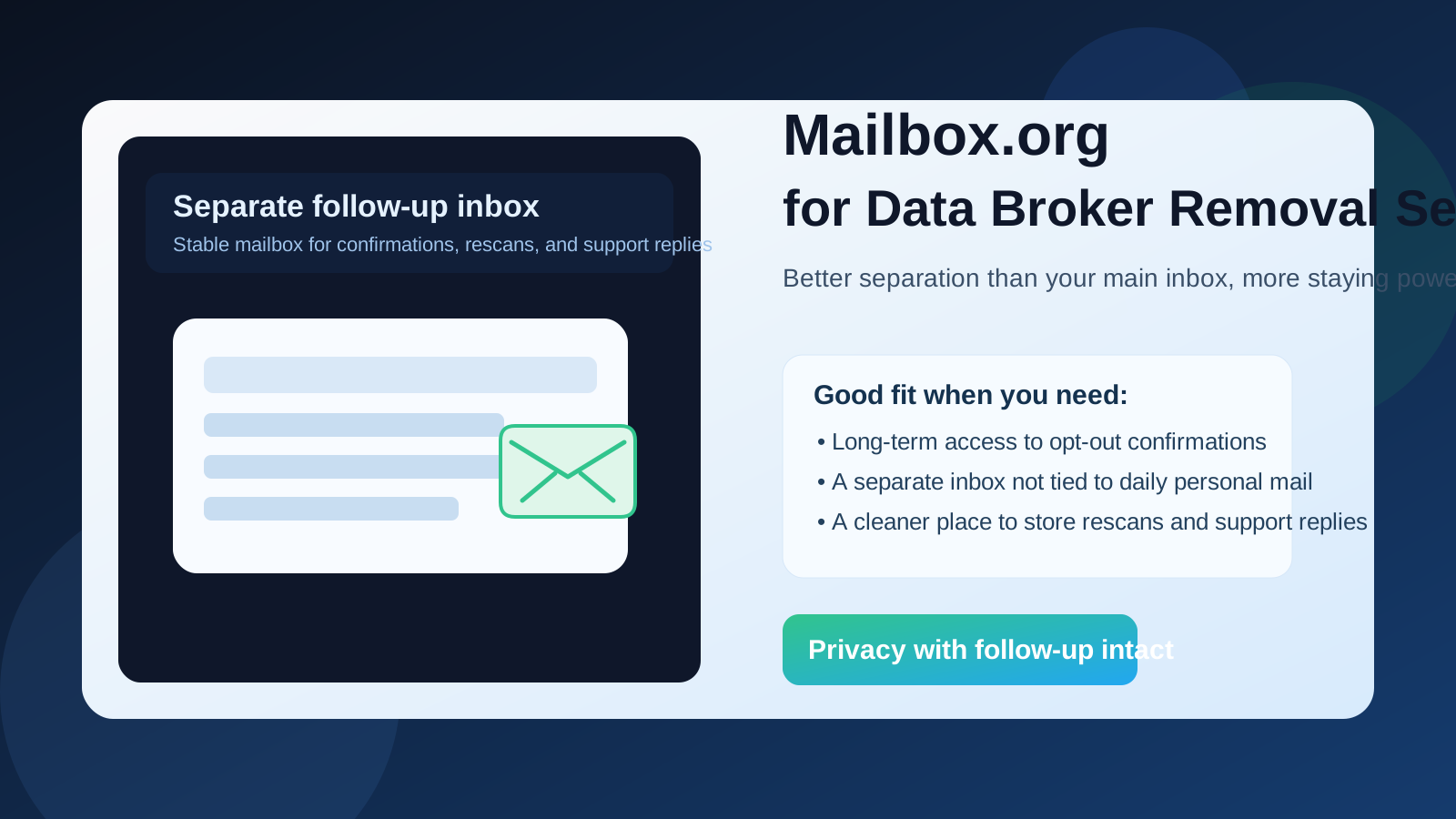
Mailbox.org can work well for data broker removal services if you want a separate, stable mailbox that is not tied to your main everyday inbox.
Usually yes — Mailbox.org is a reasonable choice for data broker removal services when you need long-term access to confirmations, rescans, and support replies without reusing your primary email address.
That said, the best answer depends on what you are trying to protect and how long you expect the relationship to last. Data broker removal services are rarely one-and-done. Even when signup takes only a few minutes, the follow-up can stretch across weeks or months. You may receive verification requests, opt-out status updates, rescan notices, support replies, billing emails, renewal reminders, or alerts telling you that a profile has reappeared. Because of that, the email address you choose is part of the privacy decision, not just a form field.
Mailbox.org sits in an interesting middle ground. It is more durable and manageable than a throwaway inbox, but it can still give you cleaner separation than using the same personal mailbox you rely on for family, shopping, account recovery, and everything else. For many people, that makes it a practical fit for this use case.
Why the email choice matters for data broker removal services
People usually sign up for data broker removal services because they want less exposure, not more. If you give those services the same address connected to your whole digital life, you are extending the reach of an identifier that may already be widely shared. That does not automatically make the service unsafe, but it does reduce compartmentalization.
At the same time, going too disposable can create a different problem. If the inbox disappears, gets abandoned, or is too hard to monitor, you might miss emails that matter later. A service cannot easily tell you that an opt-out needs reconfirmation if you no longer check the address you used at signup.
So the goal is not just “hide your email at all costs.” The goal is to use an address that gives you enough separation from your main identity while still being dependable enough for ongoing privacy management.
What Mailbox.org does well for this use case
1. It gives you separation from your main inbox
The biggest advantage is simple compartmentalization. If you do not want data-broker-removal traffic landing in the same inbox as personal conversations, financial notifications, and long-term account logins, a separate Mailbox.org mailbox can help. That separation makes it easier to keep privacy administration visible without letting it spill into the rest of your life.
2. It is better suited to follow-up than a temporary address
A temporary inbox can be great when you only need a fast verification email or you are testing something low-stakes. But many data broker removal services involve recurring contact. If the provider sends a support response in three weeks, a throwaway inbox may not be much help by then. A stable mailbox gives you a better chance of keeping the thread intact.
3. It keeps the workflow organized
Even modest privacy projects can generate more email than people expect. You may get account creation messages, confirmation links, broker-specific updates, support tickets, “we rescanned your data” notices, and subscription admin messages. Keeping those in a dedicated mailbox makes the work easier to audit later. You can check one place, search one place, and keep the whole project from dissolving into inbox clutter.
4. It can be a more deliberate privacy boundary
Some people do not love the idea of connecting privacy-management tasks to the same large-platform mailbox they use for everything else. A dedicated Mailbox.org account can feel cleaner for that reason alone. The practical benefit is not magic anonymity; it is just better separation and clearer intent.
When Mailbox.org is a strong choice
Mailbox.org is a good fit when your situation looks like this:
- You want a separate mailbox specifically for opt-outs, data-broker removals, or privacy-admin tasks.
- You expect the service to send follow-up messages beyond the first day.
- You actually plan to keep checking the inbox occasionally.
- You do not want to reuse the same address attached to your primary personal identity.
- You want something more stable than a burner or temporary inbox.
In short, it works best when you treat it as a dedicated privacy-management mailbox rather than a random address you will forget next week.
When Mailbox.org may not be the best answer
1. If you only need one quick verification email
For a very short-lived task, a stable paid mailbox can be more setup than you need. If you are only testing an intake form, checking a trial, or verifying whether a service is worth considering at all, a temporary inbox may be more efficient. That is the kind of moment where something like Anonibox can make sense: get the first message, assess the situation, and decide whether the service deserves a longer-term contact address.
2. If you will never monitor the inbox
A separate mailbox only helps if you use it. If you create a mailbox, sign up once, and never look at it again, you lose one of the main reasons to choose a stable address in the first place. Data broker removal services can require later action, and missed emails can break the workflow.
3. If you reuse the same address everywhere
A dedicated mailbox becomes less useful if it slowly turns into another all-purpose inbox. If you use the same Mailbox.org address for privacy tools, newsletters, shopping, random app signups, and account recovery, you weaken the boundary you were trying to build. The value comes from disciplined scope, not from the brand name alone.
Mailbox.org vs a temporary email for data broker removal services
This is usually the real comparison.
Temporary email is better when you need speed, low commitment, and minimal inbox exposure during an early experiment. It is useful for first-pass verification, low-stakes signups, or checking whether a service looks legitimate before giving it a more durable contact point.
Mailbox.org is better when you need continuity. If the service may send future updates, account notices, support replies, or periodic rescans, a stable mailbox is the safer practical choice. You are trading some convenience for a much better chance of keeping important messages accessible later.
For many people, the smartest workflow is staged: use a temporary inbox during research, then switch to a dedicated long-term mailbox once you decide the service is worth using seriously.
Mailbox.org vs your personal everyday email
This comparison is easier. In most cases, a separate Mailbox.org inbox is better than handing over the same personal email you use for everything else. Your main inbox already carries a lot of identity weight. It is tied to contacts, purchase histories, password resets, subscriptions, and years of digital residue. There is usually no privacy advantage in exposing that address to one more category of service if you can avoid it.
Using a separate mailbox does not make you invisible, but it reduces unnecessary linkage. That alone is often worth it.
How to use Mailbox.org well for this purpose
Use it only for privacy-management tasks
Decide what the inbox is for before you start. If it is your data-removal and privacy-admin mailbox, keep it that way. The more narrowly you define its job, the more useful the separation becomes.
Store the important confirmations outside the inbox too
Save order confirmations, support case numbers, or important broker-removal notices somewhere you can find them later. Email search is helpful, but a simple note or document with the key details makes follow-up easier.
Check it on a schedule
You do not need to obsess over it, but you should check it often enough that you do not miss reconfirmation requests or support replies. A quick recurring review is usually enough.
Keep the account secure
Privacy workflows still need basic account hygiene. Use a strong password, keep recovery details current, and use extra account protection when available. A separate mailbox is only helpful if you can depend on access to it later.
Be careful with the service itself, not just the email
The email choice matters, but it does not replace judgment. If a supposed data broker removal service makes exaggerated promises, asks for unnecessary sensitive information, or feels evasive about how it works, the better mailbox will not fix that. Choose the service carefully first.
Red flags to watch for before you sign up
- Promises that your information will disappear everywhere permanently.
- Pressure to provide more personal data than seems necessary up front.
- Vague explanations of which brokers are covered or how removal requests are handled.
- Poor support visibility, no clear contact path, or confusing billing terms.
- Requests to send highly sensitive identity documents before you understand why.
A good email setup helps with privacy, but it should never trick you into trusting a weak service. Keep the same skepticism you would use with any other privacy product.
Final answer
Yes, Mailbox.org can be a good choice for data broker removal services — especially if you want a separate, stable inbox that keeps opt-out follow-up away from your main email account.
It is usually a better fit than a temporary inbox once the service becomes an ongoing relationship, but it works best when you keep it dedicated, secure, and actively monitored. If you only need a one-time verification, a temporary inbox may be enough. If you want long-term follow-up without exposing your everyday mailbox, Mailbox.org is a sensible middle-ground option.