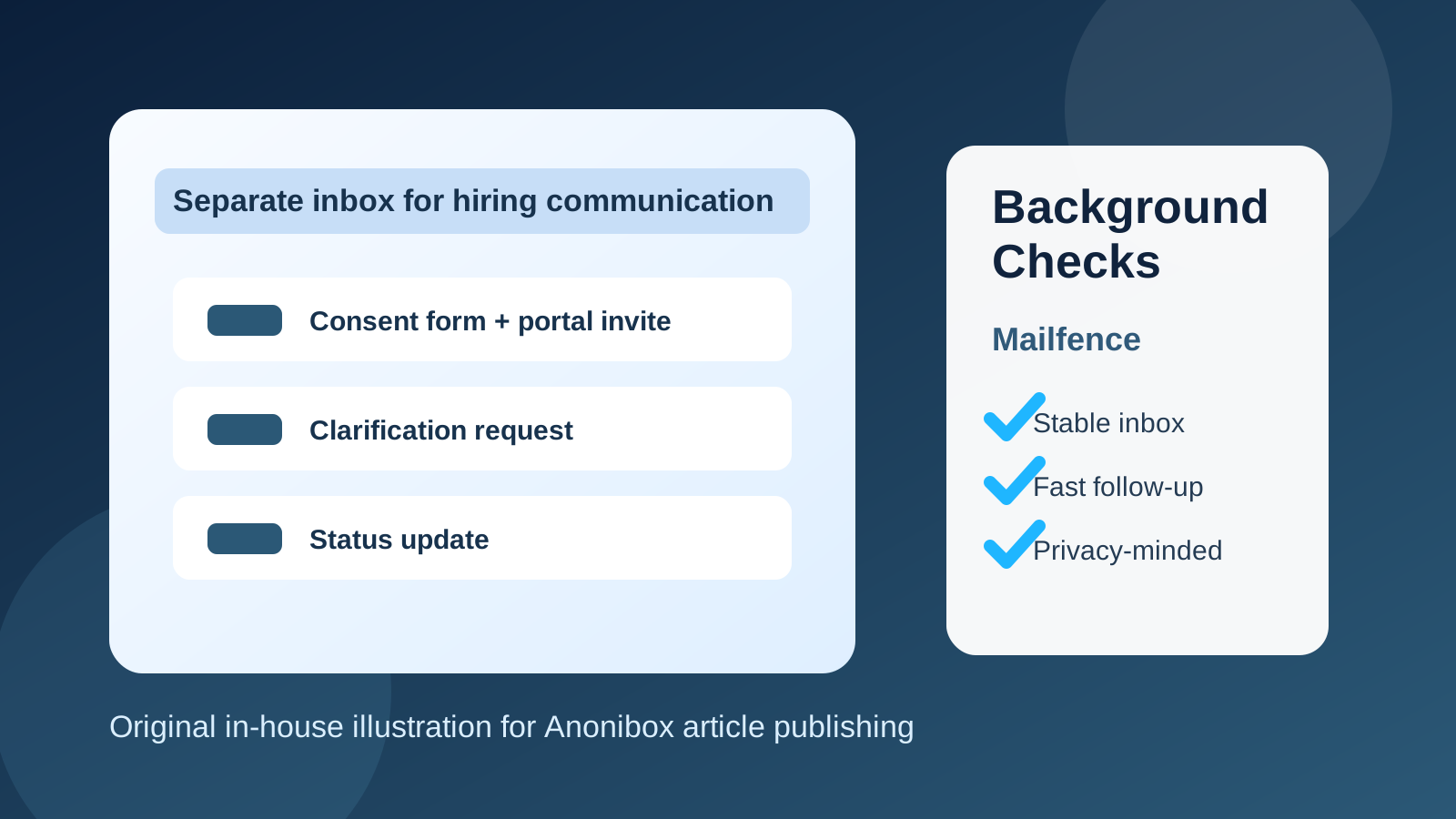
Mailfence can be a reasonable email address for background checks if you use it as a stable inbox you check closely, not as a throwaway address.
If you are asking should you use Mailfence for background checks? the short answer is yes, usually — as long as the address looks professional, stays accessible through the full screening process, and you respond quickly to time-sensitive messages.
That distinction matters. Background checks are not the same as early job-board browsing or one-off signups. Once an employer or screening vendor reaches this stage, the email you use may receive consent forms, portal invitations, deadline reminders, correction requests, and identity-verification follow-ups. At that point, privacy still matters, but reliability matters just as much.
Mailfence can fit that balance well for some job seekers. It gives you a more controlled inbox than using your oldest personal email everywhere, and it can help you keep hiring-related communication separate from shopping receipts, newsletters, and years of accumulated clutter. But like any background-check email, it only helps if you treat it as a real working inbox.
Short answer: Mailfence is usually fine for background checks
Most employers do not care whether your background-check email is Gmail, Outlook, iCloud Mail, Proton Mail, or Mailfence. What they care about is whether the address works, whether you notice messages quickly, and whether the process keeps moving without unnecessary delays.
That means Mailfence is usually acceptable if:
- you monitor it consistently during the screening window,
- you used it intentionally rather than as a disposable stopgap,
- you can keep access to it for as long as follow-up messages may arrive, and
- you use the same address consistently across the hiring steps when possible.
If those conditions are true, Mailfence can be a smart privacy-conscious option. If they are not, a more established inbox that you already check constantly may be safer.
Why background-check email is different from early-stage job-search email
Earlier in a job search, people often want distance from spammy job boards, broad recruiter lists, or low-trust forms. That is where a temporary email workflow can make sense. A tool like Anonibox is useful when you want to collect a verification email, test a platform, or keep your primary inbox away from early-stage noise.
Background checks are different. By the time an employer is running one, the communication usually has a defined purpose and a real timeline. The email address on file may be used for:
- authorization and disclosure forms,
- screening-vendor portal links,
- requests to clarify past employment or address history,
- deadline reminders if you have not completed a step,
- status notifications tied to the hiring timeline, and
- follow-up instructions if something needs correction.
That is why Mailfence can work here while a temporary inbox usually should not. The core question is not whether the address is privacy-friendly. It is whether it remains dependable long enough for a real hiring workflow.
Why Mailfence can be a good choice for background checks
1. It gives you privacy without looking disposable
One of the biggest advantages of a separate privacy-oriented inbox is that it creates distance between a serious hiring process and the main email address attached to the rest of your life. That is useful if you do not want every employer, recruiter, and third-party screening vendor tied directly to the same inbox you use for personal accounts, purchases, subscriptions, and years of digital history.
Mailfence can help you keep that boundary without creating the impression that you are using a throwaway address. For background checks, that matters. You want an address that feels stable enough for a formal process, not one that looks like it might disappear after a few hours or a few days.
2. It supports cleaner compartmentalization
Background-check messages are easy to miss when they land in a crowded everyday inbox. Using Mailfence as a dedicated hiring-process address can make the workflow cleaner. You can keep consent forms, portal links, and reminder emails separate from unrelated daily traffic, which reduces the odds of overlooking something important.
That organization benefit is not just about privacy. It is about speed. If a screening company asks you to correct a date or complete a form by tomorrow, you want that message visible right away.
3. It can reduce unnecessary inbox exposure
Even when the employer itself is legitimate, background checks often involve outside vendors, automated systems, and multiple contact points. Using a separate address can limit how widely your oldest long-term inbox is distributed. That does not stop all data sharing, and it does not create any legal or security guarantee, but it can reduce unnecessary exposure compared with using the same address for everything.
4. It can fit a more intentional privacy workflow
Many job seekers are not trying to hide from employers. They are just trying to stay organized and avoid oversharing. Mailfence can work well for that mindset. It gives you a controlled inbox for serious hiring steps without forcing you into a temporary-email model that may break once the process gets more formal.
Where Mailfence can create friction
Mailfence is not automatically the best choice in every case. There are a few situations where it can create friction if you are not careful.
1. If you do not check it often
A privacy-focused inbox only helps if you actually monitor it. Background checks can stall because candidates miss a simple reminder, a consent link expires, or a screening vendor asks a clarification question that sits unanswered for two days. If Mailfence is not already part of your daily routine, make sure you are willing to watch it closely before you use it.
2. If you switch addresses mid-process
Consistency matters. If you applied with one email, interviewed through another, and then hand over a third address for the background-check stage, you increase the odds of confusion. That does not mean you can never switch, but if you do, communicate clearly and make sure all parties know which address should be used going forward.
3. If the employer already has a reliable thread with you elsewhere
Sometimes the simplest answer is the best one. If you have already been communicating smoothly through another professional inbox and nothing about that setup is bothering you, changing addresses just for the sake of change may add more complexity than value.
4. If you expect a disposable-email experience
Mailfence is a better fit than a temporary inbox during background checks precisely because it is meant to be ongoing. If your goal is to avoid any lasting connection at all, background checks are usually the wrong stage for that approach. Screening workflows often need continuity.
When Mailfence makes the most sense
Mailfence is often a solid choice for background checks when:
- you want a separate job-search inbox that still feels professional,
- you care about reducing exposure of your oldest personal email,
- you are organized enough to watch a dedicated inbox carefully,
- you expect multiple follow-up messages and want them separated from your main inbox, and
- you are already using Mailfence as part of a broader privacy-conscious communication setup.
In those cases, it can be a good middle ground between a mainstream personal inbox and a temporary address that is too fragile for a formal screening process.
When another email might be better
You may want to use a different email address if:
- you rarely log into Mailfence,
- your application and interview process already relied on another stable inbox,
- you are worried about forgetting which address a screening vendor used,
- you need the simplest possible setup with the fewest moving parts, or
- the role is moving quickly and you know your most frequently checked inbox is elsewhere.
The best background-check email is usually not the most private-looking one. It is the one that gives you enough privacy while still being dependable under time pressure.
Best practices if you use Mailfence for background checks
Check it like a primary inbox for the duration
During the screening window, treat Mailfence as if it were your main inbox. Check it multiple times a day, search it before assuming a message never arrived, and watch for messages from both the employer and any third-party screening company.
Keep the address consistent across documents and replies
If possible, use the same email address on consent forms, follow-up replies, and any portal profile tied to the screening. Consistency helps reduce avoidable confusion.
Save important emails outside the inbox too
Portal invitations, disclosure forms, case numbers, and support contacts are worth saving somewhere easy to find. Even if your inbox remains accessible, having a backup record of the key details makes the process less brittle.
Reply promptly and professionally
Privacy-minded does not mean distant or hard to reach. If a screening vendor asks for clarification, a fast and clear reply matters more than the email brand itself.
Do not overestimate what the provider changes
Using Mailfence does not make you anonymous, and it does not prevent an employer from learning the information you are required to provide during a legitimate background check. Its value is mainly in inbox separation, organization, and reducing unnecessary use of your main long-term address.
Mailfence vs temporary email for background checks
This is where a lot of people make the wrong comparison. Mailfence is not competing with your main inbox alone. It is also competing with the temptation to use something more disposable than the situation really allows.
For early-stage signups, low-trust job boards, or one-time verification flows, a temporary inbox can still be useful. Anonibox makes sense in that earlier stage because it helps you control spam and test whether a source deserves a more permanent contact method.
Once the employer has reached the background-check stage, though, the balance changes. You usually want an inbox that stays alive, stays searchable, and supports back-and-forth communication for as long as the process needs. That is why a stable provider like Mailfence is usually a better fit than a disposable address at this point.
A quick decision checklist
- Will I monitor this inbox closely for the full screening window?
- Can I keep access to it without interruption?
- Have I already been using it consistently in the hiring process?
- Does it help me separate hiring communication from my main inbox?
- Am I choosing it for organization and privacy rather than as a vanishing address?
If the answer to most of those is yes, Mailfence is probably a sensible choice.
Final answer: should you use Mailfence for background checks?
Yes, usually — provided you use it as a stable, professional inbox rather than a disposable shield. Mailfence can be a smart option if you want privacy, cleaner inbox separation, and better control over where your hiring-related messages go.
Just remember what matters most during background checks: continuity, visibility, and fast responses. If Mailfence supports those, it can work well. If it would make you slower to notice messages or more likely to switch addresses mid-process, a different inbox may be the safer choice. The goal is not to look mysterious. The goal is to stay organized, protect your personal inbox where reasonable, and keep the screening process moving without missed messages.