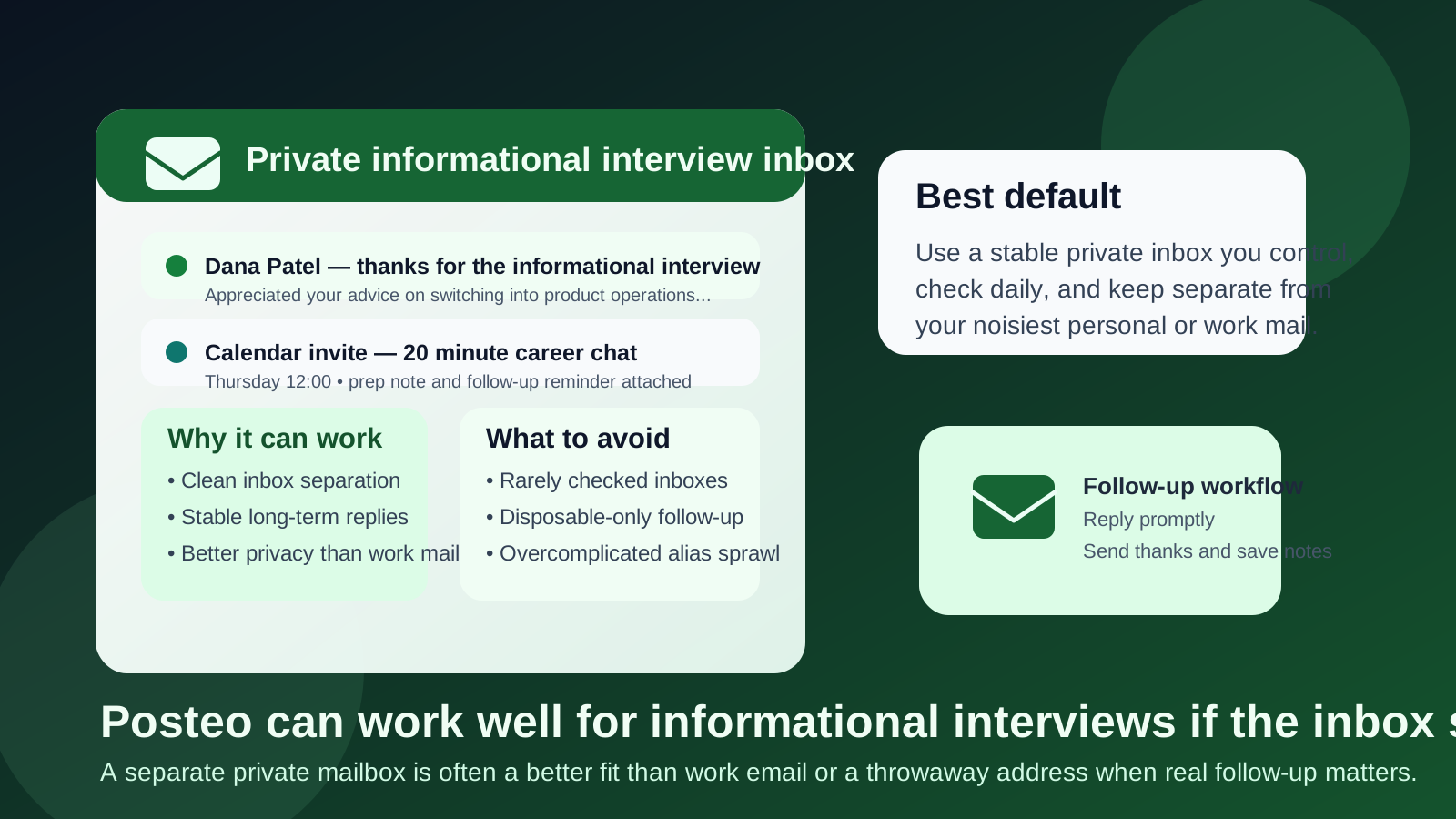
Yes — Posteo can be a good choice for informational interviews if you want a private, low-clutter inbox that you control and check regularly.
It is usually a better fit than a disposable address for this kind of outreach because informational interviews often lead to delayed replies, calendar invites, thank-you notes, and follow-up conversations that need a stable inbox.
Why this question matters
Informational interviews sit in an awkward middle ground. They are not formal job applications, but they are still part of your professional reputation. You may be reaching out to an alum, a former coworker, someone in a role you want to understand better, or a hiring manager you hope to build rapport with before a real opening appears.
That means the email address you use does more than deliver one message. It shapes how organized you look, how easy you are to reply to, and how much privacy you keep while exploring options. A privacy-focused mailbox like Posteo can make sense here, but only if it supports the kind of relationship-building informational interviews often become.
Short answer: Posteo is usually reasonable if reliability comes first
The main advantage of Posteo in this context is not that the provider name itself wins people over. Most people you contact will care much more about whether your message is thoughtful, your address looks normal, and your replies are prompt.
Posteo becomes a good fit when it helps you do three things at once: keep your career outreach separate from your everyday inbox, protect some privacy, and stay reachable for follow-up over time. If any of those break down — especially the follow-up part — the privacy benefit stops being worth much.
What informational interviews actually require from an email address
Unlike a newsletter signup or a one-time download, an informational interview usually has a longer arc. You might send an introduction, receive a reply days later, schedule a short call, follow up with a thank-you note, and then hear from that same person again weeks or months later.
Because of that, the right inbox for informational interviews needs to be:
- Stable: you should still be using it when a reply arrives later than expected.
- Monitored: if you miss a response, the opportunity may disappear quietly.
- Professional enough: the address should look normal and low-friction.
- Organized: you need to find old threads, notes, and introductions easily.
- Private enough: you should not feel forced to expose your oldest or most entangled inbox to every new contact.
Posteo can satisfy those requirements well. The bigger question is whether your setup around it does.
Where Posteo makes sense for informational interviews
1. You want a separate career-conversation inbox
Many people do not want informational interview outreach landing in the same place as shopping receipts, family messages, newsletters, product alerts, and random old accounts. A dedicated inbox makes those conversations feel more intentional and much easier to track.
If you use Posteo as a separate mailbox for networking and career exploration, that separation can be genuinely helpful. It gives you cleaner boundaries without forcing you into a temporary or obviously disposable setup.
2. You care about privacy but still need long-term continuity
Some people are comfortable using Gmail, Outlook, or iCloud Mail for everything. Others would rather keep professional outreach in a more privacy-conscious environment. Posteo can appeal to that second group because it offers separation and privacy without turning the conversation into a throwaway exchange.
That matters for informational interviews because a strong conversation can create future value long after the first email. A stable private inbox is usually a better match than a short-lived address.
3. You do not want to use work or school email
Using a work-managed or school-managed mailbox for private career exploration can create unnecessary overlap. Even when nothing dramatic happens, it often feels like the wrong boundary. A separate personal inbox avoids that problem and keeps the contact trail under your own control.
Where Posteo is a weaker choice
Using any inbox you rarely check
The most common failure mode is not the provider. It is the human. If you create a separate inbox and then forget to monitor it, you have solved the privacy problem by creating a follow-up problem.
Informational interviews are often slow-moving. Replies may come when you are busy or distracted. If Posteo is not part of your daily or near-daily routine, it becomes easier to miss a useful response.
Expecting privacy to fix a poor outreach strategy
A private mailbox does not compensate for weak outreach. If the subject line is vague, the request is too long, or the message sounds transactional, the provider will not save it. The quality of the outreach still matters more than the brand name of the inbox.
Replacing a stable inbox with a disposable one too early
This is where Anonibox and similar temporary-inbox tools are useful to mention carefully. They can be great when you want to avoid spam from gated downloads, signups, or low-trust forms. But once you are trying to build a real professional exchange with a person who may reply later, a disposable address is usually the wrong default.
If you use temporary email for intake or filtering, that is one thing. For the actual conversation thread, a stable inbox like Posteo is often the better option.
Posteo vs your main personal inbox
If your main personal inbox is already tidy, professional, and well-managed, you may not strictly need a separate provider for informational interviews. Plenty of people do just fine with one personal inbox.
But many people are not starting from that ideal state. Their everyday inbox is full of old subscriptions, social notifications, shipping updates, password resets, and unrelated noise. In that case, using Posteo as a dedicated professional-conversation inbox can reduce friction in a very practical way.
The benefit is less about image and more about control. When networking emails live in a cleaner space, follow-up becomes easier to manage and less likely to get buried.
Posteo vs a separate Gmail or Outlook account
For most recipients, a well-formed email address matters more than the provider behind it. That means the real comparison is not “Will people be impressed by Posteo?” but “Which inbox setup will help me stay organized, responsive, and private?”
A separate Gmail or Outlook account can also work well for informational interviews. They are familiar, easy to access, and often already part of someone’s routine. Posteo becomes more attractive when privacy and separation matter more to you, and when you are confident you will actually keep the inbox active.
If you are choosing between the three, ask:
- Which inbox will I reliably check?
- Which one gives me the cleanest separation from my daily clutter?
- Which one keeps my outreach under my own control rather than tied to an employer or school?
The best answer is usually the inbox that wins those three questions, not the one with the most interesting provider name.
When Posteo is a strong fit
- You want a separate inbox for networking and career conversations.
- You prefer a privacy-conscious setup over using your oldest everyday email account.
- You are willing to monitor the account consistently.
- You may need to keep threads alive for weeks or months.
- You want to avoid using work or school infrastructure for private outreach.
When it is the wrong default
- You will not check it regularly.
- You only created it for one message and do not plan to maintain it.
- Your real problem is weak organization, not provider choice.
- You need a mainstream inbox you already use every day and will trust yourself to keep active.
Best practices if you use Posteo for informational interviews
Keep the address simple and readable
You do not need a perfect personal brand address, but you do want something that looks normal and easy to type. Avoid cluttered usernames, old jokes, or anything that makes a professional exchange feel less polished than it should.
Set a reply-check routine
If Posteo is not your default inbox, build a habit around it. Check it daily while you are actively networking. Informational interviews often depend on timing, and a good reply can go cold faster than people expect.
Use folders or labels for outreach and follow-up
A simple system helps a lot. Keep one folder for active outreach, one for scheduled conversations, and one for follow-up. That may sound small, but it makes it much easier to remember who replied, who needs a thank-you note, and who said they were happy to stay in touch.
Pair the inbox with calendar reminders
Email is only half the workflow. Set reminders to prepare before the conversation and to send a thank-you note after it. A solid informational interview often creates value in the follow-up, not just the meeting itself.
Do not overshare sensitive personal context
Privacy is not only about the mailbox provider. It is also about what you put into the messages. Keep your outreach focused, respectful, and relevant. You do not need to reveal every detail of your current job frustrations or career uncertainty in the first message.
A practical setup that works well
- Create or keep one stable inbox specifically for networking and career outreach.
- If privacy matters to you, Posteo can fill that role well.
- Use the inbox consistently for outreach, replies, and informational interview follow-up.
- Set calendar reminders so prep and thank-you messages do not slip.
- Use temporary email tools like Anonibox for spam-heavy intake steps, not as the main long-term thread for human follow-up.
This gives you a good balance: enough privacy to avoid exposing your main inbox everywhere, but enough continuity to support actual professional relationships.
Common mistakes to avoid
Treating informational interviews like one-off transactions
They often are not. Even when nothing immediate comes from the call, the relationship can matter later. Choose an inbox that reflects that reality.
Creating too many separate identities
Some separation is useful. Too much separation becomes confusing. You do not need five mailboxes, rotating aliases, and a maze of forwarding rules just to ask someone for career advice.
Assuming a privacy-focused provider is automatically better
It is only better if it improves your actual workflow. A privacy-conscious inbox you ignore is worse than a mainstream inbox you manage well.
Final answer
So, should you use Posteo for informational interviews? Usually yes — if you want a private, separate inbox and you are prepared to keep it active, organized, and easy to reply from.
For many people, Posteo makes more sense than using work email or a disposable address, because informational interviews depend on trust, continuity, and delayed follow-up. If the account stays monitored and the address looks clean, it can be a very practical choice.
If your real goal is simply filtering spam from low-trust signups, use a temporary inbox for that stage and keep your actual networking conversations in a stable mailbox you control. That is usually the smarter long-term setup.