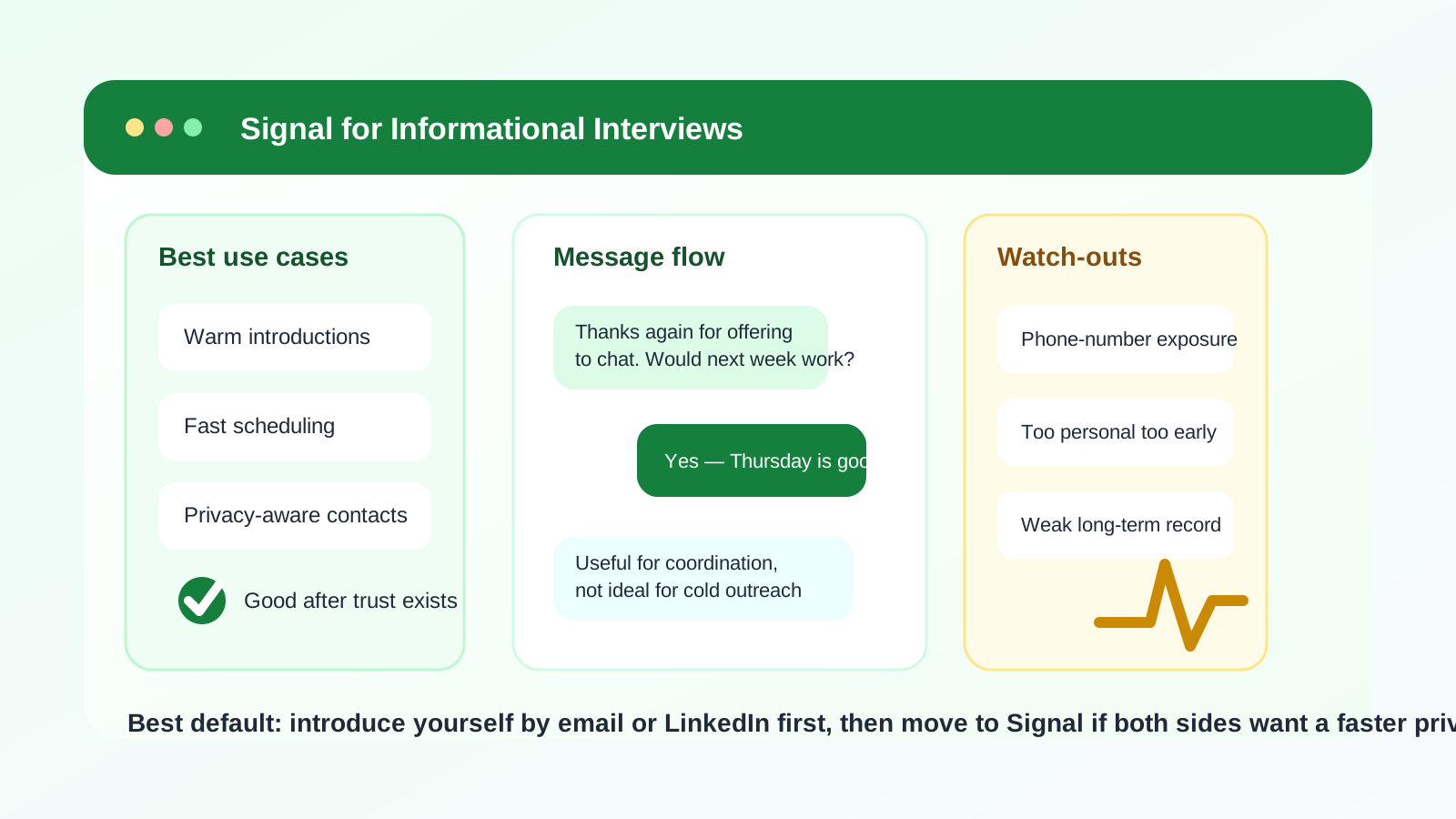
Signal can work for informational interviews, but it is usually better as a second-step channel than as your first point of contact. If you are reaching out to someone new for career advice, email or LinkedIn is usually safer because it gives you more context, cleaner professionalism, and less immediate phone-number exposure.
Use Signal when both sides already have some trust, the conversation is moving into quick scheduling or warm follow-up, and you are comfortable shifting from a formal networking lane into a more direct private messaging channel. For cold outreach or first impressions, Signal is rarely the strongest default.
Why this question comes up
Informational interviews sit in an awkward middle zone. They are not formal job interviews, but they are still professional conversations that can shape your reputation, referrals, and future opportunities. At the same time, they often grow out of warmer contexts: an alumni connection, a speaker you met after an event, a friend-of-a-friend introduction, or someone who said “feel free to reach out.”
That is why people start thinking about messaging apps. Signal is fast, private, and much less noisy than many mainstream social channels. If you already use it in daily life, it can feel more thoughtful than texting and less messy than carrying a conversation inside a crowded social app. But privacy-friendly software does not automatically make a channel ideal for professional outreach. The real question is not whether Signal is a good app. The question is whether it is the right app for this stage of the relationship.
Short answer: yes sometimes, but usually not first
If the other person already suggested Signal, or if you know them well enough that direct messaging feels normal, using Signal can be completely reasonable. It is especially useful for scheduling, quick follow-up, and conversations where both people already prefer a lower-friction channel.
But if you are contacting someone for the first time to ask for career advice, industry perspective, or a short networking call, Signal is usually not the best first move. Email and LinkedIn make it easier to introduce yourself properly, give context, and keep the interaction in a clearly professional lane before you invite a more personal mode of contact.
What Signal does well for informational interviews
1. It is fast for logistics
Signal is genuinely good for messages like “Would Thursday at 3 work?” or “I’m running five minutes late for our coffee chat.” Once an informational interview is already happening, a fast messaging channel can remove friction. That is especially true when the actual advice conversation will take place on a call, over coffee, or through a separate meeting link anyway.
2. It feels more private than many mainstream apps
Some people do not want professional conversations mixed with social feeds, public profiles, or community servers. Signal can feel cleaner than those environments. In privacy-aware circles, that can be a meaningful advantage. If both people already use it and understand its role, the channel may feel intentional rather than strange.
3. It works better once the relationship is warm
A warm introduction changes everything. If a former coworker connects you to someone, if an alum invites you to follow up there, or if you have already exchanged a few thoughtful emails, Signal can become a natural next step. At that point, you are not forcing a stranger into a personal-feeling messaging lane. You are simply choosing a faster channel for an already legitimate conversation.
4. It can help keep one conversation focused
Some people find email too slow for short scheduling loops. A single Signal thread can keep timing, links, and reminders in one place without turning into a long formal chain. For short bursts of coordination, that simplicity is useful.
Why Signal is often a weak first-contact choice
Phone-number exposure is still a real tradeoff
The biggest practical concern is simple: Signal is usually tied to your phone number, even if your profile is otherwise minimal. That means you may be giving a new professional contact a direct line into your more personal communications life earlier than necessary. Even if the conversation goes well, you should make that tradeoff deliberately rather than by default.
It can feel too personal too early
An informational interview is often about trust-building. The other person may not know you at all yet. When your first contact arrives in a private messenger instead of email or LinkedIn, it can feel slightly too intimate, especially if there was no prior invitation to use that channel. What feels efficient to you may feel abrupt to them.
It is weaker for searchable long-term follow-up
Informational interviews often create useful loose ends: book recommendations, names of teams to watch, companies to research, an offer to review your resume later, or a reminder to reconnect in a few months. Email is still better for that kind of durable record. Messaging apps are fine for quick exchanges, but they are not always the easiest place to store or revisit career context over time.
It narrows your room for a thoughtful introduction
A good first outreach note usually needs a little framing. You want to say who you are, how you found the person, why you are reaching out, and what you are asking for. Email and LinkedIn support that shape naturally. Signal can do it too, but a longer introductory message in a private messenger often feels heavier and less expected.
When Signal makes sense for informational interviews
- The other person explicitly suggested it: If they say “Message me on Signal,” take the invitation at face value.
- You already know each other: Former colleagues, classmates, conference contacts, and mutual-introduction contexts lower the risk of awkwardness.
- The main need is scheduling: Once the actual interview is agreed in principle, Signal can be great for confirming details.
- Privacy matters to both sides: In security, policy, journalism, activism, and some technical communities, a privacy-first channel may feel normal.
- The conversation already started elsewhere: Email first, Signal second is often a strong combination.
When email or LinkedIn is the better default
- Cold outreach: You found the person through alumni directories, company pages, or public talks and they do not know you yet.
- Senior contacts: A hiring manager, director, founder, or niche expert may respond better to a clearly professional channel.
- Context-heavy asks: If you need to explain your background, attach a portfolio, or share specific reasons for reaching out, email is easier.
- Boundary-conscious networking: If you want to keep professional outreach separate from your phone-based personal life, do not collapse those lanes too early.
- Longer follow-up arcs: If you want a searchable trail for future check-ins, email remains stronger.
A practical workflow that usually works better
For most people, the cleanest process is simple:
- Make first contact through email or LinkedIn with a short, specific request.
- Once the person replies and there is clear mutual interest, move to Signal only if it makes scheduling or quick coordination easier.
- Keep substantive follow-up, thank-you notes, and anything you may want to revisit later in email.
This approach gives you the best of both worlds. You get the professionalism and context of email first, then the convenience of messaging later if it actually helps.
It also fits nicely with a broader privacy-conscious workflow. If you use a separate networking inbox for early outreach, event registrations, or newsletter-heavy communities, you can keep first contact cleaner without overexposing your main personal accounts. That is one place a tool like Anonibox fits naturally: not as a magical shield, but as a practical way to separate exploratory outreach from your everyday inbox while you decide which connections deserve deeper follow-up.
How to use Signal professionally if you do choose it
Ask before assuming
If you are tempted to reach out on Signal, first ask yourself how the person would know to expect that message. If there is no obvious reason, do not force the channel. A quick email like “Happy to coordinate by Signal if that is easier for you” is a better bridge than simply appearing in their inbox uninvited.
Keep the opening message short and grounded
If Signal is already on the table, avoid sending a giant life story. A clean first message should include just enough context: who you are, how you know of them, and the narrow next step. For example: “Hi Priya — thanks again for offering to chat after the panel. I’m the product analyst who asked about privacy tooling. If next week still works, I’d love to find 15 minutes whenever convenient.”
That kind of note is clear, respectful, and easy to answer without feeling invasive.
Do not let convenience erase boundaries
Signal is fast, which means it can quietly shift expectations. Be careful about sending late-night nudges, repeated follow-ups, or overly casual updates. Informational interviews are favors. The easier the channel feels, the more important it is to remain deliberate and respectful.
Move durable information back to email
If the conversation turns into referrals, introductions, article recommendations, resume feedback, or future check-ins, move those items into email. Messaging is great for momentum. Email is better for memory.
Use profile settings thoughtfully
Even on a privacy-oriented app, you should think about what your contact sees. Display name, profile photo, and read-receipt behavior all shape tone. You do not need to make your profile sterile, but it should not undercut the professional impression you want to make.
Common mistakes to avoid
- Using Signal for cold outreach when the person never offered it.
- Writing an oversized introductory essay in chat instead of a focused ask.
- Treating quick messaging as permission to ignore professional timing and boundaries.
- Leaving important follow-up details buried in chat instead of moving them to email.
- Assuming “private app” automatically means “best professional channel.”
A quick decision checklist
Signal is probably reasonable if most of these are true:
- The person already mentioned Signal or clearly prefers direct messaging.
- You already have some trust or a warm introduction.
- The next step is mostly scheduling or lightweight coordination.
- You are comfortable sharing a phone-linked contact path.
- You can move important follow-up back to email later.
Signal is probably the wrong first move if most of these are true:
- You are doing cold outreach.
- You need to explain a lot of context.
- You want a polished professional first impression.
- You do not want to expose your phone-linked identity yet.
- You want a searchable record of the relationship from the beginning.
Final answer
So, should you use Signal for informational interviews? Sometimes — but usually after the relationship has started somewhere more formal. Signal is strong for quick coordination, warm follow-up, and privacy-aware communities where both people already accept that channel. It is weaker for cold outreach, first impressions, and conversations that need durable context.
If you want the safest default, open with email or LinkedIn, establish trust, and use Signal only when it clearly improves the workflow. That keeps your outreach professional without giving up the convenience of a fast private channel when it genuinely makes sense.