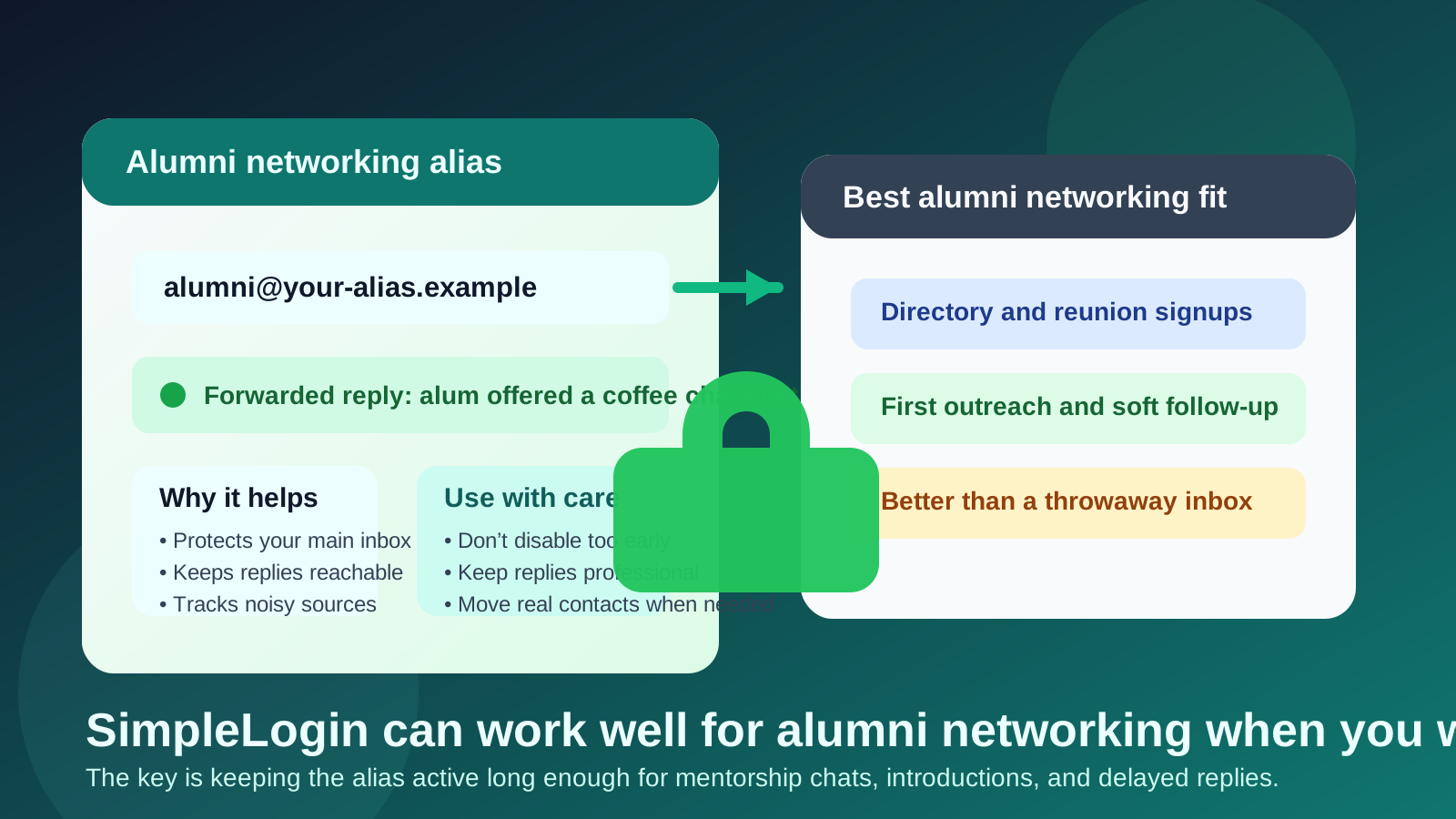
Yes, SimpleLogin can be a smart choice for alumni networking if you want a stable alias that protects your main inbox without making you hard to reach.
It works best when you keep the alias active long enough for real follow-up and use it as a privacy layer, not as a disposable address you may abandon after the first message.
Why this question matters
Alumni networking creates a different email problem than job boards, newsletter signups, or one-time event registrations. You may reach out to graduates from your school for advice, referrals, introductions, coffee chats, or industry context. Some of those conversations go nowhere. Others quietly turn into useful relationships that resurface weeks, months, or even years later.
That changes what a “good” email address looks like. A throwaway inbox can be too fragile. Your oldest personal inbox may feel too exposed. Your work email may create boundary problems. A SimpleLogin-style alias sits in the middle: it can help you share a stable contact point without exposing your main address every time you join an alumni directory, RSVP for a school event, or message someone you only know through a shared university connection.
So the real question is not whether you can use SimpleLogin. The real question is whether it helps you stay reachable enough for real alumni follow-up while still giving you better privacy and inbox control.
Short answer: often yes, if you care about privacy and can keep the alias stable
For many people, SimpleLogin is a good fit for alumni networking because it gives you something more durable than a temporary inbox and more private than sharing your primary email everywhere. That is especially useful when you are joining alumni groups, attending events, or starting outreach conversations with people you do not know well yet.
But it is not automatically the best choice in every case. If you are likely to disable the alias quickly, forget to monitor replies, or create a setup that feels overly complicated, the privacy benefit may not be worth the friction. Alumni networking rewards continuity, and any contact method that breaks too early can cost you opportunities.
What SimpleLogin does well in alumni networking
It protects your main inbox without cutting off follow-up
This is the core advantage. Alumni networking usually requires more trust than a random website signup, but less trust than a long-established professional relationship. An alias can give you a buffer during that middle stage. You remain reachable, but your primary inbox does not have to be the thing you hand out to every alumni chapter, directory form, reunion registration, mentorship platform, or lightly vetted contact.
It helps you contain future noise
Some alumni ecosystems are excellent. Others are messy. A harmless event signup can turn into reminders, school fundraising updates, sponsor mail, volunteer requests, or broad chapter blasts you never intended to receive forever. If you use an alias for alumni-related exposure, it becomes easier to track where that noise started and easier to cut it off later without disrupting the rest of your life.
It is better suited to delayed replies than a temporary inbox
People often answer alumni outreach later than you expect. Someone may travel, get busy, or remember your note after a conference week ends. An alias can handle that better than a classic temp mailbox because the point is controlled continuity, not instant expiration. If you want privacy but still need a real person to reach you later, that stability matters.
It can make outreach easier to organize
If alumni networking is part of a broader job-search or career-change process, a dedicated alias can separate those conversations from shopping receipts, family mail, app notifications, and everything else already sitting in your daily inbox. Even if the alias forwards into a mailbox you already use, it still gives you a cleaner public-facing identity for that networking lane.
Why alumni networking is different from low-trust signups
A lot of privacy tools make sense because not every website or signup deserves your real contact information. That logic is sound. But alumni networking is rarely just a one-click transaction. You might exchange follow-up messages, schedule a call, get introduced to someone else, or reconnect after several months when a role opens up.
That is why a short-lived disposable inbox is often the wrong tool for direct alumni relationships. If you are only testing whether an alumni event page requires email before it shows details, a temporary address from a tool like Anonibox can be perfectly sensible. If you are writing to an alum who may respond thoughtfully two weeks later, stability matters more than pure short-term privacy. SimpleLogin makes more sense in that second scenario because it supports ongoing reachability without fully exposing your main inbox.
When SimpleLogin is a good fit for alumni networking
You are signing up for alumni directories, panels, or reunion events
This is one of the clearest use cases. You may want to participate without automatically giving your main address to every organizer, mailing list, and platform connected to your school. An alias gives you a cleaner boundary.
You are doing first-contact outreach
If you are messaging alumni for advice, informational conversations, or soft networking, an alias can be a good first layer. You are not hiding from them. You are simply keeping your core inbox less exposed until you know which relationships become real.
You want one alumni-specific identity instead of using your personal inbox everywhere
Many people do not need a fully separate mailbox, but they do want a distinct contact point for alumni networking. An alias can be that middle-ground solution.
You care about source control
If a school platform, chapter list, or event organizer eventually becomes noisy, you can respond more precisely when you know which alias was used where. That is a practical privacy benefit, not just a theoretical one.
When SimpleLogin may be the wrong choice
You are likely to disable the alias too soon
This is the biggest mistake. Alumni follow-up can be slow. If you share an alias and then retire it a few days later, you may miss exactly the introduction, coffee chat, or referral you were hoping to create.
You already have a clean dedicated networking inbox
If you already use a stable, professional inbox only for career networking, adding another layer may not help much. In that case, an alias may be extra complexity rather than a meaningful improvement.
The relationship is already high trust
Once an alum becomes a genuine mentor, collaborator, or frequent contact, moving to the address you plan to use long term can be simpler. An alias can still work, but it is no longer the most important part of the relationship.
You are using it like a disguise instead of a workflow tool
Privacy is useful. Overcomplication is not. If the setup makes you slower to reply, more likely to miss mail, or harder to understand, it is not serving the networking goal well.
SimpleLogin vs other email choices
Versus a temporary email address
A temporary inbox is usually better for low-trust, one-off, or spam-heavy situations where you do not expect meaningful follow-up. Alumni networking usually asks for more continuity than that. SimpleLogin is the better fit when real replies matter.
Versus your main personal inbox
Your primary inbox is simple, familiar, and easy to monitor, which is a real advantage. But it also exposes the address you may want to keep more private from directories, event tools, and people you barely know. If that exposure bothers you, an alias is often a better first layer.
Versus a separate full mailbox
A separate inbox gives you stronger boundaries and heavier organization. That can be excellent if you are doing a lot of networking. But it also creates more overhead. A SimpleLogin alias can be the lighter option when you want separation without managing another full email account every day.
Versus a custom domain email
A custom domain can give you more polish and long-term control, but it also adds responsibility. An alias can be easier to adopt quickly if your main goal is reducing exposure rather than building a whole new long-term identity from scratch.
Best practices if you use SimpleLogin for alumni networking
1. Use one clear alumni alias, not a maze of tiny aliases
Most people do not need a different address for every alum they contact. A single alumni-networking alias or one per event season is often enough. Keep the system simple so you will actually maintain it.
2. Keep the alias alive longer than the event or first message
If you attend a reunion panel in June or send alumni outreach this week, do not assume all worthwhile responses will arrive immediately. Give the alias a realistic follow-up window.
3. Make sure your replies still feel normal and professional
The alias is there to protect your inbox, not to make you look temporary. Your messages should still have a clear name, a sensible signature, and a tone that feels human and easy to trust.
4. Track where you used the alias
If you shared it with an alumni portal, two local chapter events, and several one-to-one contacts, make a light note for yourself. Later, if low-value messages increase, you will know where the exposure likely happened.
5. Promote high-value relationships when it makes sense
An alias is a filter, not a prison. If the relationship becomes long-term and high trust, it may be simpler to move that person onto the address you want to keep using for the next few years.
Common mistakes to avoid
- Treating the alias like a burner: alumni networking is often too slow and relationship-driven for that.
- Forgetting to test the workflow: check that messages arrive where you expect and that replying feels natural.
- Using the alias everywhere forever: some contacts will eventually deserve a more permanent lane.
- Assuming privacy equals zero risk: an alias can reduce direct exposure, but it does not make scammy requests, suspicious links, or bad platforms safe.
A practical setup that works well
A strong low-drama workflow looks like this:
- Create one alumni-focused alias you can monitor consistently.
- Use it for alumni directories, chapter signups, event registration, and first-contact outreach.
- Watch replies closely during the active networking window and for a while after.
- Move especially valuable long-term contacts to your preferred permanent address if that feels cleaner.
- Retire or rotate the alias later only after useful follow-up has clearly slowed down.
This gives you privacy at the front door without breaking the continuity that makes alumni networking useful in the first place.
Quick decision checklist
- Do I want to protect my main inbox from alumni list growth, event mail, or broader address sharing?
- Can I keep this alias active long enough for delayed replies?
- Would a throwaway inbox be too short-lived for this context?
- Would a full separate mailbox be more overhead than I need right now?
- Am I willing to move trusted long-term contacts to a more permanent address if needed?
If most of those answers are yes, SimpleLogin is probably a strong fit.
Final answer
Yes, you can absolutely use SimpleLogin for alumni networking, and in many cases it is a smart privacy-first choice. It gives you more control than sharing your main inbox everywhere and more stability than using a classic temporary address.
The key is to use it like a durable networking alias, not a disappearing burner. If you keep the alias active, monitor replies, and shift serious long-term relationships to a stable contact lane when appropriate, SimpleLogin can support alumni networking very well.