Yes — you can use SimpleLogin for internship applications if you want more privacy and cleaner inbox boundaries during the early stage of your search.
It works best when the alias forwards reliably into a long-term inbox you check every day; once interviews, assessments, or offer paperwork start moving, stability matters more than novelty.
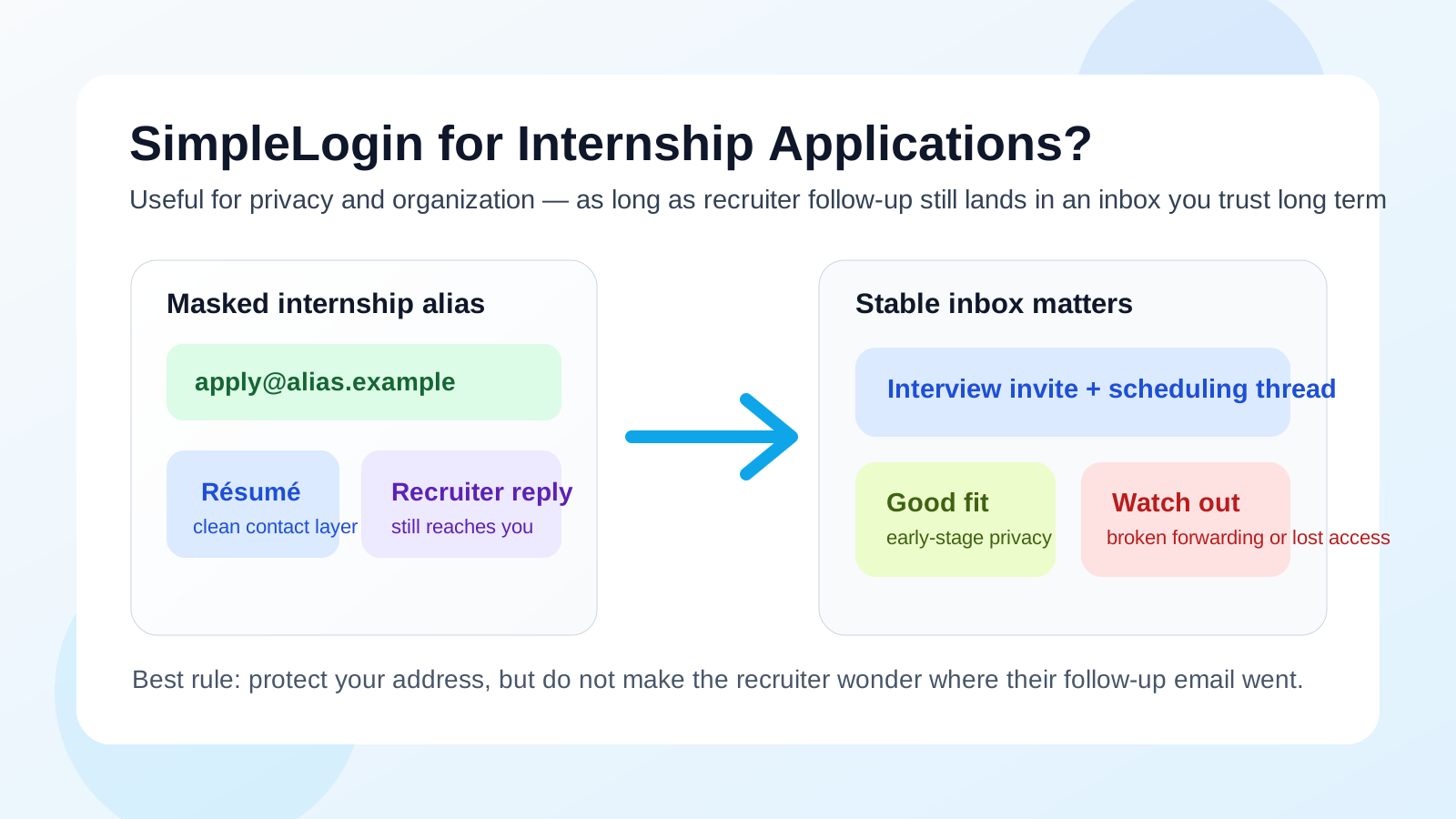
Why this question matters for internships
Internship searches create a strange mix of low-trust and high-stakes email. On one side, you may be signing up for campus job boards, talent communities, employer event reminders, résumé databases, and one-off application portals that can generate a lot of follow-up noise. On the other side, one real message from a recruiter can matter a lot: an interview request, a coding assessment deadline, a request for transcripts, or a last-minute scheduling change.
That is why internship applicants often end up torn between two goals that do not perfectly match. They want privacy, but they also want absolute reliability. They want to keep their real inbox from getting buried, but they do not want a serious opportunity trapped behind a setup they barely monitor.
SimpleLogin sits in the middle of that trade-off. It is not the same as handing out your main address everywhere, and it is not the same as using a throwaway temp inbox that might disappear at the wrong time. It is an alias layer. That can be a smart tool — if you use it with realistic expectations.
What SimpleLogin changes in an internship-application workflow
At a practical level, SimpleLogin gives you a masking layer between senders and your real mailbox. Instead of giving every employer portal, job board, or event form the address you use for everything else, you can share an alias that forwards mail into a primary inbox you already control.
That changes a few things:
- Privacy: the sender does not necessarily get your long-term address directly.
- Organization: you can separate internship-related traffic from personal mail more cleanly.
- Control: you may be able to disable or isolate an alias later if one source becomes noisy.
- Continuity: unlike a pure disposable inbox, the messages can still land in a mailbox you plan to keep.
That middle-ground structure is the reason alias services appeal to students and early-career applicants in the first place.
When using SimpleLogin for internship applications makes sense
1. You are applying through a lot of portals and want cleaner boundaries
If you are sending out many internship applications in a short time, your inbox can become chaotic quickly. A SimpleLogin alias can help keep that traffic distinct from everything else in your life, especially if you are still dealing with classes, personal mail, event registrations, and normal subscriptions.
That does not automatically make you more employable, but it can make you more organized. And being organized absolutely helps when deadlines and follow-up messages arrive close together.
2. You do not want every platform to have your main address
Not every internship-related signup deserves direct access to your oldest personal inbox. Career resources, employer webinars, résumé databases, talent communities, and third-party listings often trigger long-term outreach. If you would rather not widen the audience for your real address before you know which channels are worthwhile, an alias is a reasonable privacy tool.
3. You want to see which channel is actually generating useful replies
One underrated benefit of alias-based workflows is visibility. If you know which alias you used where, it becomes easier to tell whether a specific job board, campus portal, or event signup is producing real opportunities or just noise. That can help you cut low-value sources sooner.
4. You are using a stable primary inbox behind the alias
This is the part people sometimes skip. SimpleLogin works best when it forwards into a mailbox you already trust and monitor consistently. The alias layer is only as good as the inbox behind it. If your underlying mailbox is neglected, unstable, or close to losing access, the setup becomes much less useful.
Where SimpleLogin can become risky
Forwarding has to work every time
Internship timelines can be tight. A recruiter may send an interview request with only a short response window. An assessment link may expire. A coordinator may need quick confirmation for an event or screening call. If you are going to put an alias layer between the sender and your real inbox, you need confidence that the forwarding path is dependable and that you will notice problems quickly.
That does not mean alias services are automatically unreliable. It means you should not set one up casually and then forget to test it.
Some situations need a very boring, obvious inbox
Once you move past early-stage applications, the ideal inbox is often the least dramatic one: stable, professional, familiar, and easy to keep for years. If you are deep in interviews, handling onboarding forms, or discussing a return offer, simplicity matters. A normal personal inbox can sometimes be the safer choice simply because there are fewer moving parts.
You can overcomplicate your search
Privacy tools help only if they reduce stress overall. If you are juggling multiple aliases, filters, folders, notifications, and reply paths, you may create more opportunities for confusion instead of less. Missing a recruiter reply because you cannot remember which alias fed which rule is not a win.
How internship applications differ from generic signups
This is the core distinction. A lot of people hear “privacy” and assume the strongest option must always be the best option. But internship applications are not the same as signing up for a one-off whitepaper or a questionable newsletter.
Real internship threads can turn into:
- assessment invitations
- interview scheduling
- requests for availability or transcripts
- offer letters and follow-up paperwork
- future opportunities months after the original application
That means continuity matters. If a recruiter comes back later with a second opening, or if an employer reactivates your candidacy after a season changes, you want that message landing somewhere you still use.
That is why an alias service like SimpleLogin can make sense, while a pure temporary inbox often does not. A temp inbox is great when you want short-term protection from spam. It is usually a poor fit for serious recruiter communication that may need to stay reachable over time.
SimpleLogin versus a separate personal internship inbox
For some applicants, the cleanest answer is not an alias service at all. It is a separate long-term personal inbox dedicated to internships and job searching. That approach gives you many of the same organization benefits without adding a forwarding layer.
A separate personal internship inbox may be better if:
- you expect a high volume of legitimate recruiter communication
- you want a very simple setup with fewer failure points
- you are already in active interviews and speed matters
- you want an address that can grow with you into full-time recruiting later
SimpleLogin is stronger when your priority is masking your real address while still preserving continuity. A separate personal inbox is stronger when your top priority is simplicity.
Best practices if you decide to use SimpleLogin
Test the alias before you submit important applications
Send messages through the full path yourself. Make sure forwarding works, replies behave the way you expect, and the mail lands where you think it will.
Use one stable inbox behind it
Do not route serious internship communication into a mailbox you barely check. The entire point is to protect your address without losing reliability.
Keep your display name professional
Even if the alias masks the mailbox, your outgoing identity still needs to look normal. Your recruiter should see your real name, not a confusing handle or leftover nickname.
Know when to stop optimizing
If you reach the interview or offer stage with a promising company, consider whether the setup is still helping. Sometimes the most practical move is to continue with the alias. Sometimes it is smarter to transition to a dedicated long-term inbox you control directly.
Save the important threads
Internship searches can stretch across semesters. Keep copies of high-value messages, deadlines, and contact details in a system you can find later.
Where Anonibox and temporary email fit instead
A temporary inbox still has a place in the broader internship-search workflow. If you are testing a low-trust resource, downloading a gated guide, checking a questionable tool, or signing up for something you do not want attached to your real address yet, a temporary email workflow can be useful. That is where a service like Anonibox fits naturally.
But there is an important distinction: Anonibox-style temporary email is best for low-trust intake and spam control, while a SimpleLogin-style alias can be better for situations where you still want a buffer but need long-term continuity behind it. And once a real recruiter conversation starts, a stable inbox you actively monitor usually matters most of all.
A quick decision checklist
- Am I trying to protect my long-term address from a wide set of internship portals or signups?
- Does this alias forward into an inbox I truly check every day?
- Have I tested the forwarding and reply path before using it for real applications?
- Would a separate personal internship inbox be simpler for my situation?
- If this application turns into interviews or an offer, will this setup still feel dependable?
If your answers are mostly yes, SimpleLogin can be a smart privacy layer. If several answers are no, a dedicated personal inbox may be the better move.
Final answer
So, should you use SimpleLogin for internship applications? Yes, sometimes — especially when you want better privacy, cleaner boundaries, and more control over which internship platforms see your real email address.
Just do not confuse “more private” with “automatically better.” For actual recruiter follow-up, interview scheduling, and offer-stage communication, reliability and long-term access matter most. Use SimpleLogin if it genuinely improves your workflow, use Anonibox or other temporary email tools for low-trust signups, and keep serious internship conversations tied to an inbox you know you will still be using when the important reply arrives.