Yes — you can use SimpleLogin for job referrals, and it is often a smarter choice than handing out your primary inbox everywhere.
But it only works well if the alias forwards reliably, you can reply professionally, and you plan to keep it active long enough for slower referral follow-ups.
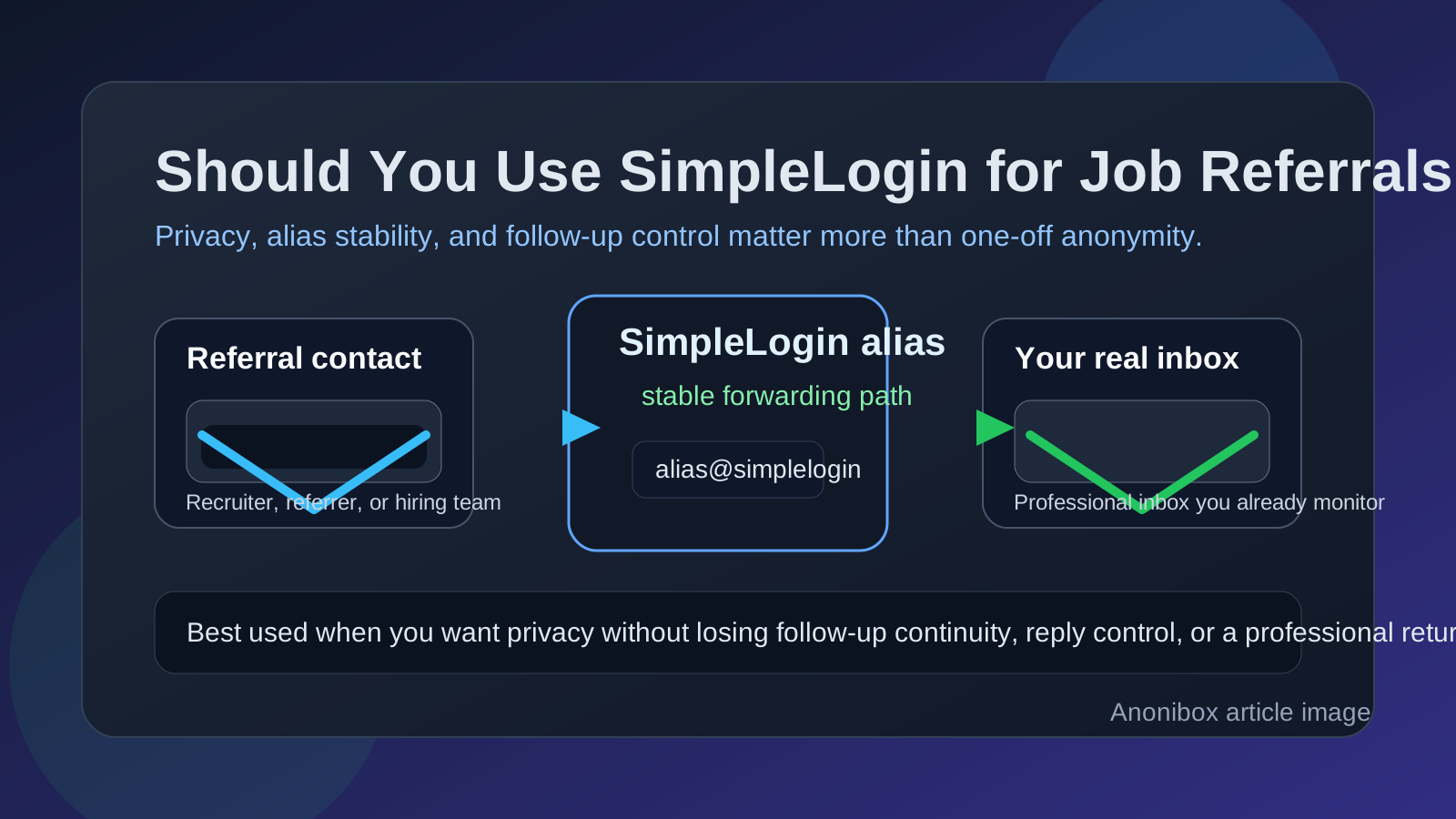
A job referral is not the same as a random signup form. When someone refers you, that contact can lead to recruiter outreach, scheduling emails, interview requests, follow-up questions, and sometimes messages that arrive days or weeks later. That makes email choice more important than it first appears.
SimpleLogin sits in an interesting middle ground. It is more private than giving every referrer your everyday address, but it is also much more stable than using a disposable inbox for something that could turn into a real hiring conversation. For many job seekers, that balance is exactly the point.
Why this question matters
Referrals often open doors faster than cold applications. A friend, former coworker, recruiter, alumni contact, or community connection may send your details to a hiring team and tell you to expect a message soon. That sounds simple, but it creates a privacy trade-off. You want to be easy to reach, yet you may not want your long-term personal inbox spread across every company, recruiter, and internal forwarding chain.
That is where an alias tool can help. Instead of exposing your main address directly, you give out an alias that forwards mail to the inbox you already monitor. If the referral turns into a real opportunity, communication keeps flowing. If it goes nowhere, you have more control over what happens next.
What SimpleLogin gets right for job referrals
SimpleLogin is usually a better fit for referrals than a temporary inbox because it is designed for forwarding and longer-lived alias management rather than short-lived one-time verification. That matters for a hiring process.
- It hides your primary address: the referrer or recruiter sees the alias, not the mailbox behind it.
- It supports continuity: referrals can produce delayed replies, and a stable alias can stay active long enough to catch them.
- It helps with organization: you can keep referral traffic separate from personal, shopping, newsletters, and unrelated inbox clutter.
- It gives you control later: if one alias starts attracting noise, you can disable or retire it without rebuilding your whole email life.
Those are real advantages, especially if you are networking broadly or talking to multiple companies at once.
The main risk: treating a referral like a throwaway interaction
The biggest mistake is using SimpleLogin with the mindset people often bring to disposable email: “I only need this for one message.” Referrals rarely work that way. A referral can sit quietly for a week, then turn into a recruiter screen, then a hiring-manager email, then a scheduling change the night before an interview.
If you create an alias and forget about it, disable it too early, stop monitoring the destination inbox, or lose the ability to reply cleanly, the privacy win can become a job-search loss. In other words, the problem is usually not SimpleLogin itself. The problem is unstable setup or poor follow-through.
So, should you use SimpleLogin for job referrals?
Usually yes — if your goal is privacy with continuity. That is the key test.
If the alias reliably forwards to an inbox you check every day, and you are comfortable keeping that alias alive throughout the referral and interview window, SimpleLogin can be a very reasonable choice. It is especially useful if you want to reduce spam exposure, keep networking outreach compartmentalized, or avoid mixing job-search traffic with your oldest personal mailbox.
If you are looking for something disposable, though, job referrals are not the best place to be disposable. Referrals need stable communication more than one-off anonymity.
When SimpleLogin makes sense
SimpleLogin is a strong option in these situations:
- You are receiving referrals from several people and want each stream separated.
- You want to avoid exposing your long-term personal inbox to every employer contact.
- You already understand how your alias forwarding and reply flow works.
- You have a stable destination inbox that you check frequently.
- You want to keep control over where follow-up messages land without relying on a temporary mailbox.
It can be especially useful for privacy-conscious job seekers who want cleaner inbox boundaries without disappearing behind a fake or fragile contact method.
When SimpleLogin may not be the best fit
There are also cases where a direct professional inbox is simpler and safer.
- You are not confident in the setup: if you are unsure how forwarding or replying works, the risk of confusion is real.
- You need zero friction: for a high-priority referral, the cleanest path may be using a polished dedicated job-search inbox directly.
- You might abandon the alias too soon: referrals often outlast your first assumption about timing.
- You want full consistency across résumé, LinkedIn, and recruiter replies: sometimes one steady inbox is easier than mixing systems.
Privacy tools are only helpful when they stay operational. If the system adds uncertainty, simplicity may be the better choice.
Best practices if you use SimpleLogin for referrals
1. Use a stable destination inbox
Forward the alias to an inbox you already trust and monitor. A referral is not the time to test an account you barely use.
2. Keep the alias active longer than you think you need to
Even if a referral seems cold after a few days, do not shut it down immediately. Hiring timelines move slowly, and delayed contact is common.
3. Make sure replies look professional
Before sharing the alias, confirm that your outgoing replies will make sense to the recipient. You do not want a promising referral derailed by a confusing sender identity or a reply path you do not fully understand.
4. Match the alias to the opportunity
Using separate aliases for different companies or referral sources can make your search easier to track. It also helps you identify where future spam or low-value follow-ups came from.
5. Save important messages outside the alias tool
If a recruiter sends interview details, take-home instructions, or scheduling links, do not rely on memory alone. Star, label, archive, or save key messages in the destination inbox where you can find them quickly.
SimpleLogin vs a temporary inbox for referrals
This is where a lot of people pick the wrong tool. Temporary inboxes are great for low-trust signups, gated downloads, early product research, or situations where you only need a verification email and do not want the relationship to continue. Job referrals are different.
A referral is a real relationship path. Someone is effectively saying, “Here is a candidate worth contacting.” That means you need a reply-capable, monitored, longer-lived communication channel. An alias service like SimpleLogin fits that better than a disposable inbox most of the time.
That does not make temporary email useless in a job search. It can still be helpful for browsing low-trust job boards, testing mailing-list signups, or protecting your inbox during early research. For that kind of lightweight filtering, Anonibox can make sense. But when an actual person is referring you for a real role, stability matters more than pure throwaway privacy.
What recruiters and referrers care about most
Most recruiters do not care whether your address is an alias as long as communication is smooth. What they do care about is whether:
- their messages reach you,
- you respond in a reasonable time,
- your email identity looks professional enough for normal business communication, and
- nothing about the thread creates avoidable confusion.
In practice, that means the best email setup is the one that protects your privacy without making you hard to hire.
Red flags to watch for
If you decide to use an alias for referrals, keep your normal job-scam instincts turned on. Privacy tools do not replace judgment.
- Be cautious if a “referral” quickly turns into pressure to move to another messaging app.
- Be skeptical of requests for sensitive information before a real interview process exists.
- Watch for vague job descriptions, rushed timelines, and generic recruiter language.
- Do not assume an email is trustworthy just because it reached your alias successfully.
An alias protects your main address. It does not automatically prove that the sender is legitimate.
A practical setup that works well
If you want a balanced approach, a good workflow looks like this:
- Create a dedicated alias for job referrals or for a specific company.
- Forward it to a professional inbox you already check daily.
- Test receiving and replying before giving the alias to a referrer.
- Leave the alias active through the full referral and interview window.
- Retire or mute it later only after you are confident the process is over.
That setup gives you privacy, traceability, and a clean way to manage follow-up without gambling on a disposable address.
Final answer
Yes, SimpleLogin can be a smart choice for job referrals — but only if you use it as a stable alias, not as a throwaway inbox. Referrals need reliable follow-up, professional replies, and enough continuity to survive real hiring timelines.
If you want more privacy than your main inbox gives you, SimpleLogin can be a useful middle ground. Just make sure the alias forwards cleanly, stays active long enough, and does not add friction when a real opportunity appears. For casual signups and early job-search filtering, a temporary inbox can help. For actual referrals, though, stability usually wins.