Yes, you can use SimpleLogin for reference checks if you want more privacy and better inbox separation.
It works best when the alias forwards to a stable email address you check often, not as a throwaway address you might abandon before the hiring process is finished.
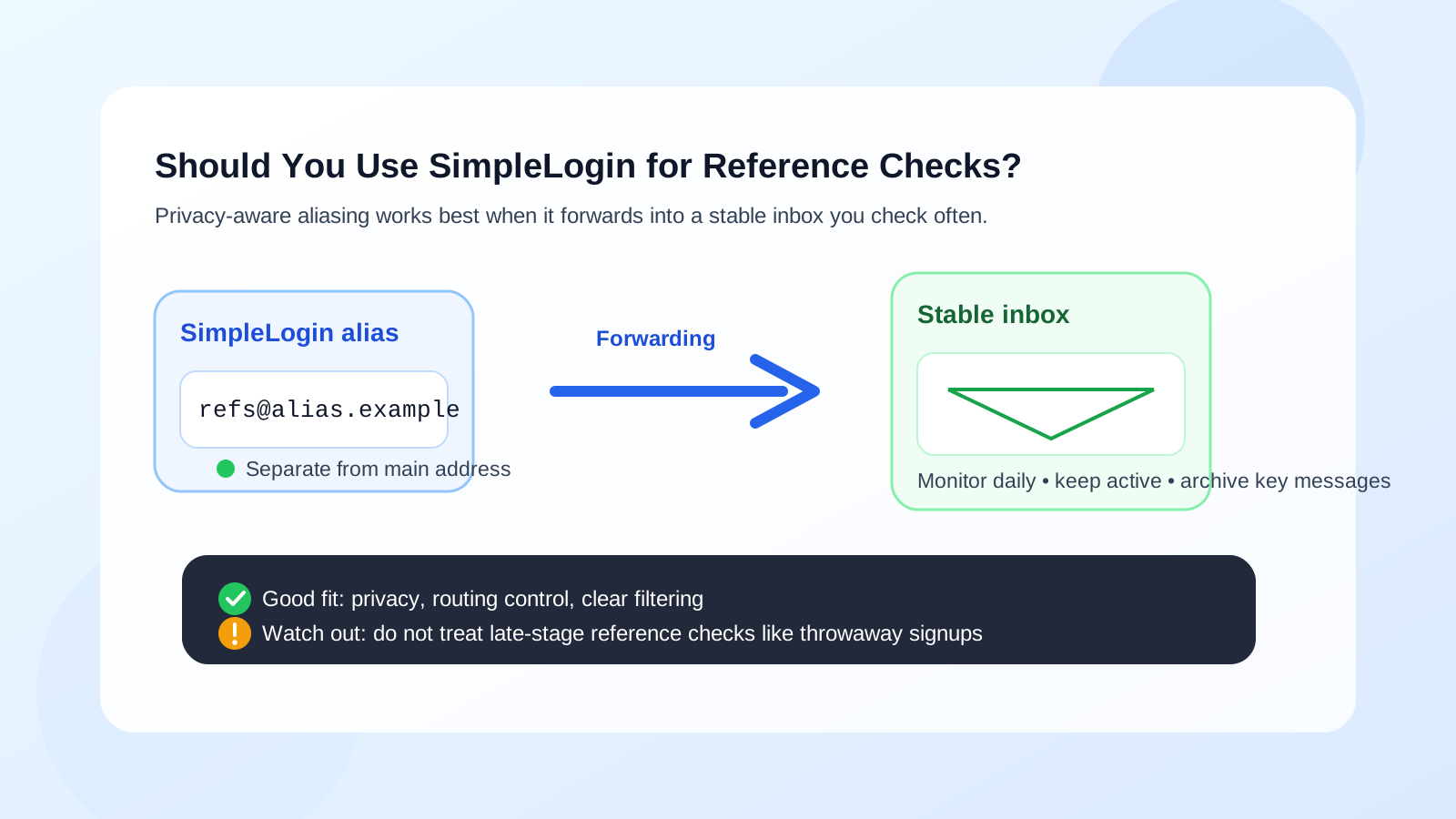
Reference checks happen late enough in the hiring process that reliability matters more than cleverness. That is what makes this question different from early-stage job board signups or cold recruiter outreach. By the time an employer is checking references, you are usually dealing with a real company, a real timeline, and messages you do not want to miss. So the right answer is not “always use an alias” or “never use an alias.” The right answer is to use SimpleLogin only if it improves privacy without making communication fragile.
SimpleLogin can be a smart option here because it lets you create an alias that forwards mail to your real inbox, which keeps your primary address less exposed. That can help if you want to keep hiring-related traffic separate, reduce long-term inbox clutter, or avoid handing the same personal address to every employer, recruiter, and third-party screening vendor. But it is still an alias layer, which means you need to think about forwarding, reply handling, consistency, and how long the alias will stay active.
What makes SimpleLogin appealing for reference checks?
SimpleLogin sits in a useful middle ground. It is not the same as giving out your everyday personal email, and it is not the same as using a disposable inbox that may disappear at the worst possible moment. Instead, it gives you a forwarding address you control.
That matters for reference checks because the messages involved are often important but limited in scope. You may receive:
- confirmation that a reference-check stage has started
- links to reference-request forms
- follow-up questions from a recruiter or screening partner
- messages asking you to confirm contact details for your references
- status updates when the process is complete or delayed
If you would rather not tie all of that to your main long-term inbox, a forwarding alias is a reasonable way to compartmentalize it.
Short answer: yes, but only if you value privacy and can keep the setup dependable
SimpleLogin is a good fit when your goal is privacy, organization, and control. It is a bad fit if you want to set something up once, stop thinking about it, and trust that every message will sort itself out. Reference checks are too important for a casual setup.
In practice, that means SimpleLogin makes sense when:
- you already use it and understand how your aliases work
- the alias forwards into an inbox you monitor daily
- you plan to keep that alias active until the hiring process is completely done
- you want to limit how widely your personal address is shared
- you want to filter reference-check traffic separately from the rest of your job search
If that describes you, it can be a clean, professional solution.
When SimpleLogin is a strong choice
1. You want separation without using a throwaway address
A reference check is not the moment for a disposable mailbox you may lose access to. But it is a reasonable moment to use a forwarding alias that keeps your primary inbox less exposed. SimpleLogin works well here because it creates separation without cutting you off from the message stream.
2. You want to track who is contacting you
One of the underrated benefits of an alias is visibility. If you create a dedicated alias for one employer or one stage of your search, you instantly know which conversation a message belongs to. That makes it easier to spot unexpected follow-ups, organize your inbox, and decide whether a contact is legitimate.
3. You care about long-term inbox hygiene
Even legitimate hiring processes can produce extra mail after the important part is over: talent-pool invites, future-opportunity emails, follow-up outreach, or vendor messages you no longer need. With a dedicated alias, you have more control later. You can keep it, filter it, or disable it after the process is fully closed.
4. You already use alias-based privacy tools comfortably
If you are already familiar with forwarding aliases, SimpleLogin will not feel strange. If you are new to it, reference checks may be a slightly late stage to experiment for the first time. Late-stage hiring is when boring and reliable usually beats clever and unfamiliar.
When a regular email address may be better
There are plenty of cases where using your normal professional email is the safer choice.
- You are already deep in the process: if the employer has used one address for interviews, scheduling, and paperwork, introducing a new alias late may create confusion.
- You expect a lot of back-and-forth: if several people may email you, consistency helps.
- You are not fully comfortable with alias replies: if replying through a forwarding setup feels even slightly uncertain, keep it simple.
- You only have one serious process going: if privacy separation is not solving a real problem, an extra layer may not be worth it.
That is the core tradeoff: privacy versus simplicity. At the reference-check stage, simplicity deserves a lot of weight.
Risks and limitations to think about
Forwarding is one more thing that can fail
Even when alias systems work well, they still add a dependency. If forwarding breaks, if a sender lands in spam, or if you disable the alias too early, you could miss a time-sensitive message. That is not a reason to avoid SimpleLogin entirely, but it is a reason to use it carefully.
Reply handling can be less intuitive
Depending on how your setup works, replying through an alias may feel less straightforward than replying from a normal mailbox. That is especially important if a recruiter or screening vendor expects a quick response. If you are not confident in the reply path, test it before using the alias on anything important.
Late-stage hiring is not the best time for experiments
Reference checks usually mean the process is serious. That is good news, but it also means missed messages carry more cost. An alias is fine if it is part of a system you already trust. It is less fine if you are improvising it in the middle of a live hiring timeline.
Consistency matters
If you used one email on your application, another for interviews, and a third for reference checks, you may create unnecessary friction. Some employers will not care. Others may need a moment to verify that all of the addresses still belong to you. That is manageable, but it is still a small cost.
Best practices if you decide to use SimpleLogin for reference checks
Use a dedicated alias, not a recycled one
Create an alias specifically for the employer, reference-check process, or late-stage job-search workflow. A clean alias makes it easier to track what it was used for and easier to disable later if you want to close the loop.
Forward to a mailbox you already trust
The destination inbox matters more than the alias name. Send everything to a mailbox you check often on desktop and mobile. If you only log in occasionally, you are undermining the whole point.
Test before you depend on it
Send a test message through the alias. Check that it arrives quickly, lands in the right folder, and can be replied to in the way you expect. The best time to discover a setup problem is before a recruiter is waiting for an answer.
Keep the alias active until the process is truly over
Do not shut it down the moment you think the reference step is finished. Hiring timelines drift. Recruiters revisit conversations. Screening vendors resend links. Keep the alias alive until the role is closed out, the offer is resolved, and you are confident no follow-up is still coming.
Save the important messages
Reference-check emails can include links, instructions, deadlines, and contact details. Archive anything important in your main records so you are not relying on memory or a single inbox view.
Keep your story consistent
If anyone asks why you used that address, the answer can be simple: you use a dedicated alias to keep job-search communication organized. That is normal, practical, and much better than sounding evasive.
How this compares with a burner or temporary email
This is where SimpleLogin often wins. A burner or fully temporary inbox may be fine for low-stakes signups, one-off downloads, or very early outreach. Reference checks are different. They are usually tied to a genuine employer decision and may stretch across several days or even weeks. You need continuity.
SimpleLogin gives you more control than a bare temporary inbox because the alias can stay in place as long as you need it, while still protecting your main address from unnecessary exposure. That makes it much more appropriate for reference checks than a short-lived disposable account.
If you like to keep your job-search identity separate from your everyday inbox, a mixed workflow can make sense: use something like Anonibox earlier when you are screening opportunities and limiting exposure, then use a stable alias-based setup once a real employer relationship develops. The key is to become more reliable as the process gets more serious, not less.
A simple decision checklist
- Do I already trust my SimpleLogin setup?
- Will the alias forward into a mailbox I check every day?
- Can I reply confidently if a recruiter or vendor writes back?
- Will I keep the alias active long enough for delays and follow-ups?
- Am I using the alias to solve a real privacy or organization problem?
If the answer is yes across the board, SimpleLogin is a reasonable choice. If several answers are no, a normal professional email may be the better tool for this stage.
Final verdict
Yes, you can use SimpleLogin for reference checks, and for privacy-conscious job seekers it can be a smart choice. The biggest advantages are address separation, better inbox control, and less long-term exposure of your primary email.
But reference checks are late-stage, high-importance communication. That means reliability matters more than novelty. Use SimpleLogin only if it forwards to a stable inbox, you understand how the alias behaves, and you are prepared to keep it active until the process is truly finished. If you want privacy and professionalism, that is the balance to aim for.