Yes, sometimes — but Slack works best for alumni networking when it is tied to a real community, event, or warm introduction, not as your default first-contact channel. It can be useful for group conversations and ongoing alumni communities, but it also exposes more profile, workspace, and membership context than a simple email or LinkedIn message.
For most people, Slack is strongest as a follow-up or community space after the initial connection is already established. If you need a lower-exposure first step, email or LinkedIn is still usually the safer starting point.
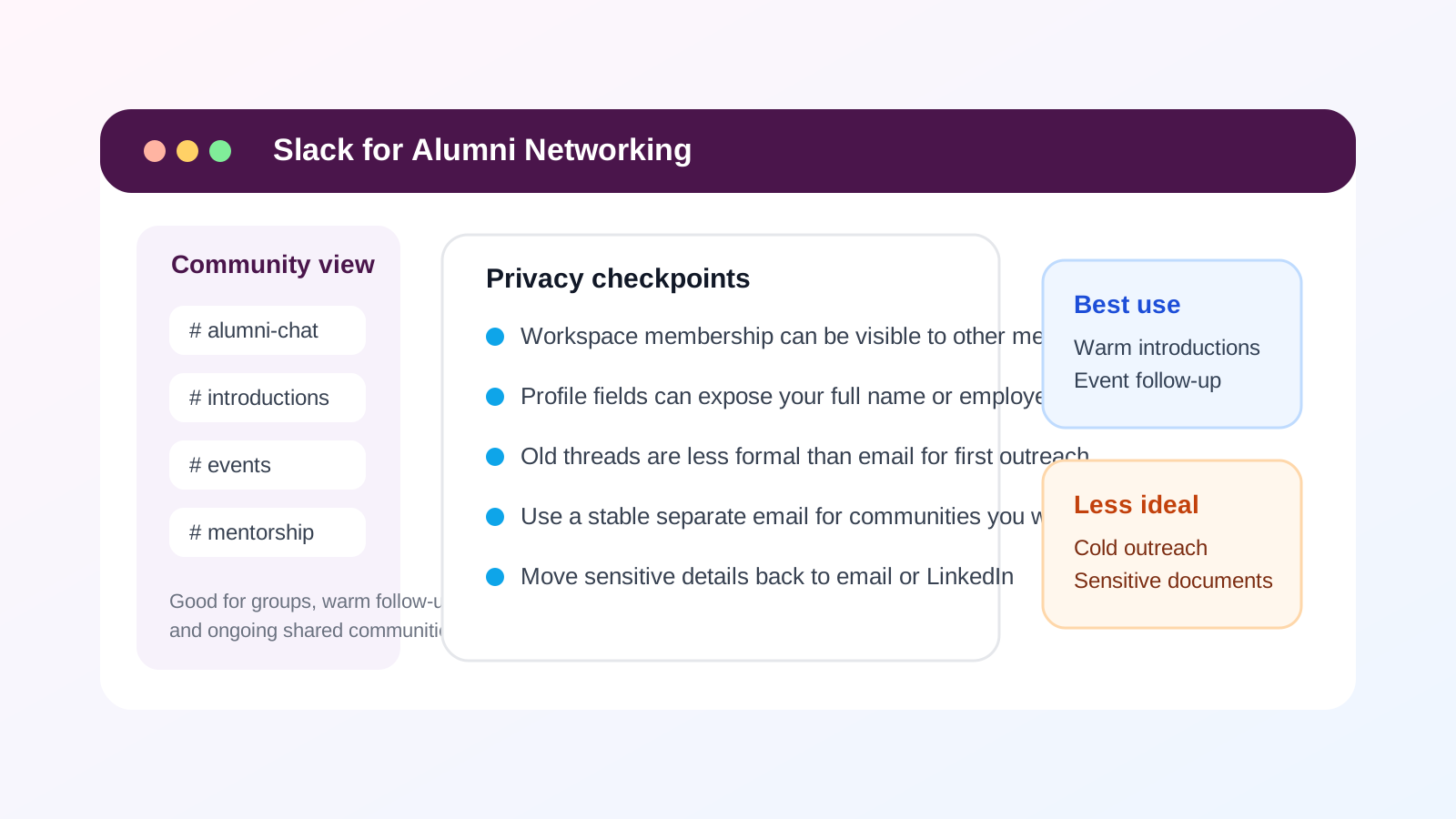
Why this question comes up
Alumni networking has changed. It is no longer limited to a formal university directory, a few LinkedIn messages, and the occasional coffee chat. Many alumni groups now organize around digital communities: private Slack workspaces, cohort channels, event groups, entrepreneurship communities, job-sharing channels, and mentoring circles. If you are trying to reconnect with people from your school, Slack can look more active and approachable than email.
That is why the question matters. Slack feels more modern and less stiff than a cold email, but it also behaves more like a semi-private community platform than a one-to-one professional contact method. The same qualities that make Slack convenient can make it messy for privacy, identity boundaries, and long-term follow-up if you use it carelessly.
Short answer: Slack can work, but context matters
If you are asking whether Slack is acceptable at all, the answer is yes. It is not inherently unprofessional, and in some alumni circles it may actually be the expected place to participate. A shared workspace can make it easier to spot relevant discussions, join event planning, answer quick questions, and build familiarity before you ever ask for a one-to-one conversation.
But the better question is not “Can I use Slack?” It is “When does Slack make sense, and what should stay somewhere else?” For most alumni networking, Slack is a good community layer and a decent warm follow-up channel. It is usually a weaker choice for cold outreach, sensitive personal sharing, or anything you may need to reference formally months later.
- Good fit: joining an alumni group, following an event thread, participating in a mentoring community, or continuing a conversation that already started in a trusted setting.
- Poor fit: cold outreach to strangers, sending sensitive documents, or relying on a busy workspace as your only long-term contact record.
What Slack does well for alumni networking
1. It is good for shared communities
Slack works best when the relationship is not purely one-to-one. Alumni networking often happens in clusters: people from the same program, startup founders from the same school, regional alumni chapters, industry-specific groups, or event attendees. In those cases, Slack can be useful because it lets you join an ongoing conversation instead of forcing every connection to start as an isolated cold message.
That can lower the friction of getting involved. You can reply to a discussion, share a relevant resource, or ask a focused question in the right channel before you ever request a direct conversation. Done well, that feels more natural than dropping into someone’s inbox with a generic “Can we chat?” message.
2. It supports warm follow-up well
If you already met an alum at an event, webinar, class community, or campus group, Slack can be a practical next step. A quick message inside the shared workspace can be enough to confirm a coffee chat, continue a topic from the event, or ask one concrete follow-up question. That is much smoother than turning every lightweight interaction into a formal email thread.
3. It can help you observe before you reach out
One underrated advantage of Slack is context. In a healthy community, you can often see which channels exist, what people care about, how formal the tone is, and whether certain members are active mentors or occasional lurkers. That helps you avoid clumsy outreach. Instead of guessing how to approach someone, you can learn the room first.
4. It can reduce some public-social-media noise
Compared with a large social platform, Slack often feels less performative. There are no public follower counts, fewer algorithmic distractions, and usually a clearer reason everyone is there. For some people, that makes alumni networking feel more focused and less awkward.
The privacy and professionalism issues to think about
1. Workspace membership can reveal more than you expect
When you join a Slack workspace, other members may be able to see your display name, photo, job title, time zone, profile text, and channel membership. That is not automatically bad, but it does mean Slack exposes more ambient identity information than a single email does. If you are privacy-conscious, that matters.
In some communities, your presence in a workspace already signals interest, affiliation, or job-search activity. That may be fine in an alumni-only group, but you should still assume that Slack is a visible participation space, not a purely private mailbox.
2. Slack can blur personal and professional identity
Many people already use Slack for work. That creates an easy mistake: treating alumni networking inside Slack as if it were just another work chat. It is not. If you join alumni communities through a work-managed identity, use a profile that exposes your employer too heavily, or rely on employer-controlled devices and notifications, you may reveal more than you intended.
Using your company-managed Slack environment for personal networking is especially risky. Your employer may control retention, device policies, and access expectations in ways that are fine for work but not ideal for private networking. If the networking matters to you personally, it should not depend on an employer-controlled communication setup.
3. It is weaker than email for formal follow-up
Slack is great for quick coordination, but it is less durable and less formal than email when the conversation becomes important. If someone sends you a thoughtful introduction, offers to review your résumé, shares hiring guidance, or agrees to reconnect later, email is usually easier to preserve, search, and revisit. Slack threads are convenient, but they are not always the best archive for meaningful professional relationships.
4. Group spaces can encourage oversharing
Because Slack feels conversational, people sometimes share too much too quickly: job-search frustration, employer complaints, detailed personal circumstances, or overly specific requests for help. In an alumni community, that can be remembered longer than you think. You do not need to treat Slack like a public social network, but you also should not treat it like a private diary.
When Slack is a poor first-contact channel
Slack is usually not the best opening move when you have no real context with the other person. If you found an alum through a directory, conference list, or social post and you are trying to start from zero, email or LinkedIn is usually cleaner. Those channels let you make a clear introduction, explain why you are reaching out, and give the other person a low-pressure way to respond later.
Slack is also a poor choice when:
- you need to send documents, résumés, or anything sensitive;
- the workspace is busy and your message is likely to disappear into notification noise;
- you are unsure whether direct messaging is normal in that community;
- you want a relationship that can continue outside a specific platform or workspace.
Best practices if you decide to use Slack
Use a stable separate networking email for important communities
If a Slack workspace matters to you long term, join it with an address you control and plan to keep. That does not have to be your main personal inbox, but it should be stable enough for invites, notifications, and recovery. This is an important distinction: a one-off disposable email can help with low-trust signups, but an alumni community you actually want to revisit usually deserves a separate, durable networking email instead.
This is where a service like Anonibox can be helpful in a limited way. If you are testing a signup flow, protecting your main inbox from low-value event spam, or separating early community registrations from your everyday email, a separate address strategy makes sense. But if the Slack community is going to become part of your real networking workflow, do not attach it to an address you may lose.
Keep your profile neutral and intentional
You do not need to build a fake persona, but you should think about what your Slack profile communicates. A simple display name, a normal photo if the community is relationship-driven, and a short professional description are usually enough. Avoid turning your profile into an accidental overshare of your current employer, private phone number, or personal life.
Move sensitive or high-value follow-up to email
If a conversation becomes substantive, move it. A quick Slack message can lead to a useful email exchange, calendar invite, or LinkedIn connection. That transition is healthy. It gives both sides a cleaner record and keeps the relationship from depending entirely on one community platform.
Do not use work-managed Slack for personal alumni networking
This is one of the clearest rules. If the networking is yours, the account and contact path should also be yours. Work-managed identity, employer-controlled devices, or company-retained messages are the wrong foundation for personal relationship building.
Watch the tone of the workspace before you DM people
Some alumni Slack communities are very open to direct outreach. Others prefer introductions in public channels first. Read the room. If you are unsure, post briefly in the relevant channel, contribute something useful, and then move to direct messaging only when it feels welcome.
What often works better than Slack for first outreach
If your real goal is to contact one alum thoughtfully, email and LinkedIn are still hard to beat. Email is better for clarity, professionalism, and long-term follow-up. LinkedIn is better when you need contextual legitimacy and an easy explanation of who you are. Slack becomes more useful once there is already a community link or a warm reason to continue there.
A simple rule of thumb:
- Email: best for direct, thoughtful, low-noise first outreach.
- LinkedIn: best for identity context and lightweight professional introductions.
- Slack: best for shared communities, event follow-up, and ongoing group participation.
A quick decision checklist
- Is this a real alumni community or just another noisy invite link?
- Am I joining to participate in a group, or am I really trying to contact one person?
- Would I be comfortable with other members seeing my profile and workspace presence?
- Do I have a stable separate email for this community, or am I using a throwaway that I may lose?
- Would email or LinkedIn be a cleaner first step for the specific person I want to reach?
If those answers point toward community participation and warm follow-up, Slack can be a good fit. If they point toward careful first outreach and privacy control, start elsewhere.
Final answer
Yes, you can use Slack for alumni networking, but it is usually best as a community and follow-up channel, not as your default first-contact tool. It works well when there is already a shared workspace, a real alumni context, and a reason to keep the conversation lightweight and ongoing.
Just be deliberate about it. Use a stable networking email, keep your profile intentional, avoid employer-controlled Slack identities, and move important conversations to email when the stakes get higher. Done that way, Slack can be genuinely useful without giving away more privacy or control than you meant to.