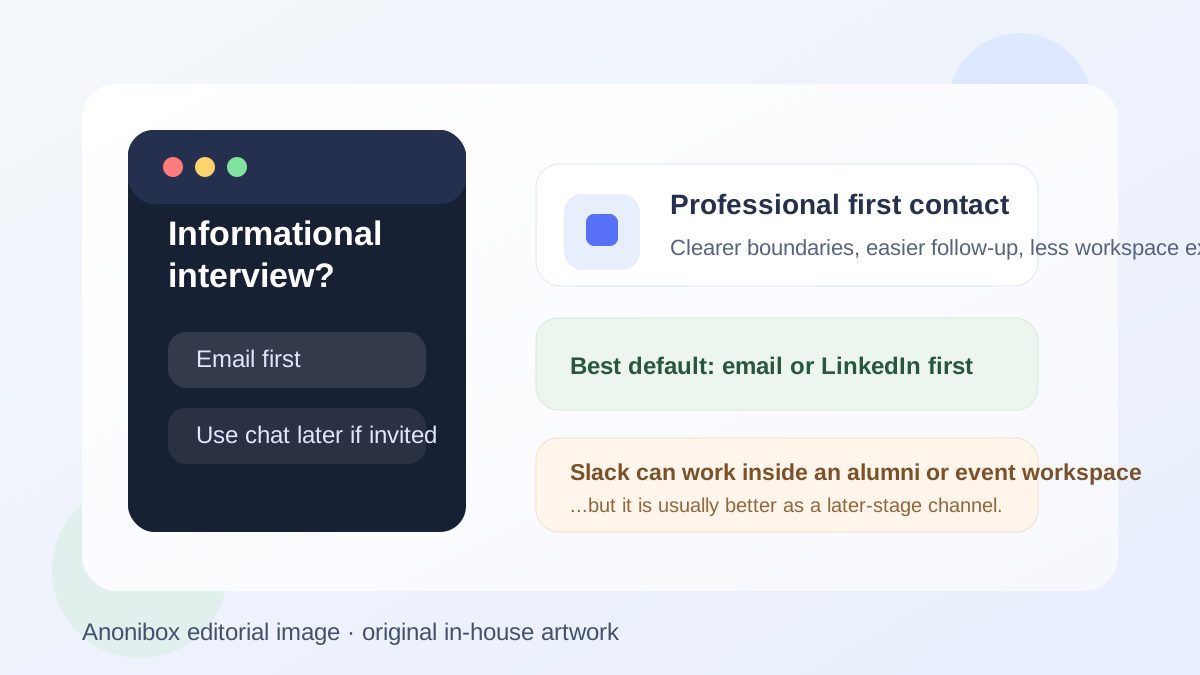
Usually no—Slack is not the best first-choice channel for informational interviews unless the other person explicitly invites you into a shared workspace. Email or LinkedIn is usually the safer starting point because it creates clearer boundaries and exposes less about your identity, employer, and online activity.
Slack can work in some alumni, startup, or community settings, but for most one-to-one informational interviews it is better as a later-stage follow-up channel than as the main way you introduce yourself.
Why this question comes up
Informational interviews often start in communities that already live inside chat tools: alumni groups, startup communities, founder circles, professional associations, bootcamp networks, and private workspaces built around events or memberships. If someone you want to learn from is already active on Slack, it is natural to wonder whether messaging them there is efficient, modern, and less formal than email.
Sometimes it is. But convenience is not the same thing as good judgment. A direct message inside Slack can expose more context than a short email does, and it can also create awkward expectations about speed, availability, and familiarity. That is why the best answer is not “never use Slack” but “use it carefully, and only when the context supports it.”
Short answer: Slack is usually a secondary channel, not the first one
If you are cold-reaching out to someone for an informational interview, email or LinkedIn is usually the more professional move. Those channels are built for first contact, scheduling, and clear one-to-one communication.
Slack is more situational. It works best when:
- you already share a legitimate community or alumni workspace,
- the other person has signaled that Slack is welcome,
- the conversation is a quick follow-up rather than a cold introduction, or
- the interview is connected to an event, mentor program, or office-hours format happening inside Slack.
If none of those are true, Slack is often the riskier and less polished option.
The main risks of using Slack for informational interviews
1. You may reveal more about yourself than you intended
Your Slack identity can expose your full name, profile photo, employer, school, role, time zone, status, and sometimes the communities you belong to. Even if you think you are just sending a quick message, the channel itself can leak more context than a clean email signature would.
That matters when you are trying to manage privacy during a job search or career transition. A simple outreach note should not accidentally reveal your current workplace habits, internal affiliation, or other details you would rather keep separate.
2. It can feel too casual for a first approach
Informational interviews are not formal job applications, but they are still professional conversations. A thoughtful email or LinkedIn note signals respect for the other person’s time. A Slack DM can sometimes feel more abrupt—especially if you have never spoken before and the person receives a high volume of workspace notifications.
That does not mean Slack is rude by default. It just means the social rules are looser, and misjudging them is easier.
3. Workspace context can complicate privacy
Slack is not the same as a private inbox. Depending on the workspace setup, your message may sit inside a professional community, alumni group, event workspace, or employer-linked environment. That can blur personal and professional lines in ways email usually does not.
Even if only the recipient sees the message, the fact that you are contacting them through a shared workspace can shape how your outreach is perceived. In some communities that is normal. In others it feels intrusive.
4. It creates faster-response pressure
Chat tools create a sense of immediacy. That can be useful for logistics, but it can also make an informational interview feel more transactional than thoughtful. If you are asking for career advice, context, or perspective, email often gives both sides more room to respond carefully and set expectations.
When Slack actually makes sense
Slack can be a good choice when the relationship or environment already supports it.
- Shared alumni or professional communities: If the person participates in a university, bootcamp, or industry Slack where networking is normal, a brief message may feel natural.
- Event follow-up: If you met during a workshop, AMA, or networking session that happened inside Slack, continuing there can be reasonable.
- Mentor programs and office hours: Some structured programs clearly encourage Slack as the main coordination channel.
- Recipient preference: If the other person says “just DM me on Slack,” take the hint and use it.
In other words, Slack works best when it is invited, expected, or already normalized by the community—not when you are forcing it as a shortcut.
Why email is usually the better first move
Email gives you cleaner boundaries. It is slower in a good way, easier to search later, and more obviously professional for first contact. You can explain who you are, why you are reaching out, and what kind of conversation you are hoping for without sounding like you are tapping someone on the shoulder in the middle of their workday.
Email is also easier to separate from the rest of your digital identity. If you want to keep career outreach organized, a separate inbox is often more useful than switching to a chat-first approach. That is where a tool like Anonibox can fit naturally: not as a gimmick, but as a way to keep first-contact outreach, newsletters, event confirmations, and recruiter follow-up out of your main personal inbox until you decide a conversation is worth carrying forward long term.
If you do use Slack, follow these best practices
Use the right account
Avoid using a work-managed Slack identity for career networking if you can help it. A personal or community-specific account is usually better than one tied to your current employer.
Keep the first message short and specific
Do not send a wall of text. A good Slack note is concise: who you are, how you found them, why you are reaching out, and a simple ask. For example, you might ask whether they would be open to a short 15-20 minute informational conversation rather than launching straight into your full background.
Offer an easier channel for scheduling
If the person responds positively, move scheduling to email if that feels cleaner. That helps with record-keeping and lowers the chance that details get buried in fast-moving chat.
Do not overshare in the DM
You do not need to paste your résumé, phone number, portfolio, and life story into the first Slack message. Start light. Let the conversation earn more detail.
Respect community norms
Some Slack groups treat networking outreach as normal; others hate unsolicited DMs. Read the room. If the space has community rules, follow them.
A practical decision checklist
Before you send a Slack message for an informational interview, ask yourself:
- Do we already share a legitimate community or alumni workspace?
- Has this person indicated that Slack is an acceptable contact method?
- Would email or LinkedIn feel more professional for this first outreach?
- Am I using an account that reveals more than I want it to?
- If they say yes, do I have a cleaner follow-up channel for scheduling?
If those answers make Slack feel natural, go ahead. If not, do not overthink it—use email first.
Example scenarios
Good use of Slack
You attend a university alumni event that runs inside a Slack workspace. A speaker says attendees are welcome to DM with follow-up questions. In that case, a short Slack note is perfectly reasonable because the channel and context are aligned.
Questionable use of Slack
You find someone in a large professional community, have never interacted with them, and send an unexpectedly long cold DM asking for 30 minutes of their time. That can feel invasive, even if your intentions are good.
Better alternative
You send a short email or LinkedIn message first, explain the shared connection, and mention that you are happy to continue on Slack later if that is easier for them. That gives the other person control over the channel.
Final answer
So, should you use Slack for informational interviews? Usually not as the first channel. It can work well inside alumni, event, or community contexts where Slack is already the normal place to talk, but email or LinkedIn is usually better for first outreach because it is more professional, less revealing, and easier to manage.
If you do use Slack, keep it brief, use the right account, and move to a cleaner scheduling channel when appropriate. And if your real concern is keeping early career outreach separate from your main inbox and identity, start by organizing your email strategy first. In most cases, that will protect your privacy more effectively than defaulting to chat.