Slack can be acceptable for quick offer-stage coordination after you independently verify the employer, but it is usually the wrong place to receive your only copy of an offer letter, compensation details, or onboarding instructions.
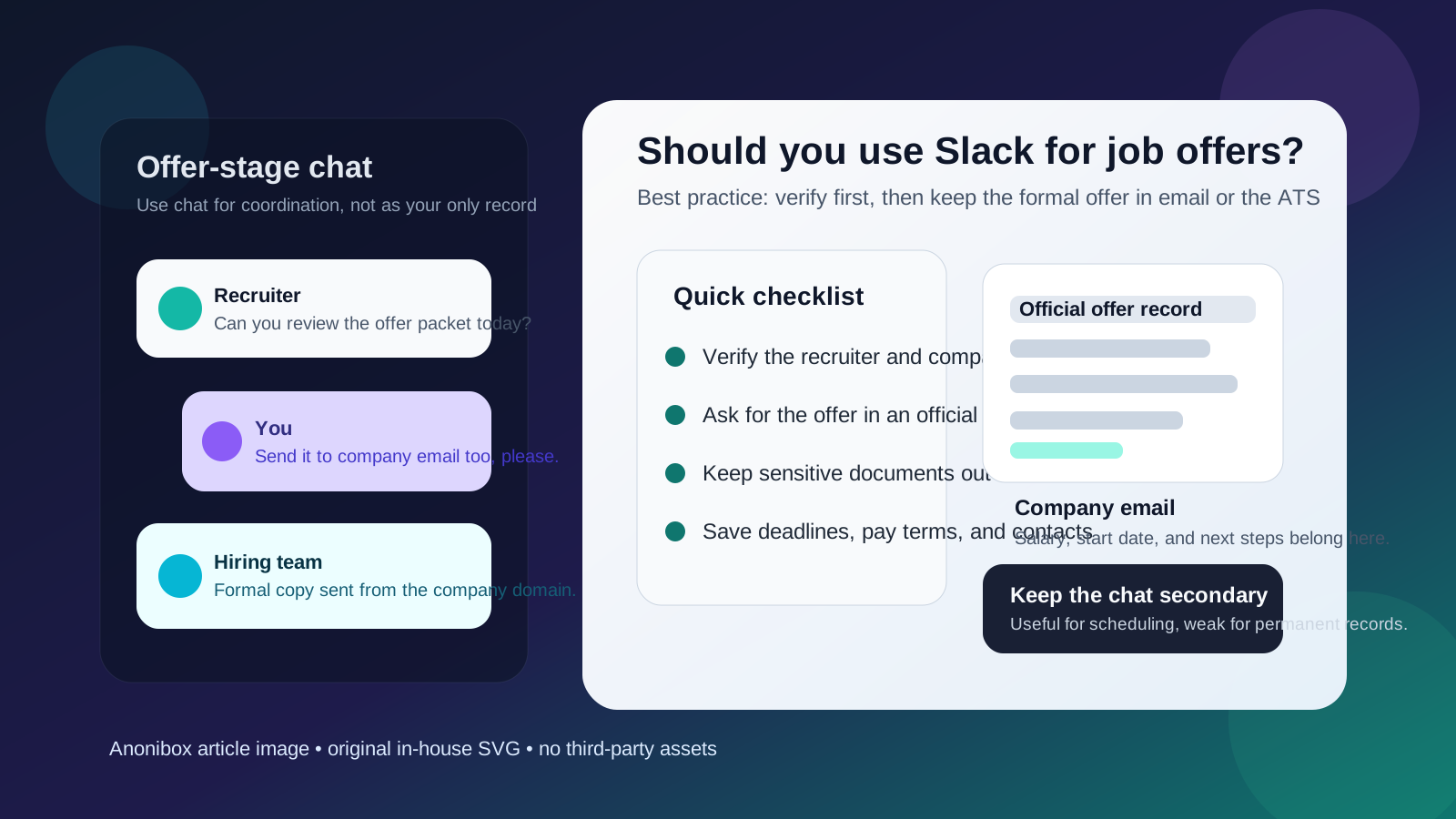
For most job seekers, the safest move is to use Slack only as a secondary channel and keep the formal offer in company email or the employer’s official hiring system.
Why this question comes up
Slack sits in a gray area between casual chat and real workplace communication. Plenty of companies use it every day, so getting a message there does not automatically mean something is wrong. A recruiter or hiring manager may use Slack to confirm timing, answer a quick question, or invite you into a conversation once you are already deep in the process.
The problem is that job offers are more sensitive than interview scheduling. Once an employer is talking about compensation, deadlines, contingencies, equipment, start dates, or onboarding documents, you need a communication trail that is stable, easy to review, and clearly tied to the real organization. Slack is not always the best place for that.
That is why the right answer is not a blanket yes or no. Slack can be fine for light coordination. It becomes risky when it replaces the formal record.
Short answer: use Slack for coordination, not as the sole source of the offer
If a legitimate employer says, “We sent the official offer to your email, and we can answer quick questions in Slack,” that can be perfectly reasonable. If someone wants to keep the entire offer process inside chat, rush you through a decision, or avoid sending anything from a company domain, that is a warning sign.
In other words, Slack is best treated as a convenience layer. It can speed up clarification, scheduling, and follow-up. It should not be the only place where the actual offer lives.
When Slack can be reasonable for job offers
There are situations where Slack use makes sense:
- You already verified the company and recruiter independently. You know who is contacting you, and the role is real.
- You have already interviewed through normal channels. Slack shows up late in the process, not as the first contact from nowhere.
- The employer also uses official email. The formal offer letter, salary details, and legal or HR instructions still arrive through a company domain or hiring platform.
- The Slack messages are limited to quick coordination. Things like “Did you receive the letter?” or “Can we talk at 3 PM?” are fine.
- The workspace clearly belongs to the employer. The names, people, and context line up with what you already know.
In that setup, Slack is not the offer itself. It is just a faster side channel for communication.
What makes Slack risky at the offer stage
1. Fake recruiter and fake workspace problems
Scammers know that chat tools feel immediate and informal. It is easier to pressure someone in a fast-moving message thread than in a formal HR email. A fake recruiter can create a workspace, use a believable display name, and make the process feel urgent before you slow down enough to verify anything.
If the first serious offer discussion appears in Slack without a matching paper trail, be cautious. Real companies may use chat, but they usually do not hide the formal record from you.
2. Weak recordkeeping for something important
An offer is not just a friendly message. It includes terms you may need to compare, revisit, negotiate, or prove later. Salary numbers, title changes, signing bonuses, deadlines, start dates, benefits notes, and contingencies are easier to handle when they are in a clear document or official email thread. Slack can bury important details in scrolling messages, side threads, or edited posts.
3. Admin visibility and workspace boundaries
Slack is a company tool, not a private vault. Depending on the workspace and account setup, admins may have broad visibility, retention policies may vary, and your messages may not behave like a private, personal archive. That does not make Slack unusable, but it does mean you should be deliberate about what you put there.
4. Pressure and urgency tactics
Chat tools make it easier for someone to create emotional pressure: “We need your answer today,” “Send the document now,” or “Just drop your details here so we can move fast.” Sometimes the urgency is real. Often it is a tactic. Slack’s speed is useful, but it can also push people into decisions before they verify the basics.
What you should verify before discussing an offer in Slack
Before you treat Slack messages as legitimate offer-stage communication, check a few things outside the chat window:
- Confirm the company website and careers presence. Make sure the employer exists in the way the sender claims.
- Verify the recruiter or hiring manager independently. Look for a company staff page, LinkedIn profile, or a prior email thread from the actual domain.
- Match the role to a real interview process. A genuine offer should connect to interviews, assessments, or conversations you actually had.
- Ask for the official offer by email. If they refuse or dodge that request, take it seriously.
- Check the workspace context. Are the channel names, participants, and terminology consistent with the employer?
If those checks line up, Slack becomes much safer as a convenience channel. If they do not, stop and verify before continuing.
What is okay to discuss in Slack, and what is better kept elsewhere?
Usually fine in Slack
- Scheduling a call to talk through the offer
- Confirming that you received the formal documents
- Asking light logistical questions
- Clarifying who your point of contact is
- Coordinating timing for follow-up conversations
Better kept in official email or the hiring system
- The actual offer letter
- Compensation details and negotiated changes
- Start-date confirmations
- Background check or identity-document instructions
- Tax, payroll, banking, or benefits paperwork
A good rule is simple: if it affects your legal, financial, or onboarding record, it should exist somewhere more formal than chat.
What if the employer seems real but wants to move everything into Slack?
That is where you need tact instead of panic. You do not have to accuse anyone of being shady. You can just ask for structure. A calm response like, “Thanks — could you also send the final offer details to my email so I have one formal thread to review?” is completely reasonable.
Professional employers usually understand that request. In fact, many will prefer it themselves. If someone pushes back hard, acts offended, or says they cannot send anything from the company domain, the risk level goes up fast.
How Slack compares with other channels at the offer stage
Slack is usually more credible than random social DMs, but it is still weaker than official email for formal offer handling. Compared with channels like Telegram or WhatsApp, Slack may feel more work-like because many organizations already use it internally. That helps a little, but it does not remove the need for verification.
Email still wins for the core offer record because it is easier to archive, easier to search, easier to forward to a spouse or mentor for review, and easier to keep tied to the company domain. If you want the inbox side of your search to stay organized, this is where a separate job-search email strategy can help. Some people use a dedicated address or a tool like Anonibox for low-stakes signups and early research, while keeping their real long-term address for serious offer-stage communication.
That separation makes more sense than trying to turn chat into your permanent record.
Practical best practices if Slack enters the offer process
- Get the formal offer outside Slack. Treat that as non-negotiable.
- Save names, dates, and deadlines. Do not rely on memory or a fast-moving channel.
- Keep sensitive personal data out of casual chat. Ask for secure official instructions instead.
- Do not click rushed links blindly. Verify where they go and who sent them.
- Use Slack for quick clarification, not final decisions. Big decisions deserve a cleaner record.
- Trust friction over urgency. If something feels off, slow the process down.
A quick decision checklist
Before you rely on Slack for anything offer-related, ask:
- Have I independently verified the employer and recruiter?
- Do I already have a real email thread or official offer document?
- Is Slack only supporting the process, or replacing it?
- Am I being asked to share sensitive information in chat?
- Does the pace feel professional, or artificially urgent?
If the answers look solid, Slack can be a useful secondary channel. If several answers raise concerns, move the conversation back to official email and verify before you go any further.
Final answer
Yes, you can use Slack for job offers in a limited way — but only after you verify the employer and only if the formal offer exists outside the chat. Slack is good for quick coordination, clarifying next steps, and keeping momentum. It is not a great place to keep the only copy of compensation terms, deadlines, or onboarding instructions.
The safest approach is simple: verify first, insist on a formal record, and use Slack as a side channel rather than the foundation of the offer process. That keeps you responsive without giving up the structure and protection that serious hiring decisions deserve.