Yes — you can use StartMail for job offers if it is a stable inbox you check constantly and plan to keep active through offer letters, negotiation replies, and onboarding follow-up.
For most people, though, the real question is not whether StartMail is private enough. It is whether your StartMail setup is simple, durable, and easy to monitor when deadlines and important documents start arriving.
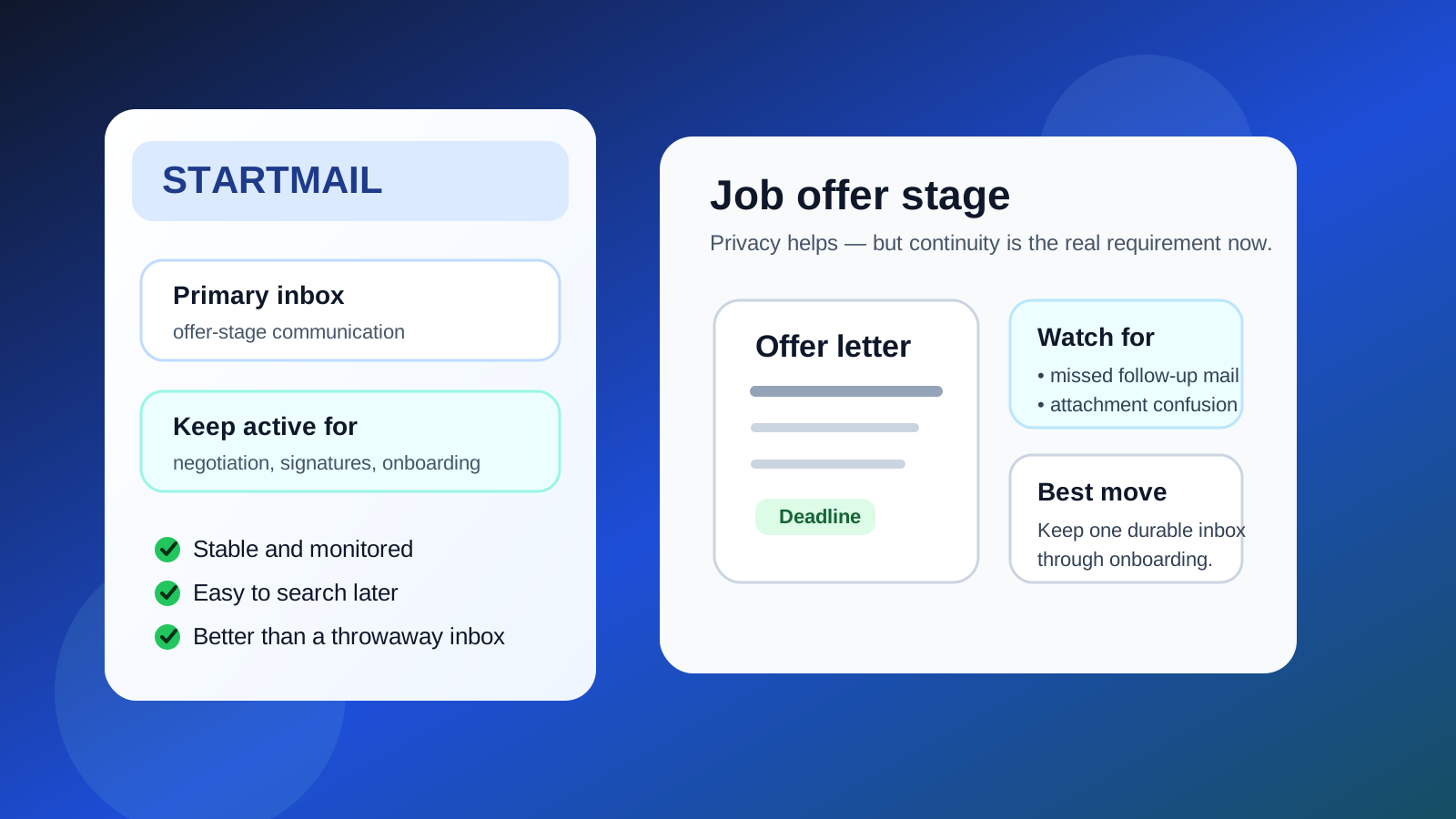
That is the practical answer behind searches for should you use StartMail for job offers. Earlier in a job search, privacy tools can help keep your oldest personal address out of job boards, recruiter databases, and every low-trust signup form you touch. But a real job offer is different from a casual application or an exploratory recruiter thread. Once a company is preparing an offer, email stops being a convenience and starts becoming part of a formal process.
You may receive compensation details, offer letters, revised versions after negotiation, benefits summaries, background-check links, e-signature requests, and onboarding instructions from several people or systems. At that point, the best inbox is usually the one that feels boring in the best possible way: dependable, searchable, actively monitored, and unlikely to create confusion.
StartMail can absolutely meet that standard for some people. The issue is not the provider name by itself. The issue is whether you are using StartMail as a serious long-term mailbox or as a privacy layer that becomes awkward once the stakes rise.
Why the offer stage changes the rules
Before an employer is serious, privacy often feels like the main concern. That makes sense. Job searching can spread your contact details widely and invite spam that lingers for months. A separate inbox, a masked address, or a temporary tool can be useful when you are just testing the water.
A job offer changes the risk profile. Now the bigger problem is not only inbox exposure. It is operational failure. Missing a message, overlooking a PDF, replying from the wrong address, or forgetting which inbox is tied to the conversation can slow down a process that is suddenly time-sensitive. When hiring moves into documents and deadlines, continuity becomes more important than clever separation.
This is where many job seekers benefit from switching mental models. Instead of asking, “How do I hide my main inbox?” the better question becomes, “Which inbox will make the next two weeks easiest to manage without mistakes?” That small shift usually leads to better decisions.
Why StartMail can be a good choice for job offers
It is a real inbox, not a disposable one
If you already use StartMail as a long-term account, that matters. An actual persistent inbox is much safer for offer-stage communication than a temporary or semi-disposable setup. Offer letters are not one-click confirmations. They can lead to days or weeks of back-and-forth.
It can keep your job search separate from your everyday personal traffic
Offer-stage threads are easier to manage when they are not buried under shopping receipts, newsletters, and unrelated personal messages. If your StartMail account is clean and intentional, it may be easier to use than a more familiar inbox that is full of clutter.
It can support privacy without looking disposable
Most recruiters and HR teams care more about whether your address looks readable and whether you reply quickly than about which email provider you chose. A straightforward address based on your real name can look perfectly professional, even if the provider is less mainstream than Gmail or Outlook.
It can carry the conversation beyond the first offer email
Many people think only about the offer letter itself. In reality, the same inbox may also receive revised terms, start-date details, tax paperwork instructions, benefits enrollment prompts, device-shipping updates, or messages from a background-check vendor. If your StartMail account is one you genuinely plan to keep using, that continuity is valuable.
Where StartMail can become the wrong choice
1. You are treating it like a temporary privacy experiment
If you opened the account just to keep your main address out of early recruiter traffic and never intended to rely on it for important documents, the offer stage is the moment to rethink the setup. A mailbox that felt good enough for job-board signups may not be the mailbox you want handling signed paperwork and deadlines.
2. You do not monitor it as closely as your main inbox
This is one of the biggest practical risks. Offer-stage communication often moves fast. If you check StartMail only occasionally, keep notifications turned off, or respond slower there than you would elsewhere, you are creating avoidable friction. Privacy offers no advantage if you miss the message that matters most.
3. You are adding too many layers around it
If your StartMail workflow depends on aliases, forwarding, filters, or several inboxes that all touch the same conversation, stop and simplify. Complexity is tolerable when the stakes are low. It becomes annoying when a recruiter is waiting for a response to a compensation revision or when HR has sent you a deadline-bound document.
4. You expect onboarding follow-up but plan to abandon the account soon
The offer phase rarely ends with a single yes or no. Even after you accept, the employer may continue using the same thread or address for more steps. If you are not prepared to keep the account active through the handoff into onboarding, it probably is not the best place for the conversation.
5. The address itself looks awkward or over-engineered
The provider matters less than the full address. A clean address usually looks fine. A complicated handle, too many numbers, or something that feels improvised can make any provider seem less polished. At this stage, the safest option is the address that creates the fewest unnecessary questions.
What employers actually care about
Most employers do not have a strong opinion about StartMail specifically. They care about whether communication feels dependable. In practice, that usually means:
- you reply promptly
- your inbox appears stable
- attachments and links do not get lost
- the same address can keep receiving follow-up messages
- the thread stays clean and easy to follow
If your StartMail account supports those basics, it can work well. If it interferes with them, its privacy benefits start mattering less.
Should you switch away from temporary email before the offer stage?
Usually, yes. This is one of the clearest transition points in a privacy-first job search.
Temporary inboxes and disposable workflows can be useful for low-trust signups, one-off listings, and early research. They are much less suited to formal employment communication. If you used Anonibox earlier to reduce spam while testing job boards or recruiter forms, that may have been a smart move. But once an employer is preparing a real offer, most people are better off moving to one durable inbox they fully control.
StartMail can be that durable inbox if you already treat it as one. If not, the better move may be to switch before the process becomes document-heavy.
Best practices if you use StartMail for job offers
Use one address consistently
Do not keep bouncing between different job-search addresses once the process becomes formal. If you need to change addresses, do it once, explain it clearly, and keep everything there afterward.
Save important files outside the inbox too
Download offer letters, compensation summaries, benefits documents, and onboarding instructions into a folder you control. Your inbox should help you manage the process, not act as the only copy of critical documents.
Create a simple folder or label for the employer
Keeping the entire thread together makes it easier to find revised terms, deadlines, or attached PDFs quickly. The less time you spend hunting for earlier messages, the calmer the process feels.
Watch for messages from different systems
The first offer email might come from a recruiter, but later steps can come from HR software, an e-signature service, or a background-check vendor. Stay alert for new senders that are part of the same legitimate process.
Check the inbox more often during the active offer window
Even if you normally review email in batches, the offer stage is one period when more frequent checks are worth it. Small delays can stretch out negotiations or create avoidable uncertainty.
Keep the account active through onboarding
If you use StartMail for the offer itself, do not assume the job is “done” once you accept. Important follow-up often continues after that moment.
When another inbox may be the better choice
You may want a different email for job offers if:
- you rarely check StartMail
- you created it only for short-term privacy
- your workflow depends on too many forwarding or alias rules
- you already have another stable inbox that is easier to monitor every day
- you know you will need a mailbox you plan to keep using well after the offer is signed
In those cases, the problem is not that StartMail is bad. It is that your specific setup may not be ideal for a stage where communication mistakes are more expensive.
A quick decision checklist
- Will this inbox still be active next month?
- Do you check it several times a day right now?
- Does the address look calm and professional?
- Can you easily find older recruiter messages and attachments in it?
- Would you trust this same inbox for onboarding follow-up after you accept?
If the answer to those questions is yes, StartMail is probably a reasonable offer-stage choice. If several answers are no, simplifying your setup before the process gets heavier is usually smarter.
Final answer: should you use StartMail for job offers?
Yes, you can use StartMail for job offers — but only if it functions as a durable, actively monitored inbox rather than a temporary privacy layer. At the offer stage, employers need to know you will actually receive offer letters, revised terms, and onboarding instructions without confusion.
For privacy-conscious job seekers, StartMail can be a solid middle ground: more deliberate than a cluttered mainstream inbox, but still capable of handling formal communication when used properly. Just do not confuse privacy with temporary convenience. A real job offer deserves an inbox you trust for the full life of the conversation.