Yes — text messages can be useful for apartment applications, especially for quick scheduling, document reminders, and status updates, but they should not be the only channel you rely on.
If you use texting during a rental application, keep it tied to a number you can monitor, avoid sending sensitive information by text, and move important details into email or the official application portal when the stakes get higher.
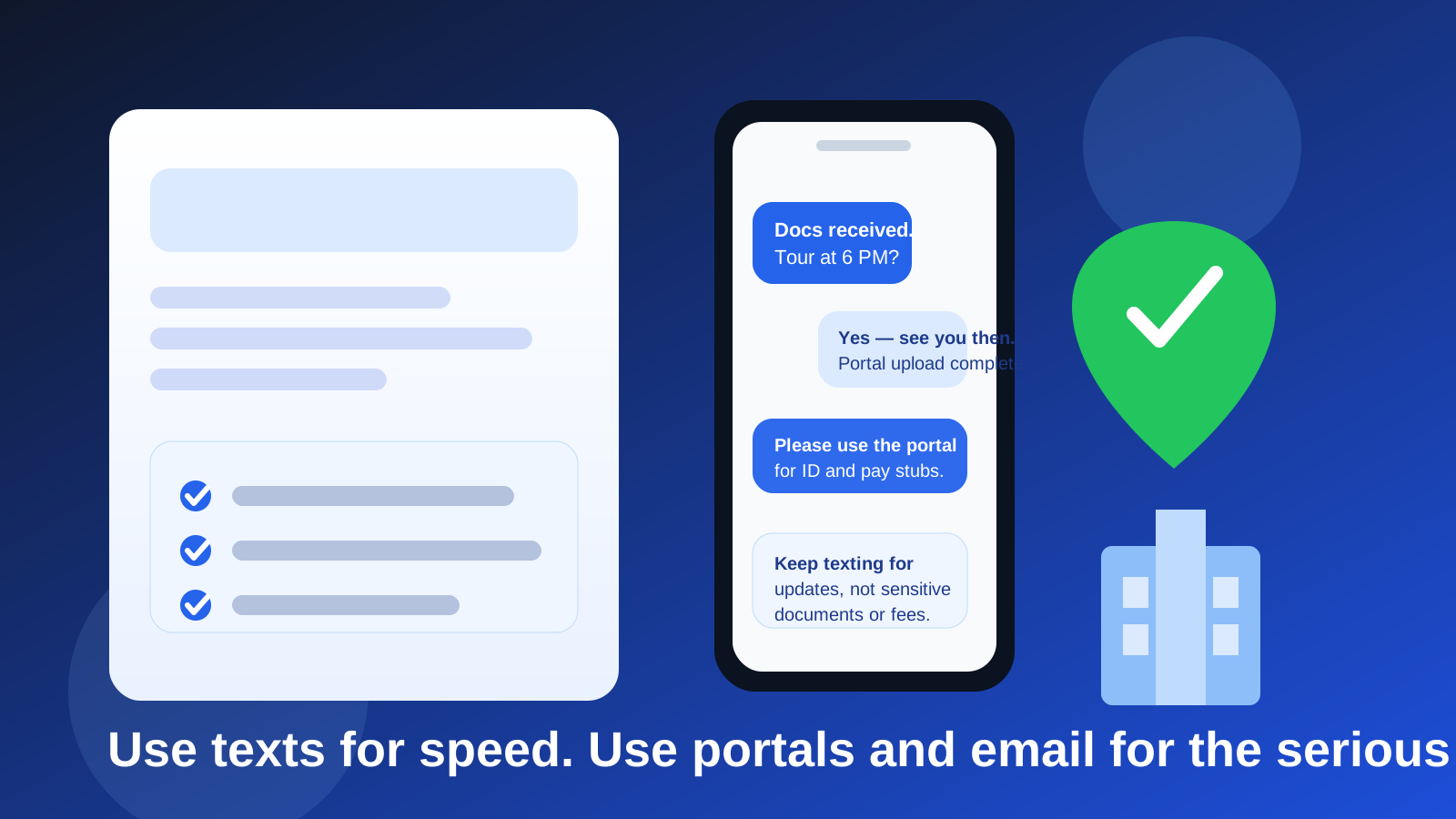
Apartment applications tend to move faster and ask for more personal information than casual apartment inquiries. Once you apply, a landlord or leasing team may text you about missing pay stubs, identity checks, tour timing, approval status, or next steps for signing. That convenience is real. So are the privacy risks.
Texting feels informal, immediate, and easy to answer from anywhere. That is exactly why it becomes a default channel so quickly. But apartment applications are not just about convenience. They involve identity details, screening, money, and deadlines. A fast message thread can help you stay responsive, yet it can also blur the line between legitimate follow-up and low-quality lead collection or outright scams.
The smartest approach is to treat text messages as a support channel rather than your entire rental workflow. They are great for quick coordination. They are much weaker for recordkeeping, document sharing, and anything that requires careful review later.
Short answer: use text messages for speed, not for everything
For many real apartment applications, texting is normal. Leasing agents often use it to confirm showings, ask whether you uploaded a document, or let you know there is an update in the portal. Ignoring texts completely can slow you down in a competitive market.
At the same time, you should be cautious about making text your only channel. It is too easy to lose context, miss attachments, or send sensitive details too casually. The safest pattern is simple: use texts for short logistical communication, then move anything important into email, the application system, or a verified phone call when needed.
Why landlords and leasing teams text during apartment applications
There are practical reasons rental teams use texting after you apply:
- Speed: a text often gets seen faster than an email.
- Scheduling: tours, follow-up calls, and move-in timing are easier to coordinate quickly.
- Document reminders: leasing offices may text to say they still need proof of income, ID, or co-signer paperwork.
- Status nudges: you may get a short message that your application is under review, approved, or waiting on screening.
- High-volume workflow: busy leasing teams sometimes manage applicants through a mix of portal messages, email, and SMS.
None of that is unusual by itself. Texting is common because apartment applications often run on deadlines. A unit can disappear quickly, and leasing teams do not always want to wait for long email replies.
Why texting can be helpful
1. You can respond quickly
If a property manager wants to know whether you can tour at 5 PM or whether you can resend a missing upload, texting reduces friction. A short answer keeps the process moving.
2. It works well for time-sensitive updates
Apartment applications sometimes hinge on small timing details. You may need to confirm receipt of a screening link, clarify a move-in date, or acknowledge that a document is coming later in the day. Texts are well suited to those quick check-ins.
3. It can separate real activity from silent inbox clutter
Email inboxes get crowded fast during a housing search. If a legitimate leasing office uses text for the most urgent items, that can actually help you notice what matters first.
Where texting starts to become risky
1. Sensitive documents do not belong in a casual thread
An apartment application may involve pay stubs, IDs, tax documents, bank statements, or other personal records. Even when a landlord is legitimate, text is usually not the best place to push around sensitive files unless you have fully verified the recipient and there is no better secure channel.
2. The paper trail is weaker
Emails and application portals are easier to search, organize, and forward later. Text threads can become messy, especially if you are dealing with multiple listings at the same time. When a dispute or misunderstanding pops up, structured records matter.
3. Scam pressure works especially well over text
Rental scams often lean on urgency: “Someone else is ready to take it,” “send the fee now,” or “move to WhatsApp for faster approval.” Texting makes those pressure tactics feel more personal and immediate than they would in an email.
4. Your main number can get noisy fast
If you are applying through listing platforms, brokers, and multiple buildings, your phone can become a funnel for follow-up messages you never wanted. That can continue even after you stop searching.
When texting is usually fine
Text messages are usually reasonable when all of these conditions are mostly true:
- you already know the property is real,
- the message is tied to a verified application you submitted,
- the topic is logistical rather than highly sensitive,
- the sender matches a real leasing office, broker, or portal workflow, and
- you still have a cleaner backup channel such as email or the application portal.
Examples include confirming a tour time, acknowledging that you uploaded a document, asking whether a screening report was received, or coordinating a call with the leasing office.
When you should slow down and switch channels
Texting should stop being the main channel when the conversation starts involving money, identity-heavy paperwork, or confusing requests. Slow down if:
- you are asked to pay an application fee, deposit, or holding fee by text link alone,
- the sender wants copies of highly sensitive documents without using a verified portal,
- the numbers or names do not match the property website,
- you are being pushed to move immediately into Telegram, WhatsApp, or another side channel, or
- the conversation feels rushed, vague, or inconsistent with the listing.
In those moments, email or a verified portal is not just tidier. It is safer. If the property is legitimate, they should be able to support a more accountable channel for important steps.
Should you use your main number or a separate number for apartment application texts?
If you expect a broad or messy rental search, a separate number is often the better choice. Apartment applications can trigger far more follow-up than people expect: reminders, alternate units, broker outreach, waitlist notices, marketing texts, and messages from listings you already rejected.
A separate stable number gives you breathing room. It can be a second SIM, a dedicated housing line, or a service such as Google Voice where that fits your setup. The goal is not to disappear. It is to stay reachable without attaching every apartment interaction to the same number you use for family, work, banking, and everyday life.
The same principle applies to email. Many renters pair a separate apartment-search inbox with a separate number so housing communication stays organized. If you want to reduce early-stage inbox exposure too, a tool like Anonibox can help with privacy-minded rental research or listing signups before you settle into the longer-term channels you want tied to a serious application.
Best practices for using text messages safely on apartment applications
Keep texts short and practical
Use text for simple coordination: “I uploaded the document,” “yes, 6 PM works,” or “please resend the portal link.” The more complex the issue, the more you should move it to email or a call.
Verify the property independently
Before you trust a text thread, confirm the property manager, building, or leasing office through the official website or another reliable source. A real-looking listing does not always mean the person texting you is legitimate.
Do not overshare in the thread
A phone number is already personal data. Do not casually add more by sending everything over text. Sensitive documents, account numbers, or private identifiers deserve more care.
Label important contacts clearly
If a real application becomes active, save the contact with the property name so you know who is who. That reduces confusion when several listings are in play at once.
Take screenshots or summarize important promises elsewhere
If someone confirms something important by text, such as a fee amount, move-in timing, or document requirement, save it or restate it by email. That makes your records cleaner if there is a mismatch later.
Watch for channel drift
It is one thing for a leasing office to text you from a known number. It is another for the whole process to drift into a less accountable channel where details get murky. When the stakes rise, pull the conversation back toward something more verifiable.
Red flags in apartment-application texts
- pressure to send money immediately before a proper review process,
- links that do not match the property or platform you applied through,
- requests for highly sensitive documents with no verified portal,
- claims that another applicant will take the unit unless you act instantly,
- refusal to provide a business email, office number, or official website, and
- messages that feel copied, vague, or inconsistent with the listing details.
If you see several of these together, the problem is bigger than texting. The application itself may not be trustworthy.
What works best in practice
For most renters, the strongest setup is a layered one:
- text messages for fast logistics,
- email for fuller explanations and searchable records,
- official portals for uploads, screening, and formal status steps, and
- a separate number or inbox if you want better privacy and easier cleanup later.
That balance lets you move quickly without letting an apartment search take over the contact details you depend on for the rest of your life.
Final answer
So, should you use text messages for apartment applications? Yes, often — but as a supporting channel, not the whole system.
Texting is useful for quick coordination and status checks, especially when a legitimate property is moving fast. But for sensitive documents, payment questions, and anything you may need to reference later, email and verified application portals are usually the better home. If privacy matters, use a stable separate number and keep your rental communication organized from the start.