Text messages can work for apartment inquiries, but they are best for quick scheduling and light follow-up, not your entire rental search. If you use texting, protect your phone number, keep messages brief, and avoid sharing sensitive documents or personal data in the thread.
Yes, you can use text messages for apartment inquiries. No, you should not rely on texting alone when you need a clear paper trail, better scam screening, or stronger privacy boundaries.
Apartment hunting often moves faster than people expect. A listing goes live, you send a note, the landlord or leasing agent replies from a mobile number, and suddenly the whole conversation is happening in your text inbox. That can feel convenient, especially when you are trying to book tours before a place disappears. But convenience is not the same thing as safety, and it is not always the same thing as professionalism either.
The real question is not whether texting is allowed. It usually is. The better question is when texting helps, when it creates unnecessary risk, and how to use it without exposing your main number to every broker, landlord, leasing assistant, listing platform, and scammer that touches the search.
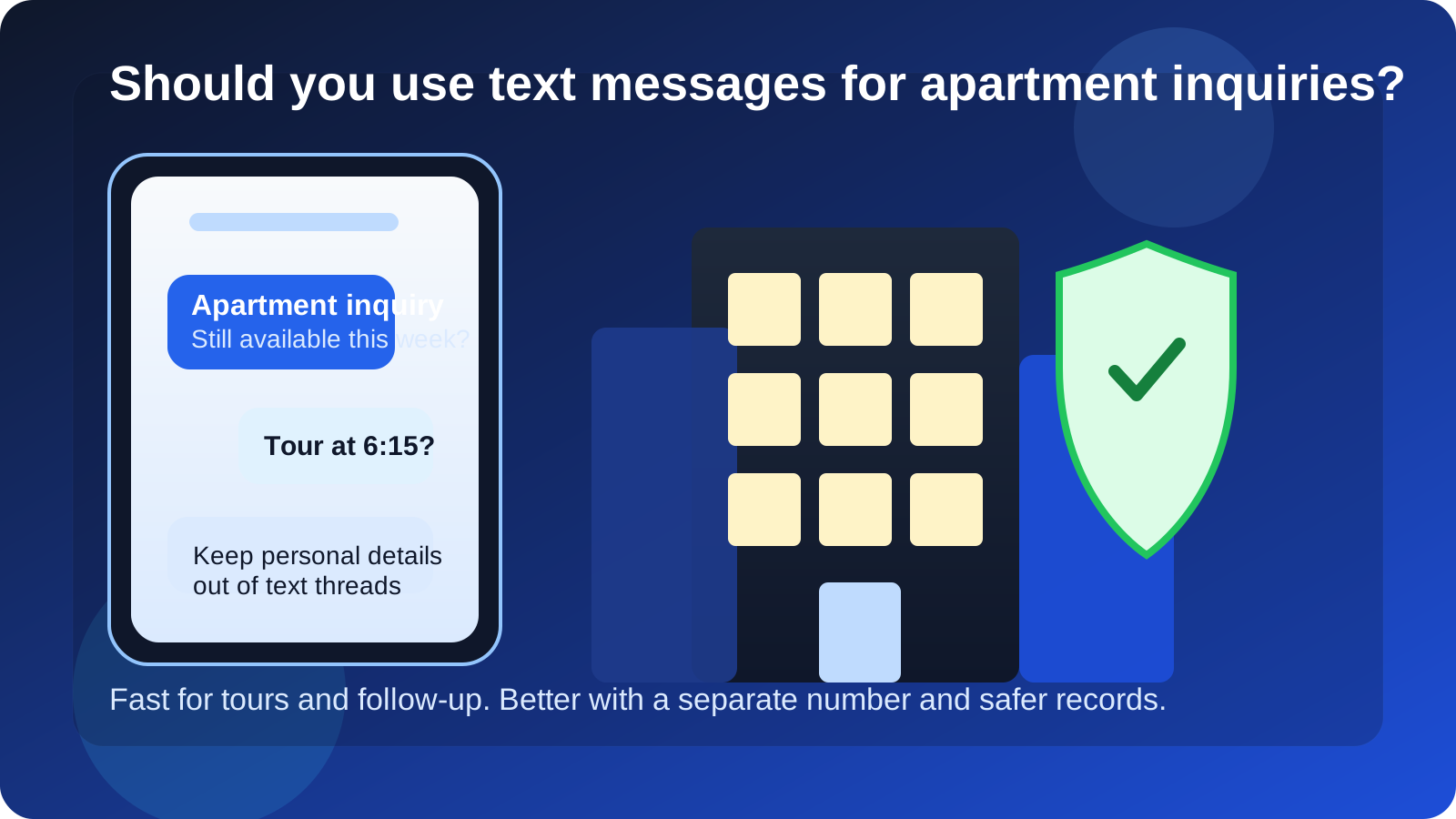
Why texting comes up so often in apartment searches
Apartment inquiries are usually more time-sensitive than many other kinds of online contact. A recruiter can email you back next week and the opportunity may still be open. A rental listing can change within hours. Because of that, many landlords and leasing teams default to the fastest channel available.
Texting often becomes the practical middle ground between calls and email:
- it is faster than email for same-day tour coordination
- it feels less intrusive than an unexpected phone call
- it is easy for agents who are already moving between properties
- it works well for short updates like “still available” or “running 10 minutes late”
So the appeal is real. The problem is that texting also exposes your phone number quickly, pushes the conversation into a more personal channel, and makes it easier for scammy or sloppy listings to pressure you off safer systems.
Short answer: texting is useful for logistics, but weak as your only communication channel
If a real landlord or leasing agent wants to confirm a tour time, send a gate code, or ask whether you are still interested, texting can be perfectly reasonable. It is often the fastest way to handle simple coordination.
But if the conversation moves into deposits, application fees, identity documents, income verification, or “act right now before someone else takes it,” texting stops being just convenient and starts becoming risky. At that point, you usually want a cleaner trail in email or an official application portal.
That is why the best approach is usually mixed: text for speed, email for records, and use a separate phone number when privacy matters.
When text messages make sense for apartment inquiries
1. You are confirming that the listing is still available
A short text can be an efficient first checkpoint. If the listing is stale, already rented, or obviously ignored, you learn that quickly without investing a longer message thread.
2. You are booking or adjusting a tour
Texting is strong for same-day logistics. “I’m outside,” “Can we move to 6:15?”, or “Is guest parking available?” are all normal uses of the channel.
3. The landlord or agent clearly prefers texting
Some smaller landlords handle everything from a mobile phone. Others use text because they are often away from a desk. If the other side clearly offers texting and the communication stays straightforward, it can be fine.
4. You are keeping the message brief and low-risk
Texting works best when the message is simple, factual, and easy to verify. It is less suitable for long screening discussions, negotiation, or anything involving sensitive personal information.
When texting is a bad idea
1. You are being pushed to move off a safer platform too fast
If a listing site has an internal messaging system or the initial inquiry came through email, and the other side immediately pressures you to switch to text before you have even confirmed the basics, slow down. That kind of rush is common in scam flows.
2. You are being asked for sensitive information
Do not text copies of your ID, bank statements, Social Security number, card details, or full credit-report information to a random number. Legitimate rentals may eventually require documents, but the channel matters. Sensitive paperwork belongs in a secure, verifiable process, not a casual text thread.
3. The conversation is getting vague, pushy, or inconsistent
Scam listings often become obvious in text because the sender avoids direct questions, changes the story, refuses basic verification, or jumps straight to urgency: “Send the deposit now,” “there are many applicants,” or “I am overseas so text only.”
4. You need a reliable record of what was promised
Text messages are searchable, but they are still easier to lose track of than a dedicated email thread, especially when you are juggling multiple listings. If terms, fees, concessions, or move-in details matter, email usually gives you a cleaner trail.
The privacy risks of using text messages for apartment inquiries
Texting feels casual, but the privacy trade-offs are real.
Your number can spread farther than you expect
A single apartment inquiry may touch a listing site, a syndication partner, a CRM, a leasing office, and one or more agents. Even when the listing itself is legitimate, your number can end up in more systems than you intended.
Spam and follow-up can last longer than the search
Once your number lands in rental lead workflows, you may keep getting messages about “similar properties,” move-in specials, or units in buildings you never wanted. That is annoying at best and invasive at worst.
Scam texts are easy to disguise as normal rental follow-up
If you are actively apartment hunting, a text that says “Hi, saw your inquiry, send application fee today” can sound plausible in the moment. That is exactly why scammers like this channel. They do not need a polished website when they can create urgency from a phone number.
It blurs your personal boundaries
Your everyday number is attached to family, friends, banking alerts, deliveries, and normal life. If apartment hunting traffic lands there too, your personal inbox gets cluttered and your number may keep attracting noise after you already signed a lease.
A better setup: separate number plus separate inbox
If you expect to contact multiple listings, the smartest setup is usually not “text everything from your main number.” It is a privacy-aware system.
- Use a separate phone number for apartment search communication when possible.
- Use email for detailed follow-up so you have a better written record.
- Keep your main inbox cleaner with a separate apartment-search address if you are replying to many listings and platforms.
That is where Anonibox can fit naturally. If you want to keep early listing replies, platform signups, and lead-form follow-up out of your main inbox, a separate temporary or low-commitment email workflow can help on the email side while your separate number handles calls and texts. The point is not to disappear. The point is to stay reachable without giving every listing your primary contact details right away.
Best practices if you do use text messages for apartment inquiries
Keep the first text short
A good apartment-inquiry text should identify the listing, state your purpose, and ask one clear question.
For example:
- “Hi, I’m following up on the one-bedroom listing on Oak Street. Is it still available for August move-in?”
- “Hi, I just sent an inquiry about the Maple Ave studio. Are you scheduling tours this week?”
That is enough. Long life stories, salary details, or document attachments in the first text usually do not help.
Move important details to email
If the conversation becomes serious, switch to email for the parts you may need to reference later: application instructions, fee explanations, lease terms, concessions, required documents, pet policies, or promised repairs.
Do not send sensitive documents by text
This rule is worth repeating. Photos of IDs, pay stubs, credit paperwork, or bank details should not go to an unverified mobile number just because the conversation started there.
Verify the person behind the number
Ask for the property address, company name, leasing office name, and official website if those details are not already clear. Then check them independently. A legitimate person should be able to answer basic verification questions without getting defensive.
Watch the tone and pace
Normal rental communication may be quick, but it should still make sense. Be cautious if the person avoids specifics, refuses to show the unit, pushes for money before a tour, or tries to keep everything in disappearing or highly informal channels.
Save what matters
If a text contains a tour confirmation, price detail, fee statement, or instruction you might need later, copy it into your notes or email yourself a record. Apartment searches get messy fast when details live only in one text thread.
Texting versus email for apartment inquiries
The choice is not really text or email. It is text for one kind of task and email for another.
- Texting is better for: availability checks, quick replies, day-of-tour logistics, and simple confirmations.
- Email is better for: application steps, written records, detailed questions, document exchange, and anything you may need to revisit later.
If you combine both channels intentionally, you get speed without losing organization.
Red flags that mean you should stop texting and step back
- The sender will not confirm the exact property or unit.
- You are asked for a deposit before seeing the place or verifying the listing.
- The person refuses email or any official application path.
- The story keeps changing about availability, owner identity, or move-in timing.
- You are pushed toward payment apps, gift cards, wire transfers, or unusual urgency.
- The grammar, timing, and behavior feel like a copy-paste script rather than a real property contact.
Any one of those can happen in legitimate communication once in a while. Several together are a serious warning sign.
A quick decision checklist
- Am I texting a verified landlord, agent, or leasing office?
- Is this just a logistics question, or am I being asked for sensitive information?
- Would a separate number protect me better than using my main one?
- Do I need email instead for a better record?
- Does anything about the pace or tone feel suspicious?
If the answers point to a normal, low-risk exchange, texting is probably fine. If the conversation is getting deeper, more personal, or more urgent, switch channels and verify before you continue.
Final answer: should you use text messages for apartment inquiries?
Yes, but selectively. Text messages are useful for speed, quick scheduling, and light follow-up during an apartment search. They are not the best place for sensitive paperwork, deposit pressure, or complicated back-and-forth that you may need to document later.
The safest approach is to use texting as a support channel, not your only channel. A separate number gives you better privacy, email gives you better records, and a separate inbox strategy with tools like Anonibox can keep rental-search noise away from your main account. That way, you stay responsive for real listings without handing your primary contact details to every thread that crosses your search.