Usually no: for most background checks, you should give one reliable email address, not two. A single dedicated inbox is usually safer and easier to monitor than splitting time-sensitive screening messages across multiple addresses.
If privacy matters, the better move is usually a separate job-search email or alias you control, not two different inboxes that can scatter consent forms, document requests, and follow-ups.
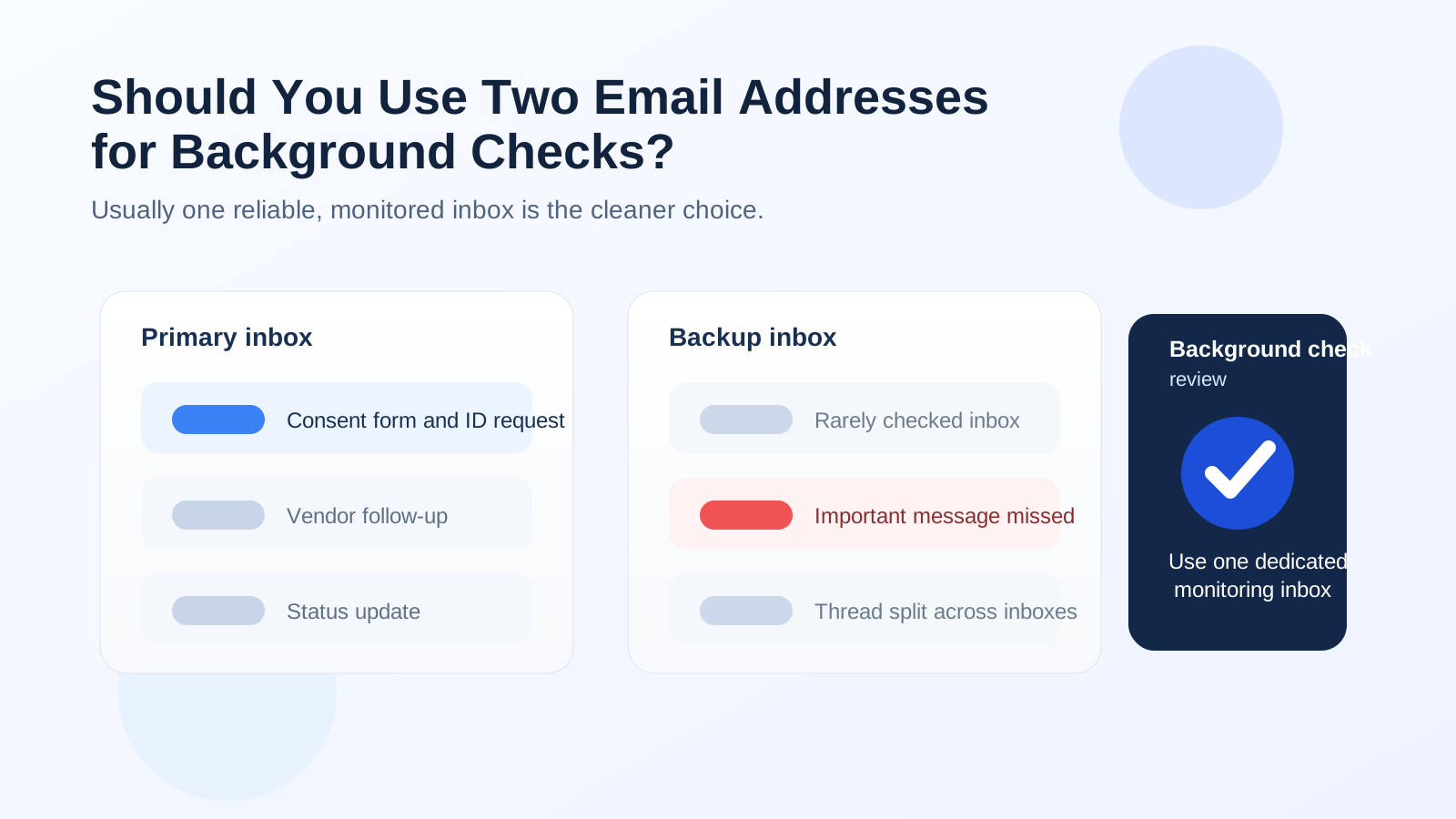
Why people consider using two email addresses during background checks
The idea is understandable. Background checks often happen late in the hiring process, when the stakes feel higher and the communication can get more formal. You may be dealing with an employer, a recruiter, and a third-party screening company. That makes some candidates think it is smart to provide both a primary email and a backup email just in case something gets missed.
Sometimes the motivation is privacy. Maybe you do not want your long-term personal inbox tied to every hiring workflow. Sometimes it is organizational. Maybe you want one inbox for recruiters and another for legal disclosures, identity checks, or scheduling. And sometimes it is continuity: you are worried about losing access to one address, or you want a fallback in case messages land in spam.
Those concerns are reasonable. But the solution is usually not “give two email addresses everywhere.” In most cases, that creates confusion faster than it creates protection.
Why one dedicated email address is usually the better choice
Background checks are not just casual follow-up emails. They can include consent links, document requests, identity verification steps, correction windows, and time-sensitive notices. When that kind of communication is split across multiple inboxes, the chance of missing something goes up.
- You may overlook a message: if the recruiter writes one address and the screening vendor writes the other, you now have two inboxes to monitor closely.
- You can create identity confusion: if your resume, application, and screening paperwork all show different addresses, some systems and coordinators may need extra clarification.
- Spam filtering becomes harder to manage: one important message in the “wrong” inbox can delay the process.
- Corrections and follow-ups get messier: if you need to dispute an error or provide a document quickly, a single thread is easier than scattered communication.
That is why a single address that you actually monitor well is usually better than two that you only half-watch.
When two email addresses can make sense
There are a few cases where using two email addresses is reasonable, but they are more limited than many people assume.
1. The form explicitly asks for an alternate contact email
If an employer or screening portal gives you a clearly labeled field for a backup or alternate email, using it can make sense. That tells you the workflow was designed to handle two addresses, rather than forcing someone on the other end to guess which address to use.
2. You are about to lose access to one address
If you are using a school email that may expire soon, a contractor email tied to a short-term role, or any account you may not keep long enough to finish the process, an alternate address can help. Background checks do not always wrap up in a day or two.
3. You have a documented deliverability problem
If you already know one address has strict filtering or has missed legitimate employment messages before, then a secondary address may be a practical fallback. But this is still better handled deliberately, not casually.
Outside of those cases, two addresses are usually more hassle than help.
What is usually smarter than giving two email addresses?
The best middle ground is usually one separate, persistent, job-search-focused email address. That gives you privacy and organization without splitting critical messages in two directions.
A strong background-check inbox should be:
- Easy for you to monitor daily
- Stable for weeks, not just hours
- Professional enough to appear on forms and disclosures
- Separate from your main personal inbox if you want less clutter
This is where an email alias or separate inbox can be more useful than two full addresses. For example, if you want to keep hiring-related traffic out of your primary inbox, a controlled secondary address or alias can help you stay organized without introducing unnecessary ambiguity. Tools like Anonibox can be useful when you want a clean address for early-stage job-search activity or to keep recruiter traffic separated from your everyday inbox, but for background checks specifically, the key is reliability. If the process may involve follow-up documents or delayed notices, make sure you use an address you can keep checking until the hiring workflow is fully complete.
Should you use a temporary or disposable email for background checks?
Usually only with caution. A truly short-lived disposable address is often a poor fit for background checks because the process may outlast your access window. Unlike a quick newsletter signup or a one-time demo confirmation, a background check can involve multiple messages over several days or even weeks.
If you want privacy, a better option is often a dedicated but persistent address rather than a one-time throwaway inbox. The goal is not just to receive the first verification message. The goal is to stay reachable for everything that comes after: disclosures, consent reminders, document issues, result updates, and any correction steps.
So if you are choosing between:
- two email addresses at once, and
- one separate but dependable background-check email,
the second option is usually cleaner.
Common problems with giving two email addresses
Messages go to the address you check less often
This is the most obvious failure mode. You intend one address to be primary and the other to be backup, but someone on the employer side uses whichever is easiest to copy from a form. Suddenly the message you needed most is sitting in the quieter inbox.
Your records become inconsistent
If your application uses one address, your resume shows another, and the screening vendor receives both, you increase the chance of small administrative problems. Even if nothing serious breaks, you may create avoidable clarification work for yourself and the employer.
You make it harder to search one clean paper trail
If you need to look up when you signed a consent form, when you sent a correction, or when the vendor requested more documents, one inbox is much easier to audit than two.
You may overcomplicate a process that rewards simplicity
Background checks are usually smoother when your contact details are boring, consistent, and easy to verify. Two addresses can feel organized from your side while looking messy from theirs.
Best practices if you want privacy without missing anything
- Use one address for the full background-check workflow. Pick the address you want attached to the process and keep it consistent.
- Make that address separate from your main inbox if you prefer. Separation is often smart; duplication is often not.
- Check spam and promotions folders daily. Screening emails can come from unfamiliar domains and automated systems.
- Whitelist or star important senders once they appear. That includes the recruiter, employer HR team, and screening vendor.
- Save copies of the key messages. Keep the consent email, vendor login details, and any document-request threads easy to find.
- Do not switch addresses halfway through unless necessary. If you must switch, notify the recruiter or screening contact clearly and confirm the update was received.
Red flags to watch for
Whether you use one email or two, background-check communication should still look legitimate. Be cautious if:
- The sender will not identify the screening company or employer clearly
- You are pushed to send sensitive documents over an untrusted channel
- The message contains broken branding, strange domains, or urgent scare tactics
- You are asked to pay upfront for routine hiring steps
- The process moves off normal email into random messaging apps without explanation
Privacy is not only about which inbox you use. It is also about slowing down when a request does not look credible.
A quick decision checklist
Before you submit contact details for a background check, ask yourself:
- Do I need a backup email, or do I really just need one better-organized email?
- Will I still have access to this address for the full screening timeline?
- Am I likely to check both inboxes carefully if I provide two?
- Did the employer actually ask for an alternate address, or am I inventing extra complexity?
- Would a dedicated job-search inbox or alias solve the privacy problem more cleanly?
If your honest answer is that one separate inbox would handle the job just fine, that is probably the right move.
Final answer
For most people, you should not use two email addresses for background checks. One dependable, well-monitored email is usually better for accuracy, follow-up, and privacy management. Two addresses only make sense when the employer explicitly supports an alternate contact field or when you have a real continuity problem with one account.
If your goal is privacy, use one dedicated screening address rather than splitting the process across two inboxes. That keeps the workflow cleaner, reduces the odds of missed messages, and still gives you more control than handing every employer your main long-term inbox.