Usually no. For most job offers, one reliable phone number is clearer and more professional than listing two numbers at once.
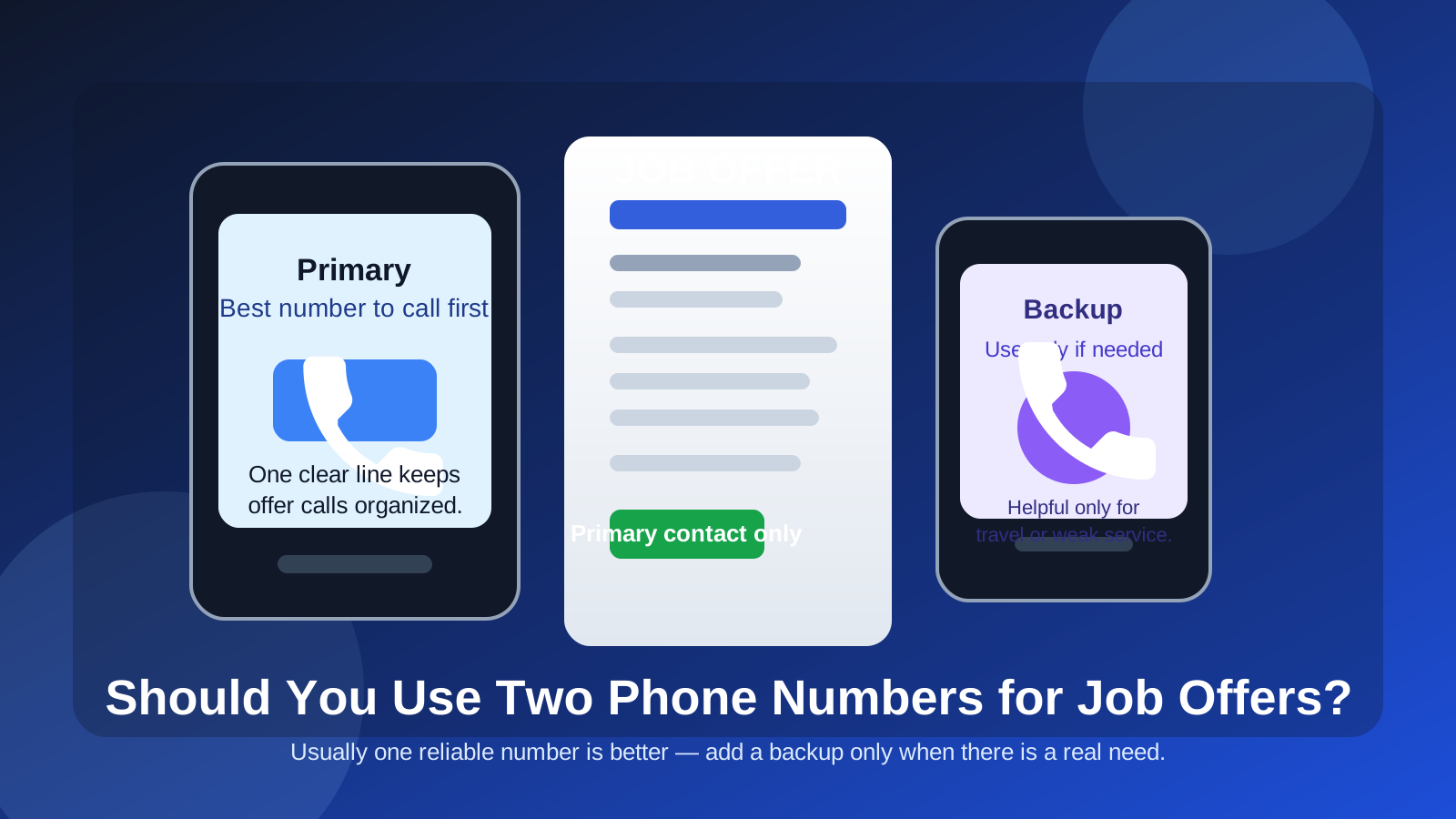
A second number only makes sense if you truly need a backup line, have unstable availability on your main phone, or want to keep a dedicated job-search number separate from your personal line without missing time-sensitive calls.
By the time you are discussing an offer, communication matters more than ever. The employer may need to confirm timing, answer questions, coordinate background-check steps, or talk through start-date details. That urgency is exactly why some candidates wonder whether giving two phone numbers might be smarter. More numbers can look like more reachability.
In practice, though, two numbers often create more confusion than convenience. Recruiters may not know which number you prefer, one person may text one line while another calls the other, and important follow-up can get split across two threads. The better default is one primary number, backed by a clear voicemail, prompt responses, and a written record through email.
If you are already separating your job-search inbox from your personal inbox with a tool like Anonibox, the same principle applies here: create clarity first, then add extra contact paths only when they solve a real problem.
Short answer: one primary number is usually best
For most job offers, give one number you actually answer, monitor, and control. That keeps the hiring team from guessing which line is current and reduces the chance of missed calls, duplicate outreach, or contradictory conversations.
If you want extra protection, the stronger move is usually to use one dedicated job-search number rather than two public numbers at the same time. One clean line is easier for you and easier for the employer.
Why this question comes up at the offer stage
The offer stage feels different from early applications. You may have already invested time in interviews, scheduling, references, and salary conversations. Because the stakes are higher, candidates often start optimizing for speed. They worry that if one call goes unanswered, the opportunity could slow down.
That concern is understandable. Offer-stage communication can involve:
- verbal offer calls
- compensation or benefits discussions
- background-check or onboarding instructions
- deadline reminders for signing paperwork
- last-minute scheduling around a start date
Still, faster communication does not automatically mean more phone numbers. What employers usually want is reliability, not complexity.
When a second phone number can actually help
There are situations where a second number is reasonable. The key is that it should solve a specific access problem, not just exist “just in case.”
1. You use a dedicated job-search number
If you have a separate number just for applications, interviews, and offers, that can be useful. It keeps recruiter calls out of your personal call log and makes it easier to mute or retire that number later if it starts attracting spam. In that setup, though, the dedicated job-search number should usually be the only number you share, not one of two equally public options.
2. You travel often or have unreliable service on one line
If you know your primary number regularly fails in certain locations, a backup number may be worth mentioning. That is less about privacy and more about continuity. Even then, it helps to label the numbers clearly so the employer knows which one to use first.
3. You genuinely need voice and text split across lines
Some people keep one number best suited for calls and another better monitored for text messages. This is less common, but if it reflects your real setup, it can work — as long as you explain it clearly instead of dropping two unlabeled numbers into a signature or form.
When two phone numbers create problems
Most of the time, two numbers introduce avoidable friction.
Mixed communication threads
One recruiter may call your first number while an HR coordinator texts the second. You then have to remember where each conversation lives, and the employer may assume you saw a message on one line that only reached the other.
Unclear preference
If you list two numbers without context, the employer has to guess. That is a small burden, but small burdens create small mistakes. At the offer stage, those mistakes can matter.
Missed verification or callback issues
Background-check vendors, onboarding teams, or scheduling staff may only try one number. If the wrong number gets entered into a form or passed between teams, you may look less reachable than you actually are.
Privacy sprawl
Every number you share is another data point that can travel through applicant systems, recruiter inboxes, vendor forms, or copied emails. If privacy matters, sharing fewer contact points is usually better than sharing more.
A better approach than listing two numbers
Use one primary number and one written backup channel
This is the cleanest setup for most people:
- one reliable phone number for calls or texts
- one monitored email address for confirmations and documents
- a professional voicemail that identifies you clearly
That combination gives the employer both speed and documentation. If you miss a call, they can leave a voicemail or follow up by email.
Use one dedicated number if privacy is your main goal
If you do not want to expose your everyday personal number during a job search, use a dedicated number that you control and check consistently. This keeps the privacy benefit while avoiding the confusion of giving multiple numbers.
Only add a backup if there is a real reason
If you truly need a second line, frame it as a backup rather than an equal alternative. For example: “My mobile number is the best way to reach me. If I am traveling, this backup number also works.” That tells the employer what to do first.
What if the employer asks for an alternate number?
If an employer specifically requests an alternate contact number, that changes the equation. In that case, giving two numbers can be perfectly reasonable because the need came from them, not from guesswork on your side.
When that happens, be explicit:
- identify the primary number
- label the second as backup only
- say whether either line is better for calls or texts
- keep the same preference consistent across forms, email signatures, and follow-up messages
Clarity matters more than the number of numbers.
How to decide whether you need one or two numbers
Ask yourself these questions before sharing contact details during an offer conversation:
- Do I actually miss calls on my main number often enough to justify a backup?
- Is my privacy concern better solved by one dedicated number instead of two shared numbers?
- Will two numbers help the employer or make them choose between channels?
- Can I monitor both numbers equally well during a time-sensitive stage?
- Has the employer asked for a backup, or am I adding complexity on my own?
If your answers point to convenience for you but confusion for them, stick with one number.
Practical examples
Good use of one number
You are finalizing an offer with a company that usually communicates by email but occasionally calls for quick updates. You give one dedicated job-search number, keep your voicemail clear, and respond quickly. That is simple, private, and easy for everyone to manage.
Reasonable use of two numbers
You are abroad for part of the week, your normal line becomes unreliable, and the employer needs to reach you quickly about a signing deadline. You provide your main number plus one clearly labeled backup line. That is a genuine use case, not unnecessary clutter.
Poor use of two numbers
You put two unlabeled phone numbers in your email signature because you want to “be safe.” The recruiter calls one number, HR texts the other, and a background-check vendor stores the backup as your primary. Now you are harder to reach, not easier.
Privacy and scam considerations
Offer-stage urgency can make people less cautious than they were during the early application phase. That is exactly when a cleaner contact setup helps.
Sharing two numbers does not just create administrative mess. It also expands the amount of personal information attached to your job search. If one number ends up in a recruiter database and the other appears in onboarding paperwork, you have widened your exposure without necessarily improving outcomes.
Keep in mind:
- legitimate employers do not need every number you have
- you should still verify unexpected calls about “urgent offer processing”
- no real employer needs login codes sent to your phone
- written confirmations should still happen through email, not only by phone
One reliable number plus one monitored email address usually gives you the best mix of reachability and control.
If you want to stay organized, keep phone and email roles separate
A useful rule is this: use phone for urgent contact and email for anything that needs a record. Salary details, benefits summaries, offer letters, onboarding steps, and negotiated terms should always be easy to reference later. That is why even candidates who prefer phone conversations should push key details back into email after the call.
If you already use a separate inbox for job-search communication, keep the same discipline with phone contact. A dedicated number can be smart. Two active public numbers usually are not.
A simple template if you really need a backup
If you do decide to share a second number, make it unmistakable:
Primary: 555-0101
Backup (if needed): 555-0102
Best contact method: Call or text the primary number first; I monitor email for written follow-up.
You obviously would replace those sample numbers with your own, but the structure matters. It removes guesswork.
Final answer
For most job offers, you should not use two phone numbers. One reliable number is clearer, easier to manage, and better for privacy.
If you need separation, use one dedicated job-search line. If you truly need a backup because of travel, weak service, or a specific employer request, you can share a second number — but label it clearly as backup only. The goal is not to give the employer every possible way to reach you. The goal is to make the right way obvious.
At the offer stage, clarity beats redundancy. One number you actually monitor is usually the strongest choice.