Usually not as your default first-contact channel. WhatsApp can work for alumni networking after both sides want a faster, more informal conversation, but it exposes your phone number and can blur personal boundaries quickly.
For most first outreach, email or LinkedIn is safer and more professional. Move to WhatsApp later only when the relationship is real, the other person prefers it, and you are comfortable sharing a number tied to your personal life.
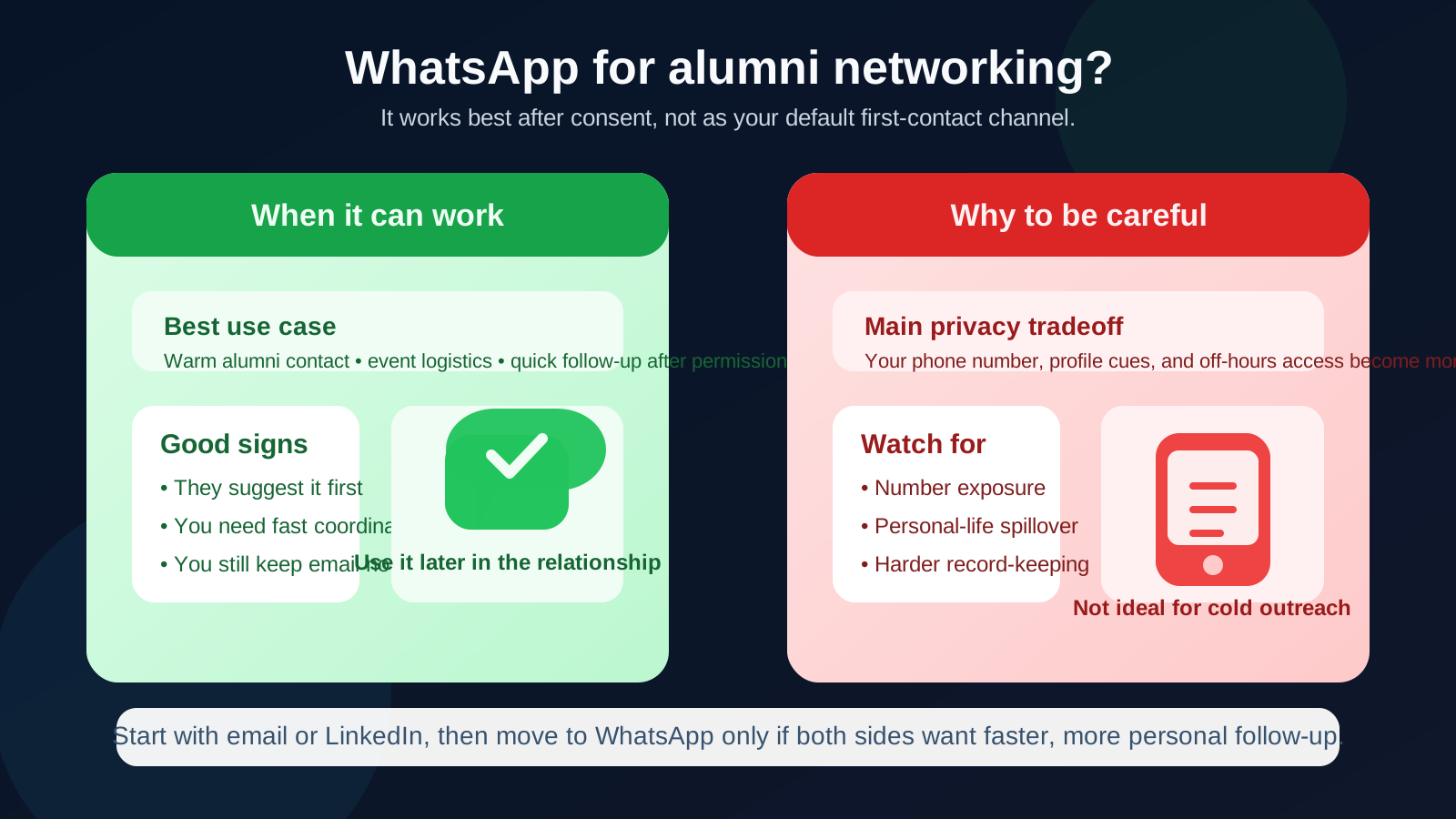
Why people consider WhatsApp for alumni networking
There is a reason this question comes up. Alumni networking is often warmer and more conversational than cold job applications. You may already share a school connection, a student organization, a degree program, or a mutual classmate. Once that common ground exists, WhatsApp can feel natural. In many countries and professional circles, it is the default messaging app for quick coordination, event planning, group chats, and casual follow-up.
If an alum says, “Feel free to message me on WhatsApp,” that can be a genuine sign of openness. It may mean they are comfortable answering a quick question, sending a voice note, or coordinating a coffee chat without another long email thread.
But convenience is not the same thing as privacy. WhatsApp works best when the relationship has already moved past first contact. Used too early, it can reveal more than you intend and make it harder to keep your networking organized.
Short answer: yes sometimes, but not as your first move
If you are wondering whether WhatsApp is acceptable at all, the answer is yes — in the right circumstances. It is not unprofessional by definition. What matters is timing, consent, and what you are giving up in exchange for convenience.
- Good fit: a warm alumni contact, a follow-up after an event, or a quick scheduling conversation after someone has already agreed to stay in touch.
- Poor fit: cold outreach, sensitive career conversations, or situations where you do not want to reveal your primary phone number.
That is why email and LinkedIn remain the safer default. They let you introduce yourself, explain context, and keep a cleaner professional record before you decide whether a more personal channel makes sense.
The main privacy tradeoff: your phone number becomes part of the relationship
The biggest issue with WhatsApp is simple: it is usually tied to a real phone number. The moment you move the conversation there, you are often sharing a direct personal contact path. That may be fine with a trusted alum you have already spoken with. It is very different with someone you do not know yet.
Once your number is visible, a few things can happen:
- You become reachable outside normal professional boundaries.
- Your alumni networking messages mix with your personal chats.
- It becomes harder to separate valuable contacts from random follow-up.
- You may expose profile details you did not mean to make part of a networking interaction.
Even when nothing bad happens, that is still a meaningful tradeoff. Alumni networking is often long-term. A conversation that starts as a quick informational chat can turn into future referrals, introductions, event invitations, or years of occasional follow-up. It is worth choosing a channel that you can manage intentionally.
When WhatsApp can work well for alumni networking
WhatsApp is usually strongest as a second-stage channel rather than a first-stage one. It can make sense when:
- The alum suggests it first. That is a strong signal that they are comfortable using it.
- You already had initial contact somewhere else. Maybe you connected through LinkedIn, email, a campus event, or a mutual introduction.
- You need quick coordination. Confirming a coffee meeting, sharing an event arrival update, or handling last-minute timing changes is where messaging apps shine.
- The relationship is already somewhat personal. Some alumni communities are informal and mobile-first, especially among recent graduates or regional chapters that organize through group chats.
In those situations, WhatsApp can feel efficient, friendly, and low-friction. It can help the conversation move naturally once the professional trust is already there.
When WhatsApp is the wrong default
There are also clear cases where WhatsApp is not the best idea.
- Cold outreach: messaging a stranger on WhatsApp can feel invasive in a way that email or LinkedIn usually does not.
- Early trust-building: before someone knows who you are, a professional channel is easier for them to evaluate and respond to at their own pace.
- Sensitive career discussions: if you are asking about job openings, internal referrals, compensation realities, or difficult workplace issues, keeping the early exchange in email can be safer and easier to reference later.
- You want separation from personal life: if networking messages arriving at night or on weekends would bother you, WhatsApp can create that exact problem.
For many people, the strongest reason to avoid WhatsApp early is not safety in a dramatic sense. It is boundary management. Your networking system works better when every new contact does not immediately gain access to your most personal communication lane.
Email or LinkedIn usually makes a better first step
For alumni outreach, the most reliable sequence is often:
- Make first contact on LinkedIn or email.
- Explain the shared alumni connection clearly.
- Ask one focused question or suggest one concrete next step.
- Move to WhatsApp only if it becomes useful and mutual.
This keeps the opening professional while still leaving room for a more casual channel later. It also gives you a written thread you can search more easily when you want to remember where you met, what they offered, or when to follow up again.
If inbox organization matters to you, this is where a separate networking email strategy can help. Some people use a dedicated address for outreach so alumni conversations do not disappear inside a personal inbox. If you want that separation during early-stage contact, a tool like Anonibox can be useful for keeping outreach organized before you decide which contacts belong in your long-term communication setup. The key is not to hide who you are. It is to manage where new conversations start.
Best practices if you do move an alumni conversation to WhatsApp
If you decide WhatsApp is appropriate, a few habits make it much easier to use well.
1. Let the other person opt into it
The cleanest move is to wait until they mention WhatsApp or ask whether they prefer it. If you want to suggest it yourself, do it lightly: “Happy to continue here by email, or on WhatsApp if that is easier for you.” That gives them a choice.
2. Keep your first message contextual
Do not start with “Hi” and nothing else. Remind them who you are and why you are messaging. For example: “Hi Priya — this is Sam from the State U alumni panel. Thanks again for offering to share advice on breaking into product marketing.”
3. Review what your profile reveals
Your display name, photo, status line, and activity cues may all change how professional the conversation feels. You do not need to sanitize your personality, but it is smart to know what a new contact can infer from your account.
4. Do not turn chat convenience into endless access
Fast messaging can create pressure to reply faster than you want. It is okay to keep a normal rhythm, especially if the conversation is informational rather than urgent.
5. Move important details back into a searchable record
If the alum shares a referral link, introduction details, or practical advice you want to keep, save it somewhere stable. Messaging apps are easy to use and easy to forget. A short follow-up email recap or personal note can prevent useful information from getting buried.
Red flags to watch for
WhatsApp is common enough that scammers and low-trust recruiters use it too. Be cautious if someone:
- pushes you to move to WhatsApp immediately before introducing themselves properly,
- claims to offer a job or referral but stays vague about their identity,
- asks for personal documents or financial information in chat,
- uses urgency to keep you from verifying who they are, or
- behaves more like a cold salesperson than a genuine alum trying to help.
Those are not uniquely WhatsApp problems, but the app can make them feel more immediate because it is so direct and personal.
A practical rule of thumb
If you would not hand this person your personal number at the beginning of an in-person alumni mixer, do not rush to give it to them digitally either. Start with a lower-exposure channel, build a little trust, and only move closer when there is a clear reason.
That rule keeps the choice simple:
- First contact: email or LinkedIn.
- After rapport exists: WhatsApp can be fine for quick follow-up.
- If privacy matters a lot: keep the relationship on channels that do not require your personal number until you are sure you want that access shared.
Final answer: should you use WhatsApp for alumni networking?
Yes, sometimes — but usually later, not first. WhatsApp can be helpful for alumni networking when the connection is warm, both sides are comfortable, and quick coordination matters. It is much less ideal for cold outreach because it exposes your phone number and can collapse professional and personal boundaries too early.
The safest, most practical approach is to begin on email or LinkedIn, then use WhatsApp only when there is a clear reason to switch. That way you stay approachable without giving every new alumni contact direct access to one of your most personal communication channels.