Yes, you can use Yandex Mail for job interviews, but it is usually best only if the address looks professional, the inbox is stable, and the employer is unlikely to be slowed down by provider unfamiliarity.
For many job seekers, Yandex Mail is workable, but a more familiar mainstream inbox or a separate job-search email can be the safer choice once interview scheduling becomes serious.
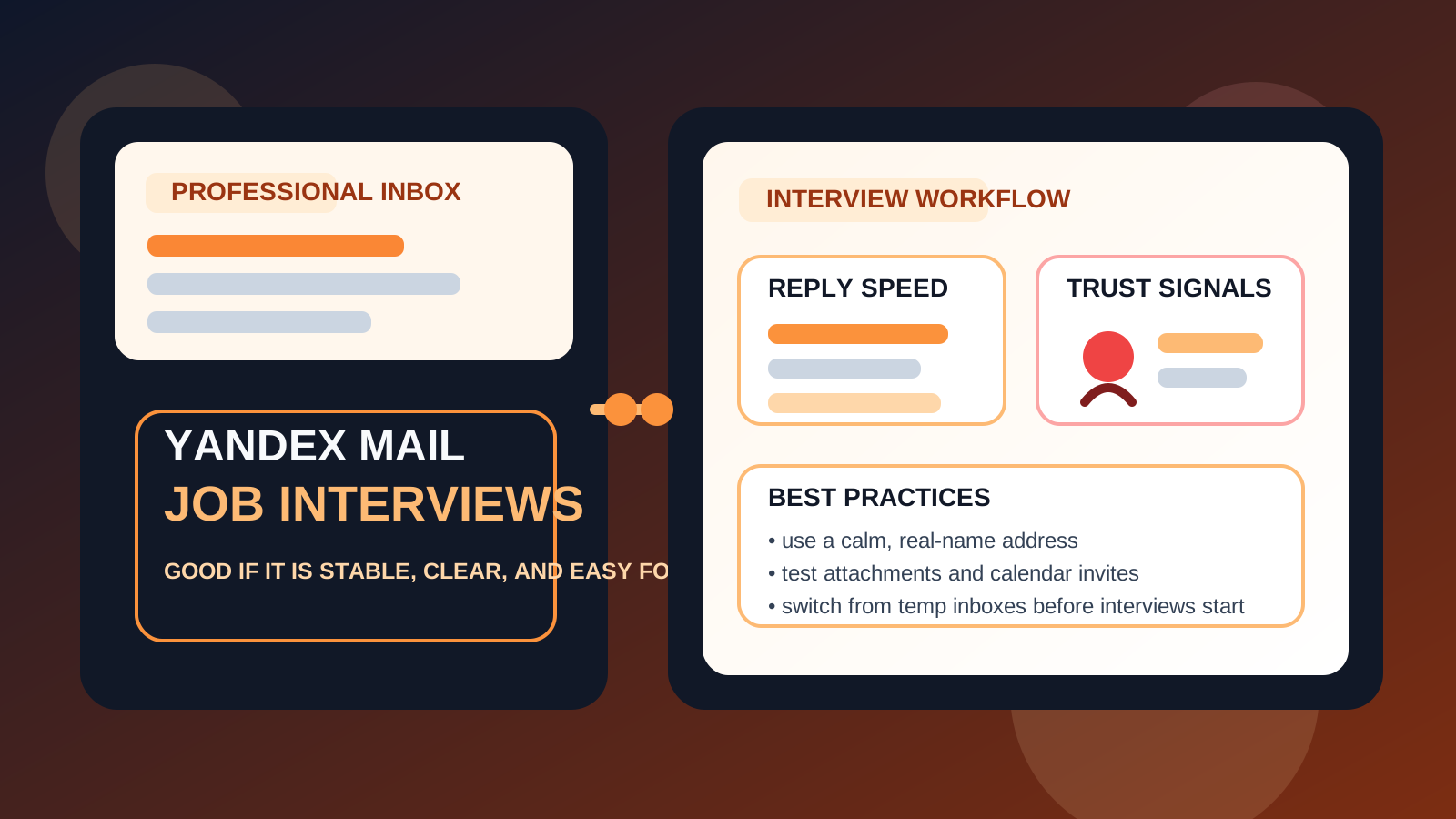
That is the real answer behind searches for should you use yandex mail for job interviews. Interview-stage email is different from application-stage email. When you are just submitting resumes, some inbox decisions are mostly about privacy and spam control. Once a recruiter starts offering interview slots, sending calendar invites, or following up with preparation notes, your email address becomes part of a live workflow. The question stops being “Can this inbox receive mail?” and becomes “Will this inbox help the process move smoothly?”
Yandex Mail can absolutely work for that. It is a real long-term email provider, not a disposable inbox, and many people use it every day without trouble. But whether it is the best choice depends on three practical things: how professional the address looks, how comfortable recruiters will be with the provider, and how confident you are that you will not miss important messages.
Why this question comes up with Yandex Mail
Yandex Mail sits in a different category from Gmail, Outlook, or iCloud Mail in many job markets. It is legitimate, but it is not equally familiar everywhere. That matters because interview communication is full of small trust signals. Recruiters often make fast judgments from tiny details: the email address, the reply speed, the tone, the calendar response, and whether anything about the setup feels confusing.
Most employers are not deeply evaluating your email provider, but they do notice when an address feels unusual for the market they operate in. If a recruiter sees a clean Gmail, Outlook, or other familiar address, they usually move on without thinking. If they see a provider they rarely encounter, they may not reject you, but it can create one more moment of hesitation or friction. That is why Yandex Mail is less about hard rules and more about reducing unnecessary uncertainty.
When Yandex Mail is perfectly fine for job interviews
You already use it as a stable personal inbox
If Yandex Mail is your long-term personal email and you monitor it closely, that stability matters. Interview communication can stretch across several days or weeks, and a stable inbox is more important than chasing a theoretically perfect provider.
Your address looks professional
The provider name is only part of the picture. A clean address based on your name generally matters more than a clever or messy username. If your Yandex address looks calm and professional, that removes a lot of risk immediately.
You are interviewing in a market where the provider is not surprising
Provider familiarity is partly regional. In some places, Yandex Mail will not stand out much at all. In others, it may feel less common. If your employer base already overlaps with regions where Yandex services are well known, the friction is lower.
You have already tested the inbox for serious communication
Before interviews start, it helps if you already know the inbox handles attachments, password resets, notifications, and calendar-related messages without trouble. Confidence matters here. You do not want your first test of the inbox to happen when a recruiter is waiting for confirmation.
Where Yandex Mail can create friction during interviews
Some recruiters may be less familiar with it
This is the most practical concern. A less common provider can make your address feel slightly unusual, especially when the hiring team mostly deals with Gmail or Outlook users. That does not mean they will treat you badly. It just means the email may not feel instantly neutral in the way a more common provider does.
Interview communication needs fast trust
Applications can absorb a little uncertainty. Interviews cannot. When scheduling becomes active, you want the other side to feel comfortable sending invites, reschedules, follow-ups, and possibly sensitive instructions without wondering whether the inbox is temporary, obscure, or hard to manage.
Your Yandex inbox may not be your cleanest inbox
If the account is old and full of newsletters, promotions, and years of general traffic, important interview messages can get buried. That is not a Yandex-specific flaw. It is a reminder that interview email should be easy to monitor under pressure.
You might be using it for privacy in the wrong way
Some job seekers move toward less common providers because they want more separation from their main digital identity. That instinct makes sense. But interviews are not the stage where you want to feel semi-disposable. Once a company is serious about you, continuity matters more than experimentation.
Yandex Mail vs a temporary email for job interviews
This is where the distinction matters most. Yandex Mail is a real inbox. Temporary email is not the same thing at all. A temporary inbox can be useful earlier in the funnel, for example when you are testing a low-trust job board, signing up for alerts, or trying to avoid turning your main inbox into a spam magnet. That is the kind of situation where a service like Anonibox can be useful.
But once actual interviews begin, a temporary inbox is usually the wrong tool. Interview communication needs continuity. Recruiters may follow up days later. Hiring managers may send a take-home task. Coordinators may resend a meeting link at the last minute. A stable inbox matters far more than maximum throwaway privacy at that stage.
So if the choice is between Yandex Mail and a disposable inbox, Yandex Mail is usually the better interview option. The more useful question is whether Yandex Mail is better than a cleaner, more familiar dedicated job-search inbox.
Yandex Mail vs a separate job-search inbox
For many people, the best answer is not “use Yandex Mail” or “never use Yandex Mail.” It is “use the inbox that gives you the least friction while keeping reasonable privacy.” A separate job-search inbox often wins on that balance.
A dedicated interview inbox can help when:
- you are interviewing with multiple companies at once
- you want recruiter messages separated from your everyday personal life
- your existing inbox is cluttered
- you want to reduce the chance of missing invites or follow-ups
- you suspect a less familiar provider may raise unnecessary questions
If your Yandex Mail account is already tidy, professional, and well managed, you may not need another inbox. But if you are starting to worry about recruiter perception, organization, or response speed, a separate interview-only account can be the cleaner move.
Best practices if you do use Yandex Mail for job interviews
Use a real-name format if possible
Even a perfectly reliable inbox can look weak if the address itself looks casual or outdated. A simple name-based format is usually the safest option.
Send test messages before interviews begin
Test basic tasks before you need them. Send yourself attachments. Check spam and junk folders. Confirm that notification settings work the way you expect. If you rely on mobile alerts, make sure they are actually visible.
Watch for calendar and scheduling messages
Interview coordination often depends on invite emails, reschedule notes, and confirmations from automated systems. Make sure those messages are not being buried or filtered away. The problem is rarely the provider alone. It is the combination of settings, habits, and inbox clutter.
Do not switch addresses mid-process unless you have to
Consistency helps recruiters keep track of candidates. If you begin with one inbox and then move to another for interview scheduling, confusion becomes more likely. If you want a cleaner setup, make the switch before the process becomes active, not in the middle of it.
Keep a backup contact path ready
You do not need to volunteer multiple inboxes right away, but it is smart to have a backup plan. If a recruiter says they never received your reply or a message seems delayed, being able to calmly confirm another contact route reduces stress.
Use privacy tools at the right stage
If you care about inbox privacy, use the strong privacy habits where they help most. Temporary inboxes and alias-style workflows are often best for low-trust signups, not for active interviews. Keep the tools, but use them at the right moment.
When Yandex Mail is probably not your best option
- your address looks unprofessional
- you are interviewing in a market where the provider may feel unfamiliar
- your inbox is cluttered and you already miss messages
- you want the lowest-friction possible setup for recruiters
- you are still using the account in a semi-throwaway way rather than as a true long-term inbox
In those cases, the safer move is usually not to force Yandex Mail to work. It is to move serious interview communication to a cleaner, more predictable inbox before the process gets busy.
A simple decision framework
- Use Yandex Mail confidently if it is a real long-term inbox, the address looks professional, and you monitor it closely.
- Use a separate job-search inbox if you want stronger organization, easier recruiter familiarity, and less risk of missing interview messages.
- Use temporary email only earlier in the funnel for low-trust signups or alert-heavy services, then switch to a stable inbox for real interviews.
- Avoid unnecessary friction if you already suspect the provider may confuse the people scheduling your interviews.
Final answer
Yes, Yandex Mail can work for job interviews, but it is not always the smoothest default. If the account is professional, stable, and closely watched, it can handle interview communication just fine.
Still, interviews are a high-trust stage of the job search, and sometimes the best move is the least surprising one. If you want maximum simplicity for scheduling, recruiter confidence, and message continuity, a cleaner dedicated interview inbox may be better. Use privacy-focused tools like Anonibox earlier in the search when you are protecting yourself from noisy signups, then rely on a stable inbox once real interviews begin.
That way, you keep the privacy benefits where they help most without adding friction when timing and clarity matter.