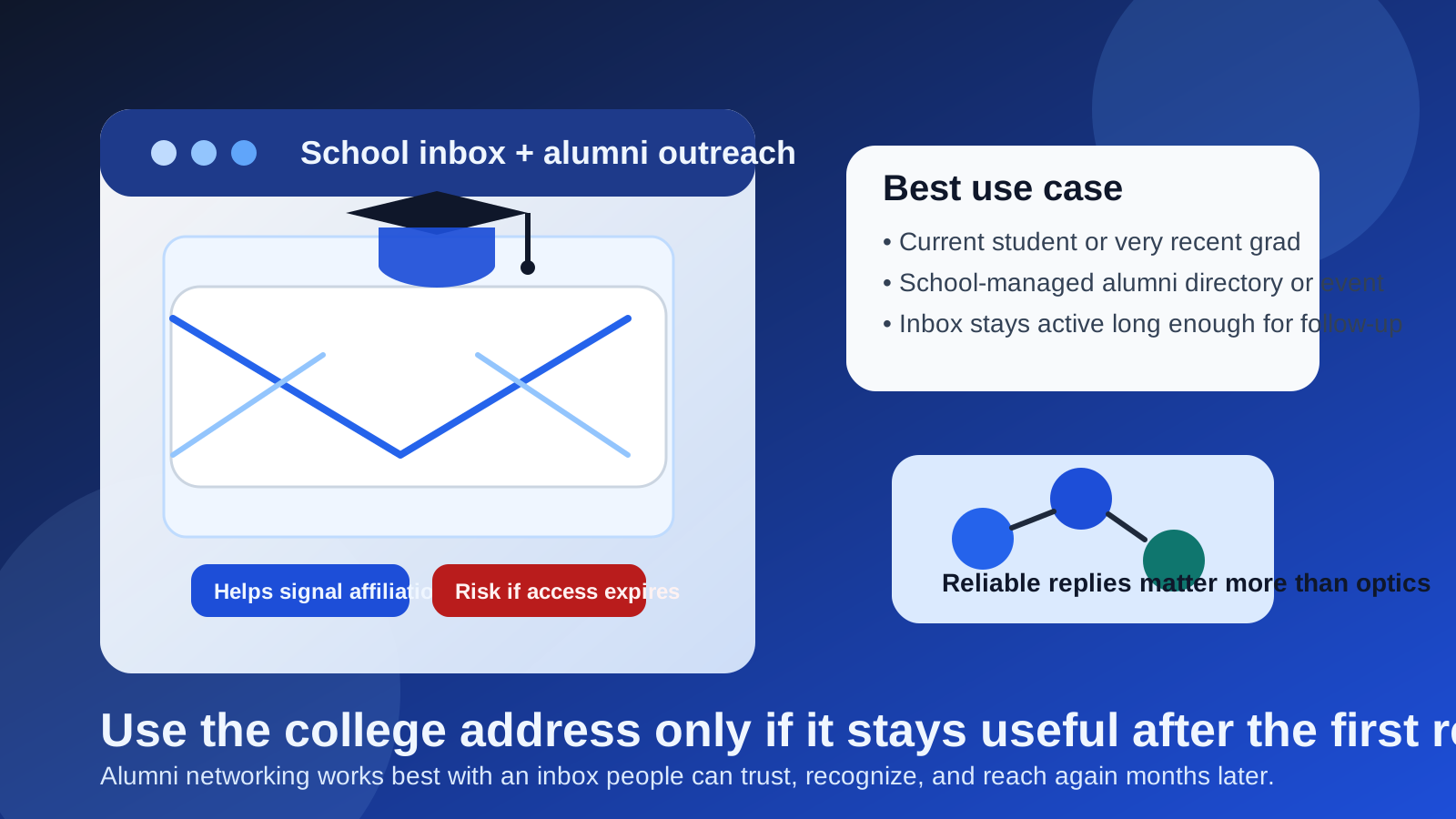
Sometimes, yes — a college email for alumni networking can help if you are a current student or recent graduate contacting alumni through a school-run directory, mentorship program, or reunion event.
But if your campus inbox may expire, forward unreliably, or stop being part of your identity soon, a stable personal address you control long term is usually the safer default for real alumni conversations.
Why this question comes up in the first place
Alumni networking is different from cold outreach to strangers. Shared school affiliation gives you a natural opening. If you are emailing someone from the same university, a .edu address can make that connection obvious immediately. It may feel more credible than a random new inbox because it shows where you study, what community you belong to, and why you are reaching out.
That is the upside. The downside is that alumni networking is rarely a one-email event. Good conversations often stretch over weeks or months. Someone may reply later, offer an introduction later, or send advice after your first note. If your college email is unstable, tied to a soon-to-expire student account, or no longer something you want to use publicly, the early credibility boost can create long-term friction.
Short answer: when a college email helps
Your college email is usually a reasonable choice when all three of these are true:
- You are still a student or very recent graduate.
- The outreach is clearly alumni-related. For example, an alumni directory, mentoring platform, student-to-alumni introduction, or school event.
- You know the inbox will remain active long enough for follow-up messages, scheduling, and later replies.
In that scenario, the address can make your message feel more grounded. It explains why you are reaching out and can reduce some of the friction that comes with cold networking.
When a college email becomes a bad fit
A college address stops being a strong default when the networking relationship may last longer than the account itself. That is especially true if:
- your school disables student email after graduation,
- you are already an alumnus and do not check the inbox often,
- the account forwards inconsistently or is cluttered with campus mail,
- you want one stable identity for broader career networking beyond school, or
- you are reaching out in a context where the school connection is secondary rather than central.
Alumni networking is supposed to create ongoing professional relationships, not just prove that you once had a campus login. If the address may disappear or become inconvenient, that matters more than the short-term optics.
What a college email does well in alumni outreach
1. It signals shared affiliation fast
People are more likely to recognize the school connection immediately when the email itself comes from the university domain. If the recipient gets a lot of messages, that signal can help yours feel easier to place.
2. It can feel appropriate for school-run programs
If you are using an alumni portal, student mentorship system, departmental network, or university career office referral, a campus address often fits naturally. In some cases it may even be what the system expects.
3. It can feel more context-rich than a generic brand-new inbox
A college email is not automatically better than a personal one, but for a student reaching out to alumni, it can communicate status and context without forcing you to explain as much in the first line.
The real risks most people miss
Graduation risk
This is the biggest one. Many people underestimate how quickly a “perfectly fine” student inbox becomes unreliable. Maybe the account stays active for six months after graduation. Maybe it forwards for a year. Maybe it keeps working but becomes buried under old student services mail. None of those are ideal if someone wants to reply later with a job lead or introduction.
Weak long-term identity
If you are building a professional network, you want people to remember an address that still makes sense next year. A college account can be great for a student phase, but less ideal if you are trying to create continuity across job searching, internships, informational interviews, and eventual full-time work.
Inbox clutter
Campus accounts often attract newsletters, club notices, admin reminders, and system messages. Important alumni replies can get buried more easily than people expect.
Mixed audience confusion
Sometimes a college email makes sense for alumni contacts but not for everyone else in your search. If you are also talking to recruiters, hiring managers, and professionals outside your school network, you may end up juggling identities in a messy way.
Should current students and alumni make the same choice?
No. The answer is different depending on where you are.
If you are a current student
Your college email is often acceptable for alumni networking, especially when the relationship is clearly school-connected. It may even be helpful. The main question is whether you also need a longer-term contact path ready in case the conversation continues beyond the academic year or into your graduation transition.
If you are a recent graduate
You should be more careful. If your school has a known expiration policy or you are already shifting into broader career networking, a stable personal inbox usually becomes the smarter default.
If you graduated a while ago
Using a college email is usually less compelling unless that address is still fully active and central to how you manage professional communication. In many cases, a well-managed personal address looks cleaner and is easier to trust long term.
A better default for many people: stable personal email with alumni context in the message
You do not need a .edu address to make the school connection clear. A strong first paragraph can do that for you:
I’m a recent State University graduate reaching out through the alumni directory because I saw your path from biology into product operations and would love to ask a few thoughtful questions.
That gives the recipient the context they need without tying the conversation to an address that may disappear. For many people, this is the best balance: the message shows the connection, while the inbox remains fully under your control.
What about privacy?
Some people assume a college email is safer because it is not their main personal address. That can be true in a narrow sense, but it is not the whole story. The main privacy question is not whether the domain is school-owned. It is whether the inbox is stable, monitored, and appropriate for the type of relationship you are starting.
If you want separation without using a throwaway inbox, a dedicated personal networking address or an alias-based setup can work better than either your campus inbox or a fully disposable one. For example, some people use a separate inbox or alias managed through a workflow like Anonibox to keep outreach organized without sacrificing long-term reply reliability.
That matters because alumni networking usually benefits from persistence. A totally temporary address can break continuity, while a campus address can become obsolete. A stable, purpose-built personal inbox often lands in the middle.
Best practices if you do use your college email
- Check the expiration policy first. Do not guess. Know how long the account stays active after graduation.
- Turn on forwarding only if it works reliably. Test it, do not assume it is seamless.
- Keep your signature simple. Include your name, program or graduation year if relevant, and one stable fallback contact method if appropriate.
- Move valuable contacts somewhere durable. If a conversation becomes meaningful, make sure you can continue it from an address you control long term.
- Do not treat the school domain as automatic credibility. The quality of your message still matters more than the domain.
Best alternatives if you decide not to use it
1. A clean personal email address
For most alumni networking, this is the simplest and strongest option. It is stable, familiar, and easy to keep for years.
2. A dedicated networking or job-search inbox
This helps if you want separation from your everyday personal mail without creating a disposable identity. It is especially useful if you are contacting alumni, recruiters, and mentors at the same time.
3. An alias you can keep long term
If you want more control over filtering and organization, an alias can help you route alumni outreach separately while still keeping reply continuity.
Mistakes to avoid
- Using a college inbox just because it “looks official” even though you barely check it.
- Starting conversations there and then disappearing when the account expires or gets ignored.
- Assuming a disposable inbox is a better replacement for real alumni relationship building.
- Overcomplicating the identity piece when a stable personal address plus a clear alumni introduction would work fine.
A quick decision checklist
Before you email an alumnus, ask yourself:
- Will this address still work six to twelve months from now?
- Do I check it consistently enough to catch replies fast?
- Is the school connection central to this outreach?
- Would a stable personal inbox serve the long-term relationship better?
- If the conversation turns into referrals, introductions, or mentoring, will I want to keep using this address?
If your honest answer points toward uncertainty, choose the stable inbox.
Final answer
So, should you use your college email for alumni networking? Sometimes yes, especially if you are a current student using a clearly school-related channel and your campus inbox will stay active long enough to support real follow-up.
But for long-term alumni networking, a stable personal address you control is usually the better choice. Shared school identity can open the door, but reliable communication is what keeps the relationship useful after that first message.