Sometimes yes — a college email can work for apartment applications if you are an active student, you check that inbox every day, and the rental timeline is short enough that school-account access is not likely to become a problem.
But for many apartment applications, a personal inbox you control long-term is the safer default because screening updates, lease paperwork, waitlist notices, and move-in follow-up can outlast your semester, your graduation date, or even your access to the school account itself.
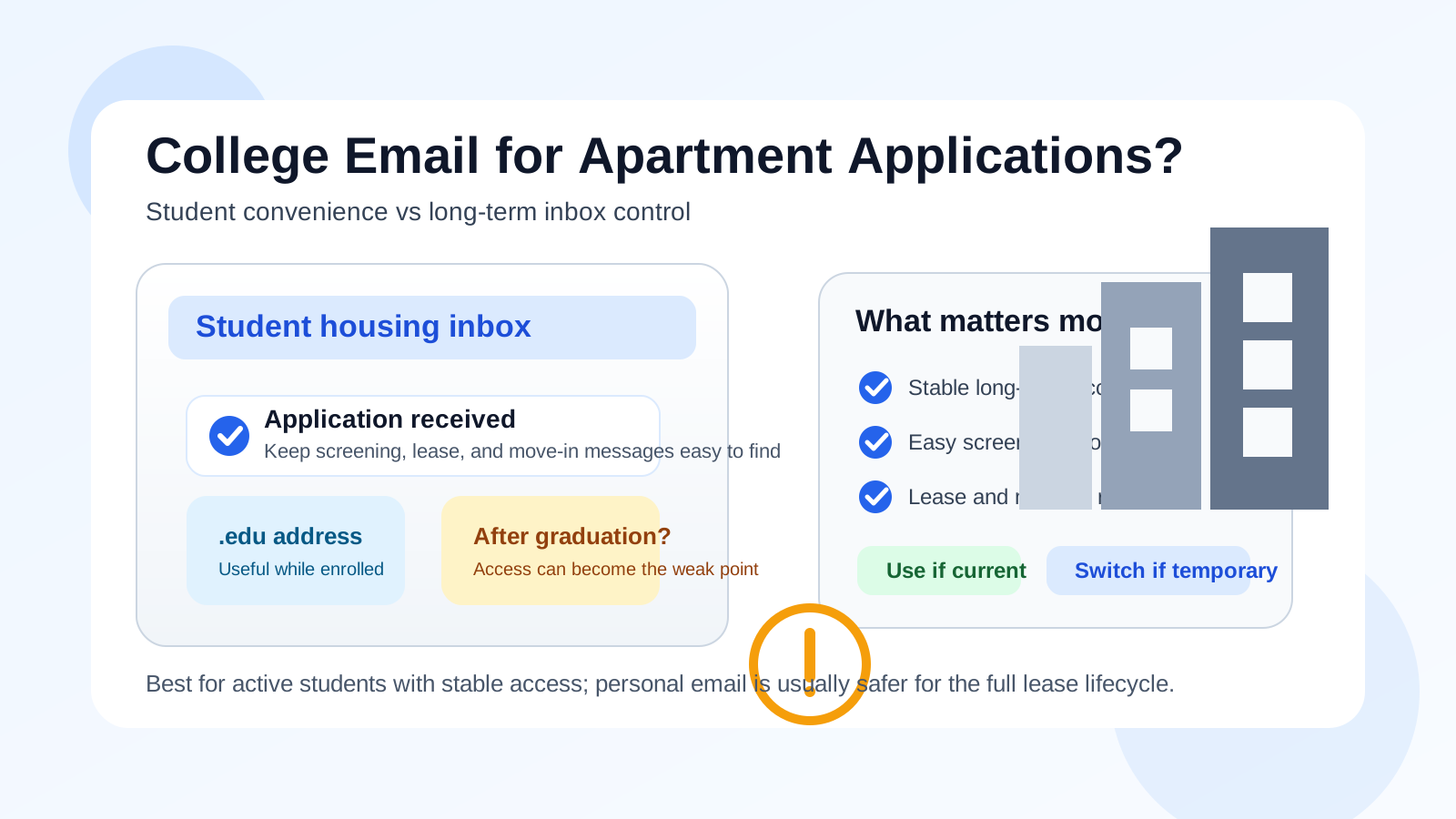
This question comes up more often than people expect. A college email looks legitimate, organized, and easy to recognize. If you are already using it for classes, financial aid, housing portals, and campus services, using the same address for apartment applications can feel like the obvious move.
And sometimes it is fine. Many student renters really are applying for off-campus housing while they still actively use their school account every day. In that situation, a college email may feel cleaner than using a messy old personal inbox.
The problem is not that a college address looks unprofessional. The real issue is continuity. Apartment applications can stretch beyond the point where a school email is convenient. A landlord may follow up weeks later. A screening company may send a correction request after you think the process is done. A property manager may reuse the same email for approval notices, lease documents, utility instructions, or renewal reminders. If that whole chain is tied to a student account you lose, stop monitoring, or treat casually, things get messy fast.
Short answer: workable for some students, but not the safest long-term default
If you are still in school, expect to keep the address for a while, and are applying for student-friendly or near-campus housing right now, your college email can be acceptable.
If you are close to graduating, studying abroad, changing schools, or dealing with an apartment process that may run for months, a personal email you own long-term is usually better. Apartment applications are not just about the first reply. They are about everything that comes after it.
Why some renters prefer using a college email
It looks established
A college address can make you look like a real student rather than a throwaway lead. For landlords who rent to students, that may help them understand your situation quickly. If you are applying near campus, the address can even signal why you are interested in the area.
It keeps school-related housing in one place
Some students already use their college inbox for dorm updates, roommate coordination, tuition notices, and campus housing messages. Adding apartment applications can feel organized, especially if the move is tied directly to the school year.
It may be the inbox you check most often right now
Plenty of students actually monitor their school email more carefully than any personal address. If that is true for you, then using it can improve response speed during a competitive apartment search.
Those are real advantages. The key is knowing when they outweigh the downsides — and when they do not.
Where a college email becomes risky
1. You may not control it forever
This is the biggest issue. A school account belongs to the institution, not fully to you. Some colleges keep alumni email access for years. Others reduce storage, change forwarding behavior, or deactivate accounts sooner than students expect. Even if your school is generous, relying on an account you do not truly own is a gamble when apartment records may matter long after the application is submitted.
If a landlord sends a lease correction, deposit reminder, maintenance onboarding note, or renewal message months later, you do not want that landing in an inbox you barely use anymore or might lose after graduation.
2. Apartment applications often outlast the search phase
People sometimes think only about getting approved. But the same address may later receive:
- identity-verification follow-up,
- co-signer requests,
- income or document corrections,
- lease-signing links,
- move-in instructions,
- rent-portal setup emails, and
- renewal or notice reminders.
If you would not trust your college account for that whole life cycle, it is probably not the best primary application email either.
3. You may treat it like a temporary stage-of-life inbox
Even if the account technically stays active, many people mentally downgrade a college inbox once classes end. That creates a softer version of the same problem: important apartment messages are not lost because the account vanished, but because you stopped checking it regularly.
4. Shared or institution-managed systems can create friction
Some school systems filter aggressively, redirect external mail, or mix apartment-related messages into a flood of campus notices. That is not automatically a dealbreaker, but it does make it easier to miss something time-sensitive during a housing search.
5. It can be the wrong signal outside student-heavy markets
In a student-focused rental area, a college email makes sense. In a broader market, it may subtly suggest temporary status, an unusual income profile, or a life stage that leads to more questions. That is not necessarily fair, but it can affect how you want to present yourself.
When a college email usually makes sense
- You are actively enrolled and will keep the account for the full rental timeline.
- You are applying for near-campus or student-oriented housing.
- You genuinely monitor the inbox every day.
- You are comfortable moving important records into a long-term personal archive if needed.
- The apartment process is simple and happening now, not months from now.
In those cases, using your college email is not inherently a mistake. It can be a practical choice if the account is active, stable, and central to your daily routine.
When a personal email is the better choice
- You are close to graduating or transferring.
- You are apartment hunting for after graduation.
- You may move cities or change institutions soon.
- You want one stable inbox for applications, approvals, and lease follow-up.
- You do not want housing paperwork mixed into school admin mail.
For most long-term rental situations, a personal inbox you fully control is the safer default. It gives you continuity, simpler recordkeeping, and less dependence on school IT policies you do not control.
Is a college email better than a temporary or burner inbox?
For a real apartment application, yes — usually. A college address is far more stable and credible than a disposable inbox when you are exchanging screening updates, legal documents, or lease information.
That said, there is still room for a temporary-email workflow earlier in the search. If you are replying to low-trust listings, browsing lead forms, or testing whether a rental platform will spam you, a tool like Anonibox can help keep that early noise away from your real inbox. The trick is knowing when to switch. Once you move from casual inquiry to an actual apartment application, you usually want a durable address you will keep monitoring.
So this is not really “college email versus temporary email” for the exact same stage. It is more about using the right address for the right point in the process.
College email vs personal email for apartment applications
College email advantages
- Can signal student status quickly in student-heavy markets
- May be the inbox you already monitor most
- Keeps campus-related housing conversations grouped together
Personal email advantages
- You own it long-term
- It is easier to keep using after graduation
- Lease, rent, and maintenance communication can stay in one stable place
- It avoids dependence on school retention and forwarding policies
If the apartment could matter beyond the current semester, personal email usually wins on durability alone.
Best practices if you decide to use your college email
1. Check the retention policy first
Do not guess. Find out whether your school keeps email access after graduation, for how long, and under what conditions. If the answer is vague, assume the account is not a reliable forever address.
2. Turn on forwarding carefully
If allowed, forward apartment-related messages to a personal inbox you control. That gives you a backup without forcing you to abandon the college address immediately. Just make sure forwarding works consistently before you rely on it.
3. Create a dedicated folder or label
Apartment applications can get buried under class announcements and campus notifications. A clear folder or label for housing, screening, and lease emails reduces the chance that you miss something important.
4. Save key documents outside the inbox
Application confirmations, signed leases, payment receipts, and screening reports should not live only in email. Download and store them somewhere you control.
5. Switch to a long-term address once the relationship becomes ongoing
If you get approved, it can make sense to ask the landlord or property manager to update your contact email to a stable personal address for ongoing lease communication. That avoids future headaches if your school account changes.
Red flags no matter which email you use
The email choice matters, but it does not replace basic rental-scam caution. Slow down if:
- you are asked for fees before you verify the property,
- the landlord refuses a portal or traceable documentation process,
- the listing only exists on one low-trust platform,
- the contact becomes pushy about deposits or identity documents, or
- important promises exist only in fast chat messages and not in something you can save properly.
A college email does not make a bad listing safer. It only changes which inbox receives the risk.
A quick decision checklist
Before you use your college email for apartment applications, ask yourself:
- Will I definitely keep access to this account for the whole rental timeline?
- Do I monitor this inbox more reliably than my personal email?
- Is this apartment search tightly tied to my current school life, or is it really a longer-term move?
- Would I regret having the lease trail tied to a school account next year?
- Do I have a plan to archive and back up important housing messages?
If your answers point to stable access, daily monitoring, and student-specific housing, the college email may be fine. If they point to uncertainty after graduation or weak long-term control, a personal email is safer.
Final answer
So, should you use your college email for apartment applications? Sometimes — especially if you are an active student applying for near-campus housing and you know the account will stay available through the full process.
But for many renters, a personal inbox you control long-term is the better default because apartment applications do not end at “submit.” They often turn into screening updates, lease paperwork, move-in instructions, and future notices. If you want the cleanest long-term setup, use a personal email for the real application trail and reserve temporary or low-exposure inbox strategies for the earlier, noisier parts of the search.
That gives you the convenience of smart inbox separation without tying important housing communication to an account that may not stay with you.