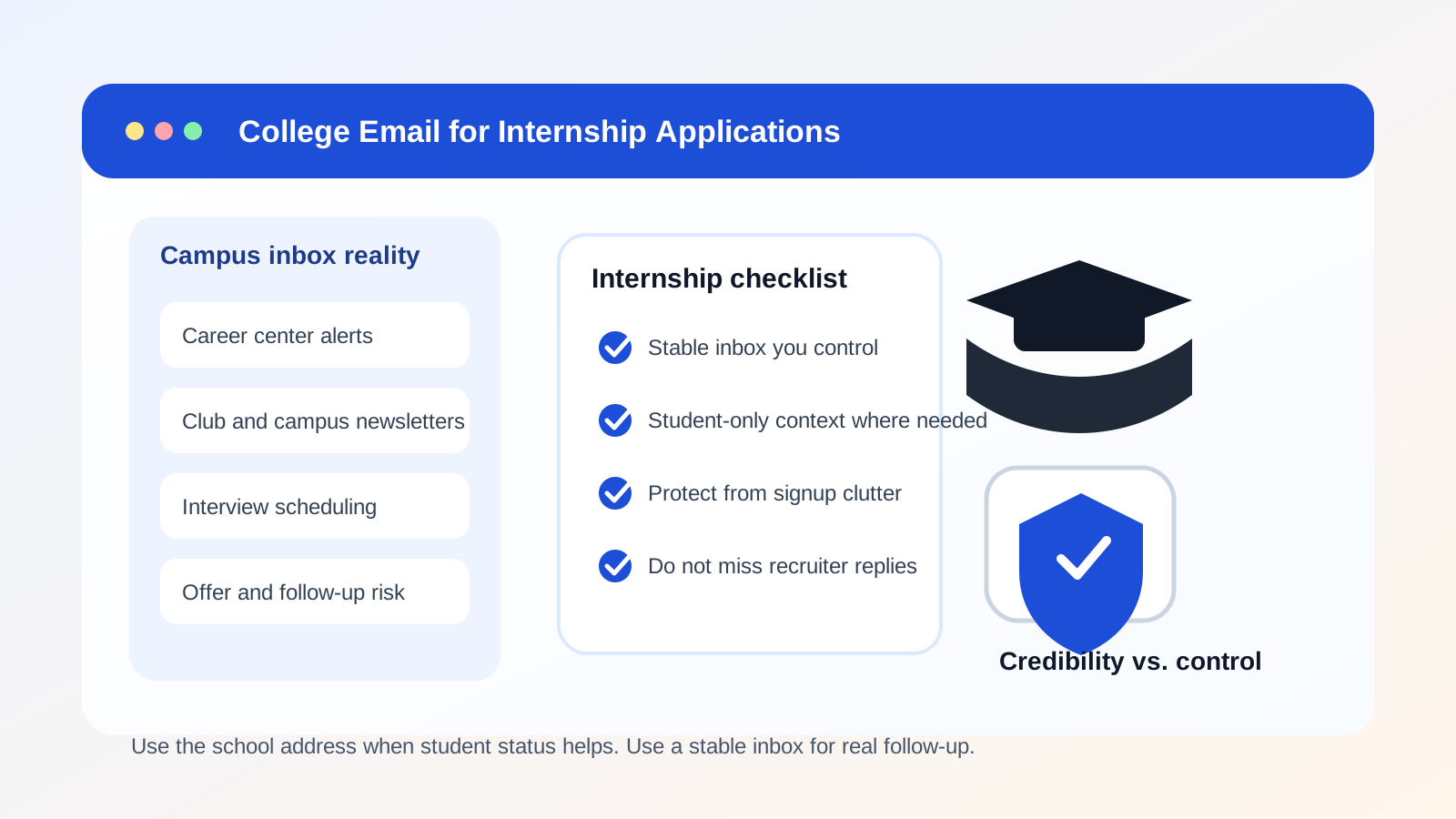
Sometimes—but usually not as your default. A college email can help with student-only internships, campus recruiting, and situations where your school affiliation matters, but a permanent inbox you control yourself is usually the safer choice for real internship applications.
The most practical middle ground is simple: use your college address only when it gives you a real advantage, keep a separate long-term professional inbox for serious applications and follow-up, and reserve temporary inboxes for low-trust signups or noisy talent communities rather than important employer communication.
Why this question matters more for internships than people expect
Internships sit in an awkward middle ground between school life and professional hiring. You may still be very much in a student context, using campus job boards, career-center portals, alumni programs, employer events, and university mailing lists. At the same time, the actual internship process can look just like a regular job search: employer ATS forms, recruiter emails, interview scheduling, assessment links, reference requests, and follow-up that stretches well beyond the semester when you applied.
That is why a college email feels tempting. It looks official, it signals that you really are a student, and in some cases it can make sense. But the deeper question is not whether a school email can work. It is whether it is the smartest address to anchor an internship process that may continue through finals, summer break, graduation, or even a full-time conversion later on.
For many students, the answer is no. The convenience is real, but the long-term control is weaker than people assume.
Short answer: useful in some campus situations, weak as your default internship inbox
If you are applying to a clearly student-targeted program, registering for a campus recruiting event, or proving current enrollment for a university partnership, a college email can be reasonable. In those narrow cases, the school domain may help confirm that you belong in the applicant pool.
But once an employer starts treating you like a serious candidate, stability matters more than student branding. A permanent inbox you control after graduation is usually better for interview scheduling, document sharing, offer timelines, and the occasional delayed recruiter follow-up that shows up months after you first applied.
When a college email can genuinely help with internship applications
1. Student-only or campus-only internship programs
Some internships are explicitly tied to current student status. They may come through campus career portals, department newsletters, university partnerships, professor referrals, or employers recruiting directly from a target school. In those cases, a college address can make your status obvious and reduce friction.
If the employer mainly wants to know that you are an active student, using the address attached to your school identity is not strange. It can even feel natural.
2. University-connected employers and alumni programs
Some outreach works differently when there is a school connection. Alumni may respond more warmly to a recognizable campus domain, and certain university-sponsored internship pipelines are built around that context. If you are applying inside that ecosystem, a college email may help you look connected to the exact audience the program is designed for.
3. Short-lived event or portal access where the email is mostly administrative
If you are signing up for a campus internship fair, an employer info session, a résumé drop tied to a student portal, or a one-time workshop, using the college address can be fine. The risk is lower when the email is mostly about event logistics rather than becoming your long-term point of contact for the whole hiring process.
The biggest drawbacks of using your college email for internships
1. Graduation and student-status changes can break continuity
This is the biggest issue. Schools do not all handle email access the same way. Some let graduates keep accounts for years. Others reduce access, remove forwarding, or deactivate mailboxes after a transition period. Even if your school promises continued access, policies can change, account storage can fill up, and login habits often change once class life ends.
Internship hiring does not always respect academic timelines. A company may reply late. A recruiter may re-open a role after the semester ends. A strong internship can turn into a part-time role, a return offer, or a full-time conversation later. If your inbox is tied to an institution instead of your own long-term identity, you are building unnecessary risk into that handoff.
2. College inboxes are often clutter magnets
School accounts collect far more than academic messages. Club announcements, campus alerts, event promotions, financial-aid reminders, course-system notifications, newsletter blasts, volunteer requests, and general university traffic can bury important employer messages faster than you expect.
That matters during internship season because some of the most important messages are easy to miss: interview invites, coding tests, portfolio requests, updated deadlines, or a recruiter asking for a quick reply before moving to the next candidate.
3. You do not fully control the account environment
A college email may feel personal because you use it every day, but it is still a school-managed account. The institution controls retention rules, security settings, account recovery options, forwarding policies, and sometimes even what tools integrate cleanly with the mailbox. That is different from an address you opened and manage yourself.
For ordinary class communication, that is not a big deal. For a professional search that could spill into the next stage of your life, it matters more.
4. It can lock your professional identity to a temporary phase
A college address says something true about you right now: you are a student. But internships often exist to bridge you toward what comes next. If all of your recruiter communication, saved contacts, and follow-up threads live in an inbox tied to your student phase, moving into the next phase becomes clunkier than it needs to be.
A stable personal professional inbox gives you continuity from sophomore year internships all the way to post-graduation job offers.
Why internships make this especially tricky
Internships move on unpredictable timelines. Some companies reply within days. Others wait until after midterms. Some schedule interviews during finals. Some fill roles slowly, then come back weeks later. Others use internships as pipelines for future conversion roles and keep your information active long after the internship itself ends.
That unpredictability is exactly why a fragile or cluttered inbox is a bad default. You might think, “I only need this address for one summer application,” but the real communication window can be much longer than the application itself.
There is also a psychological trap here: because internships feel smaller than full-time jobs, students sometimes treat the contact details more casually. But the downside of missing one internship interview can be just as real as missing a full-time interview, especially when internships are the route into later offers.
A better default: use a separate long-term job-search inbox
For most students, the cleanest option is a separate email you control personally and plan to keep for years. It does not have to be fancy. It just needs to be professional, stable, easy to monitor, and not overloaded with personal subscriptions or school traffic.
That gives you several advantages:
- Continuity: the inbox still works after semesters end, addresses change, or graduation happens.
- Organization: internship applications, recruiter replies, and interview scheduling stay separate from class mail.
- Cleaner follow-up: you can keep one searchable record of your outreach, deadlines, and contacts.
- Better boundaries: you are not mixing university alerts, club spam, and employer messages in the same stream.
If you are also signing up for low-trust job boards, employer talent communities, internship newsletters, or one-off resource downloads, that is where a temporary-email tool like Anonibox can fit naturally. The important distinction is that temporary inboxes are best for exploration and spam control—not as the main address you depend on for interview invites or serious employer follow-up.
When a college email is still reasonable
Using your college email is probably fine if most of these are true:
- The internship is explicitly student-only or university-linked.
- Your school is known to keep alumni email access stable for a long time.
- You check the inbox carefully every day and it is not overwhelmed with campus clutter.
- You are early in the process and mostly handling event registrations or portal access.
- You are prepared to move the conversation to a permanent inbox if the process becomes serious.
In other words, a college email is not automatically wrong. It is just rarely the best all-purpose default.
How to use your college email more safely if you decide to use it
Set up reliable forwarding if your school allows it
If forwarding is available and dependable, use it. That way important internship messages do not live only inside the school mailbox. Still, do not assume forwarding solves everything forever; test it and keep checking the original inbox too.
Move serious conversations to your long-term inbox early
Once a recruiter replies, an interview is scheduled, or an application becomes a real possibility, it is reasonable to shift to the inbox you plan to keep. A simple line like, “For follow-up, this is the best address to reach me,” is usually enough.
Clean up the inbox during recruiting season
Unsubscribe from nonessential school newsletters, create filters for employer domains, star time-sensitive messages, and make the inbox easier to scan. A messy mailbox creates avoidable risk.
Use a professional signature and name format
If you do use your college address, make the rest of the presentation strong. Use your real name, a clear email signature, and prompt replies. A student domain does not hurt you nearly as much as looking disorganized does.
Know your school’s retention policy now, not later
Do not wait until graduation week to ask whether you keep your mailbox. Check the policy before internship season gets busy. If the answer is vague, assume less control rather than more.
When you should avoid using your college email
You should probably avoid it if:
- You may lose access soon because of graduation, transfer, or status changes.
- Your inbox is already buried in academic and campus traffic.
- You are applying broadly off campus, not mainly through student-only channels.
- You want a stable address that still makes sense for return offers or full-time conversion.
- You are using the internship search to build a long-term professional network.
Those are strong signals that a personal professional inbox is the better foundation.
A quick decision checklist
Before you use your college email on an internship application, ask:
- Does this internship specifically value current student identity?
- Will I definitely control this inbox long enough for the whole process?
- Can I reliably spot an interview invite or deadline change in this mailbox?
- Would a separate long-term professional inbox make follow-up cleaner?
- Am I using this address for a serious application, or just a low-stakes signup?
If the honest answer points toward long-term reliability, choose the inbox you control yourself.
Final answer
So, should you use your college email for internship applications? Sometimes, but usually only when the school connection genuinely helps. For most serious internship applications, a permanent professional inbox you control is the safer and more practical choice.
Use the college address when it clearly supports a student-only context. Use a stable personal job-search email for real applications, interviews, and follow-up. And if you are just testing platforms or protecting yourself from signup clutter, use temporary inboxes strategically without making them the single point of contact for opportunities you care about.
That balance gives you the benefits of student credibility where it matters, without tying your internship search to an inbox that may become noisy, temporary, or harder to manage right when the important messages start arriving.