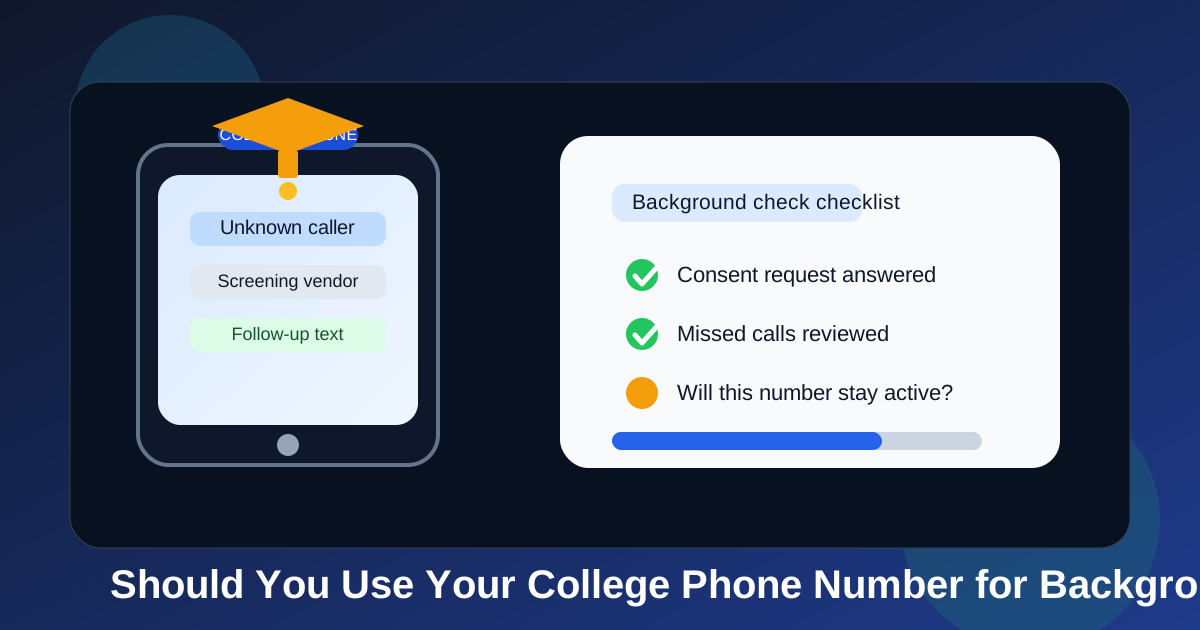
Usually only if it is a stable number you control, check regularly, and expect to keep active through the full screening process.
For many job seekers, a long-term personal number or a separate job-search number is safer because background checks can involve third-party calls, missed-call follow-up, text alerts, and timing that extends beyond graduation, semester breaks, or changes in your campus routine.
Why this question comes up
A college phone number can mean a few different things. Sometimes it is simply the same personal mobile number you have used for years and plan to keep after graduation. Other times it is a number that feels more temporary: a line tied to a student plan, a second number you used for recruiting events, a campus-related setup you barely check, or a number with an outdated voicemail and habits you no longer want attached to your job search.
That difference matters. A background check is not the same as casually applying for jobs or signing up for a recruiter newsletter. By the time a background check begins, the employer or screening vendor usually needs a dependable way to reach you about consent forms, identity questions, previous addresses, dates of employment, or missing information. At that stage, reliability matters more than convenience or familiarity.
Short answer: use a college phone number only if it is really your long-term number
If your college phone number is just your normal personal cell number and you plan to keep it, using it for background checks can be completely fine. The fact that you started using it during school is not the problem.
The problem starts when the number is tied to a temporary season of life. If you may stop using it, ignore it after graduation, or treat it as a secondary line you rarely answer, it becomes a weak choice for a process that may need clean follow-up.
Why background checks need a more dependable phone number than early job-search steps
Early in a job search, many people use more protective workflows. They may route low-trust signups away from their main inbox, use separate contact channels, or keep job-board exposure limited. That can be smart. Background checks are different because the communication is usually more important and less disposable.
Depending on the employer and screening provider, your phone number may be used for:
- time-sensitive reminders to complete a screening form
- calls about identity or record mismatches
- follow-up when an email was missed or bounced
- appointment coordination for fingerprinting or in-person verification
- status clarification if a screening portal stalls or needs another document
That does not mean every background check depends heavily on phone contact. Some are almost entirely email-driven. But when a phone number does matter, it tends to matter at exactly the moment you do not want confusion.
When a college phone number is probably fine
Using your college phone number is usually reasonable if all of these are true:
- it is actually your primary personal number
- you expect to keep it for the foreseeable future
- you answer calls, read texts, and check voicemail consistently
- the line is fully under your control, not borrowed or likely to disappear
- your voicemail and caller-ID setup are appropriate for employer contact
If that describes your situation, there may be no real downside. A stable personal number is often better than switching to something else just because the word college makes it sound less professional.
When it is a bad idea
A college phone number is a weaker choice if any of these apply:
- you may stop using the number after graduation or a move
- you treat it like a backup line and rarely answer it
- the voicemail greeting is old, confusing, or too casual
- the line is tied to a family arrangement you may change soon
- you silence unknown calls and almost never review missed voicemails
- you mainly want to use it because it feels familiar, not because it is the most reliable option
Background checks often move in short bursts. You may hear nothing for days, then suddenly get a reminder or question that needs an answer quickly. A number you do not really monitor creates avoidable risk.
The biggest risks of using the wrong college phone number
1. You may miss third-party screening calls
Background checks are often handled by outside vendors, not just the employer. Their calls may come from unfamiliar numbers, and their texts may look generic. If you ignore unknown callers on a secondary or half-abandoned number, you can easily miss something important.
2. Your habits may change after a semester ends
During school, you may respond quickly because your phone is central to campus life, group chats, and daily logistics. After finals, a move, or graduation, that same number can quietly become less central. The issue is not the number itself. It is the change in how you use it.
3. The number may no longer feel professional
Maybe the line still works, but the voicemail is outdated, the contact name on your account is strange, or you answer it like a personal-only line. None of that is catastrophic, but background-check communication works best when the channel feels easy to trust and easy to manage.
4. You may create extra friction during a sensitive step
If a recruiter or screening team has to chase you across voicemail, text, and email because the number is unreliable, a small contact choice becomes an annoying process problem. The goal is not perfection. It is fewer avoidable delays.
What is usually better?
A stable personal number you plan to keep
For most people, this is the best default. If it is your real everyday phone, you check it regularly, and you expect to keep it long term, it is probably the simplest and safest option.
A separate job-search number you fully control
This can be a good middle ground if privacy matters to you and you do not want your main number circulating too widely. The key is that it still needs to be dependable. If you use a separate number, treat it like a real communication channel, not a disposable experiment.
Updating your contact information before screening starts
If you used one number earlier in the process and now realize a different one would be better, fix it before the background-check invite goes out. A quick note to the recruiter is much easier than troubleshooting a screening account after messages are already being sent.
How privacy fits into this decision
Privacy still matters. A phone number is personal information, and you do not need to expose your main contact details carelessly across every early-stage form and job-board interaction. But background checks are later in the funnel. By then, the bigger risk is often not spam. It is missing a legitimate, time-sensitive message.
That is why the best strategy is usually layered. Use stronger privacy boundaries earlier in the search, then use more durable contact channels once a real employer has moved you into screening and onboarding steps.
Where Anonibox fits naturally
Anonibox makes the most sense when you want to protect your main inbox from noisy signups, low-trust forms, or early-stage job-search clutter. That is a smart use of temporary or separate email workflows.
For a real background check, though, your phone and email setup should emphasize continuity. You want channels you can search later, monitor daily, and keep active without wondering whether they still fit your life next month. In other words, privacy tools are useful earlier, but background checks usually call for stability.
A practical setup that works well
- Pick the number you are most likely to keep. Long-term control matters more than the label attached to the number.
- Make sure voicemail is ready. A simple, professional greeting removes unnecessary friction.
- Check missed calls and texts during the screening window. Do not assume everything important will arrive by email.
- Keep your email and phone strategy aligned. If your email is stable, your phone should be too.
- Tell the recruiter quickly if your contact details change. Fixing it early is much easier than fixing it after a deadline passes.
A simple example
Imagine a student who applies during spring semester using a number they mostly associate with campus life. They graduate, move home, start screening for a new role, and stop answering unfamiliar calls because the line has become secondary in practice. A screening vendor leaves one voicemail about a mismatch in dates, but the message is buried and the candidate only notices after the deadline gets close.
Now compare that with using the number they actually plan to keep and monitor every day. Nothing about the screening process becomes dramatic. The call comes in, the voicemail makes sense, and the follow-up happens quickly. That is the kind of boring reliability you want.
Quick checklist before you use your college phone number
- Will I still be using this number in a few months?
- Do I actually answer or review unknown calls on it?
- Is the voicemail greeting professional enough for employer contact?
- Would another number give me better continuity and less risk?
- Am I choosing this line because it is reliable, or just because it is familiar?
If those questions expose uncertainty, that uncertainty is useful. It usually means another number would serve you better for a background check.
Final answer
You can use your college phone number for background checks if it is truly your stable long-term number and you treat it like an active professional contact channel. If it is temporary, lightly monitored, or likely to change with graduation or life transitions, it is usually not the best choice.
For most job seekers, the safest approach is a number they fully control, check regularly, and expect to keep throughout the entire screening process. That gives you the privacy awareness you want without making an important hiring step harder than it needs to be.