Usually no — your personal email can work for car dealership quotes, but a separate inbox is usually the smarter default if you plan to contact multiple dealers or use quote forms on marketplaces.
Your personal address is stable and professional, but it also attracts sales follow-up, inventory alerts, and quote spam that can outlast your actual car search. For early low-trust inquiries, a temporary inbox from Anonibox can reduce exposure, but serious quote conversations usually belong in a stable separate email you control.
Why people ask this before requesting quotes
Buying a car is not just a pricing decision. It is also a contact-management problem. Many dealership forms ask for your email before they will send pricing, availability updates, trade-in information, or financing details. On paper that seems harmless. In practice, one quote request can turn into weeks of follow-up from sales staff, dealership CRMs, manufacturer campaigns, and “just checking in” sequences.
That is why people hesitate to use their personal email for car dealership quotes. Your main inbox already handles the rest of your life: banking, receipts, password resets, travel plans, family messages, healthcare portals, school notices, and everything else you actually need to keep visible. Car-shopping email is temporary, noisy, and often shared across more systems than buyers expect.
The question is not whether a personal email address is acceptable. It usually is. The real question is whether it is the best tool for the kind of shopping you are about to do.
Short answer: acceptable, but usually not the best default
If you are asking one local dealership for one serious quote and you expect to buy soon, using your personal email is probably fine. It is a real address, you already check it, and you are unlikely to lose an important reply.
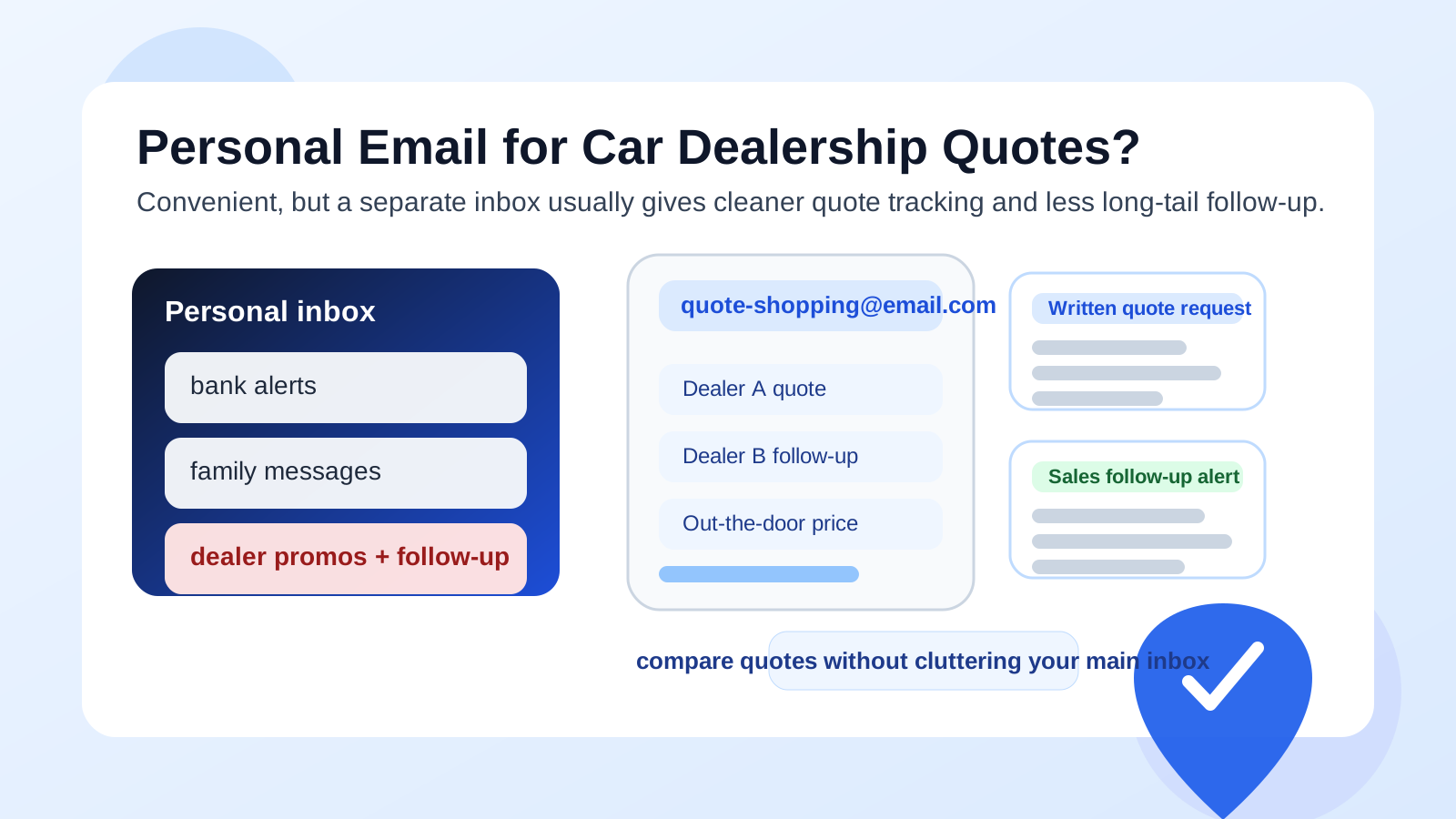
But if you are comparing several dealerships, using lead forms, or still figuring out whether you want a new car, used car, lease, or trade-in path, your personal inbox usually creates more friction than benefit. A separate email gives you the same reachability with better organization and less long-tail clutter.
Why dealership quote requests create so much follow-up
Dealerships do not treat quote requests like quiet one-message conversations. Most stores use a sales process built around persistence. Even when you ask a straightforward question like “What is your out-the-door price on this VIN?” the system around that question may include:
- automated reply emails,
- inventory alerts for similar vehicles,
- follow-up from individual salespeople,
- weekend sale announcements,
- trade-in prompts,
- financing pre-qualification nudges, and
- reactivation messages after you stop responding.
That does not automatically mean anything shady is happening. It is simply how many dealer lead systems work. The privacy problem is that your oldest personal inbox does not need to become the permanent container for every early inquiry you make while comparing prices.
What can go wrong when you use your personal email
1. Dealer follow-up mixes with the rest of your life
When quote emails land in the same inbox as your regular life, it becomes harder to see what matters. A useful written quote can end up buried between receipts, newsletters, and unrelated daily messages. The problem is not only spam. It is also that the legitimate messages become less visible.
2. It becomes harder to track who said what
Serious car shopping often means comparing several dealerships at once. One store may give a real breakdown. Another may dodge your pricing question. Another may switch you to a different car. If every email lands in your main inbox, the quote-comparison process gets messier than it needs to be.
3. Your personal address spreads farther than expected
A single quote request may touch more than one system: the dealership website, a group-level CRM, call-tracking software, manufacturer lead routing, and third-party listing or pricing tools. Even if every participant is legitimate, your personal address can end up attached to more databases than you intended.
4. Cleanup is annoying after the search ends
Once you buy a car or decide to wait, dealership follow-up does not always stop immediately. If all of that activity used your main inbox, you are the one who has to clean it up later. A dedicated quote-shopping inbox makes that much easier.
When using your personal email is still reasonable
There are cases where using your personal address is perfectly sensible.
- You are contacting one or two verified dealerships, not ten.
- You already know the exact vehicle you want.
- You expect the shopping window to be short.
- You keep your main inbox organized and easy to search.
- You do not mind the possibility of some lingering follow-up.
If that sounds like your situation, personal email is not a mistake. It is just a trade-off. You are choosing convenience over separation, and that can be reasonable when the process is narrow and controlled.
When a separate email is clearly better
A separate inbox is usually the better choice when:
- you are collecting quotes from multiple dealerships,
- you are using dealer sites and marketplace sites together,
- you are still early in the research phase,
- you want a clean written record of pricing and add-ons,
- you are comparing financing or trade-in paths, or
- you simply do not want dealership follow-up in your main inbox for months.
A separate email does not have to be complicated. It just needs to be a stable address you control and actually check while you are shopping. That gives you most of the privacy benefit without increasing the risk of missing something important.
Personal email vs. separate email vs. burner email
These options solve different problems, and a lot of buyers mix them up.
Personal email
Your personal email is the easiest option because you already use it. It is stable and trusted, but it exposes the inbox that handles everything else in your life.
Separate long-term email
This is the best default for most people who are seriously comparing quotes. It gives you organization, reachability, and a clean place to store written pricing without tying the whole process to your oldest inbox.
Burner or temporary email
A burner email is useful at the very beginning when you are testing whether forms work, checking low-trust listings, or collecting the first wave of responses without committing a long-term address. But a true disposable inbox is risky once the conversation becomes real. If a salesperson sends a detailed quote, a buyer’s order, or a time-sensitive message, you do not want that living in an inbox you stop checking or lose access to.
That is why the practical workflow is often: temporary inbox for low-trust or very early exploration, then a stable separate inbox once a dealership becomes a serious contender.
What about email aliases?
An alias can work well if you already understand how your forwarding setup behaves and you monitor the destination inbox carefully. The benefit is that you can filter, label, or retire the alias later. The downside is that if your main inbox is already cluttered, an alias alone does not solve the bigger organization problem. It still lands in the same place unless you manage it well.
For many buyers, a fully separate quote-shopping inbox is simpler than a clever alias system. The right answer depends on whether you want easier filtering or true compartmentalization.
The best workflow for quote shopping
If you want the cleanest balance between privacy and practicality, use a stable separate email for serious quote requests and pair it with a separate phone strategy if you expect a lot of calls or texts. That way you keep the whole shopping process contained.
A simple setup looks like this:
- use one dedicated inbox for dealer quotes,
- create folders or labels by dealership name,
- star written out-the-door pricing and fee breakdowns,
- archive noisy promo messages instead of letting them pile up, and
- retire or mute the inbox later if follow-up continues after you are done shopping.
This structure makes it much easier to compare answers side by side instead of trying to remember what each dealer said over a mix of email, calls, and text threads.
What should stay out of early quote requests?
Early quote forms do not require you to overshare just because extra fields exist. In the first stage, focus on what is necessary to get useful pricing or availability information.
- Avoid using your work email for personal car shopping.
- Be cautious with detailed financing information before you trust the dealership and the deal path.
- Do not treat every quote form like a green light to hand over every long-term contact method at once.
- Sequence sensitive documents and personal details later, after a dealership proves it is worth serious engagement.
This is not about secrecy. It is about keeping your exposure proportional to the stage of the conversation.
A practical example
Imagine you are comparing five dealerships for the same model. You ask each one for their out-the-door price, whether add-ons are mandatory, and whether the car is physically in stock. Within twenty-four hours, you may get:
- one clear written answer,
- one vague “come in and let’s talk” reply,
- two automated follow-up sequences, and
- one push toward a different vehicle entirely.
If those messages live in a dedicated quote inbox, the pattern is obvious. If they land in your main personal inbox, they compete with everything else you already need to manage. The separate inbox does not magically make dealerships quieter, but it makes your decision-making much cleaner.
Quick checklist before you request quotes
- Am I contacting one dealership or several?
- Am I still in research mode or already negotiating seriously?
- Do I want written documentation of dealer answers?
- Would I be annoyed if dealership follow-up stayed in my personal inbox for weeks?
- Do I have a separate stable inbox ready if I want cleaner organization?
If most of those answers point toward more shopping, more comparison, and more follow-up, a separate email is probably the smarter move.
Final answer
So, should you use your personal email for car dealership quotes? You can, and sometimes it is perfectly fine. But for most people who are comparing multiple dealers or trying to control spam and follow-up, a separate email is the better default.
Your personal inbox should not have to absorb the full noise of the car-shopping process. Keep it available for real life, use a stable separate inbox for serious quote tracking, and use temporary tools like Anonibox only where they fit the early low-trust stage. That way you stay reachable for useful offers without turning your main email into a permanent dealership lead bucket.