Yes, you can use your personal email for internship applications if it looks professional, you control it long term, and you actually monitor it.
But it is not always the smartest default. A separate internship-search inbox often gives you better organization, less long-term spam, and a lower chance of missing recruiter replies when deadlines move fast.
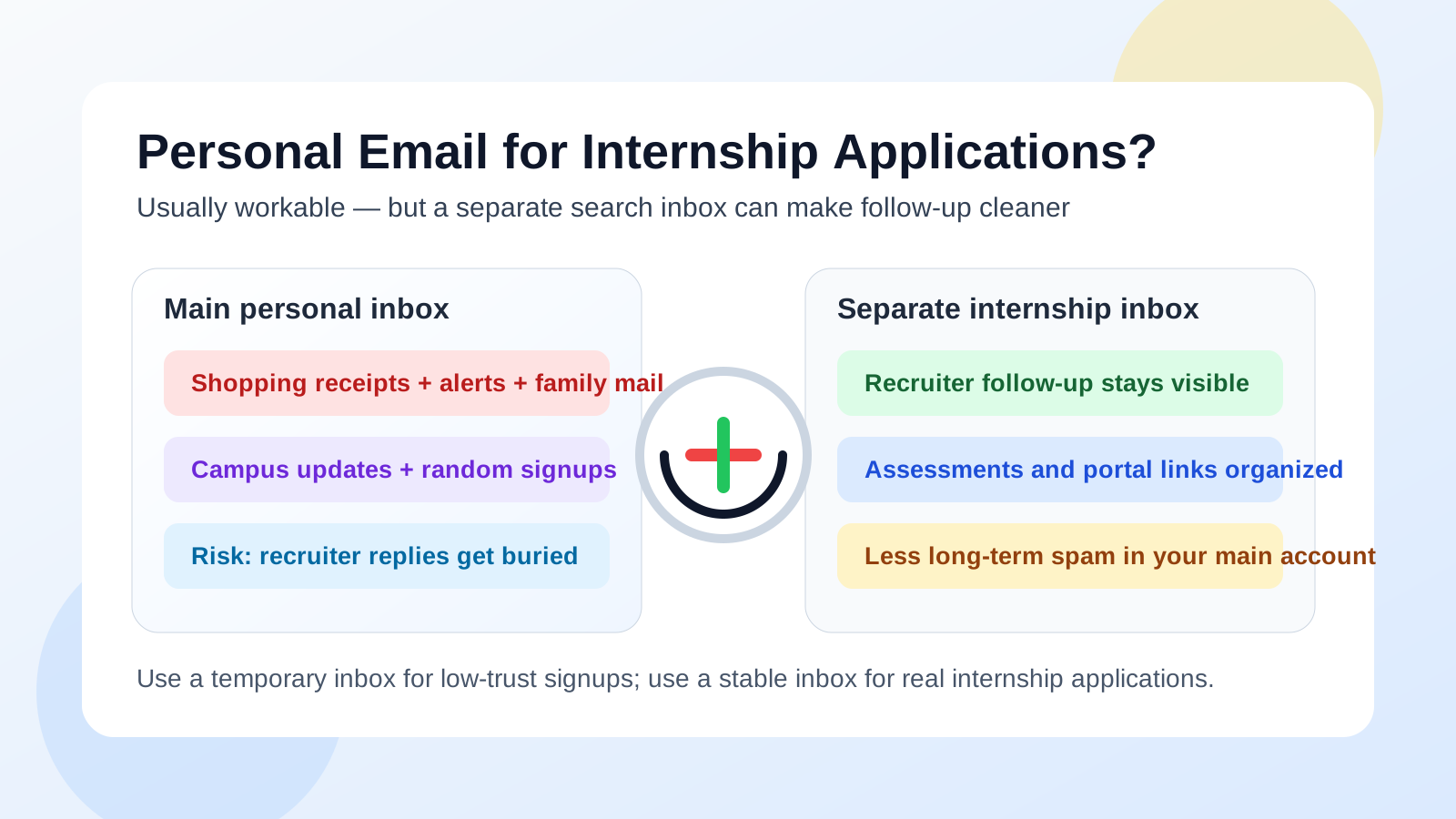
Why this question matters for internships
Internship applications create a different kind of inbox problem than many people expect. You may be applying through company career pages, student job boards, campus portals, talent communities, virtual events, startup forms, and third-party recruiting platforms all at once. Even if only a few of those applications turn into real conversations, every signup can generate confirmations, password resets, “complete your profile” reminders, event invites, assessments, newsletters, and follow-up sequences.
That means the email address you choose is not just a form field. It becomes the landing zone for the entire hiring process. It affects whether you notice an interview request in time, whether you can find a coding test two weeks later, and whether your main personal inbox turns into a dumping ground for internship-season noise.
For students, recent grads, and career changers, the issue is even more practical because internship applications often overlap with school mail, financial aid notices, family messages, travel plans, and ordinary life admin. A personal email can absolutely work, but whether it is the best fit depends on how your inbox is already behaving.
Short answer: personal email is acceptable, but often not ideal
Most employers do not care whether your address is your main personal inbox or a dedicated search inbox. They mainly care that it is real, professional, and checked regularly. So if your personal email is some version of your real name, you respond promptly, and your inbox is not chaos, using it for internships is completely reasonable.
The catch is that “reasonable” and “optimal” are not the same thing. Your main personal account may already collect years of newsletters, retail receipts, subscriptions, old signups, friend groups, and school notifications. Adding internship applications on top of that can make important recruiter messages easier to miss and can expose your long-term inbox to a lot of extra spam.
When using your personal email makes sense
1. Your email already looks professional
If your address is clean, easy to read, and tied to your real name, it will usually work fine for internship applications. Employers are not looking for a special “internship-only” address. They just want something credible and easy to reply to.
For example, an address built around your name is usually fine. An older address that looks overly casual, cluttered, or hard to take seriously is where problems start.
2. You are applying selectively, not everywhere
If you are sending a manageable number of applications to employers you actually care about, your personal inbox may stay under control. In that situation, the convenience of using the address you already know and check every day can outweigh the downside.
This is especially true if you are applying mostly through trusted employer sites rather than dozens of third-party boards.
3. You want long-term continuity
A personal email you own is often better than a school or work account because it stays with you. Internship timelines can stretch longer than expected. A recruiter may circle back after finals, during summer, or months later when a new opening appears. A personal address gives those delayed replies somewhere stable to land.
4. You already manage your inbox well
If you use folders, labels, filters, starred messages, or notifications thoughtfully, a personal inbox may work perfectly well. The biggest risk with personal email is not that it is personal. It is that it may be too noisy. If yours is already organized, that risk is lower.
When personal email is the wrong default
1. Your inbox is already overloaded
If your main personal account contains shopping updates, banking alerts, group messages, app notifications, newsletters, travel confirmations, and years of random signups, internship messages can disappear inside the mess. Missing an assessment link because it landed between sales emails and campus notices is a very avoidable problem.
2. You use the same email for every signup on the internet
The more widely your main personal email is exposed, the more likely it is to collect spam, phishing attempts, and irrelevant recruiting mail. Internship season often adds even more exposure because you may touch unfamiliar job boards, talent communities, and form builders quickly. If you already feel like your address is everywhere, using it for every internship application may make that problem worse.
3. You want stronger boundaries
Some people simply do not want their everyday life inbox to become their recruiting inbox. That is a reasonable preference. If you would rather keep internship searching separate from family mail, club activity, campus admin, bills, and personal accounts, a dedicated search inbox will feel cleaner.
4. Your personal address looks unprofessional or outdated
Sometimes the issue is not privacy at all. It is presentation. If your personal email comes from a nickname you no longer use, a joke handle from middle school, or a cluttered address you would not want on a résumé header, internship season is a good time to stop relying on it.
How personal email compares with the alternatives
Personal email vs. a separate internship inbox
A separate inbox is often the best middle ground. It gives you the stability of a real account without forcing every internship-related message into your oldest personal mailbox. You can still use a mainstream provider, still look professional, and still own the account long term. You just get cleaner boundaries and better organization.
For many applicants, that setup is the smartest default: more reliable than a disposable inbox, less risky than overusing a school address, and less messy than routing every application through a long-used personal account.
Personal email vs. a college email
A college email can help in student-specific programs, campus recruiting, and situations where your school affiliation matters. But it may not be the best long-term anchor if internship communication continues after a semester ends or after graduation. Your personal email is often better on continuity, while a separate search inbox is usually better on organization.
Personal email vs. temporary or burner email
This is where many people get tripped up. A temporary inbox can be useful for low-trust signups, gated downloads, talent-community experiments, or noisy event registrations. That is a natural use case for a tool like Anonibox.
But real internship applications are different. Once a company may send interview scheduling details, test links, or delayed recruiter follow-up, a stable inbox matters more than short-term shielding. Temporary email is useful at the top of the funnel. It is usually the wrong place to run the full application process.
A practical workflow that keeps both privacy and reliability
- Use a temporary inbox for low-trust intake. If you are testing a new internship board, signing up for a webinar, or joining a talent network you do not fully trust yet, a temporary address can help reduce spam in your main inbox.
- Use a stable inbox for real applications. Once you are applying to roles you genuinely care about, switch to an email you can monitor daily for weeks or months.
- Decide whether your personal inbox is good enough. If it is clean, professional, and manageable, you can use it. If it is noisy, create a dedicated internship-search inbox instead.
- Keep one system for serious follow-up. Do not scatter live applications across three or four addresses unless you have a strong reason. Reliability matters more than cleverness once real employers are involved.
Best practices if you do use your personal email
Clean up the address first
If the address itself looks dated or unserious, create a better one before sending applications. A simple, boring email is usually best.
Make internship mail easy to spot
Create a folder, label, or filter for internship applications. If you are in a busy semester, that small step can save you from missing a deadline email buried under unrelated mail.
Turn on notifications for important messages
If you are actively applying, make sure important mail does not rely on luck. At minimum, check your inbox consistently and watch for replies from employers, applicant tracking systems, and scheduling tools.
Keep your signature simple
You do not need a big corporate-style signature. Your name and maybe one relevant link, if appropriate, are enough. The goal is clarity, not decoration.
Be careful with reuse across sketchy platforms
If a board, form, or outreach source feels low-trust, consider using a separate address or a temporary inbox for that first interaction instead of donating your primary personal email immediately.
A quick checklist before you decide
- Does my personal email look professional?
- Do I control it long term?
- Can I reliably monitor it during internship season?
- Is my inbox already crowded enough that important replies may get buried?
- Do I want cleaner separation between internship searching and everyday life?
If your answers are strong on professionalism, stability, and organization, your personal email can work well. If your answers expose clutter, spam exposure, or weak boundaries, a separate internship inbox is probably the better move.
Final answer
So, should you use your personal email for internship applications? Usually yes — if it is professional, stable, and easy to manage.
But if you are applying broadly, touching low-trust platforms, or already fighting a crowded inbox, a separate internship-search email is often the smarter choice. It gives you cleaner organization, better privacy, and a lower chance of missing recruiter follow-up. Use temporary inboxes like Anonibox for noisy top-of-funnel signups when that makes sense, but keep real internship applications in a stable account you will still control when the important reply finally arrives.