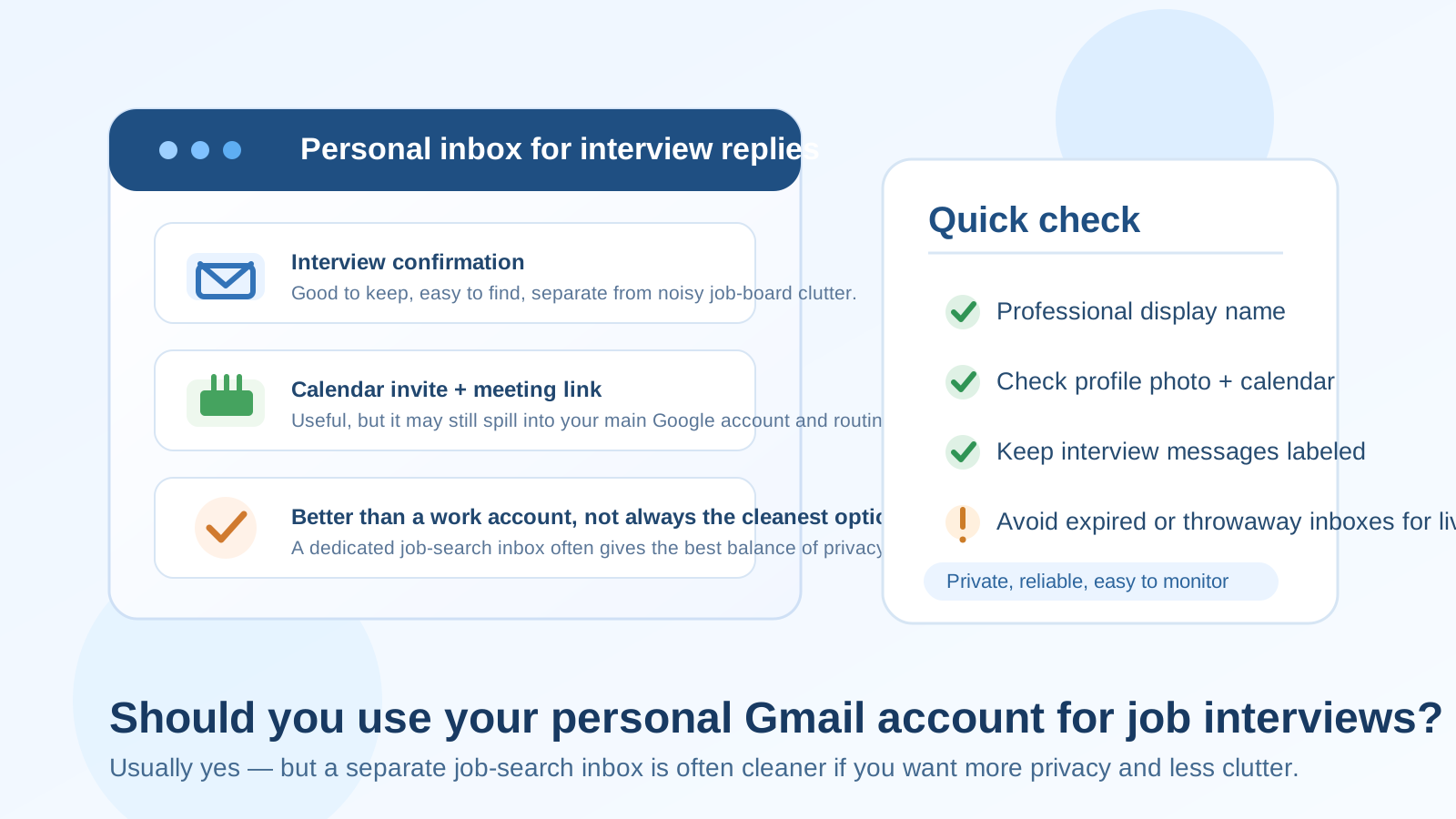
Yes, you can use your personal Gmail account for job interviews, and it is usually safer than using a work email. But if you want cleaner privacy boundaries, fewer distractions, and less long-term inbox clutter, a separate job-search inbox is often the better option.
Your personal Gmail is fine for many interviews, but it can still expose your main Google identity, calendar habits, and everyday inbox to recruiters and hiring workflows. The best choice depends on how private and organized you want your search to be.
Why people default to personal Gmail for interviews
For a lot of job seekers, personal Gmail is the obvious middle ground. It feels more professional and reliable than a temporary inbox, and it avoids the employer visibility issues that come with using a work-managed account. It is already tied to your phone, you probably check it constantly, and it handles calendar invites, attachments, and video-call links without extra setup.
That convenience matters. Interviews move quickly. Recruiters send confirmation emails, reschedule at the last minute, drop Google Meet links into invites, and sometimes email follow-up tasks with tight deadlines. Using an inbox you already monitor can reduce the odds that you miss something important.
So if the question is “Can I use my personal Gmail account for job interviews?” the honest answer is yes. In many cases, it works perfectly well. The more useful question is whether it is the best setup for your situation.
The biggest advantage: it is stable and easy to monitor
The main reason personal Gmail works well for interviews is reliability. Unlike a disposable inbox, it is not going to expire. Unlike a work account, it is not controlled by an employer. And unlike a brand-new account you barely use, it is already integrated into your normal routine.
That gives you a few practical advantages:
- You see messages quickly. Important interview emails are less likely to sit unread.
- Calendar invites usually work smoothly. Recruiters often expect candidates to accept, reschedule, or check meeting details quickly.
- Attachments and follow-ups stay in one place. That makes preparation easier when you are juggling multiple interviews.
- You control the account. No manager, admin, or company retention policy is attached to it.
Compared with using a work Gmail account, that is a meaningful privacy win already. Your current employer cannot see your interview scheduling, and you do not risk awkward audit trails inside a company-managed Google Workspace.
Why personal Gmail is still not perfect
Personal Gmail is better than work Gmail for job interviews, but that does not automatically make it ideal. The main downside is that your everyday digital life and your interview process start living in the same place.
1. Your main inbox gets cluttered fast
Interviewing rarely stays limited to one message per company. You may get recruiter follow-ups, reminders, rescheduling notices, assessment instructions, meeting links, thank-you replies, company marketing emails, and broad hiring-news blasts. If all of that lands in your main inbox, important personal messages can get buried — or interview logistics can get lost inside your regular email noise.
2. Your calendar can become messy
Gmail is not just an inbox. For many people it is also the center of Google Calendar, Meet, Drive, and sign-in activity. That means job interviews can spill into the same calendar you use for family events, bills, appointments, travel, and reminders. It works, but it is not always clean.
If you share devices, glance at notifications in public, or screen-share during an interview, that overlap can feel less private than you expected.
3. Your broader Google identity may come along with it
Depending on your settings, your Google account may include a profile photo, display name, linked apps, saved contacts, and other context built over years of normal use. None of that makes personal Gmail unsafe, but it does mean your interview identity is not as neatly separated as you might want.
For example, a recruiter may only see your email address, but once you start interacting with calendar invites, Google Meet links, or shared documents, the rest of your account setup can matter more than people expect.
4. Long-term recruiter traffic stays attached to your real inbox
Even after you finish interviewing, some recruiters keep reaching out. Some companies keep you in talent pools. Some job boards keep sending alerts because your address has been active in hiring-related workflows. If you use your everyday Gmail everywhere, those leftovers remain mixed into the account you use for everything else.
When personal Gmail is usually a perfectly reasonable choice
Using your personal Gmail account is usually fine when:
- you are interviewing with legitimate employers you have already vetted
- you want a dependable inbox you already check constantly
- you do not mind interview messages landing in your main email flow
- you are only interviewing with a few companies at once
- your current Gmail address already looks professional
If your address is simple, your display name is professional, and your inbox is under control, personal Gmail can be a very practical option. For many people, it is the easiest answer and not a bad one.
When a separate job-search Gmail account is smarter
A separate Gmail account becomes the better choice when you want more control. That is especially true if you are applying widely, interviewing with multiple companies at once, or trying to keep your search more private.
A dedicated job-search inbox gives you clear benefits:
- Cleaner organization: every recruiter message, invite, and follow-up is in one place.
- Better privacy boundaries: your everyday inbox and personal routines stay separate.
- Less chance of accidental mix-ups: fewer wrong attachments, old signatures, or unrelated threads.
- Easier cleanup later: if the inbox becomes noisy, you can archive it or stop using it without affecting your main email life.
If you are serious about privacy, this is usually the strongest middle-ground setup: not disposable, not employer-controlled, but still dedicated and easy to monitor.
Personal Gmail vs work Gmail vs temporary email
This comparison matters because people often treat all “non-work” email options as interchangeable. They are not.
Personal Gmail vs work Gmail: personal Gmail is usually much better for interviews because it is your account, not your employer’s. Work Gmail can create obvious visibility and policy risks.
Personal Gmail vs temporary email: personal Gmail is better for actual interviews because it is stable. Temporary inboxes are more useful earlier in the funnel — for job-board signups, resume downloads, one-off recruiter lead forms, or anything that may generate spam before a real conversation starts.
If you use Anonibox or another temporary email tool, the best way to think about it is this: disposable email can be useful for the noisy outer layer of a job search, but real interview coordination usually deserves an inbox you can trust for days or weeks, not minutes or hours.
How to make personal Gmail safer and more professional for interviews
If you do decide to use your personal Gmail account, a few cleanup steps go a long way.
Use a professional display name
If your account still shows an old nickname, joke label, or inconsistent capitalization, fix it before interviews start. You want your email identity to match the professional version of your name on your résumé and LinkedIn profile.
Review your profile photo
Not every hiring workflow exposes your photo, but some Google-based interactions can. If you would not want an interviewer seeing it in a professional context, swap it for something neutral or remove it.
Create labels or filters for interview traffic
This is one of the simplest improvements you can make. A label like “Job Interviews” or filters for recruiter domains can keep invites and follow-ups from getting buried in everything else.
Check your calendar settings
If you auto-add events or share parts of your calendar across devices, make sure you understand how interview invites will appear. A messy or overexposed calendar is one of the most common annoyances with using a main personal account.
Watch your signature and reply habits
If you have an outdated signature, personal quote, or casual sign-off attached to the account, clean it up. Interview communication does not need to sound stiff, but it should sound intentional.
Signs you should not use your main personal Gmail
There are a few cases where your everyday Gmail account is probably not the best choice:
- the address itself looks unprofessional or overly personal
- your inbox is already chaotic and you regularly miss messages
- you are interviewing heavily and want strict separation
- you use that Google account across shared devices or family workflows
- you want a cleaner privacy boundary between job searching and personal life
None of these mean personal Gmail is “wrong.” They just mean a separate account will probably make your life easier.
A practical rule of thumb
If you only need one reliable inbox and your personal Gmail already looks professional, using it for job interviews is fine. If you want more privacy, cleaner organization, or less long-term clutter, create a dedicated job-search Gmail account instead.
That is the real answer most people are looking for: your personal Gmail can work, but a separate account is often the tidier long-term system.
Final answer
So, should you use your personal Gmail account for job interviews? Usually yes — especially if the alternative is a work account or an inbox you do not check reliably. It is stable, familiar, and good enough for many candidates.
But if you want better boundaries, easier organization, and fewer leftovers in your everyday inbox, a dedicated job-search account is often the smarter move. Personal Gmail is acceptable. Separate Gmail is cleaner. Work Gmail is the one to avoid.