Usually yes — but only when the internship application is legitimate and you are comfortable letting recruiters contact your main line directly.
If you are applying broadly, uploading your résumé to multiple portals, or using lower-trust job boards, your personal phone number can attract spam, scam texts, and long-tail follow-up, so a separate number is often the safer choice.
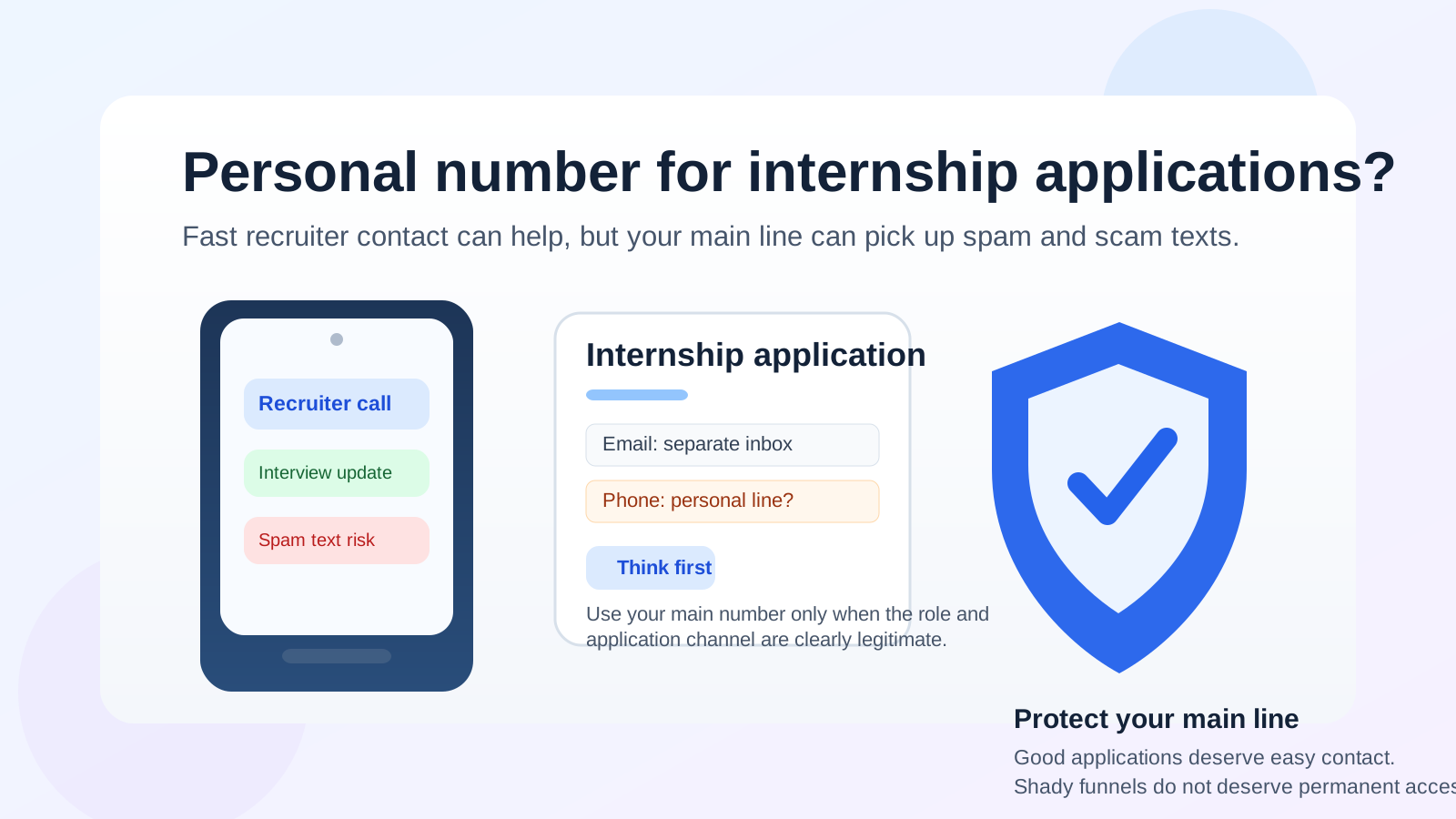
Why this question matters more for internships than many people expect
Internship season can turn into a contact-information explosion. Students and early-career applicants often apply to a large batch of roles in a short window, sign up for employer newsletters, join campus recruiting systems, attend virtual events, and share résumés with career centers or student platforms. Every one of those touchpoints can spread your phone number further than you intended.
A phone number is more sensitive than an ordinary profile field because it creates an immediate path to you. It can be used for calls, texts, voicemail, two-factor prompts, and increasingly believable scam outreach. That does not mean you should panic or hide your number from every employer. It means you should treat your personal number as something valuable rather than something every application funnel automatically deserves.
Short answer: your personal number is fine for trusted employers, but not always the best default
If you are applying directly through a real company careers page, the role is clearly legitimate, and you want fast recruiter follow-up, using your personal phone number is often completely reasonable. Many employers still use calls and text messages for screening, scheduling, and last-minute interview logistics.
But if you are applying through aggregators, résumé-drop systems, thin event forms, or postings that feel vague, sharing your personal number can create more friction than benefit. In those cases, a dedicated job-search number or another stable second line can give you the same reachability with much better control.
Why employers ask for a phone number on internship applications
There are plenty of legitimate reasons employers collect a phone number during internship recruiting:
- Interview scheduling: phone contact can be faster than back-and-forth email when calendars are tight.
- Screening calls: some internship processes start with a quick recruiter call before a formal interview.
- Event follow-up: campus recruiters may use text or phone outreach after a career fair or information session.
- Offer logistics: once a candidate moves forward, time-sensitive communication sometimes works better by phone.
- Standard applicant tracking fields: many hiring systems ask for a phone number whether or not it becomes the main communication channel.
So the issue is not that a phone number request is automatically suspicious. The real question is whether this employer, this application path, and this stage of the process justify giving out your main number.
The biggest downsides of using your personal phone number
1. Spam can outlast the internship search
Internship recruiting often involves many applications at once, and not every system handles candidate data in a clean, minimal way. Once your personal number circulates through job boards, agency databases, event signup tools, and recruiting CRMs, you may keep getting reminders, newsletters, recruiter texts, and low-value outreach long after you stop applying.
2. Scam texts are common in early-career recruiting
Students and first-time applicants are frequent targets for fake recruiter messages. A text claiming there is an urgent remote internship, a high-paying assistant role, or an immediate interview over WhatsApp can sound real enough to catch you off guard. The more widely your personal number is shared, the more exposed you are to this kind of noise.
3. Your everyday life gets mixed with internship admin
Your main number is usually tied to family, friends, school contacts, delivery updates, banking alerts, and everything else in your life. Adding dozens of internship contacts to the same stream can make it harder to tell what matters, especially when recruiters text from unfamiliar numbers.
4. It becomes harder to reset later
A separate number can be retired, muted, or managed differently once recruiting season ends. Your primary personal number usually cannot. That makes every low-trust application more expensive from a privacy standpoint.
When using your personal phone number is usually fine
There are situations where the simplest answer is still the right one. Your personal phone number is often a reasonable choice when:
- You are applying directly on a legitimate company website.
- You already researched the employer and the internship looks real.
- You want to be easy to reach for screening calls or interview coordination.
- You are applying to a smaller number of high-intent roles rather than blasting applications everywhere.
- You are comfortable handling recruiter contact on your main line for the next few months.
In those cases, the convenience may outweigh the privacy trade-off. Some candidates prefer not to add extra tools or extra numbers to an already stressful process, and that is fair.
When you should think twice before using your personal number
Caution makes sense when the application path itself feels noisy or low-trust. Be more careful if:
- The posting is on a broad third-party board with thin company details.
- The employer wants you to upload a résumé before clearly identifying the role.
- You are signing up for multiple talent communities, campus-event forms, or networking databases at once.
- You expect to apply to many internships in a compressed time period.
- The outreach includes pressure to move quickly to text, Telegram, WhatsApp, or another off-platform channel.
- The role description feels copied, vague, or strangely overpaid.
Those are the moments where a second line pays for itself in reduced noise and better screening.
A better middle ground: use a dedicated internship-search number
If you like the speed of phone contact but do not want to expose your main line everywhere, a dedicated internship-search number is often the sweet spot. That could be a second SIM, an eSIM, a carrier add-on, or another lawful, stable number solution available in your region.
The key word is stable. Internship hiring can move slowly. A recruiter may call you weeks after the original application, and an offer conversation may happen even later. Whatever number you use should be something you can keep active and monitor consistently.
A dedicated number gives you several advantages:
- You can separate internship calls from normal life.
- You can screen unknown numbers more confidently.
- You can set up a clean voicemail just for recruiting.
- You can mute or retire the line after the season if it becomes noisy.
- You can better track which platforms generate useful responses and which mostly generate spam.
If you are already using a separate email workflow for recruiting, pairing it with a dedicated number creates a much cleaner system. For example, some applicants use Anonibox for early-stage inbox separation while also reserving a second number for recruiter calls and portal signups. That combination keeps the internship search organized without forcing every contact stream into your everyday accounts.
Best practices if you do use your personal number
Keep your voicemail professional
A simple greeting with your name is enough. You do not need a polished radio voice. You just want a recruiter to feel confident they reached the right person.
Respond without oversharing
A phone number is for contact, not for handing over sensitive documents by text. Be wary if someone asks for copies of identification, banking details, or verification codes before you have clearly confirmed the employer and the stage of the process.
Verify unexpected messages independently
If a text references an application you do not recognize, do not assume it is real because it knows your name or school. Ask for the recruiter’s name, company, official email, and the exact role. Then verify the opportunity separately.
Use labels, contacts, or notes
Once calls and texts start arriving, save legitimate contacts with the company name and role. That small habit makes follow-up much less chaotic.
Be careful with callback urgency
Real recruiters may move quickly, but scammers manufacture urgency. “Reply in ten minutes,” “download this app now,” or “send a code immediately” are signals to slow down rather than rush.
What if the phone field is required?
If a trusted employer requires a phone number, you usually have three realistic options:
- Use your personal number if you trust the employer and want the fastest path to a response.
- Use a dedicated recruiting number if you want privacy without looking difficult to reach.
- Skip the application if the privacy trade-off feels too high for a low-confidence opportunity.
For most candidates, option two is the best long-term habit, especially during busy recruiting seasons. But if you are applying to a small set of well-vetted internships, your personal number may be perfectly fine.
A quick checklist before you enter your number
- Am I applying directly to a real employer or through a noisy third-party funnel?
- Do I want fast phone contact for this specific role?
- Would I be comfortable getting follow-up from this source on my main line for months?
- Am I applying broadly enough that a dedicated number would reduce chaos?
- Does anything about this internship or recruiter feel vague, rushed, or suspicious?
If those answers point to a trusted process, your personal number is probably fine. If several answers raise concerns, a separate number is the smarter move.
Final answer
You can use your personal phone number for internship applications, and for legitimate employers it is often completely normal. But normal does not always mean optimal. Your main line is still personal information, and broad internship recruiting can spread it much farther than you expect.
If the role is real and you want easy contact, your personal number may be worth using. If you are applying widely, relying on mixed-quality job boards, or simply want better privacy, a dedicated number is usually the better system. The goal is not to make yourself hard to reach. It is to stay reachable for good opportunities without giving every recruiting funnel permanent access to your main line.