Usually yes, if your personal number is stable and easy to monitor — but a separate number can be better if you want stronger privacy or cleaner boundaries.
For salary negotiations, continuity matters more than anonymity, so the best number is the one you can keep reachable through calls, texts, scheduling changes, and final paperwork without exposing your work line.
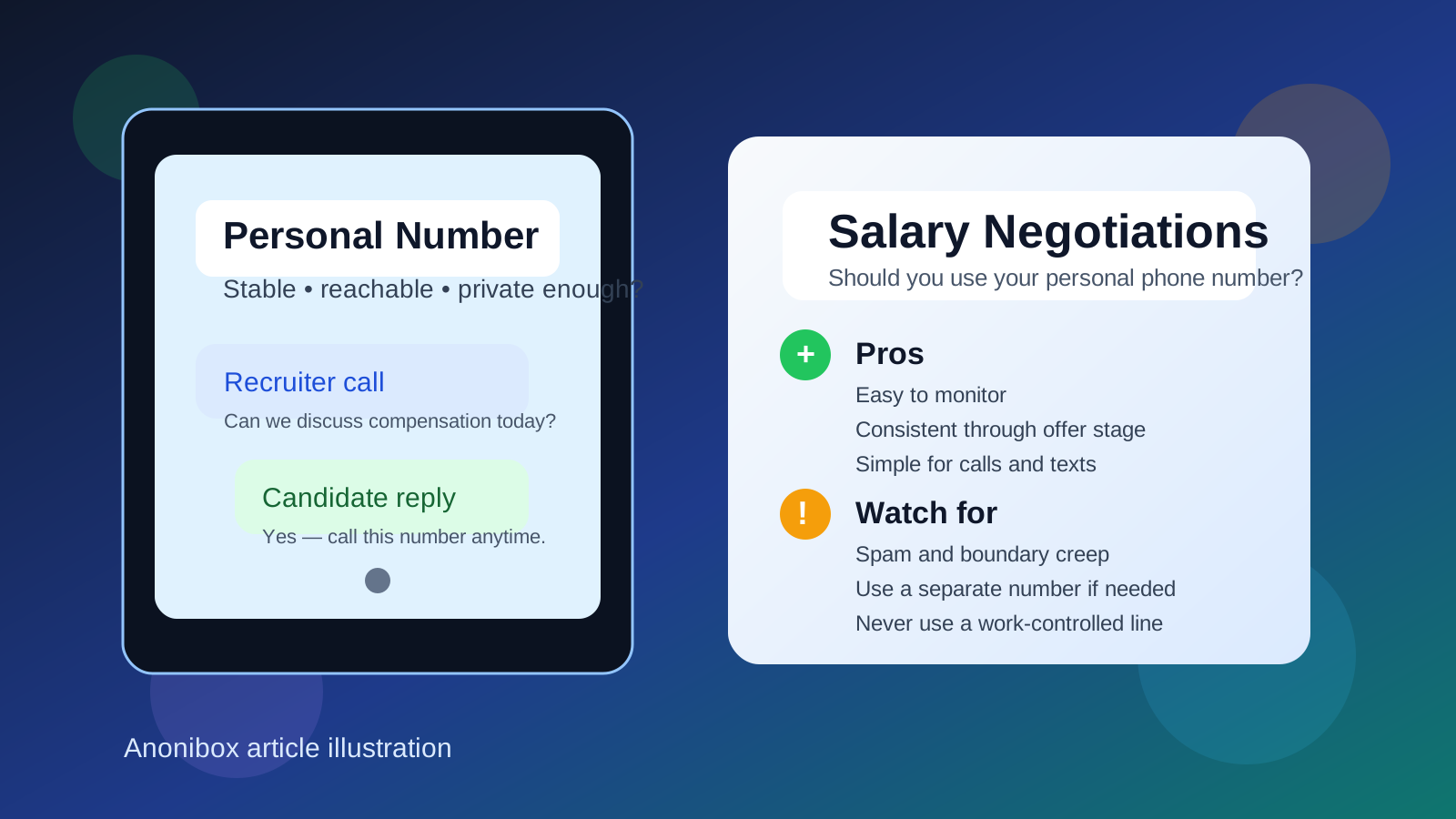
Why this question matters more at the negotiation stage
Salary negotiations are not like early job-board browsing. By the time compensation comes up, the conversation usually involves real people, real deadlines, and details you do not want to miss: interview debriefs, recruiter callbacks, revised compensation ranges, written offer timing, relocation questions, bonus breakdowns, and approval delays. That is why the question is not just “Is my personal number private enough?” It is also “Will this number stay dependable from negotiation to signature?”
In many cases, your personal phone number is the most practical answer. It is familiar, always with you, and less likely to disappear than a throwaway or short-term number. But “practical” is not the same thing as “always best.” If you are trying to keep your job search segmented from daily life, or if you are worried about spam, scam texts, or exposing your main line too widely, you may want a more deliberate setup.
When your personal phone number is the best choice
Your personal number is usually a good fit for salary negotiations when all three of these are true:
- The opportunity is legitimate. You already know the company, recruiter, or hiring manager is real.
- You can monitor the number closely. Missed calls, voicemails, and texts will not sit untouched for days.
- You expect the process to keep moving. Negotiations often involve quick clarifications and short response windows.
If that sounds like your situation, a personal number can work very well. It is stable, easy to answer from anywhere, and simple for the other side to use. Recruiters also tend to prefer one clear number they can call or text without wondering whether a forwarding layer, app, or temporary line is still active.
Your personal number is especially sensible if you already use it professionally, have a clean voicemail greeting, and do not mind receiving a few job-related texts or calls during the process. For a lot of candidates, this is the lowest-friction option.
When your personal number starts to feel risky
Even when the company is real, using your everyday number is not automatically ideal. A personal number can become frustrating when you want better separation between your job search and the rest of your life.
1. You want stronger privacy boundaries
If you are talking to multiple employers at once, your main number can turn into a stream of callbacks, recruiter texts, and calendar pings. That is not a disaster, but it can get noisy quickly.
2. You are worried about long-tail spam
Once your number has been shared across recruiters, staffing firms, or application platforms, you may keep hearing from people long after the negotiation is over. Some of that will be legitimate follow-up. Some of it will just be unwanted outreach.
3. You are still employed and want clean separation
If you are negotiating discreetly while working elsewhere, you may prefer not to mix salary-related calls with family messages, banking alerts, or daily personal communication. A separate line can make discretion easier.
4. You are dealing with third-party recruiters or messy processes
Not every negotiation happens directly with one tidy internal recruiter. Agency recruiters, executive recruiters, and multi-step hiring loops can increase the number of people who end up with your number. In those cases, a more controlled phone setup can feel safer.
Why your work phone number is usually the worse choice
If you are comparing options, your personal number is almost always better than a company-owned work number. A work line can expose your activity, create retention and monitoring concerns, and become unusable the moment your employment situation changes. It also sends the wrong signal if the line is clearly tied to your current employer.
That is one reason the live salary-negotiations cluster on Anonibox already leans away from work-owned contact channels. Salary conversations need continuity. Employer-controlled contact methods are bad at continuity.
Personal number vs separate number vs virtual number
The real decision is often not “personal number or nothing.” It is “personal number or a better-organized alternative?”
Use your personal number if:
- You trust the employer and process.
- You want the fewest moving parts.
- You are comfortable receiving calls and texts on your main line.
- You know you will not miss important follow-up.
Use a separate number if:
- You want privacy without sacrificing reliability.
- You are talking to several employers at once.
- You want to mute or retire the line later if it attracts spam.
- You prefer recruiter communication not to mix with everyday life.
Use a stable virtual number if:
- You can keep it active through the entire negotiation and onboarding window.
- You have tested voicemail, call forwarding, and text delivery first.
- You are confident you will actually monitor the app or dashboard that receives messages.
What you generally do not want is a fragile setup that feels private but causes missed compensation details. Negotiation-stage communication is too important for a number you barely check.
What about scam risk?
This is one reason people hesitate to use a personal number at all. The concern is fair. Job-related scams often arrive by text because texts feel urgent and conversational. Someone who knows you are interviewing may try to sound credible with a short note about “next steps,” “offer paperwork,” or “verification.”
That does not mean you should never share your personal number. It means you should treat unexpected messages with care:
- Verify unfamiliar recruiters independently before clicking links.
- Be suspicious of pressure to move to WhatsApp, Telegram, or another channel immediately.
- Never share one-time login codes sent to your phone.
- Do not send tax forms, IDs, or bank details by text just because a message sounds official.
If the negotiation is already underway with a known employer, your risk is lower than it is during open-ended job-board hunting. But lower is not the same as zero. Stay alert.
How to use your personal number safely if you decide yes
If you choose your personal line, a few habits make it work much better.
Keep your voicemail clean and professional
A simple greeting with your name is enough. If a recruiter cannot reach you live, the voicemail should reassure them they reached the right person and that you are reachable.
Turn on spam filtering, but review it
Modern phones can silence or filter likely spam. Use that, but check filtered calls and hidden message folders periodically while negotiations are active. You do not want a legitimate callback buried by an aggressive filter.
Reply from a calm, consistent channel
If a recruiter texts you, it is fine to keep logistics there briefly. But once compensation details become substantial, email is often the better record. If you already use Anonibox or another separate inbox strategy for job-search organization, that can help keep salary terms, revised numbers, and written summaries easy to track.
Set expectations when helpful
If you prefer phone calls only during certain hours, it is reasonable to say so. Something as simple as “Text is fine for scheduling; email is best for detailed compensation questions” can keep communication cleaner.
Save important contacts clearly
Label the recruiter, HR contact, and hiring manager in your phone so you do not ignore a real callback thinking it is random outreach.
When a separate number is smarter than your personal one
A separate number is usually the better move when you want privacy and order, not privacy at any cost. It gives you more control without the fragility of a true burner setup.
It is especially useful when:
- You are negotiating with multiple companies at once.
- You are still employed and want a cleaner wall between search activity and daily life.
- You expect ongoing recruiter contact after the current opportunity ends.
- You are sensitive to spam and do not want your main number circulating widely.
That is the same general logic behind separate job-search email workflows. A dedicated channel does not need to be disposable to be useful. It just needs to be stable, monitored, and under your control.
Red flags that mean slow down before sharing any number
- The employer or recruiter refuses to identify themselves clearly.
- The “offer” appears before a real interview process.
- The message pushes you into encrypted chat apps immediately.
- You are asked for payment, gift cards, or equipment purchases.
- The sender wants sensitive personal data before proving the opportunity is real.
In those cases, the question is not whether to use your personal number. The better question is whether you should continue the conversation at all.
A practical decision checklist
Before you share or keep using your personal number for salary negotiations, ask yourself:
- Is this employer clearly legitimate and already vetted?
- Will I reliably see and answer calls or texts on this line?
- Am I comfortable having recruiter communication on my everyday number?
- Would a separate number give me better privacy without adding delivery risk?
- Do I need one clean phone line for this whole process, from negotiation to signed paperwork?
If your answers point to convenience, stability, and low concern about boundary issues, your personal number is probably fine. If your answers point to privacy, clutter, or too many unknown contacts, a separate number is likely the smarter move.
Bottom line
Yes, you can use your personal phone number for salary negotiations, and for many people it is the most practical option. It is familiar, stable, and easy to monitor during a stage where missing a call or text can slow everything down.
But practical does not always mean optimal. If you want cleaner boundaries, more privacy, or less long-term spam, a separate number can be better. The key is to choose a number you fully control and actually check. Salary negotiations are not the moment for a flaky setup, a work-controlled line, or a number you plan to abandon too soon.
Use the contact method that keeps you reachable, organized, and in control. That is what matters most.