Usually no. Your work email is usually the wrong default for alumni networking if you care about privacy, long-term contact control, and keeping employer-owned systems out of your personal career relationships.
Use a stable personal or job-search inbox for real alumni conversations, and save temporary email tools like Anonibox for low-trust signups, directory previews, or RSVP forms where spam control matters more than long-term follow-up.
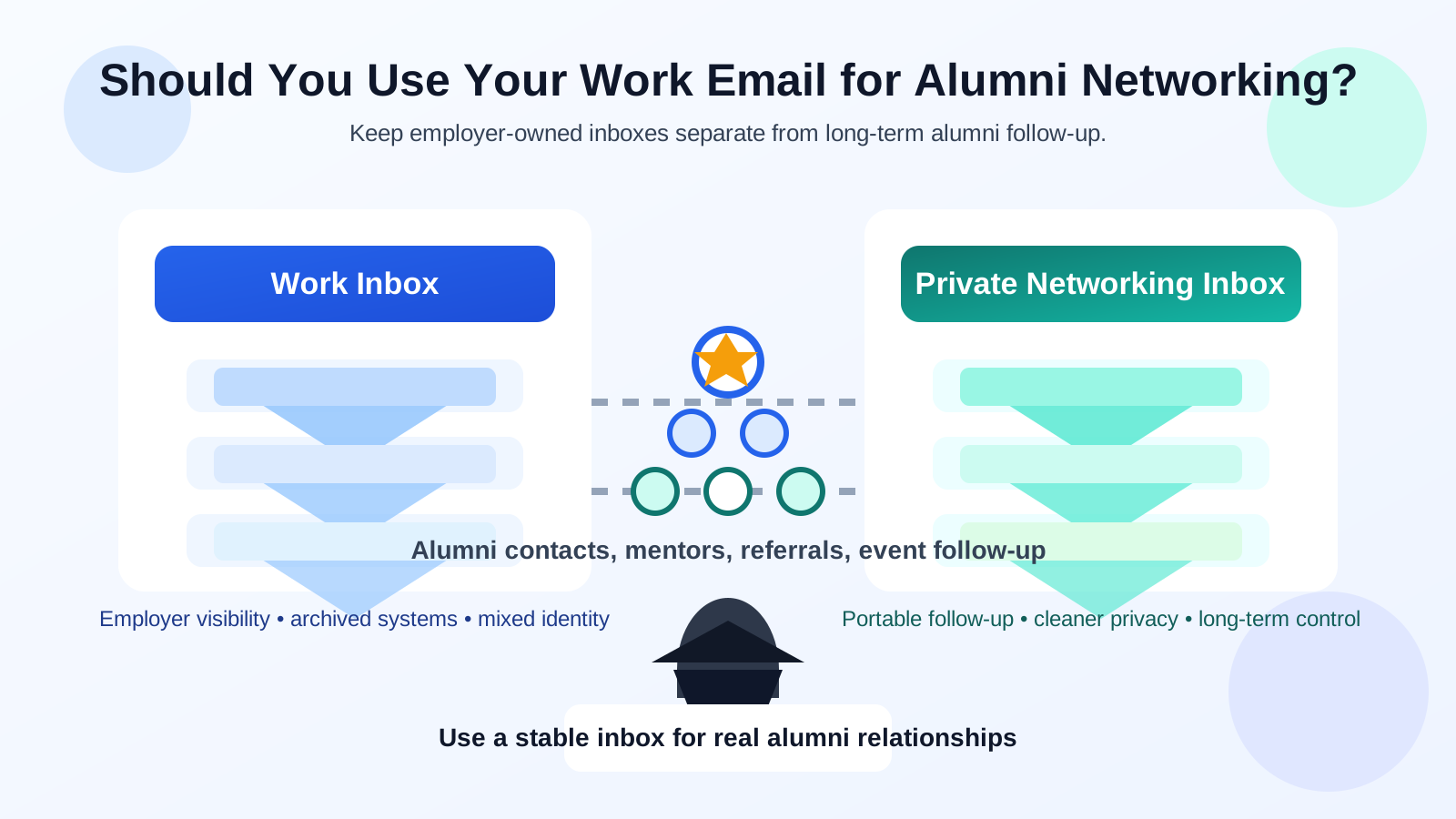
Why this question matters more in alumni networking than people think
Alumni networking often starts casually. You send one note to a graduate from your school, reply to a chapter event invite, or ask for a quick coffee chat after a panel. Because it feels lower stakes than applying for a job, people often use whatever email account is already open during the workday.
That shortcut can age badly. Alumni conversations do not always end with one message. They can turn into introductions, referrals, mentorship, event invites, industry updates, and job leads months later. If those conversations live inside an employer-controlled inbox, you are making your current company part of a relationship that is really about your future.
Short answer: a work inbox is convenient, but usually not worth the tradeoff
A work address can look polished and may be easy to monitor, but the downsides are bigger than they first appear. Work email is not fully yours. It can be archived, retained, monitored under policy, tied to company signatures and calendars, and cut off if you change jobs.
Alumni networking works best when your contact method is stable, personal enough to be portable, and professional enough to support long-tail follow-up. A clean separate inbox usually does that better than a company mailbox.
Why people reach for their work email in the first place
- It looks credible: a company domain can feel more impressive than a generic personal address.
- It is already open: if you are messaging between meetings, the easiest inbox often wins.
- Your calendar and signature are ready: scheduling feels smoother when your work tools are already connected.
- You are networking while employed: using a work inbox can feel harmless when you are not actively applying anywhere yet.
Those are real convenience benefits, but they are short-term benefits. Alumni relationships often outlast the job you have today, which makes long-term ownership more important than short-term polish.
The biggest risks of using your work email for alumni networking
1. Employer visibility and retention
Even if nobody is reading your messages in practice, company email still lives inside company systems. Messages may be archived, backed up, scanned, retained, or accessible to administrators under policy. That matters if you are exploring a career change quietly, reconnecting with alumni in adjacent industries, or simply keeping your personal networking separate from work.
2. You can send the wrong signal
Your email address is part of your introduction. A work domain tells the other person where you are employed right now and can change the tone of the conversation. An alum at a competitor may become more guarded. A founder may assume you are reaching out in an official capacity. A recruiter may read your note as current-employer-branded instead of personally motivated.
3. You may lose the thread if you change jobs
This is one of the most practical reasons not to use a work mailbox. Alumni follow-up can be slow. Someone might reply after conference season, after budget season, or when a team finally opens a role. If they write to an address you no longer control, the relationship can stall for no good reason.
4. Alumni ecosystems can spread your address farther than expected
University directories, chapter newsletters, reunion platforms, mentoring portals, event apps, and sponsor tools can all create extra mail. Some of it is useful. Some of it is just noise. If that spillover lands in your work inbox, you are mixing personal career activity with an account meant for your employer’s business.
5. Your work tools can reveal more than the message itself
The issue is not only the email body. A work account often carries a company signature, office phone number, title, calendar availability, device sync, and other metadata. That can reveal more about your job and your employer than you intended when all you wanted was a simple alumni conversation.
When a work email might be acceptable
There are cases where using your work email is not automatically wrong:
- You are attending an alumni event openly as part of your current role.
- You are representing your employer at a school panel, recruiting event, or sponsor program.
- The conversation is clearly business-development or partnership-related rather than private career exploration.
- You genuinely want the contact tied to your current employer instead of to you personally.
If that is the situation, a work address can be fine. The problem starts when the relationship is really yours, but the inbox belongs to your employer.
What usually works better
A separate stable inbox
This is the strongest default for most people. A dedicated inbox lets you keep alumni notes, follow-up, referrals, and event invites organized without tying them to your employer. It also stays with you if your job changes.
A clean personal email
If your personal inbox already looks professional and you keep it under control, it may be enough. The key is reliability. Alumni contacts should feel comfortable replying six months from now, and you should still be there to receive it.
Temporary email for low-trust edges only
Temporary email has a place, just not for real relationship building. A service like Anonibox makes sense when you want to preview a directory, grab a one-time event download, register for a sponsor-heavy webinar, or protect your main inbox from a form that feels more like lead capture than genuine networking.
For real alumni outreach, though, use a stable address. If someone may introduce you to a hiring manager later, forward your résumé, or reply after a long delay, they need a mailbox that will still work.
A practical workflow for alumni networking without oversharing
- Use a stable inbox for one-to-one outreach. That is the address you use for alumni coffee chats, mentorship requests, and follow-up.
- Use temporary email only for low-value exposure. Think list signups, event promos, and optional gated content.
- Keep notes with each contact. Record where you met, what you discussed, and when to follow up so the relationship does not disappear into your archive.
- Use a simple signature. Your name, role or school context if helpful, and maybe LinkedIn are enough. You do not need a corporate banner.
- Review what your address communicates. Before sending, ask whether this inbox represents you or your employer.
Examples
Recent graduate: You are reaching out to alumni while still employed in your first job. A work inbox feels convenient, but a stable separate email protects future conversations if you leave within a year.
Mid-career professional: You want to reconnect with alumni while exploring a pivot into a new field. Using your company mailbox quietly drags employer visibility into what should be a personal networking process.
Active alumni volunteer: If you are organizing events on behalf of your employer or acting as a formal representative, work email can be appropriate. The deciding question is whether the relationship belongs to your role or to you.
Common mistakes to avoid
- Using your work inbox just because it is open.
- Using a disposable inbox for a real mentor or alum you genuinely hope will reply later.
- Letting alumni messages mix with unrelated company mail until important follow-up gets buried.
- Assuming a polished company domain is always safer than a plain personal address.
- Forgetting that job changes can cut off access to old threads and contacts.
Quick checklist before you send the first note
- Do I fully control this inbox if I leave my job tomorrow?
- Would I be comfortable with this conversation living in employer-owned systems?
- Am I contacting this alum as myself or as a representative of my company?
- Could this relationship lead to future opportunities, referrals, or introductions?
- Is this a real conversation, or just a low-trust signup where temporary email would be enough?
Conclusion
Usually no: your work email is not the best default for alumni networking. It may be convenient, but it creates avoidable privacy issues, ties personal career relationships to employer-owned systems, and can leave you without control if your job changes.
A stable separate inbox is usually the better choice for real alumni follow-up. Use temporary email strategically for low-trust forms and spam-heavy signups, but keep person-to-person alumni relationships on an address you own and can keep for the long run.