Usually no. A work phone number is rarely the best number for employment verification because it can expose your job search, tie a sensitive process to an employer-controlled line, and create continuity problems if follow-up stretches out.
For employment verification, a personal number or a separate long-term number you control is usually safer, as long as you actually monitor it and can respond when HR or a screening vendor reaches out.
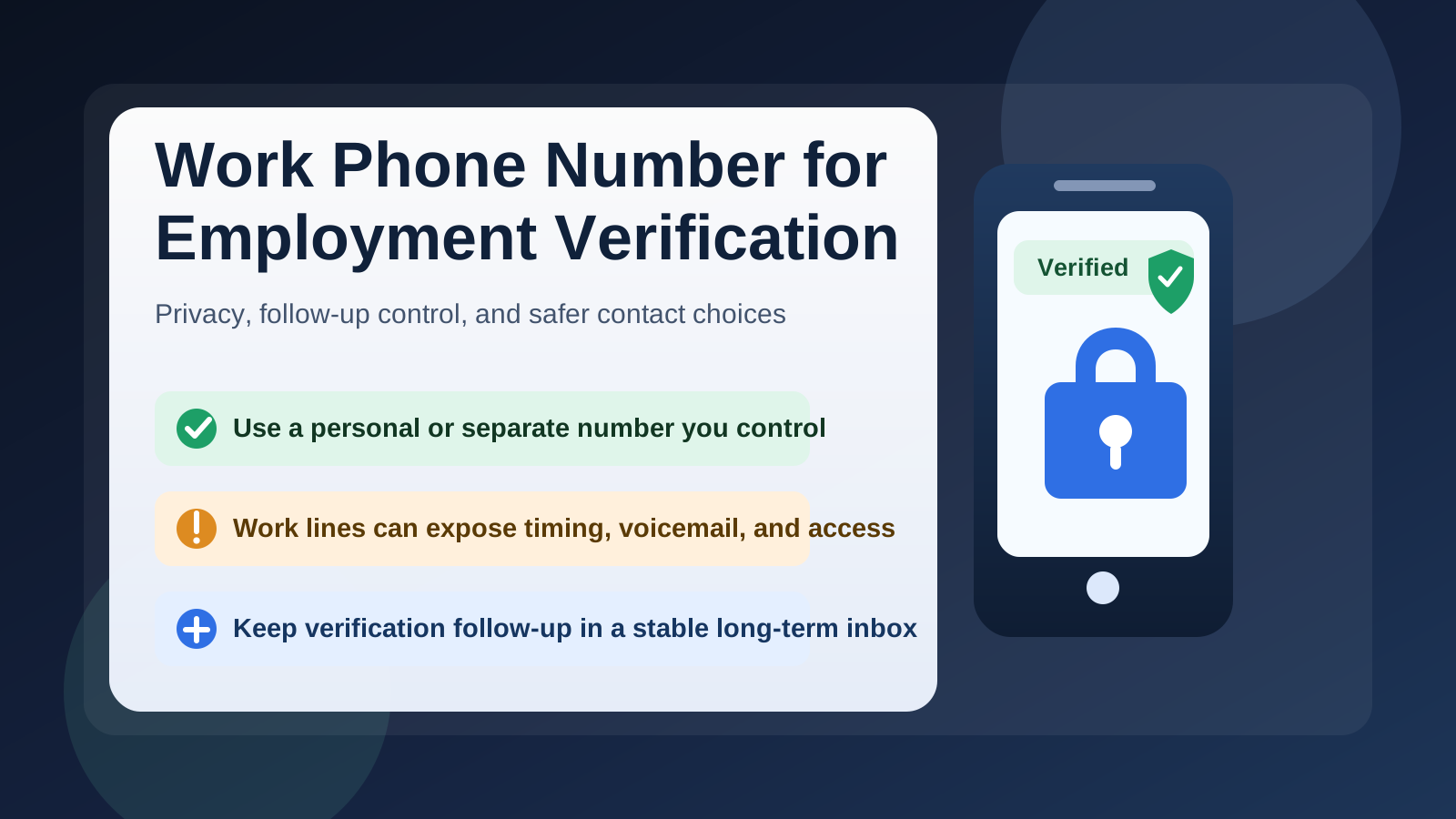
Why people consider using a work phone number
The logic is understandable. If you already use a work number every day, it may feel like the easiest line to answer. You know it is charged, you notice incoming calls, and it may look more “professional” than a personal mobile number. If employment verification happens while you are still at your current job, using the number that seems most active can feel practical.
But employment verification is not the same as ordinary business communication. This stage often involves sensitive timing, identity details, follow-up requests, and sometimes document coordination. The goal is not to pick the number that looks official. The goal is to pick the number that gives you the most control, privacy, and continuity from start to finish.
What employment verification usually involves
People sometimes picture employment verification as one quick confirmation call, but it is often messier than that. A recruiter, HR team, or third-party screening vendor may need to:
- confirm your dates of employment, title, or manager details
- ask permission to contact a former employer
- send follow-up questions after an automated check fails
- clarify a mismatch between your application and employer records
- coordinate a call window because someone could not reach you the first time
- check whether a number is still the best way to reach you while the file stays open
That means the number you use may matter for more than one call. It can become part of a small paper trail that includes voicemail, missed-call callbacks, text messages, scheduling notes, and identity-sensitive conversations. That is exactly why a work phone number is often the wrong fit.
The biggest risks of using your work phone number for employment verification
1. You may expose your job search at the worst possible moment
If the number belongs to your current employer, or even just sits inside your daily work environment, you lose privacy. Notifications may appear on a device you use in front of coworkers. Call logs may sync with employer-managed systems. A voicemail from a screening vendor can land on a line that feels more visible than you intended.
That does not mean your employer is definitely monitoring every contact. It means you should not build a sensitive transition step around an assumption of perfect privacy on work infrastructure.
2. You do not fully control the line
A work number often comes with employer rules, billing ownership, device policies, voicemail settings, retention rules, or admin access you cannot change. Even if the number feels like “yours” during the workday, it may stop being yours the moment you change roles, resign, lose device access, or get your line reassigned.
Employment verification is a bad place to depend on a contact channel you do not own. If the process continues after you leave, get locked out, or stop carrying that device, an important call can become much harder to recover.
3. Verification follow-up can spill across time
Many late-stage hiring tasks do not resolve in one business day. A previous employer may be slow to respond. A vendor may need another document. HR may need to retry a call or confirm one detail before clearing the background step. If that happens, you want the contact number to remain stable and easy for you to manage.
A personal number or a separate long-term job-search number gives you that continuity. A work number gives you continuity only as long as your employer relationship and device access stay unchanged.
4. Voicemail and callback handling get awkward fast
Imagine missing a verification call and receiving a voicemail that references a new employer, a background screening vendor, or a hiring decision. On a work-managed line, that is uncomfortable. The same goes for text messages asking you to confirm identity details or return a call during business hours.
Even if nothing dramatic happens, it is clumsy. Sensitive hiring logistics work better on a number where your voicemail, callback timing, and notification behavior are fully under your control.
5. It blurs personal and employer boundaries
Employment verification sits at the point where your current and future professional worlds can overlap. That overlap is already stressful for many people. Using a work phone number makes the overlap bigger by routing personal career-transition activity through a line associated with your current employer.
Most job seekers feel better when that boundary is cleaner.
When using a work phone number might be acceptable
There are limited cases where it may be workable. For example, if you are verifying a former role, you personally control the line, nobody else has access to it, and you are confident you will keep the number through the entire process, the risk may be lower.
But even then, “acceptable” is not the same as “ideal.” The more important question is whether there is a better option. In most cases, there is.
What to use instead
A personal mobile number
If your personal number is stable, private enough for your comfort, and easy to monitor, it is usually the simplest safe choice. You control the device, you control voicemail, and you keep the line even if your work situation changes.
A separate long-term number for job-search activity
If you want more separation, a dedicated number can be even better. It lets you keep hiring-related calls and texts away from your primary personal line without depending on your employer’s infrastructure.
This approach pairs well with a separate inbox strategy too. If you already use a dedicated inbox or a tool like Anonibox to keep early-stage recruiter traffic out of your main email, using a separate phone number for later-stage verification and scheduling creates the same kind of boundary on the phone side.
A reliable virtual number you truly control
Some people prefer a long-term virtual number they own and monitor closely. That can work well if it has dependable voicemail, good call delivery, and no habit of dropping important texts. The key word is reliable. Employment verification is not a great time to experiment with a flaky number setup.
Best practices if you need to share a number for employment verification
- Use a number you will still control in a few weeks. Do not optimize only for today.
- Set a clear voicemail greeting. Keep it simple and professional.
- Answer unknown calls carefully. Screening vendors and HR teams do not always call from a number you recognize.
- Ask the caller to identify themselves. Verify company and vendor details before sharing anything sensitive.
- Keep records. Note who called, what they needed, and what deadline they gave you.
- Do not share one-time codes. No legitimate employment verification workflow needs a login code from your phone.
Red flags that matter more than the number itself
Sometimes the real problem is not whether the number is work or personal. It is whether the outreach is trustworthy at all. Slow down if the caller or texter:
- cannot clearly name the employer or screening company
- pushes you to move to an untrusted app immediately
- asks for financial details, payment, or login codes
- wants sensitive documents before you can verify who they are
- creates false urgency without giving you a way to confirm legitimacy
A safer number helps, but good judgment still matters. Privacy and scam resistance are both part of the same contact strategy.
A quick decision checklist
Before you give out a number for employment verification, ask yourself:
- Do I personally control this line and voicemail?
- Will I still have access if my job situation changes soon?
- Would a missed call or voicemail on this number make me uncomfortable?
- Am I separating sensitive hiring activity from employer-owned systems?
- Do I have a better long-term number for this process?
If those questions point away from your work number, listen to them.
Final answer
Usually no. A work phone number is rarely the best choice for employment verification because it can reduce privacy, create employer-visibility concerns, and leave you dependent on a line you may not control long enough.
A personal number or a separate long-term number you control is usually the safer option. It keeps the process reachable, organized, and more private, which is exactly what you want when a hiring decision is close and follow-up details matter.