Usually no. If the number belongs to your current employer or runs through an employer-managed device, do not use it for internship applications unless you fully understand and accept the visibility, access, and boundary risks.
A work phone can make you reachable, but it can also expose your internship search to the wrong systems and people. In most cases, a personal number or a separate job-search number is the safer and more professional option.
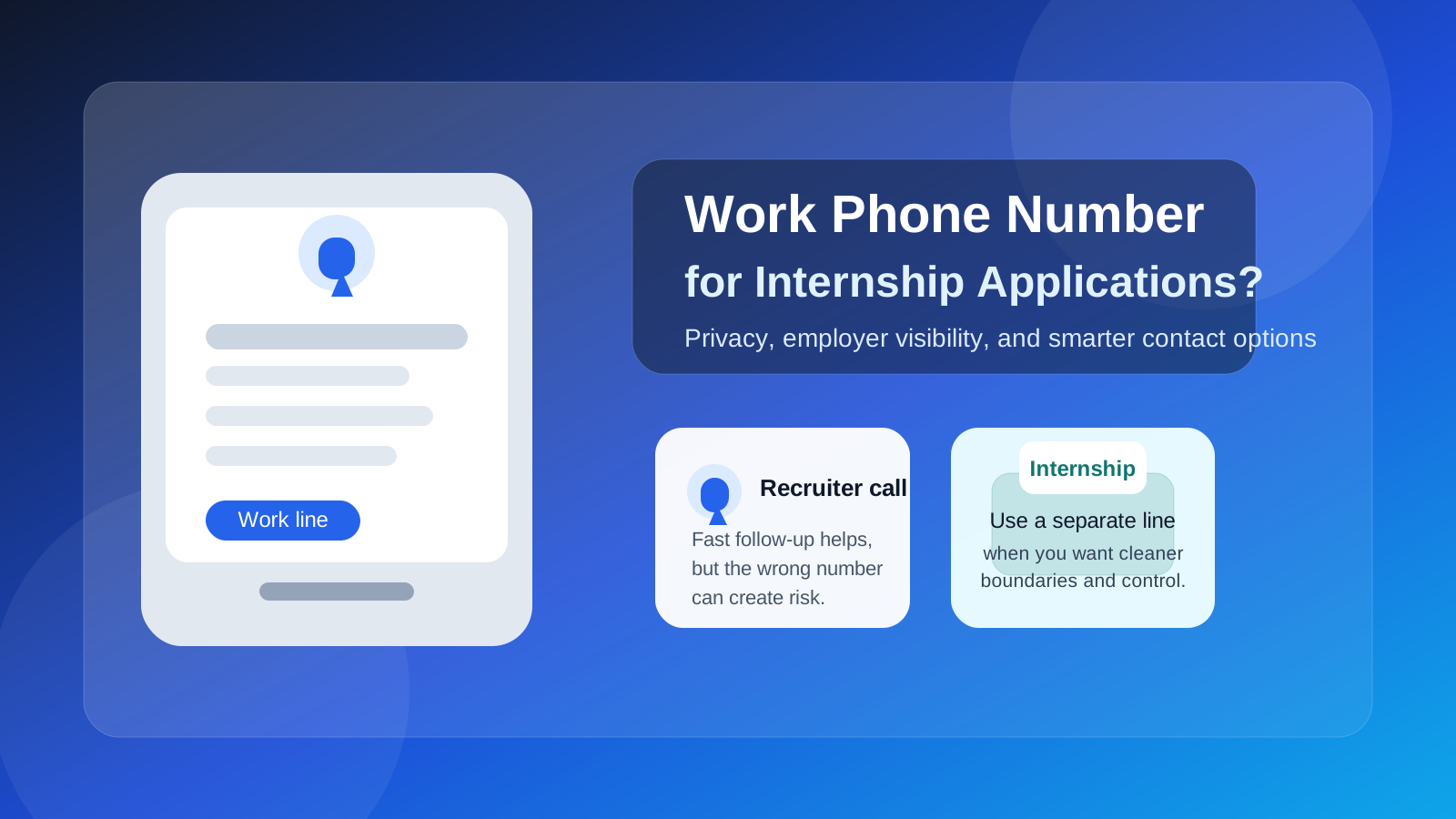
Why this question matters more than it seems
On the surface, a phone number is just contact information. Recruiters use it for screening calls, interview scheduling, and quick logistics. For internships especially, hiring teams often move fast. A recruiter may want to text a confirmation, a coordinator may need to reschedule, or a hiring manager may call with little notice. That makes a phone number useful.
The problem is that a work phone number is not just a phone number. It may be tied to a company-owned device, a managed mobile plan, a shared billing account, centralized logs, employer-installed apps, or a voicemail greeting that does not match the identity you want to present in an internship search. Even if nobody is actively monitoring you, the line may still belong to your employer in ways that reduce your privacy and control.
That is why the real question is not “can a recruiter reach me there?” It is “what am I exposing if I use this number, and is there a better option?”
The short answer: avoid employer-owned numbers when you can
If the phone was issued by your employer, paid for by your employer, or managed under workplace device policies, it is usually a bad idea to use it for internship applications. You may be conducting a perfectly legitimate search, but you are still mixing a personal career move with infrastructure you do not fully own.
That creates three common problems. First, you may not know who can see the call or message history. Second, you may lose access to the line later. Third, recruiter communication can land in a channel that was never designed to be private job-search space.
Main risks of using your work phone number for internship applications
Employer visibility and device management
Some companies manage work phones closely. Others barely touch them. But unless you know the exact policy, you should assume the number, plan, and device may be subject to logging, mobile device management, carrier records, or routine admin access. That does not mean your boss is reading every text. It means the phone is not purely yours.
If you are trying to keep an internship search discreet, that lack of separation matters. A recruiter name in recent calls, a text preview on a locked screen, a shared billing report, or a synced work system can create visibility you did not intend.
Blurry professional boundaries
A recruiter calling your work line sends an odd signal. It can make follow-up harder to manage and can blur the line between your current responsibilities and your next-step plans. If you are juggling shifts, classes, or a current job, you want internship communication to reach you in a channel you control on your own terms.
That is especially true if the work number is used during business hours, shared with a team, forwarded through a desk setup, or connected to collaboration tools that are not really private.
Voicemail, caller ID, and brand mismatch
Your work line may present a company name, department label, or generic voicemail greeting. That can confuse recruiters. If you apply for a marketing internship and the callback reaches a voicemail that sounds like a retail shift phone, a client support extension, or a small business operations line, the experience becomes awkward fast.
It does not automatically ruin your chances, but it is unnecessary friction. You want your contact details to feel direct, stable, and unmistakably yours.
Losing access later
If you change jobs, lose the device, leave a role, or have the line reassigned, you may lose access to messages tied to active applications. Internship timelines can stretch longer than people expect. A recruiter might circle back weeks later. An interview invite can arrive after a quiet period. A background-check coordinator may reach out after you assumed the process had stalled.
A number you do not truly control is a bad place to anchor that follow-up.
Privacy and compliance concerns
Some workplaces have clear rules about personal use on company systems. Even if using the phone for an internship search is not prohibited, it may still create uncomfortable gray areas. You do not want to wonder whether a text thread, voicemail, or call log now sits inside an employer-managed archive.
That risk is not worth taking when better alternatives exist.
When might it be acceptable?
There are a few narrow cases where using a work-associated number may be fine:
- The number is actually yours and only lightly associated with work, such as a personally owned line that colleagues happen to use.
- You are applying for internal internships or development opportunities within the same organization and there is no need for separation.
- You have no other stable option temporarily and you are making a conscious short-term tradeoff, not assuming it is best practice.
Even then, think carefully. “Acceptable” is not the same as “ideal.” If you can switch to a personally controlled number before interviews start, do it.
Better alternatives that protect your privacy
1. Use your personal number if it is stable and professional
If your personal number is under your control and you are comfortable receiving recruiter calls there, it is often the simplest answer. Just make sure your voicemail greeting is clean and that you check missed calls promptly.
2. Set up a separate job-search number
This is usually the best option for privacy-conscious applicants. A separate number gives you cleaner boundaries, easier call screening, and more control over spam. Depending on your location, that could mean a second SIM, a virtual number, or another lawful number-management tool you control directly.
A dedicated line is especially useful if you expect to apply broadly, sign up on multiple job boards, or test several recruiting channels at once.
3. Use a voice service like Google Voice where available and appropriate
For some people, a forwarding number is a practical middle ground. It can help with screening, voicemail setup, and keeping your main number less exposed. Just make sure the service is supported in your region and that you will reliably receive calls and texts where recruiters are likely to contact you.
4. Pair a separate number with a separate email workflow
Phone privacy works better when your email strategy is just as intentional. If you already use Anonibox or another separate inbox approach for early-stage forms, newsletters, or lower-trust signups, a dedicated internship-contact number creates the same kind of boundary for calls and texts. That does not mean every application should use a temporary inbox forever, but it does mean you should think in systems rather than one-off fields.
What if the application requires a phone number?
If a legitimate internship application requires a phone number, you usually have three realistic choices:
- Use a personally controlled number you are comfortable answering.
- Use a dedicated job-search number.
- Skip the application if the privacy tradeoff is not worth it to you.
What you generally should not do is default to an employer-owned line just because it is convenient in the moment. Convenience now can create confusion later.
A practical checklist before you submit your number
- Do I personally control this phone number and the device attached to it?
- Could someone at work reasonably see call or message activity tied to this line?
- Would a recruiter reach a voicemail greeting that clearly sounds like me?
- Will I still have this number throughout the full internship hiring timeline?
- Would a separate number reduce spam and make screening easier?
If several answers make you hesitate, that is your signal to switch numbers before you apply.
How to set up a cleaner internship contact channel
You do not need a complicated system. A simple setup goes a long way:
- Create or choose a personally controlled number for internship search activity.
- Record a short professional voicemail with your name.
- Turn on missed-call notifications and check them daily.
- Keep recruiter texts in that same channel so scheduling stays organized.
- Use a separate email address or inbox strategy if you are applying broadly.
This gives you reachability without mixing internship follow-up into employer-managed tools.
Final answer
In most cases, no — you should not use your work phone number for internship applications if the line belongs to your employer or sits on an employer-managed device. The privacy risk, access risk, and boundary problems usually outweigh the convenience.
A better approach is to use a number you truly control, ideally one dedicated to your search if you expect lots of outreach. That keeps recruiter contact professional, protects your privacy better, and makes it far less likely that your internship search will leak into the wrong systems.